
Showing posts with label academic. Show all posts

Friday, 4 March 2022

Interview with Antonia Wimbush


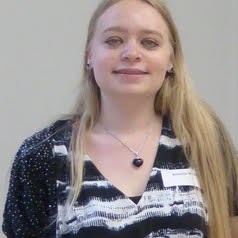
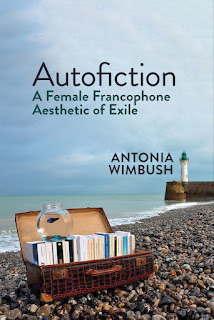
Antonia Wimbush is a postcolonial scholar who graduated from a PhD at Birmingham in 2018. She joined Liverpool University Humanities department in October 2020. She took up a Leverhulme Early Career Fellowship under the mentorship of Prof. Charles Forsdick. Her project is entitled 'Representing the BUMIDOM: French Caribbean Migration in Literature and Culture.' She is the author of Autofiction: A Female Francophone Aesthetic of Exile (Liverpool University Press, 2021). 

Interviewed by Elle Morgan

This interview is spread across my own website The French Lettres, and also Everybody’s Reviewing in Leicester. This is because of Leicester’s close connection with postcolonial studies. Indeed, Antonia's fascinating expertise on migration will likely be of interest to many creatives residing in the city. The literary scene in Leicester has long been engaged with the same issues of displacement, migration, and home that Antonia writes about in her latest book, Autofiction: A Female Francophone Aesthetic of Exile

Originally, the book was a thesis, its aim being to address the wealth of writers whose work existed outside of the metropolitan: those who are not white, male or middle-class. During the interview, we discuss writers such as Dante Alighieri (who wrote from political displacement in his native Florence) as a famous example of what some people mean by 'exiled writers' because he fits into all of those privileged categories. Antonia’s work interrogates this by engaging with writers such as Nina Bouraoui, from Algeria and France. Her work also expands upon Julia Kristeva’s threefold explanation of 'exile': geographically, as writers, and also as women. She says: 'I am deeply interested in women writers who write in a metaphorically exiled position, in an imagined place.'

She expands upon this by referencing Edward Said, whose work interrogates the notion that 'exile' means to be a member of the bourgeoisie and therefore somehow 'important' and 'mattering.' Antonia is clearly passionate about the sense of 'otherness' that comes from not belonging, and this is evident from her work teaching emerging scholars at Liverpool University. 

As a Lecturer, Antonia has seen many early-career scholars, such as undergrads and postgrads, who have been engaged in research on memory. There is a particular pattern of interest in concrete examples of statues and monuments, as well as identity. As she teaches in postcolonial Francophone subjects and has long been interested in the notion of 'Carribbeing,' her research corresponds urgently with the thirst for learning about underrepresented writers.    

She says: 'It was a thesis on four writers, at first. For the book, it widened, expanding to six, which was a challenge. I looked at all sorts of writers whose postcolonial entity is even contested, moving towards writers in Quebec. There are writers such as Michèle Rakotoson, in Madagascar who underwent political exile for their comments against the dictatorship.'

Clearly, it is a timely area that has been contributed to, and expanded by, a scholar considerate of the ambiguities concerning exiled voices. 


About the interviewer
Elle Morgan is a student and writer who is usually quite lost, navigating both life and various university buildings. If you would like to find her, she is on the internet here.


Saturday, 23 March 2019

Review by Jon Wilkins of "Laughter, Literature, Violence, 1840-1930" by Jonathan Taylor


I have long been an advocate of creative writers becoming more involved in the fusty old world of academic writing, so it was with great pleasure that I saw that Jonathan Taylor had written Laughter, Literature, Violence, 1840–1930, published by Palgrave Macmillan, knowing from experience that this would be an extremely well written book that flowed and was attractive to the reader.

I was not disappointed. Taking three of the subjects closest to my heart, Taylor writes with well-researched prowess about Laughter, Literature and Violence through the gaze of philosophers, academics, writers, Ancient Greeks, Romans, poets, politicians, soldiers, churchmen, the list is almost endless.

In Laughter, Literature, Violence, 1840-1930 we see the convoluted relationship between laughter, violence, war, horror and death. This through an inventive line of enquiry via philosophy and politics, and then in a study of four texts, by Edgar Allan Poe, Edmund Gosse, Wyndham Lewis and Katherine Mansfield - four amazingly diverse and complicated characters who are brought to life by Taylor. We learn that laughter and violence are forever interlinked, from the pratfall to the explosion of guffaws at a friend’s demise. We can’t help ourselves and Taylor carefully explains why. 

We investigate a founding comic text, The Pickwick Papers, and how Schadenfreude intrudes into the English language and changes comic writing for ever. Schadenfreude is such an intense feeling that we had to invent (or import) a word for it.

Taylor does not write above his audience. He looks them straight in the eye and invites them to take part in the conversation. He engages the reader and doesn’t try to point score or write to an intellectual elite. Not for him pretentious authority but an engaging narrative wordcraft that wants us, the reader, to be part of his discussion and discovery. This is the beauty of having a gifted creative writer producing an academic text. It is readable and accessible.

The book is painstakingly researched over five years with a plethora of footnotes asking us to read further into his enquiries. The depth and richness of his research reflects his love for the subject. This is a text for the academic to help him or her to interrogate and to investigate and a book for the interested party, who enjoys the subject. Both are well served. It is not too academic to put off the casual reader, yet it has enough gravitas to educate and intrigue.

The book ended and I wanted to know more. I wanted to plunge into this strange world where we laugh in the face of violence. Where sadness is disabused by jokes. Where all are equal, and equally absurd, especially the man who slips on the floor.


About the reviewer
Jon Wilkins is sixty-three. He has a gorgeous wife Annie and two beautiful sons, and loves to write. He is a retired teacher, lapsed Waterstone's bookseller and former Basketball Coach. He taught PE and English for twenty years and coached women’s basketball for over thirty years.  He has always loved books and reading.