Showing posts with label crime fiction. Show all posts

Thursday, 1 June 2023

Review by Lisa Williams of "The Last Dance" by Mark Billingham


The Last Dance is the first book in a new series by Mark Billingham. The story introduces his new character DS Declan Miller: he’s returned to work, some think too early, after the death of his wife. His wife also worked for the force and was his dancing partner – hence the title. 

Declan likes a joke. His new partner at work, DS Sara Xiu, is unresponsive to his humour. This antagonism bonds them nicely as characters and ensures by the end of the book the pairing feels as comfortable as a favourite pair of slippers. 

I read this on Pigeonhole. They release a few chapters a day which meant I couldn’t binge it and consequently felt every cliff-hanger. It's a tense enjoyable read and I’ll very definitely be reading the next Detective Miller novel.


About the reviewer
Lisa Williams writes short stories usually of just 100 words. You can find her online @noodleBubble


Sunday, 4 September 2022

Review by Jon Wilkins of "Come the Dark Night" by David Tregarthen


Oxford, traditional epicentre of murder and scholastic mayhem in England doesn’t want to miss out again, and in this skilfully constructed crime thriller by David Tregarthen we are introduced to a new murderer and of course a new Oxford-based detective, following in the footsteps of too many to mention. DS Kate Stewart and her partner turn to medievalist Dr Jonathan Reynolds to help them solve a grisly murder, with reference to Beowulf, the eponymous hero who fought an epic monster in Grendel.

This is a carefully crafted, sophisticated novel of suspense, that draws the reader into the dark shadows of the University town, where a relentless killer with a penchant for literature hides in the shadows. A student is found decapitated in the cupola of the Sheldonian Theatre and, with the body, is a cryptic note in a strange language. The note is finally recognised as a passage from the heroic poem Beowulf, and soon we see that the grisly murder replicates a bloody death in the work.

Then we see a second, equally grisly murder and find that the victim is Tom, a former student of Reynolds. A horrified Reynolds sees the crime’s link to another literary connection, an early English poem. We are forced to ask what is this obsession with medieval times, or is it with Dr Jonathan Reynolds himself? 

Another death suggests that a killer is working his way through the University’s English Literature syllabus, and the police and the scholar are drawn further into a hideous mystery where no one is safe. 

The novel is set in an Oxford of Morse, Gervase Fen, and Nigel Strangeways, the town of the traditional detective, but also an Oxford cowering in fear as the murders gain media coverage. DS Kate Stewart is an interesting character who bears comparisons with the aforementioned sleuths as she neatly steps towards the maniac taunting the town.

Who will be next? Who is the murderous enigma mocking the police, the public and especially the scholar Jonathan Reynolds?


About the reviewer
Jon Wilkins is 66. He is married to the gorgeous Annie with two wonderful sons. He was a teacher for twenty years, a Waterstones bookseller and coached women’s basketball for over thirty years before taking up writing seriously. Nowadays he takes notes for students with Special Needs at Leicester University. He has had a work commissioned by the UK Arts Council and several pieces published traditionally as well as on-line. He has had poems in magazines and anthologies, art galleries, studios, museums and at Huddersfield Railway Station. He loves writing poetry. For his MA, he wrote a crime novel, Utrecht Snow. He followed it up with Utrecht Rain, and is now writing a third part. He is currently writing a crime series, Poppy Knows Best, set at the end of the Great War and into the early 1920s.

You can read more about Come the Dark Night, by David Tregarthen, on Creative Writing at Leicester here. 

Thursday, 25 August 2022

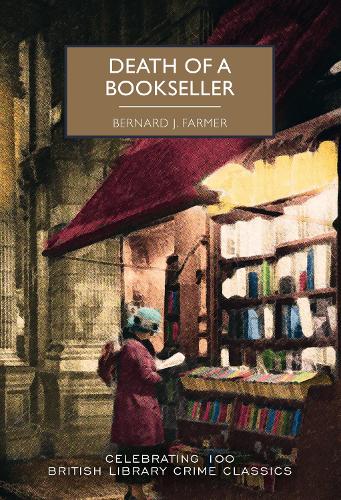
Review by Jon Wilkins of "Death of a Bookseller" by Bernard J. Farmer


If you are a crime fiction fan, you will be aware of the wonderful series published by the British Library of out of print crime classics that they have reintroduced for public consumption. The breadth of work covered is mesmerising and some have once again become best sellers.

I have just finished reading Death of a Bookseller in two sittings over coffee and cake at my favourite pub, the Royal Oak in Kirby Muxloe. It is a place highly conducive for reading crime fiction. All the usual suspects drink there!

I usually prefer the Golden Age of Crime, but this novel was written in 1956, the author unknown to me and the echoes of the period are clear even now. 

We are introduced to policeman Sergeant Jack Wigan who befriends bookseller Michael Fisk. Early in the novel the bookseller is murdered and the crime blamed on the unfortunate Fred Hampton, an unpleasant man without a friend in the world. Wigan believes him to be innocent of the crime, even when he is convicted and sentenced to death. 

He fights to clear his name and his journey is faithfully recorded here, as along with new-found friends Charlie North and Searle Connington he endeavours to do this, despite Hampton being the most unsympathetic and ignorant of clients. 

The story delves into the murky 1950s world of book selling where a slash of the razor is as regular as under-the-counter payments. We meet unscrupulous book sellers the Ferrow brothers and the sleazy Corky Edwards, the glamorous Ruth Brent and American multi-millionare Dithan Dand as well as a less than endearing Detective Inspector Saggs. There are so many characters who are described so eloquently that we struggle to discover the culprit until all is revealed. 

Books are stolen and resold, enmities cultivated and entrenched, the merest slight never forgotten. One cannot envisage the Waterstones Bookseller to behave in this manner but who knows? The denouement is blood-curdlingly fulfilling as Wigan fights to the very end to clear Hamptons name. You will enjoy this romp through the bookshops of London and might even be inclined to become a book collector yourself as the leading lights in the novel do. A gem.


About the reviewer
Jon Wilkins is 66. He is married to the gorgeous Annie with two wonderful sons. He was a teacher for twenty years, a Waterstones bookseller and coached women’s basketball for over thirty years before taking up writing seriously. Nowadays he takes notes for students with Special Needs at Leicester University. He has had a work commissioned by the UK Arts Council and several pieces published traditionally as well as on-line. He has had poems in magazines and anthologies, art galleries, studios, museums and at Huddersfield Railway Station. He loves writing poetry. For his MA, he wrote a crime novel, Utrecht Snow. He followed it up with Utrecht Rain, and is now writing a third part. He is currently writing a crime series, Poppy Knows Best, set at the end of the Great War and into the early 1920s.

Wednesday, 24 August 2022

Review by Jon Wilkins of "Detective Inspector Huss" by Helene Tursten


Following in the footsteps of Swedish crime writers, Maj Sjowall and Per Wahloo, we are invited into the world of a detective and, through them, discover what life is like in Sweden. There is so much more in the Irene Huss novels than a simple crime and discovery and that is how it should be. That is the true delight of the stories. 

In brief, to introduce the main characters, Irene Huss is around forty years of age and is a police inspector working in Göteborg with the Violent Crimes Unit. She is happily married to a chef, Krister. She has twin girls Kristina and Jenny and a dog, Sammie. Many years ago she was European champion at jujitsu. 

Work colleague Tommy Persson is her best and oldest friend. They have known each other since the police academy. Indeed, Irene feels the pull of family in the police force as she says: “We’re just like an old married couple … though she’d never said so out loud.” 

Her boss, Commissioner Sven Andersson, is actually too old for his job and should retire, but he does not want to. He regularly has high blood pressure and worries Irene. 

Jonny Blom is the most unsympathetic of her work colleagues, always on the edge with a spiteful selfish nature. He seems to represent the old fashioned machismo side of the police. Jonny Blom is a corrosive influence within the group. If this was real life, he would have been formally reprimanded for his misogynistic behaviour and I see his character as a weakness in the series. It is all well and good having a defective character, but it has to be true to life. He is an embarrassment and disciplinary proceedings would have been started against him. Blom may be married, but his womanising and drinking as well as his sexism and intolerance would not be acceptable in a modern police force. To say that his boss has old-fashioned values, so doesn’t really understand Blom’s faults, is a little naïve and he doesn’t confront him as he should. Blom is tolerated more as a dramatic device, but I feel in real life he would have been ostracised by his work colleagues, especially after his sexual assault on Birgitta, and sanctioned by his bosses for his intemperate and inappropriate behaviour.

Fredrik Stridh, Hannu Rauhala, Birgitta Moberg and Svante Malm are more sympathetic colleagues and we can warm to them all. The final main character is Professor Doctor Yvonne Stridner who is the forensics specialist. Brilliant at her job, she seems to intimidate everyone in the office, especially Andersson.

The Irene Huss series by Helen Tursten is unique in Scandinavian crime fiction in that as well as being a contemporary story about a Göteborg Detective who has made it to the top, the stories also show that she’s happily married with her two daughters and lives a normal family life as a contrast to the seedy, unpleasant, and often violent work she is involved in. It is the everyday ordinariness of Swedish life that is pivotal here and so the awful murders that do occur stand out in their savagery compared to the day-to-day actions at home.

If you start with Detective Inspector Huss, her first novel, you will be on a journey into Swedish crime and the metamorphosis of a character who should be more widely read.


About the reviewer
Jon Wilkins is 66. He is married to the gorgeous Annie with two wonderful sons. He was a teacher for twenty years, a Waterstones bookseller and coached women’s basketball for over thirty years before taking up writing seriously. Nowadays he takes notes for students with Special Needs at Leicester University. He has had a work commissioned by the UK Arts Council and several pieces published traditionally as well as on-line. He has had poems in magazines and anthologies, art galleries, studios, museums and at Huddersfield Railway Station. He loves writing poetry. For his MA, he wrote a crime novel, Utrecht Snow. He followed it up with Utrecht Rain, and is now writing a third part. He is currently writing a crime series, Poppy Knows Best, set at the end of the Great War and into the early 1920s.

You can read more about Utrecht Snow on Creative Writing at Leicester here.

Tuesday, 1 June 2021

Review by Jonathan Wilkins of "Reading the Cozy Mystery: Critical Essays on an Underappreciated Subgenre" ed. Phyllis M. Betz


For most of us, our introduction to the crime fiction genre was through the 'cozy mystery.' At last we have a critical approach to that almost-ignored genre. It's been ignored because it has not been taken seriously in the past and the advent of Nordic Noir and now Domestic Noir seems to have pushed it further back. It's now time for the cozy crime to fight back and show its value to the literary world.

Phyllis M. Betz has done a great job in gathering together a varied troupe of writers who investigate the genre and reinforce its value. In her introduction, she rails against those who ask experts on this form when they will turn their attention to serious work. This constant downplaying of the literary merit of popular fiction and cozy crime in particular grates on this writer. Who are these arbiters of so called 'taste' who wish to deify one genre at the expense of another, and what indeed is their legitimacy in doing so? As Betz asks, if the cozy mystery is so limited, why is it so popular?

Sarah Rowland asks the same question in her essay. After invoking Jungian literary theory, she comes to the conclusion that it is the purest form of literature that we have, drawing elements from across crime fiction, even hard-boiled fiction. She champions the cozy as 'bringing comedy, rebirth and renewal into the lives of readers.' 

The lack of blood and violence in the cozy mystery is to be applauded, because it leaves the reader to investigate with the detective a 'clean' crime. Jennifer S. Palmer tells us 'there is an investigation by the protagonists in which clues emerge to titillate the reader and help them to predict the denouement in which the murderer is identified.' That is the key. We are invited to enjoy the machinations of the detective. The story is meant to be fun: we will discover the criminal, they will be punished, and all will be well in our world.

We are introduced to varied cast of crime fighters in the anthology with brief descriptions of most that will hopefully entice the casual reader into further investigation. They include Agatha Raisin, Phryne Fisher, Jane Marple (of course), Daisy Dalrymple, Aurora Teagarden, as well as two perhaps lesser-known detectives that I introduced in my essay in the anthology, Solange Fontaine and Clara Baroness of Linz. Each individual and the works they adorn are investigated in detail by the contributors and the essays shed new light of many aspects of their work, as well as their backgrounds and the setting of the stories. The essays beg other questions too, and encourage us to read further in the genre and discover just what the attractions are.

So far I have concentrated on the female heroes of the genre, but who could forget Columbo, perhaps the archetypal male cozy mystery detective. Stephen Cloutier, in his contribution, writes at length on Columbo. He thinks Columbo is working in an area more associated with hard-boiled fiction but that he maintains the essence of the cozy detective. We know the killer from the start but the stories' format forces viewers to 'focus on Columbo’s interactions with the rich and powerful and to tease out the show's social commentary.' Thus Cloutier feels this show encapsulates the cozy genre by recognizing the lead detective as central to the story.

Finally, there's a little bit of controversy as Sally Beresford-Sheridan suggests that the famous hard-boiled detective Nero Wolfe is indeed a member of the cozy crime family. I think that is an idea that you the reader had best interrogate; suffice to say, by challenging us with this theory, Beresford-Sheridan reinforces it with the thought that 'when defining strictures for detective fiction … parameters most likely will, and should, be broken in order to continually make the genre new and exciting for its readers.'

Writers change, writing styles change and the reader will always change. It is the constant change and reinvention of practice that intrigues us, the readers, but as long as we have the basic framework surrounding what we know as cozy crime, we will have what we want, and we will be happy. Betz has succeeded in making us happy with this fine collection of thoughts and ideas. This is an excellent starting point for academics as well as the casual reader who wants to learn more. Cozy perfection.


About the reviewer
Jonathan Wilkins is a Creative Writing PhD Student at Aberystwyth University, Wales, reading mostly Golden Age Crime fiction.

Wednesday, 24 October 2018

Review of “The History of Crime Fiction”: A talk by John Martin


John Martin began his talk by explaining that crime fiction began with ‘The Murders in the Rue Morgue’ published in 1841. This short story by Edgar Allan Poe was the first to feature a murder and a detective. Since then crime fiction has become a wide-ranging genre, and occupies a large part of the fiction section in libraries.

Fictional detective Sherlock Holmes first appeared in Arthur Conan Doyle’s A Study in Scarlet in 1887. The Holmes novels dominated crime fiction until 1920 when Agatha Christie began her decades of publishing with The Mysterious Affair at Styles.

We heard how Christie introduced new concepts in crime fiction: the unreliable narrator in The Murder of Roger Ackroyd; a female detective, Miss Marple, in The Murder at the Vicarage; and multiple murders in Murder on the Orient Express. Other well-known writers of the ‘Golden Years’ include Leslie Charteris (Enter the Saint) and George Simenon (The Crime of Inspector Maigret).

Raymond Chandler, Ian Fleming and Alistair Maclean are among the ‘Big Names’ from the forties and fifties. Fleming’s James Bond novels are a variant on the crime novel with the action being played out on an international level. Ruth Rendall, John Le Carre, and Colin Dexter are some of the prominent crime writers of the sixties and seventies, and their popularity was boosted by the advent of the ‘TV Years’ which saw a huge increase in television adaptations of crime novels.

Crime fiction continues to evolve, and John Martin ended his comprehensive talk by outlining the most recent developments. Stieg Larsson and Jo Nesbo are the most well-known of the Scandinavian crime writers. ‘Domestic Noir, a term first used in relation to fiction by Julia Crouch, includes Gone Girl by Gillian Flynn and The Girl on the Train by Paula Hawkins.

About the reviewer
Karen Powell is studying for a PhD in Creative Writing at the University of Leicester. Her poetry has been published in various anthologies and magazines including Welcome to Leicester: poems about the city, The Interpreter’s House and Silver Birch Press.


Monday, 22 May 2017

Interview with Kim Slater


Kim Slater is a full-time Nottingham author, writing in two genres. 

Her first Young Adult book, Smart, won ten regional prizes and has been shortlisted for twenty-five regional and national awards, including the Waterstones Children’s Book Prize, the Federation of Children’s Book Groups Prize and her first two novels, Smart and A Seven-Letter Word, have both been nominated/longlisted for the Carnegie Medal. Her third YA novel, 928 Miles from Home has just been published in hardback by Macmillan Children’s Books (May 2017).

Writing also as KL Slater for digital imprint, Bookouture (Hachette), Kim’s first two adult psychological thrillers, Safe with Me and Blink, reached the top five in the Amazon UK chart and top ten in the Amazon US chart. Her third thriller, Liar, is published June 2017. To date, she has sold over 300,000 digital copies of her adult crime books.

Kim holds a first-class honours degree in English & Creative Writing and an MA in Creative Writing from Nottingham Trent University. She lives in Nottingham with her husband. Her website is http://kimslater.com/.


Interview with Jonathan Taylor

JT: What originally drew you to the genre of Young Adult fiction?

KS: I chose Writing for Children and Young Adults as one of the modules on my MA in Creative Writing at Nottingham Trent University as I thought it would be interesting. Up until this point I never really fancied writing for younger readers as I thought it would feel limiting and ultimately be censured by gatekeepers. In actual fact, I found it to be quite the opposite. I wrote a short story called Smart for my assignment piece and fell in love with writing strong, young voices. And I have always found librarians, teachers and my publisher, to be embracing of the difficult and diverse subjects I often choose to tackle in my books.

JT: You write in two genres: crime fiction and YA fiction. In your YA novels, there is a kind of detective work, where the young narrators try to understand a complex and mysterious adult world. What do you feel are the differences and overlaps between the two genres?

KS: Adult crime was always my first love, it’s what I wrote (unpublished) almost exclusively up until embarking on my MA course in 2010. So, it felt natural for me to thread a bit of a mystery through my YA novels. It serves to keep the reader (both adult and young readers) turning the pages which is particularly important in writing successful adult commercial crime. 

For me, the similarity between all genres, not just these two, is in writing complex, believable characters. My characters are often flawed and it’s a challenge to get the reader to empathise with them but I enjoy revealing all their different facets when writing both YA and adult crime. Young readers and commercial crime fans all like a good story, so crafting a compelling narrative is a definite similarity, too.

A difference I find when I’m writing is being able to explore interesting issues more thoroughly in my YA fiction whereas in commercial crime, I can’t afford to dwell too much on anything that slows down the pace. That might sound a bit prescriptive and it’s easy to be sniffy about it but I love writing in this genre. I feel I have a good handle on what my adult readers are looking for - in what they deem to be a good book - and I enjoy crafting the characters and stories.

JT: Both Smart and Seven Letter Word are written from the perspective of teenage boys. I found the voices both compelling and convincing. How do you inhabit a teenage boy’s voice and, indeed, psychology like this?

KS: …and now a third teenage boy’s perspective in my latest novel, 928 Miles from Home. 
In the beginning, I never set out to ‘write boys’ but the character always comes first for me, even before I know what the full story will be and all the main character voices – in my YA fiction – have thus far been boys.

This has had an unexpected and welcome outcome in that schools inform me the books are very popular with their boys. I get asked by lots of girls in schools if I’ll write a YA female protagonist and my answer is that yes, of course I will . . . if she presents herself!

I inhabit a teenage boy’s voice in exactly the same way as I approach any voice I write: male, female, young, old . . . I put myself inside that person’s head. For some time before I start to write, actually. I get to know the character, listen to the little quirks and personality traits that make them the person they are. At the same time, I think about their world and the sorts of things that might happen. 

I don’t like to put labels on people, psychologically or otherwise and this allows me to write characters on a human level, from the perspective of their own experiences and how it feels to be them . . . regardless of what the experts might say. Within reason. I call it ‘simmering’ and it’s a very important part of the process for me. When I get a feel for that character and the world he or she lives in, then the words begin to flow.

JT: What would you like younger readers to take from your novels? What’s your aim in writing for them?

KS: When they’ve read a Kim Slater novel, I would like young readers to feel that they have walked in someone else’s shoes for a short time. Often my main characters are young people who feel excluded and who feel different to their peers in some way. By the end of the book I’d like to think that the reader identifies with them, that despite apparent differences, people are essentially all the same. 

I enjoy exploring issues when I’m writing YA and my aim is to get young people talking about difficult and often contentious subjects. I try and avoid being too political, I like to show both sides like a debate and for them to think about how they might form their own opinions. Happily, my books are popular in schools for this very reason.

JT: What do you enjoy most about writing, and being a writer? What do you enjoy least?

KS:The thing I enjoy the most is reminding myself that my passion is now also my career. Now I’m writing in two genres, the financial rewards are excellent but if I wasn’t a professional writer I’d be working a day job and writing for no money at all – indeed, as I did for many years!

The thing I enjoy the least is also, ironically, I believe the secret to success; getting so utterly wrapped up in a fictional world and its characters that one forgets real life and real people are just outside the door. Writing draws me in every day like a powerful magnet and it’s not until I physically get out into the fresh air it releases its insatiable grip!

JT: What are you working on at the moment?

KS: I’m currently ‘simmering’ my fourth YA novel for Macmillan Children’s Books which is again set in Nottingham and explores issues such as poverty and the affects that crime can have on a family. And I am working on my fourth adult psychological crime novel, writing as KL Slater.


About the interviewer
Jonathan Taylor is an author, editor, critic and lecturer. His books include the novel Melissa (Salt, 2015), and the memoir Take Me Home (Granta, 2007). He directs the MA in Creative Writing at the University of Leicester. His website is www.jonathanptaylor.co.uk 

Sunday, 27 September 2015

Review by Dips Patel of “The Devotion of Suspect X” by Keigo Higashino

Very much crime, but not a grisly type (I'm talking Mo Hayder, Kathy Reichs, Karin Slaughter type of crime fiction, the kind you feel you need scrub yourself with a wire wool brush after reading) but is a bit more of a puzzler. There's this bloke see, he's a maths genius (well a teacher of maths, but he's ruddy brilliant at problem solving) and his neighbour is a single mum who he's pretty much in love with in an-unrequited-love-from-afar-kinda-way-but-not-that-afar-she-lives-right-next-door-to-him. Anyway, she does away with her ex-hubby (the swine that he is, he had it coming I tells ya!) and this guy helps her clean up the mess, so-to-speak. Naturally the crime comes to the attention of the police and the lead detective has his suspicions and this is the meat of the story, a battle of wits between detective solving the crime and the “good” Samaritan trying to help a friend. There's a sting in the tail and every person I spoke to who read the book didn't see it coming and I most very definitely didn't, I did think I had it figured a couple of times but no it’s a sneaky twist all right!

One of the stand out crime fiction books I read in year 2012 and easily one of my “go-to” recommends of crime fiction of recent years, honestly it would make a great tv show/even film (you heard it here first people) and if you figure it out before the end you are if not a genius then far too intelligent for my liking.

About the reviewer
Dips Patel is a graduate in Graphic Design which means he can colour in without going over the lines and when he does he makes it look deliberate, cool and edgy. He much prefers fine art where the art of talking nonsense is finer still allowing him extremely moderate success in introducing his work to a wider audience. Hobbies include reading stuff, watching stuff, commendably misguided attempts at painting stuff and consuming copious amounts of coco pops, clementines, curries, cakes and cocktails, not all at the same time which is frowned upon in polite society.

Wednesday, 10 December 2014

Review by Morgen Bailey of "Classic Crime Stories"


Synopsis:

Discover a world of heroes and villains, suspense and intrigue. This riveting and comprehensive collection brings together some of the best crime writing of all time. Ruth Rendell and Frances Hegarty spearhead the modern genre, moving through the popular and rarely recorded Graham Greene, to Edgar Wallace and G.K. Chesterton and his master detective Father Brown. And that's not all.

You can find the following stories in this book: 'Loopy,' 'The Missing Romney,' 'Insufficient Evidence,' 'The Compleat Criminal,' 'The Case for the Defence,' 'Markheim,' 'The Blue Cross,' 'Bluebeard's Bathtub,' 'Nine Point of the Law,' 'Arsene Lupin in Prison.' This collection includes stories from Ruth Rendell, Frances Hegarty, E.W. Hornung, Graham Greene, Margery Allingham, Charles Dickens, G.K. Chesterton, Maurice Leblanc, Edgar Wallace, and Robert Louis Stevenson.


This collection is available here.  


Review (of the audiobook – timings in brackets):
The collection starts with Ruth Rendell's 'Loopy' (37.34), a strange tale about a man, Colin, who takes his role of Little Red Riding Hood's wolf far too seriously. His relationship with his fiancée sours as he grows closer to his mother, who had made his costume, amid discussions of their living arrangements.


Next up is Edgar Wallace's 'The Missing Romney' (21.50), a stolen painting taken from a deserving arrogant aristocrats - those with bloated bank balances earned by dubious means - by the elusive Robin Hood-type serial thief Four Square Jane. She's investigated by Peter Dawes who admires her for being a criminal with a brain. It appears to be the perfect crime and when it's revealed, it shows how clever Jane, and therefore, Edgar is. My favourite of the collection.


The third story, 'Insufficient Evidence' by Frances Hegarty (18.39), is a sad tale about a woman who seeks retribution and gets it, but not to her or others' expectations. Another well-written piece.


The fourth (and narrator-heavy) story sees the return of Edgar Wallace and his 'The Compleat Criminal' (25.29). The main character is Felix O'Hara Golbeater, a solicitor who has come in contact with many criminals. He appears to commit the perfect crime under another identity but his plan starts to unravel. The crime may have been clever but the ending was predictable and I guessed it.


'The Case for the Defence' by Graham Greene (7.58) is another classic and well-described story, and the shortest of the collection. It features twins and I expected a clichéd ending but the one given was satisfying.

Robert Louis Stevenson's 'Markheim' (45.25) is a strange tale about the interaction of an antique dealer and a customer, named Markheim. It lost me a couple of times but will appeal to surreal lovers.


'The Blue Cross' by GK Chesterton (45.29), like the three stories before it, is narrator-heavy with character description at the start. The main two characters are the criminal Flambeau and his pursuer Detective Valentin. My favourite line was about coincidences and how a Williams killing a Williamson, a case of infanticide. A very clever tale, one of the best here..
Margery Allingham's 'Bluebeard's Bathtub' (25.18) – also known as 'Three is a Lucky Number' – is another clever story but Ronald Torbay meets his match.

The last but one story is EW Hornung’s ‘Nine Points of the Law’ (35.47), a cat and mouse-type story of Harry ‘Bunny’ Manders attempting to outwit Raffles. He appears to have done so but is everything as it seems?


Finally is Maurice Leblanc’s ‘Arsene Lupin In Prison’ (42.54). Another incredibly clever tale which seems impossible but there’s always a way.


Conclusion:
Generally the writing is very strong, albeit outdated in some respects, and, like most compilations, some stories are better than others but enough will appeal to any reader, especially those who enjoy historical crime mysteries.

This review was first published on Morgen Bailey's blog here.

About the reviewer
Based in Northamptonshire, England, Morgen Bailey (“Morgen with an E”) is a freelance writer, editor, tutor, blogger, and speaker. Like her, her blog, http://morgenbailey.wordpress.com, is consumed by all things literary. Her debut novel, several short story collections, and writer’s block workbooks are available from Amazon.com, Amazon.co.uk and Smashwords. 

Friday, 3 October 2014

I Can't Wait for Friday: Review by Liz Gray of Nicci French's "Blue Monday" Series


I first came across Nicci French in my local library: I had joined a crime reading group because I wanted to widen my circle of crime fiction and to discuss books with other readers.  At that point I had only read Ian Rankin and Val McDermid, and the crime shelves were so packed with writers that I didn't know where to begin.  But the group facilitator produced a list, and early on we picked out a Nicci French novel, Blue Monday.
 
Nicci French is in fact a pair of writers, husband Sean French and his wife Nicci Gerard: and together they write very successful crime fiction.  Blue Monday is the first of a sequence of novels featuring the psychotherapist Frieda Stark who works with the police in much the same way as Tony Hill in Val McDermid's Wire in the Blood series.  So far the sequence has got as far as Thursday and includes Tuesday's Gone, Waiting for Wednesday and Thursday's Children.

The novels are hard-hitting and often feature highly disturbing scenarios: the abduction of a small child; the murder of a popular local woman who turns out to have had a secret double life; a confused young woman trying to serve tea to a rotting corpse – these books do not pull their punches, but there is always a resolution and that is what makes them satisfying: that, and the fact that it's impossible to guess the outcome.  Nicci French is a master of narrative twists: there's always more than one plot-line and the pace rattles on, interspersed by glimpses into Klein's largely dysfunctional personal life.  She is typical of the therapist who can't sort out their own emotional life: clear-sighted and helpful with her patients, she is unable to sustain a long-term relationship herself, and in the latest book, Thursday's Children, she abruptly finishes with Sandy, the lovely, understanding man who has given up a life in America to be with her.  I'm sure this is not the end of the story; but we'll have to wait for Friday's book to find out.

Setting is very important in crime fiction, and the area of London where Frieda lives is evoked in vivid clarity, as is her basement flat which houses a number of strays passing through, such as Josef, the Polish builder who becomes her friend and confidant.  But the novels sometimes step outside London as well, to the Suffolk coast where Frieda grew up and where she is forced to return in order to investigate a case.

The appeal of the psychotherapist is that, unlike with police dramas where we see the who, the what and the where, here we are able to see something of the why.  And that is something we all surely cry out to know: when we hear of terrible murders or abductions or attacks or even senseless robberies, more than finding out whodunnit we want to know why they dunnit.  And here's where the psychotherapist scores over the policeman: though Frieda Stark is modest about her achievements, she does give us a window on the inner workings of the criminal mind; and that, to me, is more fascinating than any number of car chases.

If you haven't caught up with these stories I urge you to give them a go.  Personally, I can't wait for Friday ...

About the reviewer
Liz Gray is a well-known Leicestershire poet.  She has performed at Word!, Simon Says and more recently has featured in the Everybody's Reading event, 'Women's Words.'  She is a published writer and reviewer and has led poetry workshops at the Richard Attenborough Centre and at local libraries. Her blog can be found at: lizardyoga.wordpress.com.