Showing posts with label Welcome to Leicester. Show all posts

Wednesday, 16 November 2016

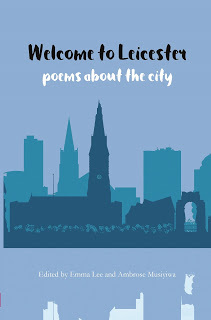
Review by Simon Cole of "Welcome to Leicester," ed. Ambrose Musiyiwa and Emma Lee, and "Born to Run," by Bruce Springsteen

Home Thoughts From Abroad


Holiday reading is important to me. It has to be a conscious choice as the pile of books by the bedside gets bigger, and the time available to read them gets smaller. So a half term break saw two choices make the cut. Springsteen's Born To Run, and Welcome to Leicester: Poems about the City.

Springsteen has produced a magnificent rollicking read, as he heads from sleeping on the beach surrounded by all of his few possessions to mega stardom. Along the way he hasn't lost his sense of humour, of irony and of who he has lost along the way. His descriptions of his battles with himself and his depression are vivid and moving. 

Having engaged with The Boss, I turned my mind back to Leicester, taking myself very quickly from Asbury Park, N.J. To Spinney Hill Park, LE5. Early on in the Welcome to Leicester anthology Paul Lee recalls Spinney Hill Park, in 'her green lap', he recollects how

delighting feet sloshed through
The dew-slick flood of grass

I was hooked. I loved the evocations of places I knew as a child, and know now. The cinnamon scents washing over the Caribbean Festival, the colours and tastes of the Belgrave, THAT view of Old John from the top of London Road and late night in Granby Street. That is a scene that every police officer who has ever worked the night time economy would recognise as Julia Wood describes 'The cash-machine drunks on the pavement.'

There are two omnipresences throughout that are brought to life. The unblinking oversight of a dead King, and the inspiring tale of the fox that was an underdog. 'We've won the bloody football', writes Steve Wylie, 'while policemen laugh', before expressing guilt that he isn't exactly sure who one of the heroes adorning the lampposts in the city actually is! The sense of sport bringing together all sorts of people from all sorts of backgrounds is writ large throughout. It does capture what it felt like to be in Leicester as the impossible happened, as people danced in the street, as tears were shed, as Nessun Dorma rang out, and as one in four of the population headed for Victoria Park to sing and shout and cheer themselves hoarse. I suppose that as I write this I appear to have 'something in my eye'. The poems capture that feeling very emotively.

Overlooking all is one man. Whilst I would love that man to be the chief constable it is, of course, Richard the Third. 'A pile of bones, Both regal and diminished', a Plantagenet, a resident of York, a talisman, a commentator, a source of inspiration. In Charles G Lauder Jr's 'The City' he is the King hailed by the City one day, before his 'usurper' is festooned the next. Together with the bespectacled 'Italian alchemist' Ranieri as his Caesar, the miraculous discovery of the King in the car park runs as a driving force for a renaissance of civic pride.

For me the biggest theme is of belonging. Poets describe a search for a place to be home, where they can be themselves. Farhana Shaikh writes 'To Leicester Where We Belong', and of her grandparents arriving with just a single suitcase to their name. Some of the language and places of the past used in many poems reminded me of my own grandmother, Leicester born and bred. She would recognise the sounds of the market, the stories of those that make things, the chance to look out from the City into the county beyond. The image of Hui-Ling, Chen's 'Night Swans on the Grand Union Canal' would have resonated with her.

So what's not to like? Inevitably some of the writing grabbed me, and some didn't. In a collection of almost 100 poems and 150 pages that is unsurprising. I felt that some of the footnotes were a bit utilitarian and unnecessary; part of the joy of reading new things is finding out what is being alluded to for yourself.

What I loved most was the swirl of images and names that look like the place that I live and work in every day; the Diwali wheel, Idi Amin, The Big Issue, Windrush, suffragettes, hope, DNA, DMU, Attenborough, Watermead Park, the Haiku hike around Aylestone Meadows and even some policing. I especially loved the stately dance of Maria Ronner's 'On A Bus', as cultures meet, and the niqab and woolly hatted anorak find out a way to get along.

So, as I sat far away watching waves roll endlessly into a foreign beach, I found myself back in landlocked Leicester. Perhaps Browning should have written 'O, to be in Leicester' as he reflected on his home thoughts from abroad.

As Rob Gee shouts 'I am from Leicester, and I can do anything.' I have even got my own pen and paper, well... laptop... out and have started scribbling down some poems of my own, me ducks!

Notes:

1. Welcome to Leicester is available from Dahlia Publishing: http://www.dahliapublishing.co.uk/2016/09/welcome-to-leicester/
2. See also, Kershia Field’s review of Welcome to Leicester, http://everybodysreviewing.blogspot.co.uk/2016/10/review-by-kershia-field-of-welcome-to.html and Eliot John’s review of the anthology, http://everybodysreviewing.blogspot.co.uk/2016/10/review-by-eliot-john-of-welcome-to.html
4. See also Ambrose Musiyiwa's blog post on the anthology, http://ambrosemusiyiwa.blogspot.co.uk/2016/09/new-poetry-anthology-celebrates-city-of.html

About the reviewer
Simon Cole QPM is Chief Constable of Leicestershire Police. 

Wednesday, 26 October 2016

Review by Kershia Field of "Welcome to Leicester," ed. Emma Lee and Ambrose Musiyiwa


[This is the second of two reviews we're running on this new anthology. You can read the first here.]

When I left Leicester after living there for three years I was utterly convinced that nobody would love it as much as I do. The new Welcome to Leicester anthology has proved me wrong. It captures the remarkable and the completely normal about the city so beautifully that I realise now that Leicester stays with each and every person who passes through it.

I thought I knew everything there is to know about Leicester, its history and its culture. Once again this collection corrected me. Reading it is a wonderful, educational experience that only makes me feel closer to the city, rooting me in its fascinating past with poems like Andrew Button's “Ratae Corieltauvorum” and “Ruins steeped in history” by Norbert Gora.

Having only left Leicester a few months ago, I’m still very much homesick for the city. This collection allowed me to fall in love again and again with each page and by the end, it’s as though I’ve been back and visited the city itself. Each poem feels like a personal connection, like it was written just for me. I can hear the Leicester market place, I am part of the hustle and bustle of shoppers in the Highcross, I can smell fireworks after the Diwali celebrations, and if I close my eyes I am walking along Julia Wood’s perfect depiction of Granby Street.

Not being a football fan myself and knowing nothing about the game, I wasn’t particularly bothered by Leicester winning the Premier League this year. What I did love, though, was that the city came alive. People came from all over to our city to celebrate the success of underdogs. It resonated with thousands and that’s something that definitely shines through in “The Art of Winning” by Jayne Stanton and also “On Leicester winning the premiership” by Rob Gee.

It’s impossible to pick a favourite from the collection and I suppose that makes sense. It’s impossible to pick one part of Leicester that I love the most. Perhaps the best thing about the collection is the sense that everyone who has taken part feels proud of the city and it’s not hard to see why. Leicester belongs to everyone from all walks of life: it’s home, it’s beautiful and now everyone can have a small piece of it to keep.


About the reviewer
Kershia Field is a twenty-one-year-old poet currently working on her first poetry collection based on Mental Health and the stigma surrounding it. She has her own blog at http://kershiadoespoems.blogspot.co.uk/


Tuesday, 18 October 2016

"Iraqi culture and arts in Leicester: Everybody’s Reading Festival" by Malka Al-Haddad


Written by Malka Al-Haddad, this article was first published in Alhadath International Agency, and was translated from Arabic by Malka Al-Haddad and Alexandros Plasatis

Iraqi culture and arts in Leicester: Everybody’s Reading Festival  


Malka Al-Haddad


The 7th Everybody’s Reading Festival took place across many cultural centres in the city of Leicester, from 1-9 October 2016. There was an Iraqi representation at the festival from its opening day, as postcards with poems, including the Children of War by the Iraqi Malka Al-Haddad, had been given out by poets at Leicester Railway Station. That was part of the event “Journeys: pop up poem library”, which ran throughout the festival. On every postcard there was a poem taken by the book Over Land, Over Sea: Poems for Those Seeking Refuge, an anthology of poems edited by K. Bell, E. Lee and S. Logan, and published by Five Leaves.
    
The Railway Station was chosen as the setting for this event, as organisers wanted to inspire the commuters with a different journey, that of immigrants and refugees, suffering on their journey across counties, the sea and the forests, putting their lives in danger to reach safety and live a peaceful life, fleeing from wars and sectarian conflict that forced them on risky and daring trips.
   
The event was a success and the postcards run out long before the end of the festival.  

During the festival’s seventh day, the African Caribbean Centre hosted the launch of an anthology of poetry entitled Welcome to Leicester, edited by Emma Lee and Ambrose Musiyiwa, and published by Dahlia Press. The subject of this book is to show how this city welcomes all people and especially refugees and immigrants. About 50 poets from Britain have contributed to this anthology, which features two poems by Malka Al-Haddad who represented the Union of Iraqi Writers. Malka’s poems describe the aspects of the lives of immigrants and refugees: their suffering in their homeland, and their grief when finding themselves in the new country mixed with love and hope to make this new country their homeland, as the old country was shattered, destroyed by war, discrimination and conflict.   

On the ninth day of this festival, there was a strong presence of Iraqi culture in an event called “Walls”, organised by the People’s Art Collective and hosted by New Walk Museum and Art Gallery – one of the first public museums in the UK, opened in 1849. Malka Al-Haddad was involved in three parts of this event.

Firstly, in a documentary film about Iraq, Noble Najaf, which was screened in The Lord Mayor’s Room. Directed by the French filmmaker Morgan Railane, produced by Al Hikmat Foundation in Iraq, it was translated from French to Arabic by Dr Mohamed Alkaraishi. The film focused on the city of Najaf, Cultural Capital of Islam for 2012, and the holiest city of Shia Islam as well as the centre of Shia political power in Iraq. The film unveils historical, political, religious and cultural aspects of Najaf City. It shows how the city was rebuilt and restructured after being bombed during the American invasion in 2003 and how the Mehdi Army fought the Americans in order to get them out of Iraq and gain independence, and how, later, the city sent ambassadors to European countries for cultural exchanges and introducing Najaf as the capital of Islamic culture and the holy centre of the Shia faith, where the Libraries still hold ancient manuscripts. It showed how the clerics hold high and powerful positions in Iraq and how all people in the city follow and obey them, how they influence the decision-making of the Iraqi government, and even how they guide ordinary people in aspects of their everyday life. Finally, the film shows Najaf’s arts and culture and how NGO charities attempted to develop women’s rights.
  
After the film, Malka Al-Haddad – who appears throughout the film, back when she was the director of Najaf’s Women’s Centre for Culture and Art – explained to the audience how Najaf is at risk from potential future Isis actions and the goal of Isis is to destroy this city and destroy the Islamic culture because the faith of this city is different from the beliefs of Isis.

In another part of the museum there was another event, with poets, musicians, and storytellers, and Malka read her poems and presented some of her artwork.

It was an honour for the Iraqi poet Malka Al-Haddad to represent her culture in such a prestigious place in this city, the New Walk Museum and Art Gallery.

Despite the pain and sadness in Iraq, the voice of the Iraqi people, through culture and the arts, managed to be heard in this European multicultural city. Iraqi culture was the smile of hope for Iraqi people who live in exile and, for Malka Al-Haddad, the experience of taking part in Everybody’s Reading Festival was like listening to Ishtar guitar.           


About the writer
Malka Al-Haddad is an Iraqi poet, academic and defender of Human Rights. Registered with Front Line Defenders, she has lived in Britain since 2012. She is member of the Union of Iraqi Writers, Director of the Women’s Centre of Culture & Arts in Iraq, and was one of first delegates to the US for the Iraqi & American reconciliation project. Currently, she is an activist with Leicester City of Sanctuary and Leicester Civil Rights Movement. https://www.frontlinedefenders.org/en/profile/malka-al-haddad


About the co-translator
Alexandros Plasatis is an ethnographer and writes fiction in English, his second language. Some of his stories have been published in Overheard: Stories to Read Aloud, Unthology, Crystal Voices, blÆkk, and (forthcoming) Total Cant. He has a PhD in Creative Writing and is working on the creative writing project Write Here: Sanctuary with Cities of Sanctuary and Writing East Midlands, aiming to find and develop new creative talent within the refugee and asylum seeker community in Leicester.