Showing posts with label rob mclennan. Show all posts

Monday, 21 June 2021

Review by rob mclennan of "wifthing" by Pattie McCarthy


           margerykempething

           not getting any closer to the offing
           margery kempe gives birth in a hairshirt
           a wifthing par excellence   a female patience
           figure in her fourteenth confinement
           a comfortably finds a delusion that suits
           her status & lets no one come near or else she might
           shatter herself into a shardy mess
           in lieu of an education   margery
           kempe learns her prayers by heart & by rote
           & maybe she mums them while chained
           up in a stockroom in her postpartum
           your daughterthing is sound
           asleep your little
           girl is sound

It is interesting to see the finished, full version of Philadelphia poet Pattie McCarthy’s wifthing after spending time previously examining two of the collection’s component parts as simultaneously-produced chapbooks: margerykempething (2017) and qweyne wifthing (2017). What had been seen as separate structures is now built into a larger, uninterrupted, single-length work: a suite of twenty-five individual poems each titled “margerykempething” that leads into a suite of twenty-five individual poems each titled “qweyne wifthing,” before leading into a suite of thirty individual poems each titled “goodwifthing.” Presented as a single, book-length suite made up of short poems instead of as three distinct, discrete suites, how does one thread bleed into the other? 

Throughout wifthing, McCarthy blends contemporary perspectives with Medieval experiences in the terrain of women through mothering, daughtering and the dreaded, dissolute “thing-ness” of how female work, thought, action and birth have been devalued generally and, very specifically, cited as little more than the property of men. She writes a dialogue of previously unspoken, unrecorded and unheralded women and their experiences, writing to recover the absences and dismissals of history. “you get what you get & you don’t get upset,” she writes, in an early “margerykempething”: “margery kempe gives birth in a hairshirt / queen victoria in a shift nightdress / gives birth nine times & then her daughterthing / gives birth in same            a braid with & against / the wisp              patience is not her pigeon.” Or, as the poem that immediately follows opens: “there were two types of daughterthings     the ones / who purposely stepped on ginkgo ovules / & the ones who picked their ways around them.” She writes on female agency, from childhood to marriage; she writes on female desire, sexuality, motherhood and the complications that can arise postpartum. 

Engaged with deep and ongoing research, McCarthy explores the lives of Medieval women, writing the two sides of the long view: “you are the shape of my midlife crisis / margery kempe             where is your body / the cairn to mark you,” she writes, early on in the collection. As she cited in the chapbook edition, “margerykempething” took its title from the Book of Margery Kempe, the manuscript of which sits in the British Library. It is an edition that sits as a single copy, giving Margery Kempe the title of “first English autobiographer.” When a digital version of “medieval mystic” Kempe’s manuscript was released online in 2014, Alison Flood wrote in The Guardian: "Kempe lived in Norfolk from around 1373 to 1440. After she had given birth to 14 children, she made a vow to live chastely with her husband, and embarked on pilgrimages to Jerusalem, Santiago de Compostela, Italy and Germany. Her devotion was expressed through loud cries and roars, which often irritated bystanders, but she became famous as a mystic, and claimed to have conversations with God ... Biggs said the memoir, which has just been digitised by the British Library, was 'perhaps the first autobiography written in English,' and is also 'a remarkable record of the religious life of a woman during the tumultuous 14th and 15th centuries.'"

McCarthy herself cites the 2000 Longman edition as her source for quotations, but the 1985 Penguin edition, her “undergrad copy,” as her “sentimental source,” writing out the details of Kempe in a line both straight and slant. The second suite, “qweyne wifthing,” centres itself not on a singular specific text or individual, but on multiple, citing David Baldwin’s Elizabeth Woodville: Mother of the Princes in the Tower and Linda Simon’s Of Virtue Rare: Margaret Beaufort, Matriarch of the House of Tudor

McCarthy has worked into and through the terrain of Medieval mystics, women, their labour, tales of mothering, birth and other related topics throughout the whole of her published work-to-date, all of which have appeared with Berkeley publisher Apogee Press: bk of (h)rs (2002), Verso (2004), Table Alphabetical of Hard Words (2010), Marybones (2013) and Quiet Book (2016). As she spoke of her interest in Medieval subjects as part of an interview for Touch the Donkey: "I’ve been in love with the medieval for most of my life. This definitely has something to do with attending Catholic school—the art! The syntax of Catholicism, too, led me to studying the medieval. I think that most people are irrationally attracted to certain historical periods. The way medieval literature & art employ narrative—fragmented or episodic narrative, specifically—also the sense of simultaneity, layers of time in the work—it makes sense to me. On a more personal note, the lives of the saints were like fairytales for me. I mean, when I was a little Catholic schoolgirl we learned about all the girl-saints, about Mary—& those stories stuck to me. My school taught us a great deal about medieval women mystics, about Joan of Arc, about anchoresses in their cells, & it was very ‘cult of the virgin’ when it came to Mary (at least as far as I remember). Even as a child I think I understood that those stories all had to do with power, with women’s bodies, with literacy. I think the nuns taught us about the mystics to counteract 'woman is a temple built over a sewer' & 'woman is defective & misbegotten' & the rest of the church fathers (which I also remember well, clearly). When I walk into The Cloisters or the Musée de Cluny or the medieval galleries at any art museum, I want to sit down & think & be quiet. I feel that way in medieval churches as well—it’s what left of religion for me."


About the reviewer
Born in Ottawa, Canada’s glorious capital city, rob mclennan currently lives in Ottawa, where he is home full-time with the two wee girls he shares with Christine McNair. The author of more than thirty trade books of poetry, fiction and non-fiction, he won the John Newlove Poetry Award in 2010, the Council for the Arts in Ottawa Mid-Career Award in 2014, and was longlisted for the CBC Poetry Prize in 2012 and 2017. In March, 2016, he was inducted into the VERSe Ottawa Hall of Honour. His most recent poetry titles include A halt, which is empty (Mansfield Press, 2019) and Life sentence (Spuyten Duyvil, 2019), with a further poetry title, the book of smaller, forthcoming from University of Calgary Press in April 2022. An editor and publisher, he runs above/ground press, periodicities: a journal of poetry and poetics and Touch the Donkey. He is editor of my (small press) writing day, and an editor/managing editor of many gendered mothers. In spring 2020, he won ‘best pandemic beard’ from Coach House Books via Twitter, of which he is extremely proud (and mentions constantly). He spent the 2007-8 academic year in Edmonton as writer-in-residence at the University of Alberta, and regularly posts reviews, essays, interviews and other notices at robmclennan.blogspot.com

This review was first published on rob's blog here.

You can read more about Pattie McCarthy's wifthing on Creative Writing at Leicester here.


Tuesday, 25 October 2016

Review by rob mclennan of "Silvija" by Sandra Riley


After the diminishing / dirt body kicked against kitchen wall /


Kept alive / what mercy has lessened / quietened as we speak


Of light / spoiled / cry-babying / a bunkum transubstantiated


Our cunning remains within. (“FARTHER / FATHER”)


Ottawa poet (by way of Saskatchewan) Sandra Ridley’s fourth trade poetry title is Silvija (Toronto ON: BookThug, 2016). Following her collections Fallout (Regina SK: Hagios Press, 2009), Post-Apothecary (Toronto ON: Pedlar Press, 2011), and The Counting House (BookThug, 2013), Silvija is a book-length suite broken into “five feverish elegies,” composed as a “linguistic embodiment of the traumas of psychological suffering, physical abuse, and terminal illness.” Ridley’s poetry has long managed to be remarkably precise in detail while concurrently evasive, and yet, the poems that make up Silvija can be seen as incredibly revealing, writing:


You are no less dangerous than you were as you drag


Your bones / field stones / we never once wept upon


The firmament / eight children left with the lone wife


Who would not carry the quiet / the final cardiac pall


Paled thirty years / crescent moons / scars strapped


Below the heart. (“FARTHER / FATHER”)


The poems in Silvija still manage to maintain her particular flavour of evasiveness. Ridley’s Silvija takes its title from the name of her dedicatee, a “Silvija Barons,” coupled with dictionary definitions of “Silva” and “Silvan, Silvana, Silvanæ” that open the collection, suggesting a compounded definition involving a wooded area, a creature from a wooded area and the writing produced about a wooded area. Still, Silvija includes elements that are possibly more revealing than her previous collections, exploring and attempting meaning out of a poetry of violence, trauma and healing, and furthering her capacity for the book-length exploration. And, as much as her elegies hold together as a single, extended unit, two sections were actually composed as part of other projects, such as the section “CLASP,” composed as a response to Gatineau artist Michèle Provost’s multiform art installation, “Playlist,” or an early version of “VIGIL / VESTIGE” commissioned as “an engagement with Petro Isztin’s photo installation, ‘Study of Structure and Form.’”


While the effect of Ridley’s short phrases staccato and accumulate into a complex tapestry that refuses anything straightforward, the emotional content is raw, savage and brutally stark. There are epistolary elements to Silvija, writing a narrator speaking intimately and directly to an unnamed and shifting “you,” and the poems reveal a furious content of trauma and grief, pushing to comprehend and, ultimately, heal as best as possible. As she described, quickly, her first three collections in an interview at Jacket2: "the downwind effects of nuclear radiation in Fallout, medical incarceration, and the archaic and experimental treatments for tuberculosis and mental illness in Post-Apothecary, the trauma(s) of a relationship gone wrong in The Counting House,Silvija writes out the trauma of loss, whether through physical and emotional abuse or death, composing four sequences – “FARTHER / FATHER,” “CLASP,” “VIGIL / VESTIGE” and “DIRGE” – that are surrounded by fragments of the fifth and final section, “IN PRAISE OF THE HEALER.” Via this simple thread, she holds the book together through a kind of mantra, or Greek Chorus, allowing that for whatever elese has occurred, healing, and even resolution, is possible (and the “healer” requires acknowledgment): “You give my hands the weight of your body. // Rest in me. // What I mean is this is where I choose to die.” What becomes so compelling is the understanding that it is through the very act of writing that allows the entire healing process, as she writes: “If you can’t speak / write in a fissured / alter-language / Of nerve-matter.” Indeed.


You and I—confined to our scrying room. Every falter of the limbs and every muscle of the face exposed to view. You are what I am. You cause as much sorrow. In what worse way could we vent this rage than by beating this head against these walls?


Sing for me. You seized the words out of my mouth—who suffers the most? You keep it all in. Noise—no noise. You upset me, baby. And you can’t do that.


We’re never left alone. Consider what the means are—we can’t lose what we haven’t ever had. You asked for it. You won’t get mercy. You are no more a whisper. (“CLASP”)

About the reviewer
Born in Ottawa, Canada’s glorious capital city, rob mclennan currently lives in Ottawa. The author of nearly thirty trade books of poetry, fiction and non-fiction, he won the John Newlove Poetry Award in 2010, the Council for the Arts in Ottawa Mid-Career Award in 2014, and was longlisted for the CBC Poetry Prize in 2012. In March 2016, he was inducted into the VERSe Ottawa Hall of Honour. His most recent titles include notes and dispatches: essays (Insomniac press, 2014), The Uncertainty Principle: stories (Chaudiere Books, 2014) and the poetry collection If suppose we are a fragment (BuschekBooks, 2014). An editor and publisher, he runs above/ground press, Chaudiere Books, The Garneau Review (ottawater.com/garneaureview), seventeen seconds: a journal of poetry and poetics (ottawater.com/seventeenseconds), Touch the Donkey (touchthedonkey.blogspot.com) and the Ottawa poetry pdf annual ottawater (ottawater.com). In fall 2015, he was named “Interviews Editor” at Queen Mob’s Teahouse. He spent the 2007-8 academic year in Edmonton as writer-in-residence at the University of Alberta, and regularly posts reviews, essays, interviews and other notices at robmclennan.blogspot.com


Tuesday, 27 September 2016

Review by rob mclennan of "departures" by Dennis Cooley


because it does not hum where it turns
because it does not ring like glass
because it does not sound in diapason
because it does not want to let things stray
because it tries to bind all things
because it wants to gather them to music
because it blinds all creatures into believing
they might for a wisp of light slow the protein


it is not love but proportion
holds them together
keeps them from flying
             apart keeps them
             from having
                                 to leave


yet of attraction what are we to speak
if it were not for repulsion
we would pass through empty space
pass right through one another
it is only repulsion lets us near


With his latest collection of poetry, departures (Winnipeg MN: Turnstone Press, 2016), Winnipeg poet, editor and critic Dennis Cooley explores “his own mortality” following a health crisis. As the online catalogue copy for the book reads: “Recovering in hospital after a burst appendix, plagued by hallucinations and poisonous mistrust, Dennis Cooley retreats to memories of ancestors and of his rural Saskatchewan roots, in departures, his 20th book of poetry.” As the collection opens: “then, Winnipeg, hospital, / the Victoria, jumbled, / didn’t know / where or when.”


Regular readers of Cooley’s work have long been aware of his expansive book-length projects, each constructed around a set of specific ideas, themes or subjects, composed as collaged-manuscripts that stitch and weave their punning and playful ways, whether writing on the foundations of civilization against his prairie in the stones (Winnipeg MB: Turnstone Press, 2013), his late mother in Irene (Turnstone Press, 2000), vampire lore, literature and legend in Seeing Red (Turnstone Press, 2003), the alphabet-play of abecedarium (University of Alberta Press, 2014) or the histories and legends of Manitoba outlaw John Krafchenko in Bloody Jack (Turnstone Press, 1984; Edmonton AB: University of Alberta Press, 2002). What becomes curious, the further Cooley releases poetry collections, is the subtle evolution of his book constructions, as each collection of poems is held together through structure, theme and ideas, some of which are quite clear, and others, far more subtle. While earlier collections might have functioned more as collaged or quilted sequences, departures manages to exist as, deliberately, a more fragmented (and even, seemingly random) suite of predominantly-untitled poems, sketches and reports, as well as being held very close together through his ongoing meditations and inquiries, medical reports and retellings, and tweaks and quirks of language only Cooley could construct. He writes: “They enact procedures. Reduce bandages, extract tubes. Ease / the hooks, unflesh lures and barbs. Cut off the brightness, / little by little lift him off. un-net him onto water. Leave the / knife by his side.” Further, playing off the abbreviation “DNA” against “Canada,” writing a lovely, only-Cooley riff that even references, ever slightly and slyly, the work of another:


                                                          and Megan
                                                          and Diane
                                                          and Dana
                                        so also an an
                                        a nada under
                                        can ada among
                                        the canaanites
known also as phoenicians
who found themselves lost
at sea at a loss for words


In an interview with Jonathan Ball (dated 2003; posted 2010), Cooley talks of some of the construction of his poetry collections:


Ball: "Most, if not all, of your collections are organized around a theme, concept, or semi-narrative, though you delight in diverting yourself from this loose 'topic.' What is it that you find attractive about these conceptual threads, and why do you indulge yourself in digressing to such a great degree in the published work?"


Cooley: "For me, it’s a way of generating texts. It gives me a site to research, to see what the possibilities are; there’s a kind of focus in thinking about a terrain, saying, 'what can be done in this area.' I find it really generative, and because it works so well for me I always recommend it to others. Find a site, and then play off it to see what the possibilities of it might be. If you write a balloon poem, well, maybe you’re interested in doing a series, and maybe this extends into a notion of flying things, or rubber things, or symbols of innocence, or whatever—you often find all sorts of things by accident. I got into the Dracula poems because I was writing a series of fairy tale poems, some of which became Goldfinger, and as I was reading and working there I thought, okay, well, what else might I write? and I thought of Dracula and how he was sort of a fantasy figure, and I wrote a Dracula poem, which I don’t think is in the collection now because I willfully pulled it, because there’s just so much stuff to draw from. So I wrote that and I found myself writing a bunch of Dracula pieces, they just went on and on and on, I started about 1989 I think."


departures is a collection of, as the copy says, “hallucinations and poisonous mistrust,” but also a meditative exploration of big ideas attached to a health crisis, setting his thematic boundaries and then routinely crossing them, writing his health and his history, and multiple points both aside and between. “It is not fibrous,” he writes, “there are no veins or threads. It is smooth but it is not shiny or slick. It glows it seems with its own light, light green to yellow, shape of a rootless molar. A gumdrop.” He continues:
 
                 A phosphorescent gland, green and golden very deep he follows down, a bit slough in Saskatchewan seven or eight feet deep. He can feel it pulse. He can almost see through it.
                 Another time an old computer, hot and smelling, in oil and huzz. It contains occult lore, formulae, health records.


Towards the end of the collection, he writes: “Cooley re-enters / the coiled and calling world / carries with him / a slashed and bulging stomach. […] his appendix / has up & left him / he will not miss it / one little bit.” In Cooley’s hands, books can percolate and expand for years before seeing print, with some earlier fragments of the collection appearing in his sunfall: new and selected poems 1980-1996 (Toronto ON: Anansi, 1996). Just how long ago did his appendix actually burst?


Look. There’s the man in the moon.
His dad holds him up in his right arm.
Do you see the man in the moon?
No, he said, the small boy said, disappointed.
He could not see him.
He tried hard but he could not
see the man in the moon.


About the reviewer
Born in Ottawa, Canada’s glorious capital city, rob mclennan currently lives in Ottawa. The author of nearly thirty trade books of poetry, fiction and non-fiction, he won the John Newlove Poetry Award in 2010, the Council for the Arts in Ottawa Mid-Career Award in 2014, and was longlisted for the CBC Poetry Prize in 2012. In March 2016, he was inducted into the VERSe Ottawa Hall of Honour. His most recent titles include notes and dispatches: essays (Insomniac press, 2014), The Uncertainty Principle: stories (Chaudiere Books, 2014) and the poetry collection If suppose we are a fragment (BuschekBooks, 2014). An editor and publisher, he runs above/ground press, Chaudiere Books, The Garneau Review (ottawater.com/garneaureview), seventeen seconds: a journal of poetry and poetics (ottawater.com/seventeenseconds), Touch the Donkey (touchthedonkey.blogspot.com) and the Ottawa poetry pdf annual ottawater (ottawater.com). In fall 2015, he was named “Interviews Editor” at Queen Mob’s Teahouse. He spent the 2007-8 academic year in Edmonton as writer-in-residence at the University of Alberta, and regularly posts reviews, essays, interviews and other notices at robmclennan.blogspot.com


Saturday, 16 July 2016

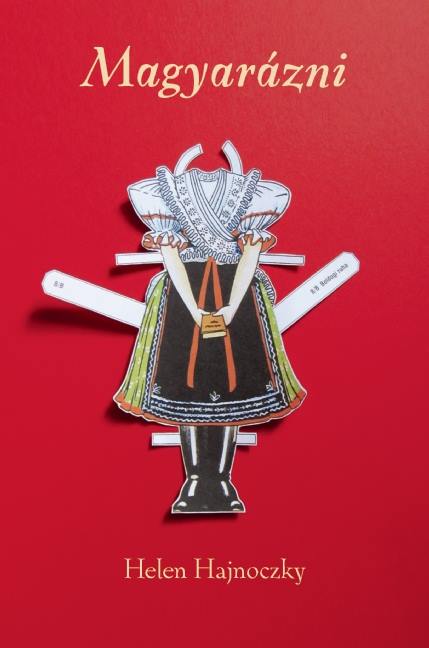
Review by rob mclennan of "Magyarazni" by Helen Hajnoczky


Nem

No, Hungarian is not a gendered language,
but no, you do not want to play Joseph in the
goddamned Christmas play again this year!

No, you’re not jealous that no on asks her which
bathroom key she wants, even though
you’ve been asked this while wearing a skirt.

No, no long hair, no stockings,
no heels, no tailored shirts. No way to indicate
them, no not them, not her, not him, just them.

No, she always gets to play Mary, and no,
you do not want to play a goddamned
shepherd either!

Just no.


In an interview posted over at Touch the Donkey, Calgary poet (recently returned to the city after an extended period schooling in Montreal) Helen Hajnoczky discusses her second trade poetry collection, Magyarázni (Toronto ON: Coach House Books, 2016):


Q: I’m curious about the Magyarázni poems: you speak of a difficulty in part, that came from writing out your relationship with your cultural background and community. What prompted you to begin this project, and what were your models, if any? I think of Andrew Suknaski writing out his Ukrainian and Russian backgrounds, for example, of even Erín Moure exploring the language and culture of the Galicians. And might Bloom and Martyr have progresses so quickly, perhaps, due to it being a kind of palate cleanser? 

A: Magyarazni germinated for a long time. There’s a wood chest in my parent’s house that my dad carved, and the tulips in his design are what inspired my project originally, particularly the visual poetry in the book. I started doodling tulips in the margins of my school notes with letters at their centre, with the accents used as stamen, long before I had really been introduced to visual poetry. The moment that sparked the project, though, was one night when my dad and I were up late chatting about when he, his sisters, and his mother left Hungary after the ’56 revolution and I thought “I should really write this down.” So, I went and typed up everything he’d said and made a little chapbook of it for him. I wanted to do something more on the topic though, and was fortunate to get a grant for the visual and written poetry book and to travel around Western Canada interviewing people who’d come during or after ’56, or whose family had done so. Originally I’d thought of including the interviews and poems in one book, but the interviews are numerous, long, and detailed and really deserved to be their own thing (which I’m still slowly working on). Though I didn’t use anything from the interviews in this book the people who so generously told me their stories definitely influenced me and the writing of MagyarázniFor more poetic influences though, Oana Avasilichioaei’s book Abandon, and the way she deals with cultural identity and nostalgia had a huge influence on me. The way Fred Wah’s writes about cultural identity, how that’s tied up with family, and the way he sets all this against the backdrop of the prairie all strongly informed the way I approached writing this book too—there’s a lot of Calgary in Magyarázni. Additionally, in 2007 Erín Moure and Oana Avasilichioaei spoke at the UofC for Translating Translating Montréal, and I have this fuzzy memory of them discussing translating words based on a feeling of the word or based on a word in a third language that the word in the source text reminds you of (I can’t remember precisely what they said and I don’t want to misquote them or misrepresent their ideas, but I believe the discussion was something along these lines), and this idea was key in the writing of Magyarázni. For example, the poem “Belváros”—the word translates into English as “inner city” (so, downtown), but I always hear it as ‘beautiful city,’ because in French ‘belle’ means beautiful. I went to a French immersion elementary school and I started hearing the word that way as a little kid, and I still hear it that way, not as inner city but as beautiful city. Because the project struggles to answer the question of how much one person’s experience of a language or culture can be representative of a community as a whole, I thought it was important to include these little hyper-personal feelings about words in the manuscript.


The author of numerous chapbooks, Hajnoczky’s first trade collection appeared as Poets and Killers: A Life in Advertising (Montreal QC: Snare/Invisible, 2010) and a portion of her manuscript “Bloom and Martyr” was selected for the 2015 John Lent Poetry-Prose Award, to be published as a chapbook by Kalamalka Press “in spring 2016.” 

As the press release for Magyarázni informs us: “The word ‘magyarázni’ (pronounced MAUDE-yar-az-knee) means ‘to explain’ in Hungarian, but translates literally as ‘make it Hungarian.’ This faux-Hungarian language primer, written in direct address, invites readers to experience what it’s like to be ‘made Hungarian’ by growing up with a parent who immigrated to North America as a refugee.” Bookended by the poems “Pronounciation Guide” and the prose poem “Learning Activities,” Magyarázni is composed as a stunning, lush and lively abecedarian, and each poem appears with a corresponding visual poem in resounding red and black. There is an element of “coming-of-age” to this collection, as the author/narrator works to reconcile the past with the present (and future), from a childhood built by Hungarian language and culture (from her parents’ own stories to her own engagements with cultural heritage), and how such foundations now require translation and explanation, even as she attempts to reclaim those same histories. Magyarázni writes her childhood home, her parent’s homeland and her time spent in Montreal (as in the poem “Zibbad,” as she writes: “You’ve been here longer now / than you were ever there and then some”), writing embroidery, linen, memory and grief.


Cukorka

Your reflection
      splintered in foil
these solemn treats

this bitter history
sugary sweet

unhooked from the tree
you melt

a plastic angel dipped
in flames, blurred
      and bubbling

you unwrap
the old world
          you chew
    and smile

        you don’t swallow
until they look away.


The poems are composed as someone caught between two poles, still navigating the blend of culture and cadence of language, family and belonging. The extended paragraph-poem “Learning Activities,” a poem that closes the collection, ends with: “Please note that W is not a true Hungarian letter. Please note that X is not a true Hungarian letter. Please note that Y is not a true Hungarian letter. Cut the sickle and hammer out of a communist-era Hungarian flag. Tell me, do you miss speaking Hungarian? That is, do you miss your father?”


About the reviewer
Born in Ottawa, Canada’s glorious capital city, rob mclennan currently lives in Ottawa. The author of nearly thirty trade books of poetry, fiction and non-fiction, he won the John Newlove Poetry Award in 2010, the Council for the Arts in Ottawa Mid-Career Award in 2014, and was longlisted for the CBC Poetry Prize in 2012. In March 2016, he was inducted into the VERSe Ottawa Hall of Honour. His most recent titles include notes and dispatches: essays (Insomniac press, 2014), The Uncertainty Principle: stories (Chaudiere Books, 2014) and the poetry collection If suppose we are a fragment (BuschekBooks, 2014). An editor and publisher, he runs above/ground press, Chaudiere Books, The Garneau Review (ottawater.com/garneaureview), seventeen seconds: a journal of poetry and poetics (ottawater.com/seventeenseconds), Touch the Donkey (touchthedonkey.blogspot.com) and the Ottawa poetry pdf annual ottawater (ottawater.com). In fall 2015, he was named “Interviews Editor” at Queen Mob’s Teahouse. He spent the 2007-8 academic year in Edmonton as writer-in-residence at the University of Alberta, and regularly posts reviews, essays, interviews and other notices at robmclennan.blogspot.com.


Wednesday, 8 June 2016

Review by rob mclennan of "Conjugation" by Phil Hall

 
 "Orange chair    blue porch    white Stetson
am re-reading      Cold Mountain   translated by Red Pine


  woke to fog    a cremation dream    it is garbage day


Olson:     words made to taste    like accuracy    pincers
  the king birds are back    an osprey shrieks


in the wooded swamp    ice reigns yet    first the school bus


  no motor    no drive   passes    only one child so far    up front
then the Trueloves    would it hurt them to signal    bastards

 
   despair is elitist    do not count pages   forget    the work


w & k    both built   from 2 Vs   or 3   end up with only    or  deface the cartoon    until the joke    is fearful"


Perth, Ontario poet Phil Hall’s latest collection is Conjugation (Toronto ON: BookThug, 2016), a complex, engaged and expansive collection that continue his meditative explorations into the lyric fragment, collage, poetics and the deep self. “Conjugation,” according to one online source, is “the modification of a verb from its basic form,” and Hall’s poetry manages a deep and serious play in the way words are constructed, pulling apart the mechanics of language and how it interacts with ideas (a play that has, it would appear, deeply influenced the work of Ottawa poet Pearl Pirie). As he writes: “but there’s a fee / a fee that sees    & hears wonky // fe-ces   we’re were   subtler/fugues   etc.” Similar to Dennis Cooley, Hall engages the mis-heard word, the mis-step, and runs with it, managing to make connections where there otherwise might not have been.


Over the past few poetry collections, Hall has shifted from his more overt engagements with Ontario gothic/rural, including his own childhood and history of abuse, to a more overt engagement of multiples—poetics, “the prison of metaphor,” pulling apart the minutiae of language, personal history, direct observations and his immediate environment (including the Ontario wilds of his Perth homestead)—each holding similar weight throughout, woven together as a precise, dense and thorough series of ongoing threads.
 
Constructed out of an opening poem, seven suite-sections and a coda, the short poem-fragments in Conjugation follow a similar tone and structure set in a number of Hall’s poetry collections, and, as with much of his work, the poems within could be presented in a variety of orders. It becomes curious how an order built so carefully, with such precision, is also constructed to be opened at any page, and read in either direction. His poems are less narratives than a series of accumulations, and the order in which you interact with them might even bring you to an entirely different conclusion.


Hall has become known for his shuffling, reworking and reprising his work, giving the sense that his poems might be less “finished” than simply set in a particular way for a particular temporal, whether temporary or permanent, reason, including poems shuffled and re-set for the sake of a chapbook, a public performance or a trade collection. “Early versions,” as Hall himself writes in the acknowledgments, of elements of the first section, “Gap & Hum,” appear previously in his X (Thee Hellbox Press, 2013) and My Banjo & Tiny Drawings (Flat Singles Press, 2015). The fifth section, “Essay on Legend,” was originally produced as a 2014 chapbook through Mark Goldstein’s Beautiful Outlaw Press (Goldstein is also designer of this current volume, as well as many of Hall’s recent trade collections). Cobbled and stitched together from a variety of threads, found and salvaged lines and objects, his “Essay on Legend” begins with an anecdote about a dog, utilizing such as a starting-point for a sequence of observations on poetry, anecdote and violence, each circling around the very idea of “legend.” The chapbook version was produced in an edition of 52 copies “in commemoration of the second annual Purdy Picnic at the A-frame, Roblin Lake, Ameliasburgh, July 26, 2014,” acknowledging the late poet Al Purdy as one of Phil Hall’s long-standing touchstones. At the Ottawa launch of the chapbook in 2014, Hall spoke of starting out as a good Ontario “son of Al Purdy” poet that slowly began shifting towards Louis Zukofsky’s 80 Flowers (1978); from stories and the anecdote to “that purse sound of the vowel.”


About the reviewer
Born in Ottawa, Canada’s glorious capital city, rob mclennan currently lives in Ottawa. The author of nearly thirty trade books of poetry, fiction and non-fiction, he won the John Newlove Poetry Award in 2010, the Council for the Arts in Ottawa Mid-Career Award in 2014, and was longlisted for the CBC Poetry Prize in 2012. In March 2016, he was inducted into the VERSe Ottawa Hall of Honour. His most recent titles include notes and dispatches: essays (Insomniac press, 2014), The Uncertainty Principle: stories, (Chaudiere Books, 2014) and the poetry collection If suppose we are a fragment (BuschekBooks, 2014). An editor and publisher, he runs above/ground press, Chaudiere Books, The Garneau Review (ottawater.com/garneaureview), seventeen seconds: a journal of poetry and poetics (ottawater.com/seventeenseconds), Touch the Donkey (touchthedonkey.blogspot.com) and the Ottawa poetry pdf annual ottawater (ottawater.com). In fall 2015, he was named “Interviews Editor” at Queen Mob’s Teahouse. He spent the 2007-8 academic year in Edmonton as writer-in-residence at the University of Alberta, and regularly posts reviews, essays, interviews and other notices at robmclennan.blogspot.com

Thursday, 2 June 2016

Review by rob mclennan of "Saint Twin" by Sarah Burgoyne


"(A PRECARIOUS LIFE) ON THE SEA
the ocean you grew up watching has decided, finally, to take you in. “where else was i going to go?” you ask, setting off. it spews squid and minnows into your little boat for you to eat if you are hungry. you throw them back because you know the ocean is hungrier. at night, the moon casts a sidelong glance into your boat. you are less round. the ocean is delighted with your company. it carries you from place to place, each day a little easier, imagining your bright bones, sideways moons, it’ll use them as walking sticks."

The author of chapbooks through Proper Tales Press, Baseline Press and above/ground press, Montreal writer and editor Sarah Burgoyne’s first trade collection is Saint Twin (Toronto ON: Mansfield Press, 2016), a collection of, as the back cover informs us, “story poems, short lyrics, long walks, tiny chapters, and fake psalms.” A hefty poetry collection at nearly one hundred and seventy pages, Saint Twin is a curious mix of straighter lyric, prose poem and short fiction, blended together to create something far more capable than the simple sum of its parts. Part of the unexpected quality of Burgoyne’s surreal lyrics comes from the structures of her pieces, slipping prose beside more traditional line breaks beside dialogue/script. Whereas most poetry collections hold together through their structural connections (some of which are the result of editors and/or copy-editors), Saint Twin remains deliberately scattered, almost collaged, maintaining a strength far more evocative than whether the collection of poems maintain consistent capitalizations or punctuations, all of which speak to Burgoyne’s incredible capacity for putting a book together. Furthermore, while the book might be structured into eight sections, one has to seek out the connections through other means; poems from the second section, “Psalms,” for example, according to the contents page, exist on pages “10, 13, 18, 23, 27, 30, 36, 42, 48, 51, 57, 61, 63, 67, 72, 81, 99, 113, 116, 119, 124, 132, 137, 139, 142, 144, 147, 152.”
 
"NOT AS ASCENSION.
Torn up in the surgery of night. The buttering under of it. Seven halos away from becoming a sprig of something anointed. Never too few in the brooding door frames; the spoken-to lighting the walls. The corner-drawing minds buttoning silver horns of ancient wisdom. A voice: Dance with me, future loser, I love you. Hide under the table, I will call down the Lord without sulphur. To cast alms over our future mistakes."

I’ve been long intrigued at the options on how to construct a poetry manuscript out of scattered parts, aware that some who compose in chapbook-length units have set the units side-by-side for the sake of the book-length manuscript: Toronto writer Kevin Connolly’s first collection, Asphalt Cigar, is a good example of this, as are Kansas poet Megan Kaminski’s two collections, Desiring Map and Deep City (I’m less aware, with Kaminski, the chicken-or-egg of “which came first,” admittedly). Another poet, such as Stephen Brockwell, might have composed the individual pieces of his 2007 poetry collection The Real Made Up into  section-groupings, but resorted the manuscript into a single, book-length unit, allowing the final selection to blend together as a more cohesive single unit. What makes Burgoyne’s collection so unique is in how she somehow manages both sides of the structural divide, as one infers that the sections were composed as single-units (at least two of her section titles correspond with chapbook titles), whether as short lyrics or prose poems, but were re-sorted for the sake of the full manuscript: the uniqueness lies in her adherence to that earlier, compositional structure, while allowing the book to live (or die) on its own single-unit coherence.

The poems in Saint Twin contain multitudes, from surreal wisdoms, biting self-awareness and hard-won observations to a wry humour, dark prophicies and proclimations, and an incredible optimism, such as in the poems “MY NEIGHBOUR’S MISFORTUNE PIERCES ME / AND I BEGIN TO COMPREHEND,” “IT WAS NOT IN PARKS THAT I LEARNED HUMLITITY” and “HAPPY BIRTHDAY, IN A NICE WAY.” As she write to open the poem “TO THE MASTERS OF OUR YOUTH, GREETINGS”: “the last days of a person’s life are the same / as the first.”

"PERHAPS THE MUSEUM NEVER EXISTED
Maybe everything is good, after all.
The act of reading and the act of understanding
made it. The point is, relates to reality.
No wonder.

And what of this?
Precise laws. Behavior of individuals.
Unintentional walk. Map of maps.
Wheels on the table legs. The main activity
continuous drifting, these visions.

Dear professional juxtaposer,
maintain a division.
Cyberspace, I walked across it.
I’m a little disappointed.
Where the body is, at the corner."


About the reviewer
Born in Ottawa, Canada’s glorious capital city, rob mclennan currently lives in Ottawa. The author of nearly thirty trade books of poetry, fiction and non-fiction, he won the John Newlove Poetry Award in 2010, the Council for the Arts in Ottawa Mid-Career Award in 2014, and was longlisted for the CBC Poetry Prize in 2012. In March 2016, he was inducted into the VERSe Ottawa Hall of Honour. His most recent titles include notes and dispatches: essays (Insomniac press, 2014), The Uncertainty Principle: stories (Chaudiere Books, 2014) and the poetry collection If suppose we are a fragment (BuschekBooks, 2014). An editor and publisher, he runs above/ground press, Chaudiere Books, The Garneau Review (ottawater.com/garneaureview), seventeen seconds: a journal of poetry and poetics (ottawater.com/seventeenseconds), Touch the Donkey (touchthedonkey.blogspot.com) and the Ottawa poetry pdf annual ottawater (ottawater.com). In fall 2015, he was named “Interviews Editor” at Queen Mob’s Teahouse. He spent the 2007-8 academic year in Edmonton as writer-in-residence at the University of Alberta, and regularly posts reviews, essays, interviews and other notices at robmclennan.blogspot.com.

Thursday, 5 May 2016

Review by rob mclennan of "Quiet Book" by Pattie McCarthy


"& to & such a pretty bird. this is
the first sonnet for the third baby. if
I sound prepared for that, I am not.
let me know you’re all right in there, would you?
Kevin says : I dreamt it was a boy.
my brother says : your favorite presidents
cannot be F D R & Jefferson—
that’s illogical. Emmett says : when I
was pregnant with you, that was a tough week too.
Asher says : seashell, voilà.     & the third
(having outgrown a perfect, fragile world)
baby (     bird from brid OE from unknown
origin)        'because he was crying
I like him most of all,' says my son." 

(Pattie Mc Carthy, "x y z & &")


Philadelphia poet Pattie McCarthy’s sixth trade collection is Quiet Book (Berkeley CA: Apogee Press, 2016), a collection focused on domestic patter and patterns, writing on home and children, mothering and everything in-between. Constructed out of three sections—“x y z & &,” “notes for clothespin” and “genre scenes”—the poems in Quiet Book follow McCarthy’s previous poetry books—bk of (h)rs (Apogee Press, 2002), Verso (Apogee Press, 2004), Table Alphabetical of Hard Words (Apogee Press, 2010), Marybones (Apogee Press, 2013) and Nulls (horse less press, 2014) —for their formal invention and innovation, focus on women, mothering and the body, and themes of Medieval artworks and archives, armed with her fierce and fiery intelligence and an evocative musical cadence that sings through every line. As she writes in the short sequence that sits in the centre of the collection, “clothespin”: “the kiss is domestic is / domestic is kiss monumental // breech upon which / so much pinch.”

Originally produced as a chapbook in 2015 through Ahshata Press, “x y z & &” is a suite of thirty-three poems that explore and extend her work in collage and accumulation, stitching together scattered notes on parenting, language, nursing, childbirth and babies. McCarthy magnificently articulates the anxiety, distraction, exhaustion and bliss of parenting small children, as she writes: “I had four hours in a row alone / to work & I looked at photos of them / & remembered the limitless mistakes / it was possible to make with the piano.” And the structure of untitled poems composed as a suite also means it is possible to begin on any page, and read in either direction. In a 2014 interview at Touch the Donkey, she briefly discussed the suite:

"I have a chapbook called ‘x y z &&’ coming out in the fall (Ahsahta Press)—it’s a sonnet sequence I wrote after my third child was born (I wrote a sonnet sequence after each child was born). One of the epigraphs is from Anselm Berrigan’s poem 'Looking through a slant of light': 'Sending his mother to the typewriter / To type a poem that would embarrass him / Years later.' That’s my preemptive action on this front.

"There are things related to the children that I do not write about because they are invasions of privacy, sure. It was harder when they were infants/toddlers because it doesn’t seem as though they have privacy when they are so little – it doesn’t feel like I have privacy during that phase either. 

[…]

"Obviously, I think they are brilliant & funny & clever—it would be impossible to resist them getting in the text."

The third section, “genre scenes,” explores the depictions of women in a variety of domestic situations and labours throughout Medieval artwork. A selection of fifteen pieces appearing previously as fifteen genre scenes (eth press, 2014), the twenty-four poems that make up “genre scenes” study historical depictions such as “woman nursing an infant with a child feeding a dog,” “& child, with apple tree & bread & doll” and “a woman scraping parnsips, with a child standing by,” that riffs off Nicholas Maes’ 1655 painting “A Woman Scraping Parsnips, with a Child Standing by Her,” as she writes:

"bring the knife toward the body toward the body
watch now watch me bring the knife toward
plane the woody surface a sharp parallel knife
keywords food people vegetables child woman young
vegetable kid person adult female lady two people two
two two persons indoor domestic scene scenes homely inside
indoors interior interiors vertical preparing sitting sit sits seated
domestic parsnips parsnip scraping basket knife house home
tags woman child cap basket knife jug skirt apron ewer bodice some things
women do with their hands working by a window
the girl is beautifully grumpy & learning something
boil the parsnips until tender
boil the eggs very hard"

In a recent interview conducted by Christy Davids for The Conversant (posted December 2015), McCarthy writes: 

"So—with Quiet Book and thinking about the domestic—the poems in 'genre scenes,' I mean I didn’t know very much at all about seventieth century Dutch painting, but I was a little bit in love with the idea of writing about those paintings while I was writing these poems about being pregnant and giving birth and having a newborn. Genre paintings—you know in the ranking of the French Academy of Fine Arts—it’s the middling genre, right. It’s: history paintings, and portraiture, and then genre paintings and the domestic—and they are small and not serious. So there was something perhaps perversely attractive to me about these paintings of people plucking ducks and deboning fish and nursing babies, and doing all this work inside the house. While I was writing these poems, I kept thinking about how we are sort of instructed not to take that seriously—‘mommy poems.’"

There have been quite a stretch of poets writing on and around the domestic in intriguing ways over the past few years, allowing the small and smaller details of home and children as material for more language-centred writing, from Canadian poet Margaret Christakos to American poets such as Dan Thomas-Glass, Julie Carr, Rachel Zucker, Chris Martin and Farid Matuk, whose chapbook My Daughter La Chola (2013) also appeared with Ahsahta Press. Given that home and children are so much a part of the days of certain writers, it seems almost impossible to not wonder why more poets don’t include such details in their own work. As McCarthy herself says in the interview, it was important to write “mommy poems” in such a way, despite knowing that the genre itself repeatedly gets a bad rap (despite so much evidence to the contrary). McCarthy provides material beyond the ends of the standard alphabet and into every parents’ movement into new and unfamiliar territory, writing the confusion, exploration and small and large discoveries beautifully, including two poems on the sometimes exhaustive and all-encompassing stretches of nursing: “milk fever cluster feeding witching hour / cluster feeding milk fever witching hour / witching hour milk fever cluster feeding / witching hour cluster feeding milk fever.” (“x y z & &”). Anyone with a small child or two, who is also interested in the language of great poetry, should be reading this. Or should I say: everyone.

"suppose the clothespin    spring-
loaded for clouds       see

also & see
through

weathering   its backbends
bellies attractive domestic
practical &

monument I want to walk
around & around & around it until
William Penn fits in its pinch

genre : common
artifacts & its significance (if
any) is unknown

the gaze of the clothespin
falls on itself"

(Pattie McCarthy, “notes for clothespin")


About the reviewer
Born in Ottawa, Canada’s glorious capital city, rob mclennan currently lives in Ottawa. The author of nearly thirty trade books of poetry, fiction and non-fiction, he won the John Newlove Poetry Award in 2010, the Council for the Arts in Ottawa Mid-Career Award in 2014, and was longlisted for the CBC Poetry Prize in 2012. In March 2016, he was inducted into the VERSe Ottawa Hall of Honour. His most recent titles include notes and dispatches: essays (Insomniac press, 2014), The Uncertainty Principle: stories (Chaudiere Books, 2014) and the poetry collection If suppose we are a fragment (BuschekBooks, 2014). An editor and publisher, he runs above/ground press, Chaudiere Books, The Garneau Review (ottawater.com/garneaureview), seventeen seconds: a journal of poetry and poetics (ottawater.com/seventeenseconds), Touch the Donkey (touchthedonkey.blogspot.com) and the Ottawa poetry pdf annual ottawater (ottawater.com). In fall 2015, he was named “Interviews Editor” at Queen Mob’s Teahouse. He spent the 2007-8 academic year in Edmonton as writer-in-residence at the University of Alberta, and regularly posts reviews, essays, interviews and other notices at robmclennan.blogspot.com

Tuesday, 26 April 2016

Review by rob mclennan of "100 Days" by Juliane Okot Bitek


"The poems in 100 Days pose incisive questions that deepen our resolve to witness. Striking through official discourse, the poetry is multiscalar and delicately local in its attentiveness. The one hundred days recounted here, 'should be days to think / to consider / to see / to witness.' With these poems we learn about the impossibility of persisting, and yet persisting, through everyday horror. In her writing, Okot Bitek shows how ripening markets, colonialism, caste and class division, austerity, war and political turmoil contribute to violence, gendered violence and to the conditions for genocide the world over. With a generous familiarity, Okot Bitek engages and transmutes an African and East-African sense of community, aspects of diaspora, and transitory belonging within North American systems and experience. Her poetry compels us to do our own work to account, relate and strengthen. We remain determined to create and therefore to act. Although the poems specify land and people closer to her Ugandan homeland, Okot Bitek’s insights resonate in relation to the genocide of Indigenous peoples in Canada and elsewhere arund the world. However at home we may be in the traditional and ancestral territories of Indigenous Peoples, this poetic project is aware of ongoing disjuncture. It question the rote offerings of an insincere, immaterial and governmental 'reconciliation'"(Cecily Nicholson, “Foreword”).


The latest title in the University of Alberta Press’ “Robert Kroetsch Series” is Juliane Okot Bitek’s 100 Days (Edmonton AB: University of Alberta Press, 2016), a collection of one hundred poems through one hundred days of the 1994 Rwanda Genocide, counting down through poems beginning with “Day 100,” living the narrative out in reverse. As the book is described on Bitek’s website, 100 Days is “a poetic response to the twentieth anniversary of the 1994 genocide in Rwanda. Inspired by the photographs of Wangechi Mutu, [as] Juliane wrote a poem a day for a hundred days and posted them on this website and on social media — Facebook, Twitter, Instagram.” To open her “Author’s Note” at the end of the collection, she describes the project in more detail:


"AT THE BEGINNING OF APRIL 2014, Wangechi Mutu, a Kenyan American artist, posted daily photographs tagged #Kwibuka20 #100Days on Facebook and Twitter. I knew immediately that they presented an opportunity for me to engage with the 1994 Rwanda Genocide, a period that I’ve thought about for the last twenty years. I contacted her and we began a collaboration of sorts; I wrote a poem and she posted a photograph for all the hundred days that has come to symbolize the worst days of the genocide in Rwanda. One hundred days of killing, one hundred days of witnessing, one hundred days of everything else that seemed to matter and then it didn’t, it couldn’t. And just lke that, twenty years has passed and there was a need to remember."


Bitek’s poems are fierce, directly straightforward and unreleting, composing her poems in an unadorned manner that increase in tension through the accumulation. As she writes in “Day 88”: “someday we will grasp / the emptiness / inside one hundred days [.]” There is a proclaiming element to her lines that give the impression that this is a collection to be heard in performance as much as read on the page, and an honesty and comprehension of her subject matter that allows her to speak, openly and directly:


Day 57


We were halfway to dead when we were reminded
that we were halfway to dead

we were hovering suspecting tripping
or tiptoeing over the terrain
lest any semblance of confidence betrayed us again

ghosts flitted about
attentive to our progress
Chrissie knew
Chrissie could see
having never left ourselves
we were never going to arrive


Part of what makes the collection so engaging is in the way she focuses on intimate spaces and details, refusing to utilize the form for a simple re-telling of history (which, frustratingly, so many poets tend to do) but engaging the smaller moments. The witness here is personal and deeply felt, even when she writes on large abstracts, proclaiming in broad gestures, exploring through the lyric a human tragedy so brutal and extensive that it becomes unfathomable. “[E]ven time measured in machete strokes” she writes, at the end of “Day 91,” “can never be accurate [.]”


Day 59


So I must talk about what happened
talk that you may understand

because you want to understand
because you say
you want to make a difference
because all of it
begins with my telling of it

you want me to talk about what happened
you want me to tell
what was never mine to tell


About the reviewer
Born in Ottawa, Canada’s glorious capital city, rob mclennan currently lives in Ottawa. The author of nearly thirty trade books of poetry, fiction and non-fiction, he won the John Newlove Poetry Award in 2010, the Council for the Arts in Ottawa Mid-Career Award in 2014, and was longlisted for the CBC Poetry Prize in 2012. In March 2016, he was inducted into the VERSe Ottawa Hall of Honour. His most recent titles include notes and dispatches: essays (Insomniac press, 2014), The Uncertainty Principle: stories, (Chaudiere Books, 2014) and the poetry collection If suppose we are a fragment (BuschekBooks, 2014). An editor and publisher, he runs above/ground press, Chaudiere Books, The Garneau Review (ottawater.com/garneaureview), seventeen seconds: a journal of poetry and poetics (ottawater.com/seventeenseconds), Touch the Donkey (touchthedonkey.blogspot.com) and the Ottawa poetry pdf annual ottawater (ottawater.com). In fall 2015, he was named “Interviews Editor” at Queen Mob’s Teahouse. He spent the 2007-8 academic year in Edmonton as writer-in-residence at the University of Alberta, and regularly posts reviews, essays, interviews and other notices at
robmclennan.blogspot.com.