
Showing posts with label Elle Morgan. Show all posts

Friday, 4 March 2022

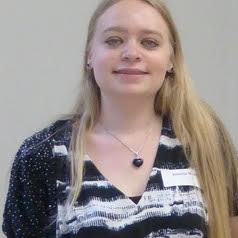
Interview with Antonia Wimbush


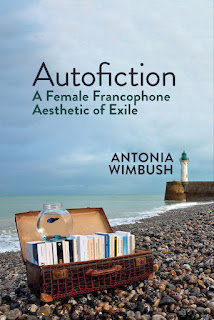
Antonia Wimbush is a postcolonial scholar who graduated from a PhD at Birmingham in 2018. She joined Liverpool University Humanities department in October 2020. She took up a Leverhulme Early Career Fellowship under the mentorship of Prof. Charles Forsdick. Her project is entitled 'Representing the BUMIDOM: French Caribbean Migration in Literature and Culture.' She is the author of Autofiction: A Female Francophone Aesthetic of Exile (Liverpool University Press, 2021). 

Interviewed by Elle Morgan

This interview is spread across my own website The French Lettres, and also Everybody’s Reviewing in Leicester. This is because of Leicester’s close connection with postcolonial studies. Indeed, Antonia's fascinating expertise on migration will likely be of interest to many creatives residing in the city. The literary scene in Leicester has long been engaged with the same issues of displacement, migration, and home that Antonia writes about in her latest book, Autofiction: A Female Francophone Aesthetic of Exile. 

Originally, the book was a thesis, its aim being to address the wealth of writers whose work existed outside of the metropolitan: those who are not white, male or middle-class. During the interview, we discuss writers such as Dante Alighieri (who wrote from political displacement in his native Florence) as a famous example of what some people mean by 'exiled writers' because he fits into all of those privileged categories. Antonia’s work interrogates this by engaging with writers such as Nina Bouraoui, from Algeria and France. Her work also expands upon Julia Kristeva’s threefold explanation of 'exile': geographically, as writers, and also as women. She says: 'I am deeply interested in women writers who write in a metaphorically exiled position, in an imagined place.'

She expands upon this by referencing Edward Said, whose work interrogates the notion that 'exile' means to be a member of the bourgeoisie and therefore somehow 'important' and 'mattering.' Antonia is clearly passionate about the sense of 'otherness' that comes from not belonging, and this is evident from her work teaching emerging scholars at Liverpool University. 

As a Lecturer, Antonia has seen many early-career scholars, such as undergrads and postgrads, who have been engaged in research on memory. There is a particular pattern of interest in concrete examples of statues and monuments, as well as identity. As she teaches in postcolonial Francophone subjects and has long been interested in the notion of 'Carribbeing,' her research corresponds urgently with the thirst for learning about underrepresented writers.    

She says: 'It was a thesis on four writers, at first. For the book, it widened, expanding to six, which was a challenge. I looked at all sorts of writers whose postcolonial entity is even contested, moving towards writers in Quebec. There are writers such as Michèle Rakotoson, in Madagascar who underwent political exile for their comments against the dictatorship.'

Clearly, it is a timely area that has been contributed to, and expanded by, a scholar considerate of the ambiguities concerning exiled voices. 


About the interviewer
Elle Morgan is a student and writer who is usually quite lost, navigating both life and various university buildings. If you would like to find her, she is on the internet here.

Monday, 21 February 2022

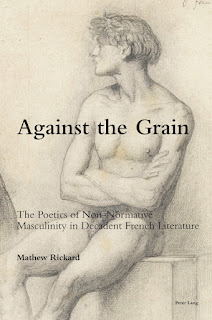
Review by Elle Morgan of "Against the Grain: The Poetics of Non-Normative Masculinity in Decadent French Literature" by Mathew Rickard


This book opened my eyes further than before, to gender-based issues experienced during the French Decadent movement, in the late 1800s. This is not an area I will pretend to know a lot about from a critical perspective, but I found that it introduced the topic in an engaging way. It is an insightful and urgent exploration of queerness, best read accompanied by a glass of white wine on a rainy Sunday. 

I came away from the book reflecting on how it addressed a gap in research I hadn’t known of. What could be an integral section of gender studies is posed as a new and daring answer to a question not often asked: is it really a man’s world? This is discussed using masculinity as a literary concept, as well as exploring how being literate has long raised important discussions regarding privilege. 

Originally written as a doctoral research thesis by a then-emerging scholar in the field of French Studies, the finished book is a wonderful appraisal of masculinity, sexuality, and the specific challenges gender-based discrimination poses. Readers will enjoy being introduced to new knowledge on the concept of the ‘dandy,’ as well as analyses of French literature from the nineteenth century. 

With a backdrop of advances in science, mass industrialisation and modernism, France at the turn of the century has always been a crucial site for understanding intersections of identity. This text is rich with these explorations, and it is an enjoyable read written by a pioneering scholar. It was the joint winner of a Peter Lang prize in 2019, and has been received well by many scholars in the field of Decadent Studies and beyond. It will certainly aid any scholar’s research in gender studies, and nineteenth century literature too.  


About the reviewer
Elle Morgan is primarily a writer but has held many jobs! Currently, Elle is studying a mix of practice-based Creative Writing and French Studies, and enjoys writing after lots of walking (but not in the current storms buffeting the UK). Elle’s website is here.

Thursday, 10 May 2018

Review by Elle Morgan of "Americanah" by Chimamanda Ngozi Adichie


Do you like Childish Gambino's new song, This is America? If so, read Chimamanda Ngozi Adichie's book, Americanah. It discusses racial identity in America. Actually, read all of her books. Cover to cover.

Americanah starts off narrated by Ifemelu, who is a Nigerian woman living in America. She has received a Fellowship from the University of Princeton, lived there for years, and is in a loving relationship with a 'black American' (note that Chimamanda distinguishes between the African students who travel on a visa in the novel, and the African-American citizens’ experience since birth).

In spite of all this, she still has to travel a long distance to get her hair braided. On the way, she notes that the majority of people getting off at Brooklyn are black, while the people at the Manhattan train stations are white. This is a discomforting experience for Ifemelu, who has worked hard to get to where she is, and left her home country as a young woman to stay with her Aunty, whose experience of America turned her 'prickly'. Ifem finds some fellow African women discomforted by her intellectual pursuits. It’s as much about the politics of America as it is Africa. 

Ifemelu left military-occupied Nigeria years ago, in pursuit of her education. Why is this strong, feminist woman, settled and content in the U.S., returning? 

Because America creates just as many barriers as it does tickets, it seems. This is a story about womanhood, in relation to cultural identity. Ifemelu navigates awkward encounters with women at the hair salon who ask why she wishes to return to Nigeria. Is it because of a man? It must be because of a man. Is it because the men in her family have money? The men in her family must have money. 

Ifemelu is in fact a self-made woman, and her journey through education is a heartening one to read. She does, however, face issues with identity, missing home, and missing the love of her life, Obinze, who she parted from years before - but Ifemelu never loses her independent nature. In contrast, Obinze's wife is suffering from her own neuroticism, to the point where she won't invite single friends over in case they threaten her marriage. There is a sadness to this story, in regards to what might have been, and what could happen, or may not - I won't spoil the book, anyway. 

Ifem is a heroine most would love to know, picking up on discrepancies in how people like her Aunty behave around their domineering or uncaring husbands. It's a bildungsroman that is just as much about finding role models, such as Obinze's strong and hardworking mother, as it is about realising that your childhood ones are flawed, such as Aunty.

If you are looking for feminist fiction that's relevant to the politics of America, which addresses themes of belonging, homesickness, and cultural identity, then please read this book. Its complex themes are threaded with the deftness of a literary hand, and has the heart of a romantic comedy. Chimamanda Ngozi Adichie's works, portraying the experience of America through an 'outsider's lens, are definitely what you want to be packing into your beach-bag, or your student satchel, this summer. 

Childish Gambino's Bonfire: https://www.youtube.com/watch?v=VYOjWnS4cMY


About the reviewer
Elle Morgan is a Creative and Critical MA student at the University of Sussex, who loves reading and reviewing, particularly 1920's Jazz Age fiction. Her website is www.ellemorganreads.wordpress.com.

Sunday, 15 April 2018

Review by Elle Morgan of "Birdcage Walk" by Helen Dunmore


How many of us read historical novels, wondering how the events of the past can help us interpret those of today? Helen Dunmore blends the post-modern with the nineteenth-century: “a man doing t’ai chi” is perched next to “skeletal” Georgian architecture. Birdcage Walk opens in the twenty-first century, and then delves into old documents from the time of the French Revolution.

“I touched the paper as if the heat of their lives might come off on my fingers”: we are introduced to the period by a contemplative man who stumbles across the past while walking his dog; Dunmore used a real place in Bristol to concretise the present. Timothy Jones snapped the black-and-white photograph on the front cover “using a Nikon D300, in between a walkway in Clifton Cemetery.” Noir-like and ethereal, it suits the genre perfectly. 

Helen uses one close psychological portrait of a family to encapsulate a broader landscape, one of the revolutionary wars happening across the Channel. In the novel, the effects of the French battles are widespread, and divide British households into anti-Royalists, and the upper-class bourgeoisie. Lizzie’s household is no different. The author asks, why do we love the people we do, even in spite of our political differences? 

Before Helen Dunmore passed away, Oliver Hurst, a Bath-based illustrator, was commissioned to paint a piece for The Financial Times, that would highlight her novel’s themes. He painted the main female protagonist, Lizzie, in a cage. She is turned away from the eighteenth-century houses, presumably from her Royalist-supporting husband’s doomed enterprise, and I wanted to know what she was looking at. Upon being contacted for interview, Hurst said he’d painted her husband smaller and insignificant, and “all that was left to do was ‘hang’ Lizzie’s cage in Georgian Bristol.” Being based locally, like Dunmore and Jones, he did not have to do much research into the historical setting. But what was Lizzie looking at?

It's a compelling novel, which channels modern themes and feminist complexities with political undertones. Dunmore was an excellent researcher, and reading this will add to any knowledge on the treatment of women in the nineteenth century. Lizzie’s mother is a typically radical, freedom-supporting character who wants the working masses in France to win; Lizzie’s husband is the opposite, with a business to think of. He becomes more and more domineering as the novel goes on, and Lizzie’s sense of liberty is compromised.

Where is Lizzie looking? Towards freedom, perhaps. 


About the reviewer
Elle Morgan is a Creative and Critical MA student at the University of Sussex, who loves reading and reviewing, particularly 1920's Jazz Age fiction. Her website is www.ellemorganreads.wordpress.com.