
Showing posts with label Film. Show all posts

Tuesday, 30 October 2018

Interview with Andrew David Barker


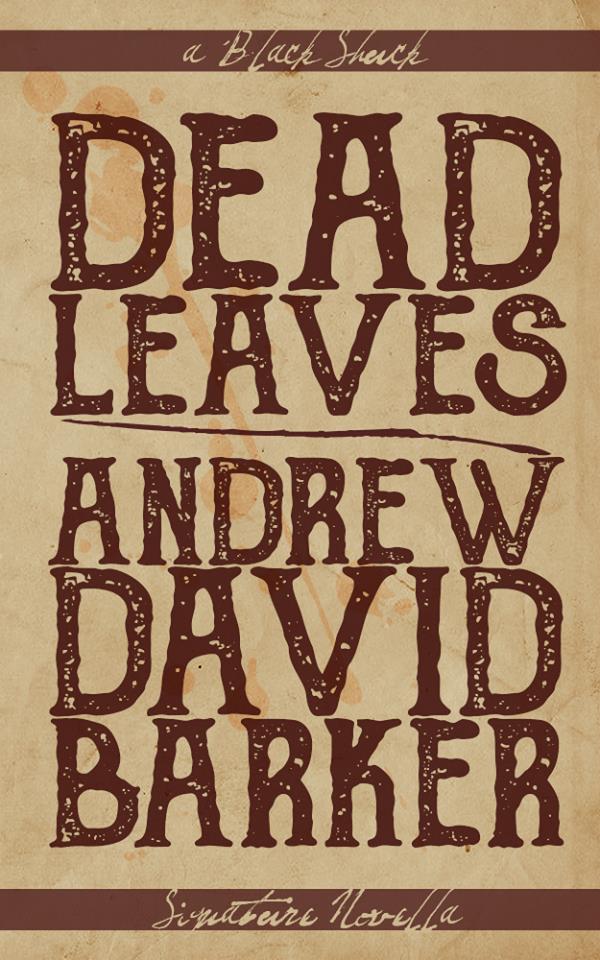
Andrew David Barker was born in Derby, England in 1975. He is a writer and filmmaker. He is the author of The Electric and the novella Dead Leaves. As a filmmaker, he wrote and directed the cult, post-apocalyptic indie feature, A Reckoning, in 2011, and has recently made the short films, Two Old Boys and Shining Tor. He lives in Warwickshire with his wife and daughter, trying to be a grown up. His website is: http://www.andrewdavidbarker.com Twitter: @ADBarker

Interviewed by Lee Wright

LW: As a novelist and filmmaker, who has influenced you the most? 

ADB: Stephen King and Steven Spielberg, probably. They, above all others, were possibly the first creators I knew of that made me want to write and to make films. The filmmaking thing came first as well. I was born in 1975 – the summer Jaws came out – and so I am very much of the Spielberg and Lucas generation. I’m part of the last wave of Gen-Xers; I grew up with TV and movies that gave me a sense of wonder and then came of age in the '90s when we thought life was one big party – the long hangover began around 2001. 

I’m someone who is always hungry for new inspiration. Once I find out about a new author, filmmaker, songwriter, whatever, I tend to want to find out everything about that person, soak up everything they’ve done, and once I’m sated I move onto the next artist. There are mainstay artists though, people I always come back to, but really I’m always looking for something new. I’m on a big Magnus Mills kick at the moment, who I think is fast becoming my favourite English writer. I understand his world and his characters, and he’s very funny.  
I think influences are important. I’ve written a lot about fandom – about how being inspired by a film/book/band whatever can propel you to create your own art. Without those first sparks of excitement I felt watching, say, Close Encounters or reading The Stand, I wouldn’t be doing this stuff.  

LW: What’s your definition of horror?  

ADB: That’s a tough question, but I guess it’s something that horrifies, simple as that. I tend to be drawn more to tales of the supernatural, the uncanny. Maybe it’s because I’m a parent now, but if it exists in a realm that is too real for me, I can’t do it nowadays. It has to be detached from my everyday life. So, humans killing other humans doesn’t do much for me. That said, I think The Texas Chain Saw Massacre is the greatest horror film ever made. I think it’s a masterpiece. An incredible piece of filmmaking that works on so many levels. It’s very much like a Grimm Fairy Tale in many ways. It’s not a film I can watch very often, but I don’t need to because it’s never left me. 

I had a love of horror films from a very early age. The first horrors I saw were the old Universal pictures, which are just beautiful to look at. Then I saw Salem’s Lot at a ridiculously young age. Yes, Tobe Hooper again. I’m sure it’s very dated now, but the memory I have of those kids scratching at the bedroom windows frightened me very badly. Dawn of the Dead was another seminal film. I was probably about nine when I first watched that and as you can imagine at that age, it had a profound effect. In many ways actually, as that was one of the first films that got me interested in filmmaking. 

I think for horror to really work it has to tap into universal fears. We all understand a fear of what lies beneath the ocean while we swim, which is why Jaws will always work. We all understand nightmares and so we have Freddy Krueger. We all understand the fear of someone wanting to murder us – Psycho, Halloween and so on.
There is the fear of something external – the monster outside – or internal – the monster inside. That is pretty much it. The best books and movies tap into those areas and to really be scary they need to peel back the many layers of our defences and strip them away one by one.     

LW: Your novel, Dead Leaves (about the video nasty area and a group of teenagers), has just been republished by Black Shuck Books after first being published in 2015 by Boo Books. Can you tell us about your experiences of having to find a new publisher?  

ADB: The world of the small press is pretty tough. No one makes any money. These publishers – and writers – do it for the sheer love of books. I think it is a pure thing. Boo Books gave me my start. They published my first novel, The Electric, in 2014, and Dead Leaves in 2015. I thought I was on a roll. Then soon after Leaves was published, Alex Davis of Boo Books had to close its doors. There is pure love, then there’s making something that is tenable. This stuff is hard to do. 

Anyway, I’m always going to be grateful for Alex giving me a start. After Dead Leaves, though, I kind of stalled with my writing. It wasn’t a writer’s block, because I was still writing, I just didn’t finish anything. I started and abandoned two novels. But also, in that time I became a parent, which, as wonderful as that has been – and it is the greatest joy in my life – it will seriously cut into your writing time. So before I knew it three years had passed since I’d published anything. Aside from a short story called "Bank Holiday All-Dayer" anyway. 

As for Black Shuck Books. I went along to Edge Lit in Derby, as I often do, which is a great writing festival, and saw Steve Shaw, who runs Black Shuck. I’d met him a few years before and got on well with him. He’d read Dead Leaves when it first came out and had told me he really liked it. Anyway, I happened to mention that I was on the lookout for a new publisher and he immediately said that he’d be interested in reissuing Leaves. That was in June of this year and it came out in September, so it happened very fast. I hadn’t sent out Dead Leaves or The Electric to any other publishers. I really should though as I’d really like to get a new publisher for The Electric. Anyway, I hope I can do more stuff with Black Shuck Books.  


LW: Your novels and short stories tend to depict the “coming-of-age genre.” Do you fear growing up? 

ADB: Ha, yes! I’m 43, but still feel like a kid most of the time. Growing up is boring. Grown ups are boring! 

I don’t know, I like the genre. There’s something about that time of firsts that has always appealed to me. It’s an exciting time, and a universal one. We all go through it and it’s always life-shaping. Who you are going to be, what you are going to love, hate, everything is formed in those early years. Plus there is a magic to childhood that we can forget when we grow up. But I never want to forget it, and writing can bring it back in very vivid ways. 
That said, it is probably time to move on. My next projects have older protagonists. I’ll more-than-likely return to writing about kids again at some point though. 

LW: Have you ever drawn on any autobiographical content for your fiction? 

ADB: Always. You’ve got to have skin in the game. All my work is drawn from my life. Dead Leaves and the short story "Bank Holiday All-Dayer" especially. That said, I don’t so much as write what I know, more write what I feel. I’m a very instinctive writer. For novels I don’t plan, don’t outline, although I do for screenplays. But for novels I like to see where the characters will lead me and through that very process, memories, feelings, moments I’ve had with people from my life always filter in. 

Like many writers, I spent a good deal of time in my early writing trying to write like authors I admired, but it never worked. You do have to find your own path, dig deep within yourself. It will give your work the honesty that will eventually become your identity. And if that identity can then connect with readers, then you’re well away. 


LW: As well as being traditionally published, you have also self-published a couple of short stories as e-books. What advice would you give for writers thinking of going down this route? 

ADB: Do it. 

Don’t wait for anybody’s permission to do any of this stuff. Get your work out into the world any way you can and don’t apologise for it. There are snobs out there about self-publishing – a lot of them established writers, it seems – that feel it’s a cheat. But a lot of doors are closed in the so-called established world. You’ve got to forge your own path. 

What I find curious is that being independent is celebrated in other areas. If you make an independent film, raise the money yourself, or, like Kevin Smith, pay for your first film yourself, it’s celebrated. It’s also inspiring. How many filmmakers were born through watching Clerks, or any number of indie films? 

If you’re a musician and you bypass the record industry and put your music out yourself, it can be celebrated. But books, no. Yet, when an Andy Weir breaks through or someone like that, a lot is made of the unsung talent out there. And there is a lot of talent out there. There’s also a lot of crap, of course. But there’s a lot of that being put out by established channels as well.  

But anyway … the walls are being torn down to a certain extent. All media is shifting. The old paradigms are crumbling. Get your stuff out there and be the best you can be. By that I mean, treat it as if you are being professionally published. Get an editor, a book cover designer; don’t just throw it out there. Think about the marketing, reviewers you might be able to tap, quotes you might be able to get. Everything a big publisher would do, apply it to your book. You won’t be able to get in Waterstone's or get reviewed by The Guardian. You might, but you probably won’t, but in everything else give it the absolute best shot you can. 


LW: One of your e-books, The Fin, is a short story, based on a scene in a film (Jaws), that was originally based on a novel by Peter Benchley. What were your thoughts when working on that story?   

ADB: Everyone who knows me knows that I’m fairly obsessed with Jaws. Spielberg’s film anyway, I don’t think Benchley’s novel is as strong. The Fin was just a bit of fun to be honest, nothing more than that. It’s fan fiction and I was certainly writing outside of my identity, which I was speaking of earlier. Although it is still about kids I suppose. I haven’t read it in a long time and it’s probably pretty clumsy, but it was fun to write and really fun to write in that world. It’s set in the world of Spielberg’s film, not really Benchley’s novel. I did think recently about taking the story down, but then decided against it. That was where I was as a writer at that point in my life. It’s a document of my abilities at that time. Every book and story is. Every film is. So that’s fine with me. Plus, I still think it’s a fun little story, and it’s very short.  

LW: Though your interests lie in the horror genre, you are yet to write a straight-forward horror novel. Do you believe that “writing scary” is a hard thing to do?

ADB: Really hard. It’s like comedy, which is also very difficult. In fact I think comedy and horror are very similar. They both work in the build-up and pay off. Plus, what scares people and what makes people laugh are very subjective, which is why I said earlier the best ones are the ones that speak to a universal truth. 

As for my writing, I haven’t written a horror novel, although I’ve written about horror. I have, however, started work on a horror novel – a '70s set, occult horror that I hope to finish one day, and I’ve just completed a short collection of ghost stories which I hope to be published next year. But really I’m interested in all kinds of stories. 

Writers are often boxed into genres, but I admire writers who break that and write across genres. I like Michael Chabon for that. He’s seen as literary, whatever that means, but very much plays around in genre, all different kinds of genre. Paul Auster is the same. I think he’s an incredible writer. Joyce Carol Oates is the same. Stephen King, who is classed as a horror writer, has written in every kind of genre there is. In fact, I think he’s only written a handful of pure, balls-to-the-wall horror novels, the rest is across the board. 

One of the main projects I’m working on seems to be a love story, very much in a kind of Nick Hornby or David Nicholls mould. It might be a detriment to my career that I’m jumping from one thing to another – that I’m not doing any one type of novel – but I can only write what I can write, and I have ideas in all kinds of genres and areas. What I try to bring to all these things though is a great sense of me, my identity. I hope that will tie them all together. 
It’s interesting to me that film directors can work in all kinds of genres and stories, and yet writers don’t have that same amount of freedom. I don’t know why that is. 

LW: What was the last novel that scared you?  

ADB: I haven’t read many horror novels in recent years, although I did read William Peter Blatty’s The Exorcist last year and thought it was quite brilliant. There was some very unnerving stuff in that one. I’m going through a bit of a Blatty stage at the moment. 

I did recently read James Herbert’s The Rats that I had great fun with, but it didn’t scare me. It takes a lot to scare me, in fiction anyway. The real world scares me greatly. 

I love a good ghost story. Michelle Paver’s "Dark Matter" was the last really good one I read. Actually, there’s a section in Murakami’s Kafka on the Shore that really upset me. The torture and killing of cats. That was horrible. He’s an incredible writer who defies any box a publisher would try to put him in. That’s an inspiration to me. 

LW: Do you ever get disheartened with writing? 

ADB: Yes. There’s what I call the Demon Doubt. He’s an arsehole. You can be happily writing away, thrilled with what you’re creating, but you come back to it the next day and it can feel and seem completely different. It can feel like what you achieved yesterday in unbridled joy is now utter crap. That’s the Demon Doubt taking hold. 

I’ve learned to ignore him, but it is sometimes hard. Once he’s got his teeth into you, entire projects can die. Believe me, I know. 

The trick is to trick him. Leave the work for a few days, weeks even. Make him think you’ve forgotten it and then go back to the work and more often than not you’ll think, “Hey, this is pretty good” and you’re back in the game. 

Truth is though, I think it’s healthy for a writer to have doubts and fears. If I were blindly confident and thinking everything I’ve written is amazing, then I’d be really worried. That path leads to mediocre, or even crap work. 

There have been times when I couldn’t write, or just had no interest in it, but they’ve been rare. Even on bad days when the Demon Doubt is playing his merry little games with my head I’m still compelled to do the work. And I think that is the key to actually making it as a writer. Now, I haven’t made it in the West’s view of success. I haven’t made big money from my writing and I still have to have a day job, but I’ve made it in the sense that I’ve kept on going and will continue to keep on going. I need to write. It’s who I am and I think I’m a better person when I do write. That’s what my wife says anyway. 

So you have to push on through those times when it all feels pointless and you think you’ve got nothing to say. Dig deep, push through and you’ll have a piece of work that you’ll be proud of. That’s the key. Ignore the Demon Doubt and finish it.   


About the reviewer 
Lee Wright was born in Nuneaton, Warwickshire in 1980 and has been writing both fiction and non-fiction since 2008. He is taking an MA in Creative Writing at the University of Leicester in 2017.

Friday, 9 March 2018

Interview with Matthew Broughton


Matthew Broughton has written widely for TV, film, radio and theatre. His most recent work for radio includes the award-winning series Tracks, and the comedy-drama Vincent Price and the Horror of the English Blood Beast, both for BBC Radio 4.  His website is https://matthewbroughton.wordpress.com/


Interviewed by Lee Wright

LW: How did you first come to write, and what was your breakthrough moment as a writer?  


MB: I can’t remember a time when I didn’t write. It started happening at a very early age, and the writing was always drama, scenarios, characters, and dialogue. Not prose or poetry. Things have generally happened by gradations, but there have been several moments along the way that have felt like a palpable step forward. When no one else was interested, a London fringe theatre company staged a play I sent them, then made me writer in residence. From that series of plays I got representation; getting my first film and TV commissions; working with Complicite (British theatre company); getting a screenplay filmed and broadcast for the first time (it appeared on the launch night of BBC 4). Also, I came very late to audio drama, but as soon as I started writing for the radio I felt immediately at home, so that first Radio 3 drama commission was a step forward moment too.


LW: You’ve written for TV, film, radio and theatre. Could you tell us about the different genres, and which you have most enjoyed doing? 


MB: Essentially, if you’re doing it right, they’re all the same. They all concern creating interesting characters, scenarios, compelling images, dialogue, and story. The only differences between them are purely technical. I enjoy them all and wouldn’t want to choose between them, but each in its way has challenges too. Here’s what I like or find interesting about each one …


For me, film is about placing characters in a landscape/world. Less is more, and at best it can feel mythic and pure. 


TV is very immediate, detailed, and often more disposable. When a large audience engages it can be intense, thrilling, and satisfying. 


Theatre is alive and the work constantly changes and evolves over a run. The drama lives and breathes in the moment, and a play is never finished, the work never complete. 


Radio has the writer at the centre of the experience working closely with the director/producer and actors. And the relationship with the listener is very intimate. You’re whispering into ears. Writer and listener make a pact to create the images between them. Imagination meets imagination. We meet half way.


LW: Your radio drama, Vincent Price and the Horror of the English Blood Beast, was a fictionalised look behind the scenes of the movie Witchfinder General and the working relationship between the American horror actor and British director Michael Reeves. 

How long did you work on this drama for and how did you first come up with the idea?    

MB: The Witchfinder play happened very quickly. A drama that had been commissioned for the Radio 4 Saturday afternoon slot was withdrawn late in the development process, meaning a gap had opened up (which is incredibly rare – it never happens). I was asked if I had any ideas to fill the space.  I’d always loved and had an interest in the Witchfinder General, and I’d enjoyed the legendary stories surrounding its creation. The world of the British Film Industry in the 1960s was pretty fascinating too!  The relationship between Vincent Price and Michael Reeves struck me as tense and creative. A fascinating clash of culture, generation, outlook, and personality. It also seemed very funny too.  


The film that resulted from the tensions, I felt, had a kind of gamey magic. Even though it’s now a bit dated, it still transcends its genre and touches on deeper, darker fears in ways that are unexpected and provocative. There aren’t many films that achieve that alchemy. 

I thought it would be good to explore and understand how that unlikely magic was achieved and felt that, like the film itself, a drama about it could be larger than the sum of its parts.  
I’d made notes on the subject long before I knew what I might do with them, so dug these out and developed them into a brief pitching treatment for R4 commissioning. (My notebooks are filled with ideas, and half-notions for stories like this, you never know which ones are going to fly until they do).

The Radio 4 commissioner offered me the slot and, with time being tight, I researched and wrote the play in 2 or 3 drafts over a few weeks. The process included visiting the BFI library, looking through Michael Reeves’ own scrapbooks and notebooks, speaking with his friends and colleagues, including some of the actors and crew from the original film; reading every available book on the subject, and watching lots of related film material from the era. 

It was an energizing period and very enjoyable.

I’ve worked on a number of projects over the years where real-life people are the subject: Keith Moon, Oliver Reed, Charles Manson, Marvin Gaye, Frank Zappa, Salvador Dali, and others. It’s challenging, but rewarding to get under real skin, and to try to inhabit real voices and lives.


By the end the Witchfinder experience I felt I’d got a handle on "Vinny Price and Mike Reeves." Both were driven characters of great talent, and both were vulnerable, insecure, and fragile too. Reeves was so young (he died aged 25) but had such amazing focus and ambition, and was so accomplished in his filmmaking that he seemed much older. But, looking through his scrapbooks, and seeing how he’d glued in his reviews and made little notes beside them, you could see his youth, enthusiasm and aspirations shining through. It was relatable, and very touching.


So, the play grew out of a curiosity in the subject matter, the opportunity of the cancelled play, and the discoveries made during the research.


LW:  What does a “typical” writing day involve for you?


MB: Chaos. Denial. And occasional small moments of clarity.


LW: Have you ever attempted to write a novel?


MB: No. And hadn’t thought about it until recently, when I was asked if I’d consider writing Tracks, my radio series, as a novel. (I’m still undecided). I think I do have an idea for one now though, so perhaps one day …

LW: What advice would you give to someone hoping for a career in writing? 


MB: Do what you have to do.


About the interviewer
Lee Wright was born in Nuneaton, Warwickshire in 1980 and has been writing both fiction and non-fiction since 2008. He is taking an MA in Creative Writing at the University of Leicester.

Thursday, 9 November 2017

Review by Robert Richardson of “The Party” (2017, film, directed by Sally Potter)

Early in The Party, one of its erudite characters mentions postmodernism, and this is a film taking place within giant quotation marks. Even Sally Potter’s shooting in stylish black and white might be seen as a retro realism achieved in too conscious a way. The satire is reflexive, for example Jinny, a lesbian pregnant with triplets, is dressed in dungarees, satirising both lazy tropes and the film’s willingness to include them.

Parties as settings inevitably lead to an emphasis on characters and relationships. This one is being hosted by Janet, as a celebration for her recent appointment to the shadow cabinet (which is obviously Labour, though that is not explicitly stated). Those invited are her friends and their partners. Most of this group know each other, some, secretly, too well; their tangled relationships bring a succession of surprises, and the best one is at the end (no spoiler for that). The characters belong to a milieu of politics and academia, with the exceptions being Gottfried, a wacky and annoying life coach, and Tom, described by Janet’s husband Bill, a professor of Roman history, as a “wanker banker”. Tom comes to the party with a hidden gun and the intention of murdering Bill. He has discovered, through texts and emails, that Bill is having an affair with his wife (absent but expected to arrive late). Consequently, Tom is in a nervous state, and while the suppressed resentments of other characters erupt verbally, his tensions break out more physically and this makes for a few moments of farce, preventing the film from being too one paced.

It is essentially an impressive ensemble performance, nevertheless, the party is taking place at the house of Janet (Kristin Scott Thomas) and Bill (Timothy Spall) and this gives them more weight. Spall is someone who can act slowly, which is just right for the lugubrious and drunk Bill, who uses the party to reveal he is terminally ill. Janet, herself having an affair, reacts hypocritically and violently when Bill admits to one of his own. Before this, Scott Thomas presents in a subtle way Janet’s sympathy and love when Bill announces his illness. With other characters there are also hints of more genuine people beneath their coldly constructed personae.

The influence of Pinter is strong: the lies and betrayals within personal relationships offset against support by those same characters for high standards of ethical behaviour. Potter’s target is not so much a liberal elite as those who are smug, humourless and take themselves far too seriously. Her comedy about them is intelligent, elegant and a delight.


About the reviewer
Robert Richardson is a visual artist and writer. His work is included in Artists’ Postcards: A Compendium (edited by Jeremy Cooper, published by Reaktion Books, London). In 2014, his solo exhibition TextSpaces was exhibited at Eugen Gomringer’s Kunsthaus Rehau in Germany. One of his designs will be included in a book about Leeds Postcards, to be published in 2018 by Four Corners Books. He is a member of the Biennale Austria association of contemporary artists.

Sunday, 18 June 2017

Review of "Alien Covenant" by Jeremy Sumner


(MILD SPOILERS AHEAD)

It’s been a long five year wait for Ridley Scott’s highly anticipated sequel to Prometheus, but now we have been finally presented with Alien: Covenant. The film follows the crew of the Covenant spaceship that is transporting thousands of colonists and embryos through space towards a newly identified hospitable planet. During the course of their journey, they pick up a stray transmission that leads them to discover a previously unknown planet. This one possesses uncannily similar traits to Earth itself and, compelled by curiosity, they decide to follow the message and explore this alien planet.

Having read previous reviews of Alien: Covenant, I was very sceptical as to whether this film would be the sequel I wanted it to be. The consensus appeared to be that the film, whilst delivering on entertainment and visuals, rarely contained the essence of horror that had been synonymous with the rest of the series. Where Prometheus had aimed to fascinate with its stimulating origin story, Alien: Covenant was set to add more pieces to finish the puzzle of how Alien came to pass. I tried my best not to let anything I’d heard before taint my experience as I took my seat in the cinema.

Despite the action sequence that unfolds shortly after the trademark Alien titles roll, the first section of the film felt very slow. I found myself struggling to feel the threat and terror that has become associated with Scott’s Alien films, perhaps due to not having met the crew of the ship whilst the event is happening. The slower tempo is understandable after this as we are gradually introduced to the rudely-awakened crew of the Covenant. Unsurprisingly, the main point of focus as we meet the cast is Daniels. Like Noomi Rapace as Shaw before her, Katherine Waterson provides a strong female lead as Daniels, balancing the character’s sense loss and hope with ease, and not to mention providing the only voice of reason when newly appointed Captain Oram decides to detour to the mysterious and uncannily Earth-like planet. Her trepidation over visiting this planet is one that will be undoubtedly shared unanimously by the audience, albeit primarily for her own personal reasons, as me and my friends still to this moment struggle to understand the logic behind the Covenant’s rogue mission to this “perfect” planet that they have somehow managed to miss.

Where Alien: Covenant really succeeds is where things start to go wrong. Curiosity does kill the cat, and the Covenant’s crew are unsurprisingly no exception. In a chain of events that contain gore, tension and hilarity (I found myself laughing out loud at an uncharacteristically slapstick shotgun failure), the tempo accelerates as violently as the deaths of the unfortunate few that succumb to this remorseless hostile world. These are humbling segments that show the weakness of this militarized unit that they seem hopelessly incapable of dealing with the horrors that they are encountering. The creature kills themselves pay tribute to the films gone by; there’s enough chest-bursting and face-hugging to please even the most casual fan of the series. 

The stand out performance, or performances, of this film has to come from Michael Fassbender. Reprising the role of the intellectually curious android David and also undertaking a new one as the identical robotic counterpart Walter, Fassbender delivers with both of his roles. I struggle to remember a film in which an actor has been able to create genuine sexual tension with himself (no, Austin Powers doesn’t count). The verbal sparring Fassbender participates in as David with Walter and the surviving crew members of the Covenant acts as an enthralling stop-gap between the disastrous first landing on the planet and unveiling the dark secrets that will inspire a truly shocking finale. Visually, Walter and David are inseparable, but it’s a tribute to the actor that he can make a simple American accent create two distinctive and believable personalities.

From what I’d heard about the film prior to viewing, there had been some debate as to the overall plot and ending. Personally, I quite liked both. I will refrain from revealing any spoilers, but the arc that had begun with Prometheus I felt was satisfyingly met, with Shaw and David’s story intertwining cleverly with the people of the Covenant. The ending itself was both haunting yet fitting, although I have to admit I had been able to work out the climax earlier than I’d have liked. As someone who longs for jaw dropping plot twists, I was slightly disappointed at the predictability of the ending, but nevertheless I think it fits in nicely with the story.

Having had time to reflect and think about Alien: Covenant, I think it’s fair to say the film has under delivered on the promising platform that Prometheus had built for it. The only character that I felt as though I was really rooting for to survive was Daniels. The rest of the crew felt very disconnected and individualised, with the relationships as artificial as the androids. This seems even more disappointing when you consider the underuse of both James Franco and the returning Guy Pearce, who have all too brief cameos in the film. The scenes that are designed to create unease and fear don’t have the same weight behind them that is traditionally associated with the Alien series. The idea seems to be to replace relentless terror with bucket loads of blood, and this tactic doesn’t quite resonate as well as Scott would have hoped.

Despite it being a reasonably enjoyable watch, and a film that I will undoubtedly watch again, I can’t help but feel slightly underwhelmed by the levels of terror and fear that are welcome baggage with Scott’s series. Having said all of this, there is still nothing quite like hearing the terrifying screech of the xenomorphs. And let me tell you, in the cinema, everyone can definitely hear you scream.

Tuesday, 30 May 2017

Review by Robert Richardson of “Rules Don’t Apply” (2016, film, directed by Warren Beatty)

Rules Don’t Apply is Warren Beatty’s first film as a director for eighteen years and as an actor for fifteen, and has the reclusive billionaire Howard Hughes, played by Beatty, at its centre. It is also a song within the film, actually composed by Eddie Arkin and Lorraine Feather, but for the purposes of the plot it is written and sung by Marla Mabrey, played by Lily Collins. The song applies as much to her as Hughes, the maverick who, despite his wealth and power, is shown too behaviourally odd for the template of corporate America. Similarly, Marla, a writer of songs rather than a singer, does not fit in with the expectations of Hollywood, where she has arrived with her mother (Annette Bening) from Virginia, as a contract actress, one of many, for Hughes’s film studio. Back home she had won a beauty contest, but a demure one since both mother and daughter are devout Baptists. Beatty, who also wrote the script, sets the film in the late 1950s/early 1960s and captures the church-going conservatism of Eisenhower era America. Eventually, the mother becomes tired of failing to have any meetings with Hughes, the promises of screen tests that never take place, and the general vacuity of Hollywood. She returns to Virginia, leaving her daughter with warnings of Hughes’s notoriety for bedding his contract actresses.
 
Frank Forbes  (Aiden Ehrenreich), the driver assigned by the studio to Marla, soon falls for her, and she for him, but they are both restrained not only by their religious backgrounds, Frank is a Methodist, but also by regulations imposed by Hughes. After Marla finally gets to meet Hughes, a triangle of sorts emerges, although this is not realised by Frank until the end of the film.
 
Marla does loosen up, but only as brief lapses from her Baptist upbringing. There is no trajectory into promiscuity or alcoholism. This is after all a romantic comedy, and Beatty successfully maintains a genial tone. In a similar vein, Frank’s personality becomes a little more steely when he is promoted from driver to one of Hughes’s close aides, but he retains his essential humanity.
 
Beatty obviously relished the role of Hughes and has great fun playing him, and this communicates to the audience, which is not a bad thing for a comedy to do. Hughes’s eccentricities were many, and Beatty plunders this fund for our entertainment: e.g. the obsession with TV dinners, burgers and banana nut ice cream; the repeated private viewings of Hell’s Angels, the World War One flying film he produced and co-directed in 1930; the ludicrous use of doubles  (Hughes employed more than one to fool the press and others). A more tragic side to Hughes, his addiction to codeine, is only mentioned in passing.
 
If ever there was a life open to fiction it was Hughes. In a way, he seems like a character from an American comic: supporting the conventional money making values of America, while paradoxically defined by strangeness and deviance. Currently, another ego-driven billionaire businessman is strutting the planet as US President. I think it is preferable when, like Hughes, they hide away.
 
Through this film, Beatty has created an opportunity for an impressive ensemble performance, which includes Alec Baldwin, Martin Sheen, Candice Bergen and Steve Coogan. As well as the pay cheque, I think there was probably the motivation of working with Beatty and contribute to his welcome return to filmmaking,
 
About the reviewer
Robert Richardson is a visual artist and writer. His work is included in Artists’ Postcards: A Compendium (edited by Jeremy Cooper, published by Reaktion Books, London). Two of his publishing projects were recently represented at a festival in Rome, and he is a member of the Biennale Austria association of contemporary artists. In 2014, his solo exhibition TextSpaces was exhibited at Eugen Gomringer’s Kunsthaus Rehau in Germany. He is also the co-editor, with William Pratt, of Homage to Imagism (AMS Press, New York).

Sunday, 21 May 2017

Review by Jeremy Sumner of "Get Out"


Is there anything scarier than realising whilst watching a fictional movie that it could almost certainly be a reality? 

Recent trends in cinema would seem to suggest that the horror films that hit a bit closer to home are becoming more and more popular. Films such as The Purge (somehow) have been so well received that they’ve found themselves in the position to continue making sequels until audiences have had enough of watching the general public disintegrate into sadistic psychopaths for twenty-four hours. Even upcoming movies, such as Life, which focuses on the discovery of hostile life from Mars, hits a lot closer to home than possessed dolls and vengeful poltergeists. It should be no surprise then that Get Out has captured the attention of the public and critics alike.

The story revolves around Chris Washington having to go and meet his girlfriend Rose Armitage’s parents for the first time in an isolated rural environment; a scary enough prospect for most. However, the draw of the film comes with the added factor that Chris is concerned that Rose hasn’t told her family he’s black, leading him to worry of any hostilities he may (almost certainly will) encounter. As the dream weekend evolves into a perpetual nightmare, Chris slowly begins to understand the gravity of the situation he has found himself in.

I confess I haven’t found myself connecting with many horror films I’ve watched. The best that I’ve watched in recent memory was The Witch, which depicted the supernatural fears and trials faced by a tormented family in medieval England. I admired this film for its boldness in avoiding cliché jump scares at all cost, with the real horror stemming from the despair and trauma faced by those inhabiting the world. Ever since then, I’ve always admired films that have been able to induce moments of pure terror and fear in an audience just by the placement and structure of the scene in regards to the plotline; Get Out follows this pattern wonderfully. Don’t get me wrong, I’ve not got anything against jump scares. As a matter of fact, this film has a fantastically placed jumpy moment that caught the entire audience off guard. However, the real power in this film is the tension that is built up throughout. From the first arrival at Rose’s parent’s house, myself and the entire audience were on the edge of our seats, genuinely worrying for the well-being of Chris in this completely alien world. Without revealing any spoilers, the final scene of the movie was so powerful in its terror that it caused outcries of fear and disbelief from everyone in the room, including myself.

In the starring role, Daniel Kaluuya acts fantastically as the sceptical and reserved Chris Washington. I found myself drawn to how effortlessly he handled a character with such emotional depth and trauma, and how easily he managed to develop Chris in a believable manner. His mannerisms when faced with the cringe-inducing racially charged questioning from the other guests at the Armitage family house almost mirrored that of my friend’s reactions when they were watching it with me. The reality from which this film draws is replicated on screen to such a level that it becomes even more horrifying to me that extreme racism like this does indeed occur in our world.

The Armitage family themselves prove themselves to be worthy opponents for Chris, with notable mentions to Allison Williams for her compassionate and understanding portrayal of Rose, and the hypnotically calm depiction of the malevolent Missy Armitage by Catherine Keener. Betty Gabriel, as the hauntingly ever-present maid Georgina, fantastically provides the strongest point of unease in this film, her excruciatingly calm voice and exterior clearly masking a tormented soul underneath. 

A great success of this film also comes with its moments of comedy, primarily provided by Chris’s best friend Rod Williams, played by Lil Rel Howery. This is an area in which director and writer Jordan Peele has thrived, with his success in comedy coming from his Emmy winning TV series Key and Peele. Howery’s scenes offer brief moments of relief and humour as he interacts with Chris over the phone, reflecting the difference in worlds they currently find themselves in.

As a horror film, Get Out has it all. The unbearably strong tension and fear built up throughout the entire film finishes with an incredibly horrifying yet satisfying climax; as clichéd as it sounds, the actors really did bring the characters to life, and scarily so; the director and producers shot a fantastically picturesque yet haunting film with a similarly spooky soundtrack to go with it (it’s safe to say that I will never be able to listen to “Run, Rabbit, Run, Rabbit” ever again). What’s even more impressive is that this film has come at the perfect time. As the world around us appears more and more bleak, this film challenges us with the frightening reality of racism that is taking place in our world every day. Walking out of the cinema, I couldn’t help but worry about just how real that film could be, and how many Armitage families and their friends are in this world.

In terms of ticking all the right boxes and operating within the realms of reality, I can safely say that Get Out will go down as the best horror film I have ever seen. 
  

Wednesday, 8 February 2017

Review by Robert Richardson of “A Monster Calls” (2016, film, directed by J.A. Bayona)


In what seems those distant days before CGI, Walt Disney introduced to popular cinema, with Song of the South, the combining of live-action and animation, and a signature lightness of touch in doing this was further developed in Mary Poppins. Now, with CGI, it has proliferated, and sometimes applied to more weighty themes. This is the case with A Monster Calls.

Set in contemporary England, a boy, Conor O’Malley, struggles to come to terms with his divorced mother’s cancer, an apparently unsympathetic maternal grandmother, and an ultimately disappointing visit from his father, remarried and living in Los Angeles. He also has to live with the attentions, including physical violence, of a school bully.

The nightmarish CGI sequences are transformations of features Conor can see from his house: a hilltop church with a graveyard and yew tree alongside it. The tree becomes the eponymous monster, voiced in ways both threatening and avuncular by Liam Neeson.

At intervals, the film includes the monster telling Conor three stories, related in an oblique way to his situation. These stories also take the form of animations, but they are in a very different style to those of the main plot. They are more like looser, sketchbook illustrations. In the final sequence, this storybook style makes sense while simultaneously providing mystery (I will avoid the detail of this, since it would be a spoiler). The monster demands of Conor that after the third story he should tell a fourth, working out the underlying truth behind his own terrifying visions.

A Monster Calls has some excellent performances. Lewis MacDougall, as Conor, succeeds in communicating awkwardness and aggression while remaining a character who is essentially likable. Sigourney Weaver gives a focused performance as the controlling grandmother, but with her own stresses and frailties occasionally showing. Toby Kebbell pitches it right as the well intentioned but failing father, and Felicity Jones, as the mother, further establishes herself as one of our finest screen actors, conveying the weakening condition of cancer in a poignant but unsentimental way. There is a brief scene where we see her naked back, and just through Jones’s posture we can believe in the seriousness of her character’s illness.

A Monster Calls has not been a box office hit, possibly because the writer, Patrick Ness (adapting his own book), and director, J.A. Bayona, commendably avoid easy answers, and as an audience we are confronted with both sadness and rage. There is also, though, hope when the difficult relationship between child and grandmother is resolved. It is, for sure, a film worth seeing, and there is a depth of purpose to reflect on, not least the way stories can interpret, and even negotiate through, life’s tragedies.

About the reviewer
Robert Richardson is a visual artist and writer. His work is included in Artists’ Postcards: A Compendium (edited by Jeremy Cooper, published by Reaktion Books, London). He has recently exhibited online with the Paris based Corridor Elephant publishing project, and he is a member of the Biennale Austria association of contemporary artists. In 2014, his solo exhibition TextSpaces was exhibited at Eugen Gomringer’s Kunsthaus Rehau in Germany. He is also the co-editor, with William Pratt, of Homage to Imagism (AMS Press, New York).
www.bobzlenz.com

Thursday, 3 November 2016

Review by Robert Richardson of “The Girl on the Train” (2016, film, directed by Tate Taylor)

Alfred Hitchcock in many of his psychological thrillers, a genre he made his own, was skilful in applying light and shade: the carefree or humorous is contrasted with the twisted and murderous. Unlike action movies in which murder is a throwaway item, Hitchcock, born and brought up a Catholic, gives its true weight as the ultimate crime both in terms of the law and an accompanying sense of it being a terrible reality.

The Girl on the Train aspires to be a contemporary film in the Hitchcock mould, but it is all shade and does not have the variety of moods Hitchcock achieved. Nevertheless, it is a competent piece of filmmaking. The director, Tate Taylor, presents quite an intricate structure, playing with lengthy flashbacks (supported by titles indicating the position in time of a sequence of scenes), while the plot maintains its coherence. When revealed, the murderer (and no spoilers here) is shown to have the authentic narcissism of the psychopath. If all this sounds somewhat hackneyed, there is enough individuality in some of the characters, and their backstories, to avoid the stereotypical.
           
As with Hitchcock, the soundtrack is used to ratchet up tension. It also has an eerie quality, and this creates a dream-like atmosphere, although it is the underbelly of the American Dream, making it, of course, a nightmare. A wealthy suburban neighbourhood includes male characters with a disturbing desire to manipulate and control women, emotionally and sexually, but, thankfully, the females can be assertive with their own deceits.

Hitchcock directed stars such as Grace Kelly and Cary Grant. It was a strategy that added an existing glamour to the mix. The Girl On The Train lacks this. In its place, though, are some solid performances. Emily Blunt is wonderful as Rachel, a very fragile and damaged person who conjures up some determination and strength.

I saw the film at my local cinema, and it was packed out. It is easy to see why The Girl on the Train is a word of mouth hit: it delivers a superior rendition of the thriller, and the nastiness lurking beneath respectability provides the enjoyment of an easy moral high ground. It is destined, I think, to be shown time and time again on satellite movie channels. The Girl on the Train is a good film, but I’m not sure that I would want to see it twice, whereas Hitchcock’s very best films keep calling me back. 

About the reviewer
Robert Richardson is a visual artist and writer. His work is included in Artists’ Postcards: A Compendium (edited by Jeremy Cooper, published by Reaktion Books, London), and he has recently exhibited online with the Paris based Corridor Elephant publishing project. He is also the co-editor, with William Pratt, of Homage to Imagism (AMS Press, New York). In 2014, his solo exhibition TextSpaces was exhibited at Eugen Gomringer’s Kunsthaus Rehau in Germany.

Thursday, 14 January 2016

Review by Dips Patel of the book and film “Beasts of No Nation” by Uzodinma Iweala / Cary Fukunaga & the memoir “A Long Way Gone” by Ishmael Beah

That same day (see two previous posts), I also happened to watch a corking film called ‘Beasts of No Nation,’ which is based on a book of the same title (by Uzodinma Iweala), set in an unnamed West African country.
It’s essentially about a kid who becomes a child soldier and then finds a way out and hope for a better life. Hugely affecting (both the book and the film) it ain’t pleasant or easy viewing (or reading for that matter), but it is worth watching as the performance of the child actor (Abraham Attah) is incredible and powers the film while easily holding his own against Idris Alba and I’d watch that rapscallion in anything – he is very, very good.
Even though it’s a work of fiction (having read ‘A Long Way Gone: the True Story of a Child Soldier,’ by Ishmael Beah, which is absolutely worth reading), it’s time well-spent watching or reading these books/film, a slip of a novel that you’d whip through in an afternoon, but is likely to stay simmering in your consciousness for a long while after and I could say the same about the film and the memoir too.
About the reviewer
Dips Patel is a graduate in Graphic Design which means he can colour in without going over the lines and when he does he makes it look deliberate, cool and edgy. He much prefers fine art where the art of talking nonsense is finer still allowing him extremely moderate success in introducing his work to a wider audience. Hobbies include reading stuff, watching stuff, commendably misguided attempts at painting stuff and consuming copious amounts of coco pops, clementines, curries, cakes and cocktails, not all at the same time which is frowned upon in polite society.

Saturday, 17 October 2015

Dips Patel reviews Justin Kurzel's "Macbeth" and writes about his "Snowtown" and Kurosawa's "Throne of Blood"

The latest version of Macbeth hit the big-screen recently, directed by Justin Kurzel (who brought us Snowtown, which if you haven’t seen is well worth catching; brutal, grim and based on a true story it’s worth bracing yourself before you press play on that one...)
I digress, back to Macbeth, this time we have Michael Fassbender and Marion Cotillard in the lead roles. Visually sumptuous, the cinematography is exhilarating (and could easily be cast as a character in its own right) some interesting modern flourishes to the story and generally casting is spot on with Fassbender immensely affecting and pretty much perfect as the initially sceptical and apprehensive would-be king turned maniacal tyrant. My only issue with the film is, and it pains me to type this, Cotillard as Lady Macbeth. Don’t get me wrong, I love her, I think she’s a fantastic actor and has a great screen presence but a presence which doesn’t quite ring true for this role, her understated take on the character lacking any ‘theatrical’ quirks (a good thing) but also lacking (a bad thing) in that believable insidious lust for power that in my head, the character is consumed by, not just for her husband but herself. In my ever-so-humble-opinion, it’s the Lady Macbeth character that’s the driving force of the play and sadly I just didn’t get that from Cottilard’s performance, nonetheless , the film as a whole is definitely worth watching. 
Now then, for a pretty awesome Macbeth-y film I would highly recommend Akira Kurosawa’s Throne of Blood, which loosely takes the story and sticks it into a feudal Japan. Starring Kurosawa stalwart and long-time collaborator, Toshiro Mifune as Taketoki Washizu in the Macbeth role, and even given the deviations from the original source (of which there are many, including having just one witch instead of three who, by the way gave me the heebiejeebies) for the most part it’s a fantastic take on the Scottish Play. The point of me mentioning this now, sapping the last vestige of your patience is simply the performance by Isuzu Yamada, who plays Lady Asaji Washizu (the Lady Macbeth equivalent role). Creepy as hell, hugely impressive and wholly believable as the quietly Machiavellian wife whose whispering words in her husband’s shell-like unleash a murderous monster before falling to pieces as the realisation and ramifications of her machinations make themselves at home. A mesmerising, stunning and exquisitely pitched performance, well worth a peek.

About the reviewer
Dips Patel is a graduate in Graphic Design which means he can colour in without going over the lines and when he does he makes it look deliberate, cool and edgy. He much prefers fine art where the art of talking nonsense is finer still allowing him extremely moderate success in introducing his work to a wider audience. Hobbies include reading stuff, watching stuff, commendably misguided attempts at painting stuff and consuming copious amounts of coco pops, clementines, curries, cakes and cocktails, not all at the same time which is frowned upon in polite society.