Showing posts with label Peter Raynard. Show all posts

Friday, 11 April 2025

Review by Peter Raynard of "Year of the Rat" by Charles G. Lauder, Jr


Dual heritage poets often explore the meaning of home, as a way of understanding their life. Lauder did this most eloquently in his debut collection, The Aesthetics of Breath. Originally from San Antonio, Texas, he now resides in the English countryside, where home and family are central to the poems in his pamphlet, The Year of the Rat.

A domestic scene is set in the opening poem (an ode to piano makers, ‘who were once all over London, names no one remembers’), as the family is getting new piano, a pre-loved baby grand, ‘as if finding a lost soul a new home.’ And there are other poems of everyday life with the accident of an elderly grand/mother, ‘your eyes and forehead red from kissing the floor,’ and the wonderful final poem, ‘In search of silence’ (yes please), with its rhyming couplets and Lauder’s skilled employment of the viscera that surrounds them:

         like a chrysalis or fox carcass,
         their creaking, crying cranes to swallow
         me within the hedges tender shadow
         layered in ash leaves and badger shit.

I guess one thing the bucolic and city environments have in common is the preponderance of rats (poor Birmingham, in the UK). Emily Dickinson referred to the rat as the ‘concisest tenant, who pays no rent.’ A bit like my adult sons. The Chinese calendar’s Year of the Rat describes the mammal as quick-witted and resourceful, and that is certainly the case with Lauder’s experience of them.

In the eponymous eight-poem sonnet sequence, we see ‘one large and one small / shield beneath gunera leaves / take turns / dashing for the tub of duck pellets.’ The comparison between city and country rat is summed up by Lauder as ‘country rats / are more genteel than their city cousins // they’re not in an alley biting through bags of rubbish.’ Their resourcefulness is evident in the ‘maze of tunnelling stretching / between the boiler house and oil tank.’ 

Having watched Lauder read at his launch, I know his poetry (and life?) is informed by Daoism. There are two touching poems from this belief system about his love for his wife and his family. ‘You are the Sun / radiating high overhead // I am Pluto / of the far, cold / surrounding edge.’

The final couplet of the pamphlet sums up this country life: ‘Here pheasants will build a nest / and wait and wait for the world to change.’

I must give a final nod to the publisher Blueprint Press. Based in the North East of England, they are a pamphlet publisher, showcasing poets between collections, and have already put out work by Fran Lock and W. N. Herbert. The pamphlets are beautifully produced in a minimalist style, so more power to them.


About the reviewer
Peter Raynard is an independent researcher, poet and editor of Proletarian Poetry. His three books of poetry are: Precarious (Smokestack, 2018), The Combination: a poetic coupling of the Communist Manifesto (Culture Matters,2018), Manland (Nine Arches Press, 2022). A debut pamphlet (a heroic crown of sonnets), The Harlot and the Rake: poems after William Hogarth, was published by Culture Matters in September 2024.

You can read more about Year of the Rat by Charles G. Lauder, Jr, on Creative Writing at Leicester here

Thursday, 16 January 2025

Review by Peter Raynard of "Our Fathers" by Michael Brown


In a world where on the one hand powerful men are abusing their position through predatory activity towards women, whilst on the other there are surging rates of suicide in men under the age of forty-five, it is important that we write to fill the picture with positive portrayals of men, by subverting the notion of what a "real man" is. Poetry has responded to this more recently, with books by Jack Underwood and Ray Antrobus gaining recognition.

Michael Brown’s Overton Poetry Prize-winning pamphlet Our Fathers is a welcome addition to this trend. Being both a parent (of a daughter) and a son himself, Brown’s poems convey tri-generational relations, relations with other men, and boyhood escapades.

The opening poem "In the Men’s Group" sets a sad scene of "a man whose wife told him he is a waste of space," and "a policeman sleeping on a blow up bed at his parents."

We then move to a short powerful poem "Shift" which is reminiscent of poems by Fred Voss: "The man made of shopfloor swarf put down / The battered gold and green baccy tin // The machinery in his head diminishing // At the sink his wife can sense the shift in him."

His relationship with his father is set in the family car, a place where measures of a relationship unfold. In the poem "In Late Summer, 1983" they are on the M1 taking Brown to live in another town. Looking at his father to "stare across the front passenger seat / at Watford Gap, or some other nondescript place he’d check on the map / to look at the way we’d come, how far."

There is a confidence in the variety of form and sound of each poem, such as in "Aqua Terra," with off rhymes across lines, such as skill, kill, flint, and microlith.

Finally I like the way Brown ends the pamphlet with the poem "Cot Song" about the birth of his daughter (who is now a teenager at least), subverting a linear narrative, showing the fragility of a newborn life, the responsibility of a parent, and the signalling of constant renewal:

          Little limb reaching up

         for some response
         from us, such Gods

         who kept you
         in the cosmos of your cot.

When asked what a poet should do in their writing, Louis MacNeice said "mention things." Brown mentions plenty of things in a short space of sixteen poems. He is rewriting what a man is, and what men can be, in a world where other so-called men catch the headlines for all the wrong reasons.


About the reviewer
Peter Raynard is an independent researcher, poet and editor of Proletarian Poetry. His three books of poetry are: Precarious (Smokestack, 2018), The Combination: a poetic coupling of the Communist Manifesto (Culture Matters,2018), Manland (Nine Arches Press, 2022). A debut pamphlet (a heroic crown of sonnets), The Harlot and the Rake: poems after William Hogarth, was published by Culture Matters in September 2024.

Saturday, 11 January 2025

Review by Peter Raynard of "Orbital" by Samantha Harvey


Set completely on a space ship, the Booker Prize-winning novel Orbital by Samantha Harvey (her fifth) melds the claustrophobic (as opposed to clashes) with the constant expanse of Earth, as the ship zips around in sixteen orbits. The descriptions of our planet are beautifully done, and you get an understanding of the different terrains, whilst accepting their common home. Inside, the inside lives of the astronauts and cosmonauts (British, Russian, American) are traced against this backdrop. The research that must have been put into the writing is exhausting – but never did the research distract from it being a novel. 

There is the constant paradox of a vessel moving at enormous speed whilst they are cocooned static within it: "They retreat inside their headphones and press weights and cycle nowhere at twenty-three times the speed of sound on a bike that has no seat or handlebars, just a set of pedals attached to a rig, and run eight miles inside a slick metal module with a close up view of a turning planet." 

I would have liked a bit more narrative to the personal story about each naut, but realise this is only a minor frustration, given their static station. But the poetic nature of the earth is brought out in Harvey’s poetic descriptions: "The way the planet seems to breathe, an animal unto itself …. It’s the black hole of the Pacific becoming a field of gold or French Polynesia dotted below, the islands like cell samples, the atolls opal lozenges."

I was surprised to see the book only getting 3.3 out of 5 on Goodreads/Amazon; however. I would agree with some of the criticisms regarding the limits of the inner life of each character but disagree with those who felt it repetitive – it was of course repetitive. They keep on going round the planet, but it is never the same view and that is the point. Our planet keeps coming up with surprises. This will be a novel I will go back to, as there is much to consume in such a small space, one spinning in parallel to the earth’s kaleidoscopic vastness.


About the reviewer
Peter Raynard is an independent researcher, poet and editor of Proletarian Poetry. His three books of poetry are: Precarious (Smokestack, 2018), The Combination: a poetic coupling of the Communist Manifesto (Culture Matters,2018), Manland (Nine Arches Press, 2022). A debut pamphlet (a heroic crown of sonnets), The Harlot and the Rake: poems after William Hogarth, was published by Culture Matters in September 2024.


Friday, 25 October 2024

Review by Peter Raynard of "After the Rites and Sandwiches" by Kathy Pimlott


Kathy Pimlott’s heart-breaking pamphlet, After the Rites and Sandwiches, portrays the impact of her husband’s sudden death from falling down the stairs of their home. In the aftermath, the reaction and readjustment is immediate and ever-present.

In an early poem, "No shock advised," short, punchy lines put you under no illusion as to the enormity of the event.

          It’s cruel work
         To kneel down
         and hunch over
         a so-familiar body at the foot of the stairs

But even then, when the defibrillator says, "no shock advised" and it’s apparent that there is nothing to be done, "still the sweet mad hopeful brain insists it will be okay."

The pamphlet is both a portrayal of grief and biography of a marriage. Tears become the episodic outpouring of emotion, almost carrying the weight of a seizure: "It’s impossible to foretell what will provoke tears, the sort that well up and tip over while you hold onto the kitchen sink waiting for them to subside."

Grief is also full of surprises, one of which is guilt: 

         Forgive me, I’ve laughed,
         glided lightly round garden centres, sipped fizzy wine
         with friends, sorted out edge pieces of puzzles.

Grief may not have feathers, but it does have a long tail; for although her husband is gone his presence remains, in objects, memories, as well as his ashes, and knowing what to do with them. In "Death Admin I," "Your demise constitutes a quarter off council tax, removal of a vote you seldom cast." Then in "Death Admin II," when collecting his ashes, 

        It shouldn’t be a surprise, the weight, the quantity.
        Not knowing what to expect, I take a pink rucksack, 
        carry you again, all down Holborn on my back.

Pimlott beautifully crafts the poems, with a matter-of-factness laced with incisive metaphors, which detract from the possibility of being overly maudlin. 

There is also dark humour as she almost parodies self-help, in titles such as "How to be A Widow," "Death Admin I & II," and in the final poem, "Coda: Tips on avoiding the offered consolations of Religion and Therapy": "If it’s Religion, it’ll spot you, even when you’re crouched low behind the credenza," or: "Therapy requires acuter acting skills. Better pretend you’re a dog (a Dalmatian, the least intellectual)." Also in the poem, "What I do with you now you’re dead," Pimlott writes: "in a laughing panic, [I] dumped a quarter of your ashes and ran away, the illicit thrill exactly what you would have wanted."

After the Rites and Sandwiches is a stunning biography of a marriage and its aftershock, that will stay in the reader’s memory long after the book is laid to rest.


About the reviewer
Peter Raynard is an independent researcher, poet and editor of Proletarian Poetry. His three books of poetry are: Precarious (Smokestack, 2018), The Combination: a poetic coupling of the Communist Manifesto (Culture Matters,2018), Manland (Nine Arches Press, 2022). A debut pamphlet (a heroic crown of sonnets), The Harlot and the Rake: poems after William Hogarth, was published by Culture Matters in September 2024.

You can read more about After the Rites and Sandwiches by Kathy Pimlott on Creative Writing at Leicester here


Thursday, 6 June 2024

Review by Peter Raynard of "Still City: Diary of an Invasion" by Oksana Maksymchuk


There has never been a time of global peace; the nearest was the two hundred year Pax Romana (Roman Peace) at the crossover into the Common Era. Today sadly, after millennia of technological and social progress, wars still abound, whether in Sub-Saharan Africa, Myanmar, or Gaza, Syria, Yemen of the Middle East. Then there is the Russian invasion of Ukraine over two years ago and its continuation of almost WW1-like trench conflict, where unknown thousands of young men die in combat at the whim of the autocrat Putin.

The Polish American poet Czesław Miłosz criticised a vein of poetry that divorced the poet from society. Urging a poetic that was witness to history (which for him was the dehumanising effect of Soviet totalitarianism in Poland post-World War Two), he called it the Witness of Poetry, not ‘because we witness it, but because it witnesses us,’ inferring that because of his experience in Eastern Europe’s upheavals, he is both witness and citizen.

Oksana Maksymchuk is also both witness and citizen. By being so, the urgency and historicity of Still City: Diary of an Invasion (with no daily dates), punches the reader with each entry. There are many dimensions within the experience of modern warfare, for example being both a land war and a digital war.

Friends of friends have died
on the front line
locked up in cellars
buried alive
in their own beds

We mourn them online

There is a deep ricochet of disbelief in what is happening, not knowing how long it will last. Separation is a key theme throughout: ‘he sends a picture of his classroom, desks / abandoned in haste.’ The normality of the past is a haunting in the present, which changes the nature of time (another key theme): ‘was it / years or days ago / that we read our poems / in an underground gallery?’ Life becomes subterranean, so you lose sight of what is going on.

Of course death is ever present, in reality and fiction.

Some say it didn’t happen
others that it was staged
corpses from the morgue
laid out
for an exhibition

In the poem ‘Blank Pages’, she references Hegel’s ‘History is not the soil in which happiness grows. The periods of happiness in it are the blank pages of history.’ History is thus reduced to either a blank page marking peacetime, or in this case filled pages of horror and destruction.

So you cling to the idea of the old normality, when the present is trying to erase it, replacing it to the point where the invasion becomes ‘the unspeakable.’ So we must be glad that Maksymchuk, as witness and citizen, has spoken, and filled these vital pages of history.


About the Reviewer
Peter Raynard is a poet, and editor of Proletarian Poetry: Poems of Working Class Lives. His latest collection is Manland (Nine Arches Press, 2022). His debut poetry pamphlet, The Harlot and the Rake: Poems after William Hogarth, and academic essay on the poetry of Fred Voss and Martin Hayes, are both forthcoming in 2024.


Thursday, 29 February 2024

Review by Peter Raynard of "The Remaining Men" by Martin Figura


The word that kept coming to mind when reading The Remaining Men was generosity. Figura writes about many lives: his own, of course, which would make for an interesting film, not just because of the death of his mother by his father, and its impact on him and his siblings, but also the soldiers, workers, and NHS staff, who are contrasted with our leading Prime Ministers, and their many follies.

There can’t be many poets who were once soldiers, and there is a certain irony in Figura being a post-war child who joins the army; there’s always a conflict somewhere (Suez, Falklands, Iraq, etc.). Figura shows how the army is often the only avenue for working-class men and women to ‘see the world’ and are often ignored in the history books.

          After School came the coastal erosion of self
          as to what is on offer. His grandfather’s
          medal ribbons all lined up straight by the pull

          of the weight

He also writes about the impact on one’s identity of leaving a birthplace, travelling abroad, living elsewhere in the UK, but being still marked by the place you were born:

          Ask where I’m from, and I’ll say Liverpool
          in my woolly Northern accent, knowing we’d left
          for a better life when I was only two

          We were only ever visiting after that
          and I have no right to feel so proud

Personal and political history runs through the collection in a linear narrative form but is wide ranging in the characters it portrays. All of this is complemented by a series of black and white pictures. Figura is also a photographer and has a book This Man’s Army about his young life in the service.

The Remaining Men will make you cry, make you angry, and make you laugh in all the right places. ‘The Mower’ is a standout gem in this respect (think Burt Lancaster’s The Swimmer as an enraged man ripping through neighbours’ gardens on his motorised lawnmower). The generosity of this collection is most poignant in the poem ‘My Name is Mercy’ about an NHS nurse, 

          If you can hear me, squeeze my hand.
          today is the nineteenth of January, 
          it is difficult, I understand.

Figura understands the importance of these people very well, and how unvalued they are by politicians who are supposed to lead us, and for that we must thank his generosity and their service.


About the reviewer
Peter Raynard is a poet, who writes prose and edits Proletarian Poetry: Poems of Working-class Lives. His latest collection is Manland (Nine Arches Press, 2022). He has a poetry pamphlet, after William Hogarth, and academic essay on the poetry of Fred Voss and Martin Hayes, forthcoming in 2024.

Tuesday, 18 July 2023

Review by Peter Raynard of "From Our Own Fire" by William Letford


As a planet we may or may not be near an apocalyptic ending. But the notion of such an event, whether triggered by contagion, nuclear war, robotic takeover, or ecological disaster, has never been more in the forefront of our minds. Art has reacted, as it should, through books like The Road, and TV series such as Black Mirror and Sweet Tooth.

Letford’s latest book From Our Own Fire (his first in seven years), is a speculative poetic response to this contemporary terror, one that takes a very different path both in form and subject from his previous work.

          The global economy is gone
          Good. It was just
          murmurations in the sky
          Opulent and undecipherable

The book is written as the journal of a stonemason and his working-class family, the Macallums. Hybrid in form, a page of prose is followed by a linked poem throughout. 

We are embedded in the family’s survivalist response to what appears an hyper-capitalist gear change by the ruling elites. A rogue robot, The Intelligence, nicknamed Andy by the family, is on the loose, casting chaotic AI on an already chaotic situation. ‘During the days Andy worked on the messages, the Baked Bean hoarders were out in force. Supermarket shelves emptied and people stepped out of their front doors like meerkats. In the middle of the madness, Joomack invited me to a tattoo party.’

In Letford’s first two Carcanet collections (Bevel in 2012, then Dirt in 2016), his ambit was the lives of the working class. The loiterers, barflies, manual workers, from the place he came from, and those of his travels. Giving voice to the working class, often with the lyricism of the Scottish dialect. 

From Our Own Fire has a similar cast list, but is a much more inventive and frightening book for all that it foreshadows. It could have been overdramatic, but in Letford’s hands it is done with poignancy, humour, and beauty.


About the reviewer
Peter Raynard is a disabled working class poet. He is the editor of Proletarian Poetry, featuring over 150 poets. His poetry books are Precarious (Smokestack Books), The Combination: A Poetic Coupling of the Communist Manifesto (Culture Matters), both in 2018, and Manland (Nine Arches Press) in July 2022. His debut pamphlet The Harlot and the Rake: Poems after William Hogarth, an ekphrastic heroic crown of sonnets, is forthcoming in September 2023, with Culture Matters. Instagram & Threads: @peteraynard


Thursday, 20 January 2022

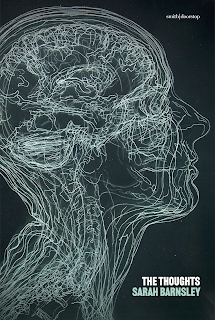
Review by Peter Raynard of "The Thoughts" by Sarah Barnsley


Sarah Barnsley’s debut collection The Thoughts is a wondrous and vital book that pushes the boundaries of what a poetry book can do and the subject it takes on - in this case, the mind (said to be medical science’s final frontier).

Divided into eight sections, (Ruminations, Compulsions, Avoidances, Magical Thinking, Thought-Action-Fusion, Formulation, Treatment, and epilogue) the book follows a coherent narrative arc, which is somewhat ironic given the chaotic experience of compulsive thinking.

Such thinking goes beyond excessive worrying or extended bouts of rumination. ‘The Next Poem’ shows this starkly: ‘I would have to touch everything in my box room in a specified order … and if I got it wrong I had to start over.’ Then in ‘The Thoughts,’ the poem is set out as a table of text with a list of examples (‘grabbing money from naked strangers in bank’) with a box to measure distress levels. In ‘The Horse,’ the metaphorical equine mind is anxious about choking on an apple: ‘and the more the horse tried / to swat the thought away / the more the apple grew.’ 

The approach taken by Barnsley perfectly fits the subject at hand. The poems come in many forms, from your expected black-on-white lineation to the downright surreal - as a questionnaire, a puzzle, funding proposal, and PhD Viva that draws on Barnsley’s experience as an academic. This makes the subject of intrusive and uncontrollable thoughts all the more direct by putting them in everyday examples.

The penultimate poem, ‘Examples,’ was, to my mind, the most moving, as it shows how common compulsive thoughts are in society: ‘We are pilots, lorry drivers, lawyers, firefighters, artists, opticians,’ as well as the types of thoughts they have: ‘an office worker who thought he’d blow up the building / if he switched on the lights.’ Exposure and challenging thoughts are two of the main strategies in treating compulsive thinking. 

This is a superb collection, smattered with humour, that shows a condition many experience but is rarely talked about - one of the many invisible disabilities, and one which Barnsley bravely makes visible.


About the reviewer
Peter Raynard’s two books of poetry are Precarious (Smokestack Books, 2018) and The Combination: A Poetic Coupling of the Communist Manifesto (Culture Matters, 2018). His third book Manland will be published by Nine Arches Press in June 2022.

Thursday, 13 January 2022

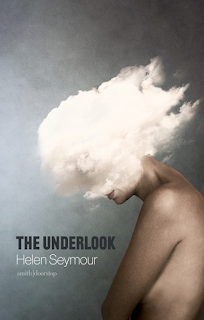
Review by Peter Raynard of "The Underlook" by Helen Seymour


In Helen Seymour’s fantastic debut collection, the poems fizz with controlled anger, satire, and surreal examples of how we navigate a society that constantly dehumanises disabled people.

A lot of the poems echoed my own experience as a disabled person: ending up in A&E and being asked your level of pain from nought to ten: "you have to say nine; if you say ten they think you’re being over-dramatic." Or, feeling disembodied when your condition is being described by a health professional, as Seymour describes in a sequence of short prose poems, "24 Hours in A&E": "Before they clean the blood off, they lever out the driftwood," and in the list poem "Spinal Fusion," where each line begins "the patient will …"

There is a central sequence, "Where is Hugo," about an abduction of a pig by a vegan, with a stand-out sestina "Chase the Forest," which like a number of the poems leaves you breathless with its pace and message. In "My Time in the Hospital," Seymour subverts the idea of passivity, with short lines and direct tense: "Mate, mate - / honestly - / I’m breathing with three lungs."

The most shocking poems are where Seymour rearranges the words of official reports, which further demonstrates the alienation of disabled people. In "Case dismissed of Slaying of Deformed Baby," a baby with a cleft palate was thrown to the floor at birth, and the perpetrator unpunished. The jolting juxtaposition of the words reflects society’s cognitive dissonance and lack of accountability: "Slammed one. Slammed seven. Bring in a realizing. Murder appealed the murder. Sustain."

Seymour utilises the surreal and satire to face up to such injustices and there is much arresting imagery; "I’m sucking in the air of a bouncy castle / breathing in the bumps." Not only is this an impressive debut, it is an impressive and urgent collection, full stop.


About the reviewer
Peter Raynard’s two books of poetry are Precarious (Smokestack Books, 2018) and The Combination: A Poetic Coupling of the Communist Manifesto (Culture Matters, 2018). His third book Manland will be published by Nine Arches Press in June 2022.