Friday, 20 October 2023

Review by Gary Day of "The Omniscient Tooth Fairy" by Vic Pickup


First things first. This tooth fairy is not omniscient. One poem is called ‘Little did I know.’ Nor is she really - this may come as no surprise - a tooth fairy. As ‘Occupation’ shows, she is so much more: ‘a climbing frame,’ ‘a tissue,’ ‘a body guard’ - in other words, a mum. More tough fairy than tooth fairy.

The only reference to dental matter is in ‘Irretrievable.’ The speaker recalls not being able to retrieve her daughter’s tooth after dropping it down the sink where its ‘pale milkiness erod[es] slowly in the sewer dirt.’ This slight but powerful drama of maternal anxiety and lost innocence crops up again in the poignant yet stoical ‘Facts of life.’

Most poems in this delightful collection concern the ups and downs of the speaker’s many-sided domestic life: husband, babies, picking up children from school, shopping for a birthday, family outings. They are a beguiling mix of vividness and tenderness, streaked with darkness. Indeed why shouldn’t they be? Life isn’t all sunny side up. But even when things get on top of the speaker, humour is never far away, as in the dazzling ‘My New Fridge,’ whose ending packs quite a punch.

Outside the fraught but generally cosy domestic circle there are more ominous events such as the plight of refugees portrayed in ‘Jungle,’ which finishes with a devastatingly powerful image. ‘The Longing of Judith Kerr’ is the most lacerating poem in the volume. It asks the reader to imagine how the children murdered in the death camps could be coaxed back to life. There are also hints of personal tragedy and a keen awareness that not all is well in contemporary Britain.

The collection bounces along. Whimsical, profound, absurd, touching, joyous, courageous and deeply life-affirming. Buy it.


About the reviewer
Gary Day is a retired English lecturer. He is the author of several books including The Story of Drama: Tragedy, Comedy and Sacrifice from the Greeks to the Present. He has also edited a range of books including two volumes on British Poetry in the Twentieth Century. His debut poetry collection, The Glass Roof Falls Like Rain, is due to be published by Holland Press later this year. 


Thursday, 19 October 2023

Review by Gary Day of "God's Little Artist" by Sue Hubbard


It’s not often that a poetry book comes complete with an introduction and notes but both do sterling work in providing a context for these poems about the life of the artist Gwen John whose achievements have been somewhat overshadowed by those of her more famous brother Augustus. 

Sue Hubbard brings her characteristic empathy and inventiveness to bear in telling John’s story from her life in Tenby, to her time at the Slade, to her move to Paris with Dorelia McNeill, on whom she may have had a crush, and who later lived in a ménage à trois with her brother and his wife Ida Nettleship. Gwen had to model to earn money and Hubbard concisely and dramatically evokes the humiliation such work could involve: ‘insolent hands on her small breasts.’   

The majority of poems in this splendid collection concern Gwen’s fateful relationship with the sculptor Auguste Rodin who was 36 years her senior. The verse pulls no punches in its evocation of desire: at one stage I had to loosen my collar. Hubbard is no less deft when it comes to conjuring the agony of being displaced by another in the affections of the beloved. One of her many gifts is to present love in the round, how it can abase as well as elevate: ‘she wants only to button his boots.’ 

After her affair with Rodin ended, John threw herself into her work. ‘The Poetry of Things’ is one of the standout pieces in the volume where ‘clouds of spray’ become ‘strings of prayer beads / lucent as benedictions.’ Art and religion offer a way forward for the broken self ‘only paint and prayer / can offer salvation.’ 

With its wonderfully glowing imagery this is a work to be treasured. 


About the reviewer
Gary Day is a retired English lecturer. He is the author of several books including The Story of Drama: Tragedy, Comedy and Sacrifice from the Greeks to the Present. He has also edited a range of books including two volumes on British Poetry in the Twentieth Century. His debut poetry collection, The Glass Roof Falls Like Rain, is due to be published by Holland Press later this year. 

Wednesday, 18 October 2023

Review by Rebecca Reynolds of "Otherlands: A World In The Making" by Thomas Halliday


Thomas Halliday’s book is a biography of the Earth, told backwards. He starts 20,000 years ago, at the beginning of the decisive thawing of the mammoth steppe, which rings the top of the world and is home to horses, bison and the now-extinct cave lion. 

The book then travels the Earth, landing at different times and places. So there are abundant giant penguins 41 million years ago; a gorgon 253 million years ago with a painful mouth tumour and a leg which has never been the same since she fractured it hunting Bunostegos (a creature looking like a stumpy, tall crocodile); and rock-eating bacteria in the Devonian, 407 million years ago, which make the surface of the water in which they live, intolerably hot to every other lifeform, shimmer with bubbles. The climate and geological processes are given as much space as plants and animals. 

The book ends in the pre-Cambrian 550 million years ago, with no life on land, a 22-hour day before friction slows the Earth’s rotation, and the closer moon shining 15% brighter.

How does Halliday add drama and interest to processes that happen over huge timescales, mostly with no humans involved?

Firstly, he picks varied moments — differently configured landmasses and oceans, with different climates and ecosystems, for example before or after mass extinctions. Secondly, he focuses on movement. Movement of wind, waves and water and therefore of land; communities of animals migrating; individual creatures on the move. Thirdly, he mixes together disparate information — so as well as watching a short-faced bear rummaging in a mammoth carcass, we learn about Korean, Russian and European bear mythologies.

Lastly, he embraces human-centred ways of description. Literary quotations head each chapter (including Hardy’s ‘Drummer Hodge’ — ‘Yet portion of that unknown plain / Will Hodge forever be’). He chooses anthropomorphic language such as ‘cyanobacteria discovered the magic of photosynthesis,’ and is happy to translate from the academic to the literary; so the academic term ‘index fossils’ (fossils which are so abundant they can be used to date the rocks they are in) becomes ‘fossil timepieces’ later in the same paragraph. The book ends with a plea to work together to stop climate change. 

This book tells us the world will never stop being in the making, or in the unmaking.


About the reviewer
Rebecca Reynolds is an English language teacher and editor. She has just finished a Research Masters at Liverpool University looking at differences between reading, speaking and listening to poetry. She published her book Curiosities from the Cabinet: Words and Objects from Britain’s Museums in 2017. Website here. X: @rebrey. 

Friday, 6 October 2023

Review by Margaret Royall of "Rain Falling" by Sarah Leavesley


Rain Falling is a stirring long poem, a battle-cry for action from humanity. Sarah’s innovative formatting of  her urgent message is astonishing in its very complexity. It is a poem sequence formatted in the shape of capital letters which spell out the title ‘Rain Falling.’ The poems forming each letter reveal the ravages of climate change on the planet, the extinction of many species, the neglectful role that humans have played and continue to play by their systematic failure to act effectively to halt the impending doom.

This is not an easy or comfortable read, requiring the reader to decipher the various ‘codes’ which the author employs. For instance, the first poem, formatted in a capital R shape, turns into a spectral poem where the top circle of the R joins onto the /\ shape and then reads backwards, mirroring the words above, perhaps throwing our culpability back at us. 

In the final G poem, the words at the base appear to be a jumble until you realise that they are repeated higher up but with some missed out and rearranged, so the reader has to figure out how they were first used and what changes have occurred. This unravelling suggests a parallel to the unravelling of the planet. Links in the eco chain go missing and humans are not effecting a lasting repair, which results in the chaotic weather we are now experiencing and the loss of species.

The author employs stark imagery to drive home her message: striking phrases such as 'raindrops ... falling like a skipped heartbeat,' 'ice as saving Angel,' 'slick with equilibrium,' 'nothing grew from the underbelly of our thundermakers,' 'reality’s overshimmering,' etc.

Rain Falling is a highly accomplished chapbook, intelligent and convincing. If the reader were ever sceptical about climate change, this will convince him/her to think again, and more than that, to act now, before it is too late.


About the reviewer
Margaret Royall has published five books of poetry and a memoir. Her work has appeared in print, online and in anthologies and has won or been listed in competitions. Her collection Where Flora Sings (Hedgehog Press 2020) was nominated for the Laurel Prize. She leads a Nottinghamshire poetry group and co-tutors a Hebridean writing retreat. Her next collection, Toccata and Fugue (Hedgehog Press) is due out in 2023. Website: https://margaretroyall.com/ Twitter: @RoyallMargaret Instagram: @meggiepoet

Tuesday, 3 October 2023

Review by Colin Dardis of "Cockroach" by Elizabeth McGeown


The 2022 UK Slam Champion, three-time All Ulster Poetry Slam Champion, and winner of many other spoken word plaudits Elizabeth McGeown delivers up her debut full-length collection, a book version of her successful hour-long live show, Cockroach. An exploration of self-identity, from teenage awkwardness to perplexing adult encounters, we find personalities of movie stars tried on and cast off in a litmus test of affinities, the rejected cockroach character searching for answers in pop culture, in art, within seclusion and amongst perceived peers.

McGeown’s preferred style of delivery feels rapid-fire and urgent on the page; the reader is often caught up in the intensity of delivery through short lines that drive the narrative forward. Such form can threaten to become staccato, fired out like so many other spoken word performances for the sake of a neat series of rhymes. Rather, here we sense that the narrative turns against itself, the speaker questioning and analysing along the way, evoking angst and self-doubt.

Sometimes the source of such anxiety and hesitation is internal, from fibromyalgia and other medical complaints (this reviewer challenges anyone to try and find a better poem about self-applying an enema for a gastric issue), but often the sources are external; we find mention of #MeToo, and McGeown’s experiences of gatekeepers and sexism in the fields of music and the spoken word scene. We see school bullying, and the weight of expectation to conform:

          I did not pay the daily toll
          and call Angela pretty
          when the prettiest thing about her was
          the relief we felt when she left.
- "Witch"

This blends naturally with the larger search for the self that the collection is primarily concerned with, and McGeown is aware of the perverse paradox that the self is frequently defined through the company it keeps. Hence, we find various house parties, dates, the need for space and solitude conflicting with the search for meaningful company. This leads to compelling observations such as "a misfit + a misfit = a kind of sanctuary." We also see this attraction reflected in a self-deprecating style:

          A painting of a loser is vivid
          perhaps never quite so vivid
          until witnessed by another loser.
- "Villain (ix)"

Indeed, self-deprecation is something McGeown excels in, as there is enough humour, spark and playfulness to stop the poems ever descending into self-pity or despondency. Ultimately, we find an authentic voice that isn’t afraid to question or defend itself. Cockroach is postmodern mal du siècle, enjoyable and engaging from start to end, and never losing any of the energy and tension McGeown brings to her live performances.


About the reviewer
Colin Dardis is a neurodivergent writer, editor and sound artist from Northern Ireland. His most recent book is What We Look Like in the Future (Red Wolf Editions, 2023). His work, largely influenced by his experiences with depression and Asperger's, has been published widely throughout Ireland, the UK and USA.
Friday, 22 September 2023

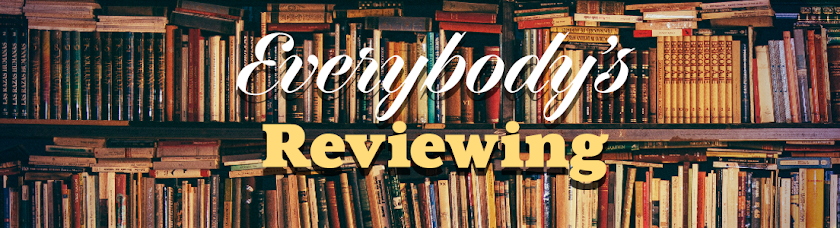
Review by Lisa Williams of "Flatlands" by Sue Hubbard


Flatlands by Sue Hubbard retells Gallico’s The Snow Goose but to an adult audience. Two souls that don’t belong, Freda and Philip, are bonded by the welfare of an injured bird: wounds and the wounded feature heavily in this wartime story. We are still evacuated with Freda but the desolation of the Snow Goose’s stretching mudflats are shifted up the coast to a “place between somewhere and nowhere” on the shores of the Wash. Hubbard’s skilled scene setting places us in both the wilderness and the time perfectly.

On “a hot day, the sort of day for a picnic, not a war” we’re transported with Freda on a train full of sad, scared evacuees to a new home “far away from love.” We’re immersed immediately in the “melancholy of the place.” This landscape, we learn as the story unfolds, matches the aching loneliness felt by both Freda and Philip. Freda remembers paisley eiderdowns and parma violets – Hubbard treats all our senses as she juxtaposes home comforts against the relentlessly barren East coast landscape.

Throughout the book the feeling of threat and uncertainty that war brings looms large but the actual menace is revealed to be lurking within the farmhouse. It is in the very place that Freda is put for safety that the full horrors of war are first exposed. She finds sanctuary at Philip’s lighthouse and they form what Philip describes as “a strange little friendship.”

An elderly Freda is telling us the story as a documentary about Dunkirk is about to be shown at her care home. Those nursed on the The Snow Goose will know Dunkirk’s poignant part in the story. I’m paddling carefully here not to avoid mines, but spoilers. During the depths of Dunkirk’s horrors in Flatlands oddly it was the addition of a dog in the water that made me catch my breath. His fate lingers long after the page has been turned.

As I read a book I make a note of sentences that I like. There was a point early on in this book that I thought I might never finish reading it because I was writing so many down. It’s a slow-paced read but with some delightful lines.


About the reviewer
Lisa Williams is a creative soul from Leicester. She has a Masters in Creative Writing from Leicester University, and lately tends to write mostly short fiction. She likes the challenge of a word limit – usually one hundred words. Her work has been published in numerous anthologies. Lisa has a weekly story slot on local community radio. She helps out a bit at Friday Flash Fiction and Blink Ink Journal. Lisa also paints and makes jewellery selling online as noodleBubble.

Thursday, 21 September 2023

Review by Katherine Gallagher of "Unmothered" by A. J. Akoto


This debut-collection from Black British poet A. J. Akoto is a book of deep feeling ‒ poetry that demands to be thought about, and read aloud. It is resonant, deep-voiced with pauses: poems that question, echo back; theatrically haunting and laced with reverberations that linger.

Akoto’s masterful and resolute poems about her unresolved arguments with her estranged mother bring to mind a line from Lavinia Greenlaw's "Prayer" "for those trapped in another’s gravity." Mother and daughter, the two are trapped, intertwined, without hope of escape. The poems, resilient, despair-biting, fiercely-knowing and uncompromising, speak with the demeaning ferocity of all the "unmothered" mother-daughter alienation that has gone before.

Images of myth, primarily Medea, tantalise and predominate, reminding the speaker of her fate. Kevin Threlfall's ominous cover design, Darkness Follows, sets the pattern, the paradox of this young woman "unmothered," "undaughtered" –  indeed, this is the way it goes:

          A return. Not of last year’s summer,
          but the sense of those simmering
          childhood hours spent reading 
          under the light of solitude.

          Cool relief of those hours free
          from the prickle
          of her shadow along the wall.
- "Return of Summer"

The protagonist imagines a wished-for escape but the "prickle / of her (mother’s) shadow along the wall" is mostly there, reinforced by a dread of "haunting" and "ghost-flames," to be reckoned with.

It is an approach-avoidance conflict writ large. In the poem, "Who is to be saved?" Akoto suggests "It’s a difficult decision, / but all the same, my mother / does what she does best: saves herself. / ... Years later, she comes back, / closing out light behind her. / A shadow crosses my heart / a spider-skitter-scattering / along the muscle of my being." One thinks of reconciliation but no, the poem continues, "She also needs my darkness. / ... When I landed in the dark, / I stayed there. Yet / she holds out her hand / and I’m hers again. Even when / she recoils at my mangling, / because some bones do not heal. / and some hurts set themselves wrong, / I’m still hers." So they hold each other "trapped."

This amazing book Unmothered continues along this pattern – with light and shade but mostly dark, an exhaustive white heat of reciprocal anger, love, recriminations and sadness. I can imagine it as a theatrical piece, perhaps as a monologue with musical backing, or a presentation of assorted moods and voices, again with music. Akoto has a powerful presence and has presented an extremely powerful range of poems where the reader is continually returning to the question: Who is to be saved?


About the reviewer
Katherine Gallagher is an Australian-born North London poet. Her sixth full collection, Acres of Light (Arc Publications, 2016) – 'a joyful rinsing of the senses,' Alison Brackenbury – follows her Carnival Edge: New & Selected Poems (also with Arc, 2010). Carol Rumens chose her 'The Year of the Tree' for The Guardian’s Poem of the Week. 

Wednesday, 20 September 2023

Review by Colin Dardis of "The Wind Stills to Listen" by Deirdre Cartmill


Deirdre Cartmill’s third full-length collection is an exploration of longing and fulfilment. The first half of the collection take the reader through the fallout from a miscarriage, from the initial thrill and excitement of expectancy to the resultant grief and trauma. "Signs of Life" sums up the devastation in a neat image of the line of a pregnancy test developing like a polaroid picture:

          like a photograph emerging from a negative
          and slowly filling with the possibility of life
          …
          But when we hand you to the doctor
          and she scans you for the first time,
          you disappear like a film exposed to light

Suddenly, given the shock of the news, motherhood and loss are seen everywhere. The flowers of a petal "fold into a womb"; the would-be parents' relationship gets compared to "pages joined by a perforated edge | and how little it takes to tear them apart." The fragility of life is exposed.

Deprived of motherhood, the poems take up the theme of observation. In "Fishmarket Pas de Deux," the speaker does not take part in the absurd dance reencountered in the poem; instead they "partake by watching." The mothering instinct is transposed onto the image of a child scavenging for food in "Daily Bread," the image seeming to haunt as a ghost, demanding to be seen, filling a void perhaps where a child should be. And yet, again, the speaker will only "watch and wait, and do nothing." In the opening poem, "Between Crossing and Passing," we are told that ghosts will do "anything to sate that unmet need | to be seen, heard." Cartmill places the unfilled mother between mourning the past and grasping at the future. We are shown a traffic light turning green, and told that "everything seems possible now," yet elsewhere we find "a trail of pawprints" that "lead nowhere," and we are left to wonder what possible direction the narrator is left free to take.

However, in the suitably-named haikai sequence, "Crossing Points," we find a key image encompassing both connection and separation:

          Window reflections.
          Me superimposed on you.
          joined without touching.

Cartmill excels in creating significance in seemingly minor images, using the material world as symbols for the turmoil felt whilst trying to make sense of what life has delivered – or failed to deliver. By the time we reach "Intercession," there is supplication, where Cartmill read to "let the reflection of Christ | washed over my upturned face." Now, with a different form of superimposition, the collection moves into a sequence taking up the majority of the book, told through the figure of Mary Magdalene. We see a blossoming faith, the ontogenesis of a personal and intimate relationship with Christ.

Magdalene starts off much as Cartmill, an observer, "reaching out, unable to touch." Yet soon, we see her move past observation and into participation, as she finds "my home in him" and eventually is invited to even preach alongside Jesus, the two becoming the one voice, and again, we find yet further superimposition.

Cartmill uses the Christ story to bring consolation and fulfilment; just as some nuns are encouraged to move any sexual desire they make have onto the Christ figure, the reader can’t help but draw comparisons and parallels between this faith helping to ease the pain of miscarriage. And indeed, Cartmill does not shy away from the intimacy that people speculate Christ and Magdalene may have held: "I watch each muscle flex," "his hand is on my waist," "his breath lifts each hair on my neck." One may stop to wonder why such emphasis on the physicality of the relationship, yet such human elements help us buy in to the intensity of feeling here.

Whatever one’s own personal views on faith and theology, the reader will still be caught up in the story, one that is emboldening, feminist, and inspiring. What we are left with is a resolution that offers a different form of motherhood, as Cartmill expertly squares the circle of the narrative to show us a surrogate relationship found through belief:

          So I speak of all God has told us,
          of how God gave birth to us
          as we give birth to men
          who shun us, break us, rape us

          - yet we do not stop giving birth.

Once more, publisher Arlen House offers up an engaging and stimulating collection, and after ten years since Cartmill’s last volume, we find that she has only strengthen her resolve, compassion and storytelling craft.


About the reviewer
Colin Dardis is a neurodivergent writer, editor and sound artist from Northern Ireland. His most recent book is What We Look Like in the Future (Red Wolf Editions, 2023). His work, largely influenced by his experiences with depression and Asperger's, has been published widely throughout Ireland, the UK and USA.

Tuesday, 19 September 2023

Review by Katherine Hetzel of "Jötunheim" by Constantine


Jötunheim is the sequel to The Cats of Charnwood. It's a time-travelling, dream-space jumping adventure which takes the Guardian cats Bailey and Scruff back 1200 years to a Charnwood not yet impacted by man’s need for stone, in a bid to find a new world for the Jotnar (giants) before humans can wipe them out.

Having travelled to the 9th century, Bailey and Scruff need the help of Leif, a human boy; Fala, a young giant; the cats of Osgathorpe; and a young Old One, in order to save the giants and prevent the pools of Kapol-Tok– doorways to other worlds – from being sealed or lost forever in the future.

As is often the way, time travel and world-hopping can be confusing, but interspersed as it is with Norse mythology and information about the geography of Charnwood, the reader is easily carried along with Scruff and Bailey to the end of their journey.

Written by a neurodiverse author with neurodiverse and reluctant readers in mind, the story is structured with lots of short chapters and section breaks to aid concentration, and often grounds the reader as to who is speaking or thinking so as not to lose track. In the early edition I read, there were punctuation errors, but if you can see beyond those the story being told is original and – as a Charnwood girl myself – is interesting in both the history and myths it presents. The book can be read alone, but reading The Cats of Charnwood first might help a reader to settle into the cats’ world more quickly. 


About the reviewer
Katherine Hetzel is an ex-microbiologist-and-egg-pickler turned children's author, writing fantasy adventure novels for middle grade readers. She's also a volunteer librarian two afternoons a week in a local primary school, and enjoys encouraging pupils of all ages to explore the world of books. To find out more, visit her website here


You can read more about Jötunheim on Creative Writing at Leicester here