Showing posts with label non-fiction. Show all posts

Tuesday, 8 September 2026

Review by Mariella Bucci of "Everything Is Tuberculosis" by John Green


In many ways, the writings of the Green brothers have grown up with me. While I could never really call myself a ‘fan’ of their YouTube content, more like a casual enjoyer, I was perfectly primed at thirteen to devour all of John Green’s YA novels, and again when Hank Green released his sci-fi duology a few years later. 

This book marks John Green’s second entry into adult non-fiction after The Anthropocene Reviewed in 2021, tracing the progress and persistence of tuberculosis throughout human history, and comes at a time when I am far older and seeking more depth to the literature I consume. Reading like part autobiography, part medical journal, part anthropology lesson, Green expertly weaves the intimate story of a young TB patient from Sierra Leone, Henry, throughout this book as both an anchor point for the reader and a persistent reminder of the very real and human consequences when disease treatment becomes socio-political. The stories of Henry’s mother and his doctor, that exemplified the monumental barriers those in developing countries face compared to the laughably easy treatment of TB in first-world countries, were especially moving. 

I was also fascinated by the chapter on the romanticism of TB, connected with hundreds of artists and creatives throughout history, culminating in the beautiful poetry written by Henry in the depths of his illness. If you’re hesitant on non-fiction, I would highly recommend this as a starting point, and especially the audiobook narrated by Green himself.


About the reviewer
Mariella Bucci is a writer and creative based in the West Midlands. She is drawn to the understanding and analysis of what makes a compelling story in any medium, from her work in the film and television industry to essays and reviews on her Substack, @mariellamusings. Offline, you will most often find her nose-deep in a novel between sets at the gym.

Thursday, 2 July 2026

Review by Jasper Sygrove of "The Cherry Tree Theory" by Rich & Rox Pink


The Cherry Tree Theory is a beautifully written and deeply reflective book, which uses the real-time revival of a once-dying cherry tree as a powerful metaphor for personal growth and healing. After moving in together, Rich and Rox Pink revisit some of the darkest chapters of their lives, while pouring their love into nurturing a rich, fruitful garden. The Cherry Tree Theory creates a moving parallel between nature’s resilience and the human capacity to recover, adapt, and thrive.

The metaphors woven throughout the book are thoughtful, relatable, and leave you with plenty to reflect on. From setting healthy boundaries to rebuilding after difficult experiences, the lessons feel authentic and nuanced. The story gently reminds us that growth is rarely linear, but with patience, care, and perseverance, it's possible to create the future we've always hoped for.

While everyone's experiences are different and not every story will resonate with every reader, the underlying message is universal: there is always light at the end of the tunnel. I finished this book feeling inspired, motivated, and more optimistic about embracing life's challenges. This is a heartfelt, uplifting read that lingers in your thoughts long after you've turned the final page.

If you're curious but not quite ready to dive into the book, Rich and Rox Pink have also created a short companion episode as part of their podcast series "Late Bloomers," with each chapter summarised in 60 seconds or less. It's a brilliant introduction that offers a flavour of what's to come, without giving away the heart of the journey.


About the reviewer
Jasper Sygrove is a 27-year-old trans content creator, music producer, and cosplayer, with a lifelong passion for all things nerdy. From TV shows and movies, to video games and books, Jasper loves discovering and discussing the stories that leave a lasting impression. As a new reviewer, Jasper is excited to share honest, thoughtful reviews, and connect with others who enjoy exploring the worlds of entertainment and storytelling.

Tuesday, 2 June 2026

Review by Anna O'Sullivan of "Humankind: A Hopeful History" by Rutger Bregman


In Humankind: A Hopeful History, Rutger Bregman critiques society’s accepted view that humans are innately selfish and immoral beings, instead arguing with candid optimism that we are intrinsically kind. He dismantles ideas of human nature, famous psychological studies and real-world events, exposing misinformation that has been long accepted into the fabric of our society, giving reason to believe humans are hardwired for selfishness. By the end, this brilliant book completely transformed my view of human nature, and gave me a sense of hope about the goodness of people. 

I was captivated from the beginning, and especially interested in the chapters that critically examine famous psychological studies by Zimbardo and Milgram, which I studied as a Psychology A-Level student. I also had a pessimistic view of human nature, as these studies have worrying real-world implications, and demonstrated what harm humans are capable of. Seeing the studies through Bregman’s refined lens, with the inaccuracies exposed, gave me an entirely new perspective, and made me wish this book had been published a few years earlier. Alongside this, Bregman uses history, biology and anthropology to build a strong argument for the goodness of people. It was eye-opening to learn about the ways in which humans have fostered values of co-operation and kindness – saving strangers in a crisis or putting others first – in contrast to the darkly depressing media we are used to consuming on a daily basis due to availability bias. This can skewer one’s perspective of society, as it did mine. 

Now more than ever, this insightful book is an essential read. Just as the media continues to add fuel to the fire of cynicism, so too does the circulation of fake news and misinformation. In one of the book’s chapters, Bregman delves further into the true story of the murder of Kitty Genovese in 1964 – a story which brought a spotlight over the bystander effect when a flood of articles claimed that "38 witnesses" had stood by and done nothing as she was murdered. A refined analysis of this tragic event found that this claim was yet another example of fake news. Bregman demonstrates how mistrust in others can and will lead to negative impacts in politics and the economy.

Humankind was outside my typical comfort zone of non-fiction, and it surprised me by becoming a new favourite. The writing is extremely accessible, explaining complicated ideas in an engaging way. It had the ability to change my mind and make me believe more in the innate goodness of the people around me. 


About the reviewer
Anna O’Sullivan is a University of Leicester graduate with a BA in English and MA in Modern and Contemporary Literature and Creative Writing. She enjoys travelling, and recently returned from five months of backpacking across Latin America. Anna’s predominant passion is books; she is an avid reader, BookToker, attendee of literature events and employee at Hachette UK.  

Sunday, 31 May 2026

Review by Callum Deppe of "Talking to Strangers" by Malcolm Gladwell


Talking to Strangers is an exceptionally engaging and thought-provoking non-fiction book. Gladwell takes you on a journey through various real-world stories that tie together to make the overarching point that we understand strangers much less than we think we do. The book challenges the natural inclination to trust strangers and overestimated belief that we can accurately judge a stranger's character, intent and emotions.

I really enjoy how Gladwell takes seemingly unrelated real-world stories and brings them together, incorporating his own thoughts and illuminating their significance. He tells each story in such a riveting and accessible manner that the book feels like storytelling rather than an analysis. Most of the stories I hadn’t heard before, which was interesting to engage with in and of itself, but even for those familiar with the stories, Gladwell expresses a fresh perspective that you likely won’t have thought or heard before. I was particularly interested in the stories of spies and espionage.

This profound book leaves you with the motivation to interact with strangers with more humility, and brilliantly demonstrates the risks of assuming you fully understand the people around you. These messages are particularly important in today’s world. I would highly recommend this book to anyone. 


About the reviewer
Callum Deppe is a University of Leicester graduate with a BSc in Psychology. He enjoys a multitude of sports including football, cricket and golf, taking his dog on long walks and reading insightful non-fiction about the world around us. Callum works as a Social Work Assistant.


Wednesday, 9 April 2025

Review by Lee Wright of "On Writers and Writing" by Henry James


The essays featured in On Writers and Writing span fifty years and include Henry James’ short reviews, obituaries, reflections on the works of other writers, and a few personal statements of principle. In these writings, he offers insights on both how to write and how to read. Edited and introduced by Pulitzer Prize finalist Michael Gorra, this collection reveals how James honed his skills as a critic long before establishing himself as a novelist. The essays underscore the importance of criticism in shaping a writer’s craft. James critiqued the mistakes of his predecessors, hoping that by learning from them, he might one day get it right himself. 

In the opening essay of the book, "The Art of Fiction," Henry James uses English novelist Walter Besant’s lecture of the same name as a starting point for his own reflections on the art of fiction and argues that literature should either instruct or amuse. He does not mention Shakespeare, though, who challenged and delighted in equal measure, albeit not in novel form. There is an essay included on The Tempest in the latter stages of the book, though it stands out as one of the drier pieces in the collection. A more engaging piece is his review of Charles Dickens’ Our Mutual Friend, in which James describes it as a work "lacking in inspiration" and remarks, "For the past ten years, it has seemed to us that Mr. Dickens has been unmistakably forcing himself. Bleak House was forced, Little Dorrit was labored, and this current work feels as though it has been dug out with a spade and pickaxe." 

With the same metaphorical pickaxe, the then 22-year-old James continues, "It were, in our opinion, an offence against humanity to place Mr. Dickens among the greatest novelists. For, to repeat what we have already intimated, he has created nothing but figure. He has added nothing to our understanding of human character. He is master of but two alternatives: he reconciles us to what is commonplace, and he reconciles us to what is odd. The value of the former service is questionable; and the manner in which Mr. Dickens performs it sometimes conveys a certain impression of charlatanism."

The harshness of James’ language and the sweeping nature of his criticism are like the sting of a hornet. He doesn’t simply critique Dickens’ work; he almost entirely dismisses it as lacking genuine literary depth. He also calls George Eliot’s Middlemarch "One of the strongest and one of the weakest of English Novels," going on to argue that Eliot’s ambition is commendable but ultimately flawed: "The author wishes to say too many things, and to say them too well; to recommend herself to a scientific audience.” In 1885, George Eliot’s husband, John Walter Cross, published a semi-autobiographical work using extracts from her letters and journals, which Henry James later reviewed. James movingly notes that the letters and journals "are only a partial expression of her spirit." Another comment, though, seems to view womanhood primarily as a biological or physical condition, disappointingly implying that female authors, in general, may have inherent limitations or constraints due to their biology. 

Nevertheless, each piece evokes the sensation of sitting by the fire with James—a man shaped by his own greatest creation—breathless, just as his unnamed narrator is in the prologue of The Turn of the Screw. Not a word is spoken until the storyteller finishes reading the manuscript. At that point, we can choose to agree or disagree with the master.


About the reviewer
Lee Wright holds an MA in Creative Writing and is currently pursuing a PhD. His fiction and nonfiction have been published in Fairlight Books, Headstuff.org, époque press, and Cigarette Fire Literary Magazine.


Monday, 24 March 2025

Review by Kim Wiltshire of "The Granite Kingdom: A Cornish Journey" by Tim Hannigan


Tim Hannigan is Cornwall born and bred and, like many of us brought up in ‘picturesque’ tourist destinations, he spent time working in the hotel sector as a chef before managing to ‘escape.’ In Hannigan’s case, this escape took him to academia and a life as a writer, living in and writing travel books about Indonesia, before he felt able to revisit his childhood home and look afresh at the whole county of Cornwall.

For me, this is definitely a settle down somewhere comfy and immerse yourself in a different world type of book. Each chapter takes us through the geological specificities of Cornwall, the historical elements that have contributed to the folklore of the area, alongside a walking travelogue that takes the reader through the county. With pictures, maps and personal anecdotes, this book has a range of elements to engage with, which bring alive this diverse and interesting area.

Starting out at Cornish poet Charles Causley’s terraced house near Launceston, Hannigan walks along the Tamar, considering the idea of borders: who sets them, on what conditions are they set, and how / why are they important? That link to literary Cornwall carries on, unsurprisingly, throughout the book, exploring the old myths and folk tales, those writers and artists who made Cornwall their home, and those who visited – often with some very strange prejudices around the ‘native’ people and the ‘beauty’ of the area, or not as some more romantic artists seem to have decided.

There are some lovely images included, but I still found myself using my map app to find some of the areas being described, especially Causley’s little cottage. Having been an occasional tourist to the area, it was great to be able to delve a little more into the area on so many different levels. This is clearly a labour of love for Hannigan and, as you read it, his generosity at sharing this area he knows and loves so well can be felt. So, as mentioned above, settle down and immerse yourself in this world of piskeys, smugglers and the actual reality of an industrial landscape where real, actual people who may not be surfers (although it seems many are) live, love and work – for, with and often despite the tourists. Oh, and if you’re lucky enough to get the hardback version, the cover is also a beautiful artwork in its own right!


About the reviewer
Kim Wiltshire is a writer and academic, Reader and Programme Leader for Creative Writing at Edge Hill University. She writes scripts, short stories and was a British Academy Innovation Fellowship researching ways of embedding arts into healthcare settings during 2022 and 2023. 

You can read more about The Granite Kingdom by Tim Hannigan on Creative Writing at Leicester here. 

Wednesday, 15 January 2025

Review by Neil Fulwood of "Beethoven: The String Quartets" by David Vernon


Erudite without being pretentious, learned without being dustily academic, philosophical without being obfuscatory, David Vernon’s wonderful book, Beethoven: The String Quartets, whirls the reader through Beethoven’s sixteen string quartets, locating them in every possible context - social, political, religious, historical, contemporary - as well as rigorously exploring their relationship to the rest of Beethoven’s oeuvre. Vernon comes across as a polymath, an intellectual and a man of culture. That he also demonstrates wit, warmth and humanity is the icing on the cake. Beethoven: the String Quartets is the kind of book that sets the gold standard for non-fiction.


About the reviewer
Neil Fulwood lives and works in Nottingham. He has published four full poetry collections with Shoestring Press, No Avoiding It, Can’t Take Me Anywhere, Service Cancelled and The Point of the Stick; and a volume of political satires, Mad Parade, with Smokestack Books.

Wednesday, 8 January 2025

Review by Tracey Foster of "Fewer, Better Things: The Hidden Wisdom of Objects" by Glenn Adamson


Reading this book reminded me of the adage: "Poets, we get it. Some things remind us of other things." 

All very amusing, but it doesn't explain why we have such an obsession with the objects we keep about us. While I write this, most of the human race is presently hunched over, worshiping at the altar of the flat screen, including myself.

Adamson investigates our need to accumulate and collect things and vocalize our appreciation of the world around us. He highlights the classification method used by Susan Stewart in her book, On Longing, in four categories: "The gigantic, the miniature, the collection and the souvenir." We name and claim large objects to bring them into our reach: mountains, oceans, planets and galaxies. We dissect and scrutinize our world down to the smallest cell or microbe. Then there is our need to catalogue and collect every variant until there are no gaps, and our desire to hold items once connected to our loved ones or historical figures. All these aspects make us human.

Our language is haptic-infused. Manual, manufacture, manoeuvre, we feel our way through life and have an impulse to touch objects to inherently understand them. The sixteenth-century art historian Giorgio Vasari said, "It is necessary to have the compass in the eyes and not the hand, because the hand works and the eye judges." Touch was previously thought the lesser of the senses, linked intrinsically to manual work and the lower classes. Helen Keller redefined how intrinsic our hands are to being fully cognizant of the world around us. Her book was the first to delve deeply into the importance of our fifth sense to fully see. 

Adamson spent time at the V&A museum and was director of the Arts & Design Museum in New York whilst writing this book. He is an advocate of moderation, reducing our world of stuff to just the essential or aesthetic. He explores William Morris' mantra: "Have nothing in your house that you know to be useful or believe to be beautiful." 

This book fully explores our relationship with objects, whilst maintaining a plea for living a life less cluttered. This seems a valid call following on from the excess of Christmas, the frenzy of exchanging goods and the aftermath of stuffing our homes with even more items we don’t really need. Museums are often guilty of acquiring masses of objects that spend their whole life in storage. Adamson spends one chapter exploring our multifaceted response to antiquities in museums, including paintings: "Any painting is an embodied moment of truth."

We bring our experiences and expectations when we visit museums. This can skew our reactions and temper our responses. Galleries lay out a default blank slate; cabinets are clear and clutter-free to allow us personal interaction with each object. Visitors experience a unique reaction, dependent upon race, gender, age and class, transforming everyday items into "cultural icons."

This book pleads for restraint when amassing items around us, a quick calculation of the carbon footprint we contribute to and collate in our world of stuff. Adamson is a believer of mend and reuse or, like the Japanese art of Kintsugi, the need to learn to live with the broken, as a memento of our time here on earth. The book is a call for a resurgence of material intelligence: as our stuff gets more technical, we become more removed from its creation: "Skin should be understood a site of intelligence." We should be more discerning with it. 


About the reviewer
Tracey Foster started off in a long career as an Art and Design teacher but wanted to refocus her creative energies into writing poetry and prose. After helping others find inspiration in the world around us, she took an MA course in Creative Writing at Leicester University and has not looked back. She finds inspiration in the past and the events that shape us. Previous work has been published by Comma Press, Ayaskala, Alternateroute, Fish Barrel Review, Haiku Foundation, Mausoleum Press, Bus Poetry Magazine, Wayward Literature, The Arts Council and she writes on her own blog site, The Small Sublime, found here.

Friday, 5 July 2024

Review by Lee Wright of "Our Island Stories: Country Walks Through Colonial Britain" by Corinne Fowler


American philosopher John Dewey said, “Time and memory are true artists; they remould reality nearer to the heart's desire.”

The British countryside has long captured that heart's desire, with its poetic allure, rolling hills, meandering lanes, and quaint villages with their listed buildings, evoking a sense of tranquillity and wonder, and wealth. But in Our Island Stories: Country Walks through Colonial Britain, historian Corinne Fowler (joined by various companions) takes us back through time on ten fascinating walks through Britain’s rural landscape, and sets out to discover the unique colonial connections of the places through which she passes.  

From the Cotswolds to East Lancashire, Hampshire to the Inner Hebrides, to Dolgellau and Norfolk, Fowler is propelled by a personal desire to give us the facts in an era when our elected (and often unelected) politicians choose to remould reality, preferring fiction over fact. This book isn't afraid to tie a piece of string around the base of the sensitive rural tooth, and the other end to the colonial doorknob, then slam the door. History may be complicated, but it should not be reshaped. As the author says in the book's preface, “Knowledge is not something to be weaponized but to be shared.” 

Fowler's finely crafted book shows us why it is essential we explore imperialism. Each walk taken is accessible so others, if they so wish, can follow in the author's footsteps. Slavery was a vast system and the author's task is equally vast. As she continues to shine new light on Britain's past, some in Westminster and most of the right-wing press are fighting her all the way. Fowler encourages her readers to look at rural Britain differently. History has much to show us, and this book, and her walks, follow where the history leads. 


About the reviewer
Lee Wright has an MA in Creative Writing from the University of Leicester and is currently working towards a PhD researching memoir and film. His fiction and poetry have been published with Fairlight Books, époque press and Burning House Press.

You can read more about Our Island Stories by Corinne Fowler on Creative Writing at Leicester here. 


Monday, 24 June 2024

Review by Tracey Foster of "Wanderers: A History of Women Walking" by Kerri Andrews


"I like going from one lighted room to another - such is my brain to me. Lighted rooms and the walks in the fields are corridors" - Virginia Woolf.

Woolf was a passionate walker, a stroller of London Streets, an observer, gathering mental notes of the comings and goings she witnessed there. This was all great material for writing. She admitted in her correspondence to constructing the whole of To the Lighthouse whilst walking round Tavistock Square. Pacing, timing of key moments throughout a text, matters to all novelists but in Woolf's case the pacing was literal and physical. The freedom she felt when pounding the streets was an absolute liberation for her and other gentrified women of the period. She could rebuke social expectations and constrictions and wander freely amid other classes, eavesdropping on conversations and exploring characters at first hand. Woolf plucked ripe material like fruit off a loaded tree: "I keep thinking of different ways to manage my scenes; conceiving endless possibilities, seeing life as I walk about the streets, an immersive opaque block of material to be conveyed by me into its equivalent of language."

Andrews's book delves into the lives of ten women who were passionate wanderers: strong, empowered, tenacious females who threw the rule book out. Fear has always been a barrier, the one thing stopping all females from just setting off. The solo male had no such obstacles, men like Wainwright, who wandered over hill and dale, staying out till dusk, knocking on strangers' doors to ask for a bed for the night. Our history books are full of such examples, Wordsworth, R. L. Stevenson, Rousseau, Keats and Coleridge. Andrews aims to put the record straight with this book, delving into 300 years of women walking to discover themselves: adventurers, writers and poets. 

These include women like Dorothy Wordsworth, a more accomplished hiker than her brother, who completed much more arduous journeys. While her brother was lauded for his poetry, she was ridiculed for being unfeminine; her strong physical presence was an affront to the ideal female form and her activities seen as ungraceful. She dismissed this and revelled in the chance to walk outdoors: "I seem to be drawn more closely to nature in such places; or rather I feel more strongly the power of nature over me, and I am better satisfied with myself for being able to find enjoyment in what unfortunately to many persons, is either dismal or insipid."

Robert McFarlane noted that "walking is not the action by which one arrives at knowledge; it is itself the means of knowing." For Dorothy, the moors offered her freedom and the chance to fully find herself. Rebecca Solnit, a compulsive wanderer, observed this male dominance of the field in her book Wanderlust and is proved correct when we peruse any bookshelf; authors of words on walking are more than 90% male. She states: "Legal measures, social mores ascribed to both men and women, the threat implicit in sexual harassment and rape itself have all limited women's ability to walk where and when they wished. Even the English language is rife with words and phrases that sexualize women's walking."

Despite this, women have walked and written about it passionately but mostly in private correspondence with others. This book eavesdrops on their thoughts, emotions and discoveries. Some of these women turned pedestrian to escape very rigid lives or confinement. Ellen Weeton explored the hills of Lancashire to escape an unhappy marriage and abusive husband. Harriet Martineau had been confined to bed by illness for five years, and used her newfound legs to explore the whole Lake District. Anais Nin sought solace from depression on the streets of New York and Paris. These women took ownership of their health and wellbeing and recorded their progress intimately and passionately: "Ultimately,  the vitality, variety and significance of the different ways of walking of seeing, of ‘being,’ articulated by these women require us to re-evaluate  our walking history,  because that history has always been written by women."


About the reviewer
Tracey Foster started off in a long career as an Art and Design teacher but wanted to refocus her creative energies into writing poetry and prose. She finds inspiration in the past and the events that shape us. Previous work has been published by Comma Press, Ayaskala, Alternateroute, Fish Barrel Review, Mausoleum Press, Bus Poetry Magazine, Wayward Literature, Zine Magazine and The Arts Council and she writes her own blog, Small Sublime. Her work is currently on exhibition at the Ikon Gallery.


Monday, 8 April 2024

Review by Lee Wright of "The Observable Universe" by Heather McCalden


Following the death of both her parents from AIDS in the 1990s, Heather McCalden was left an orphan at the age ten, to be raised by her grandmother. Convinced she could solve the mystery of why this happened and who her father really was, she became consumed by thoughts of AIDS and the internet developing on parallel timelines – 1982 was the year the terms Acquired Immune Deficiency Syndrome (AIDS) and Internet with a capital I were first used. 

Years of searching for deeper understanding eventually led her to becoming an artist and writer, clearly needing to fulfil a desire to create, and fill that part of her which life had destroyed. 

The publishing world isn't short on grief memoirs, but McCalden has been innovative with her subject, imparting historical knowledge and personal intimacy like spoonsful of cough syrup. The experience of reading The Observable Universe may sometimes taste bitter, but it is easily digestible. 

Viral infection and the internet are both constructed on shifting sands and so the author is constantly moving. The book feels like a Russian doll, or scrapbook. Or, as McCalden explains on the opening page: "This book is an album about grief. Every fragment is like a track on a record."

Every vignette, whether on Facebook, desire, curiosity, Netflix, human longing, Wikipedia, useless private detectives, or Holocaust deniers, carries with it both the serious and the satirical. The dormant menace of AIDS erupted around her as she grew up in Los Angeles, and then years later, another menace – that of a family secret - caused more heartache. 

McCalden’s thoughts are everywhere but given only in glimpses. There are also episodes of – whisper it – flash fiction, in the form of retold conversations in hotel bars or rent a car offices. Like a virus, there are many directions this memoir could go, and like the internet, you have to filter through the pages to get to the real story. 


About the reviewer
Lee Wright has an MA in Creative Writing and is currently working towards a PhD researching memoir and film. His fiction and poetry have been published with Fairlight Books, époque press and Burning House Press.

Wednesday, 18 October 2023

Review by Rebecca Reynolds of "Otherlands: A World In The Making" by Thomas Halliday


Thomas Halliday’s book is a biography of the Earth, told backwards. He starts 20,000 years ago, at the beginning of the decisive thawing of the mammoth steppe, which rings the top of the world and is home to horses, bison and the now-extinct cave lion. 

The book then travels the Earth, landing at different times and places. So there are abundant giant penguins 41 million years ago; a gorgon 253 million years ago with a painful mouth tumour and a leg which has never been the same since she fractured it hunting Bunostegos (a creature looking like a stumpy, tall crocodile); and rock-eating bacteria in the Devonian, 407 million years ago, which make the surface of the water in which they live, intolerably hot to every other lifeform, shimmer with bubbles. The climate and geological processes are given as much space as plants and animals. 

The book ends in the pre-Cambrian 550 million years ago, with no life on land, a 22-hour day before friction slows the Earth’s rotation, and the closer moon shining 15% brighter.

How does Halliday add drama and interest to processes that happen over huge timescales, mostly with no humans involved?

Firstly, he picks varied moments — differently configured landmasses and oceans, with different climates and ecosystems, for example before or after mass extinctions. Secondly, he focuses on movement. Movement of wind, waves and water and therefore of land; communities of animals migrating; individual creatures on the move. Thirdly, he mixes together disparate information — so as well as watching a short-faced bear rummaging in a mammoth carcass, we learn about Korean, Russian and European bear mythologies.

Lastly, he embraces human-centred ways of description. Literary quotations head each chapter (including Hardy’s ‘Drummer Hodge’ — ‘Yet portion of that unknown plain / Will Hodge forever be’). He chooses anthropomorphic language such as ‘cyanobacteria discovered the magic of photosynthesis,’ and is happy to translate from the academic to the literary; so the academic term ‘index fossils’ (fossils which are so abundant they can be used to date the rocks they are in) becomes ‘fossil timepieces’ later in the same paragraph. The book ends with a plea to work together to stop climate change. 

This book tells us the world will never stop being in the making, or in the unmaking.


About the reviewer
Rebecca Reynolds is an English language teacher and editor. She has just finished a Research Masters at Liverpool University looking at differences between reading, speaking and listening to poetry. She published her book Curiosities from the Cabinet: Words and Objects from Britain’s Museums in 2017. Website here. X: @rebrey. 

Tuesday, 2 May 2023

Review by Lisa Williams of "The Scent of Flowers at Night" by Leïla Slimani


Grab a sleeping bag – we’re off to Venice with Leïla Slimani to be locked into the Punta della Dogana museum for the night. In 2016 her novel Sweet Song won the Prix Goncourt, and this year she’s one of the Booker Prize judges. In The Scent of Flowers at Night she dwells on family, oppression, and ultimately happiness. These musings are woven round her exploration of the exhibits at night. Her reflections on self, solitude and the creative process make this short autobiographical work a particular delight for writers. The time frame seems fleeting though; her neat, lucid style leaves you wanting to spend another night with her, perhaps in a different museum.  


About the reviewer
Lisa Williams has an MA in Creative Writing from the University of Leicester. She writes word-limited flash fiction, mostly drabbles - stories of exactly one hundred words. You can find her online @noodleBubble 


Friday, 11 November 2022

Review by Fiona Linday of "Marrying Across Borders" by Sheela Burrell


It was an absolute pleasure to read Sheela’s generous memoirs, Marrying Across Borders. This most enlightening read shows her informed perspective on international marriage, giving others tips for thriving in the UK. They say to write what you would like to read; Sheela has filled a gap for those couples adapting to new surroundings and cultures. As well as us gleaning from her integration and connection with her family and friends, she cleverly elicits the experience of others in cross-cultural marriages. That was through a questionnaire to extend her Malaysian perspective.

This self-help book is presented striking a natural tone. Much humour and honesty keep us hooked in enjoying this helpful tool. I think it prepares those in cross-cultural marriages for smoother integration.

I particularly enjoyed the social and cultural norms chapter where Sheila says of her marriage: “When two people from different cultures fall in love, they come as two uniquely wrapped packages with intricate layers of beliefs and rules from their own culture ... We realised that we needed to respect and compromise as a couple in a cross-cultural relationship when it came to each other’s culture.”

Her story covers current topics to encourage cohesion within families. So the reader learns about misconceptions and better understands rich cultures. The layout is easy to dip into for valuable insight to engage newcomers as challenges present themselves or consume as a gripping memoir. I highly recommend this as a valuable resource to those welcoming couples in a cross-cultural marriage.


About the reviewer
Fiona Linday is an East Midland’s writer, coach and creative mentor. First published with the young adult Get Over It, Adventures, Onwards and Upwards. Then followed a prize-winning short story, ‘Off the Beaten Track,’ and the Unique Writing Publications Story Award for ‘Love’ prose non-fiction. There is a YA eBook anthology of short stories, The Heavenly Road Trip with Help For Writers. More recently, she enjoys facilitating with Attenborough Arts Centre, Leicester University learners editing Family Matters: An Anthology of New Writing, 2019, and Making Our World Better, Dahlia Publishing, 2022. These projects were Arts Council supported. Her inspirational collection is Count Our Blessings, Onwards & Upwards, 2021. Presently, she is pitching a resilience-building, wildlife picture book series seeking a publisher. Her website is here. You can read more about Making Our World Better on Creative Writing at Leicester here. 


Thursday, 29 September 2022

Review by Jon Wilkins of "The Author Is Not Dead, Merely Somewhere Else: Creative Writing Reconceived," by Michelene Wandor


Like London buses, good books come about in pairs.

Having read and reviewed Michelene Wandor’s Critical-Creative Writing: Two Sides of the Same Coin, I delved into an earlier book of hers about Creative Writing, and was at once captivated and intrigued, and it is not often that I have felt that about a non-fiction book. We can only admire Wandor’s own bibliography and in this book we can see why she has become such a successful writer. She ‘gets’ Creative Writing and this book will help the reader to ‘get’ it as well.

In The Author Is Not Dead, Merely Somewhere Else: Creative Writing Reconceived, Wandor has written the first history of Creative Writing, within it analysing the often complex relationship with English, literary studies and cultural theory. Scholarly, though not prescriptive, and challenging, her book presents us with an  inquisitive approach to Creative Writing that asks the reader, no challenges the reader, to look into their own practice and to see what they can add to the subject. 

Wandor looks at Creative Writing’s position in higher education, and what its future is and investigates and critiques the methodology of the workshop approach that we know so well, asking is this the right approach. Wandor looks for strategies for change in Creative Writing.  Should we be content with past practice or do we need something radically new in our approach as students, teachers and especially writers? This really is a ‘must read.’

There is so much in the book that we can learn from and can add to our own best Creative Writing practice. As Professor Philip Martin, former Pro Vice-Chancellor at DMU, says “A compelling, exciting read …” and its not often you can say that about an academic text!

The Author Is Not Dead, Merely Somewhere Else is an indispensable read for teachers and students, and all those who are worried about the future of Creative Writing, especially under our current government who seem to view creativity in all forms as subversive.


About the reviewer
Jon Wilkins is 66. He is married to the gorgeous Annie with two wonderful sons. He was a teacher for twenty years, a Waterstones bookseller and coached women’s basketball for over thirty years before taking up writing seriously. Nowadays he takes notes for students with Special Needs at Leicester University. He has had a work commissioned by the UK Arts Council and several pieces published traditionally as well as on-line. He has had poems in magazines and anthologies, art galleries, studios, museums and at Huddersfield Railway Station. He loves writing poetry. For his MA, he wrote a crime novel, Utrecht Snow. He followed it up with Utrecht Rain, and is now writing a third part. He is currently writing a crime series, Poppy Knows Best, set at the end of the Great War and into the early 1920s.

Tuesday, 21 June 2022

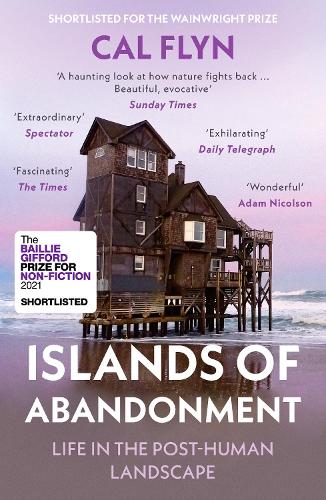
Review by Tracey Foster of "Islands of Abandonment" by Cal Flyn


In post-war bombed-out Britain, nature crept over and slowly reclaimed the wasteland in our towns, leading the director of Kew Gardens E. J. Salisbury to write about ‘the rapid clothing of blackened scars of war by the green mantle of vegetation.’ This book too is a hymn to the rewilding of a post-human landscape.

Travelling to all the remotest parts of the world post industrialisation, Flyn describes in beautiful prose the quiet, calming effect of nature’s restorative powers. Places that are regarded as cast off, inhuman dead zones - abandoned industrial waste, derelict buildings, nuclear fallout areas - all are found to have let nature creep in and take over: 'The glasshouse stands chest-deep in thistles. They grow tightly packed, straight up, soft heads fluffed and overripe, coming loose at the sides, ruffled by the draughts that seep through the broken panes. Thistledown hangs in the air, shifting on almost imperceptible currents, moving slowly through shafts of light.'

The nuclear test zone of Bikini Atoll, used exclusively in the 40s and 50s, was found in 2008 to contain a lagoon of kaleidoscopic life and be one of the most impressive underwater reefs on earth. Time and time again Flyn explores examples of nature moving in as man moves out. Nature thrives as she is left alone to repair what we have damaged. But Flyn gives us a word of warning: ‘these are not stories of redemption but restoration,’ for the land is always immeasurably altered and never replaced. 

A note of hope comes from recent science that shows that after competing with a global market, 63 million hectares of Soviet farmland was abandoned and is now contributing to the carbon capture of 7.6 gigatons of carbon dioxide. Part of this was the huge area around the nuclear plant of Chernobyl that was abandoned in 1986. Flyn's visit to the rewilded region takes on even more poignancy since the outbreak of the current war in Ukraine. How much has now been lost after so many gains will need to be told another day. 

This book is not just based on scientific study. Flyn also references a wider literature heritage from Milton’s Paradise Lost, to T. S. Elliot’s Wasteland and H. G. Wells’ War of the Worlds. This book should appeal to all as it draws from so many backgrounds. 

Flyn recently won the Sunday Times Charlotte Aitken Young Writer of the Year Award and spoke about her childhood in a wheelchair. Born with one leg shorter than the other, she underwent over twenty operations before the age of fifteen and was determined to not let this stop her. In this book she describes climbing under barbed wire and into derelict buildings to reach every part of the post-human landscape and takes her time to note every leaf and moss patch.

Quoted in the Sunday Times, she said, ‘some people have described my book as polemic, but I see it as anti-polemic.’ Can we ever replace what we have lost? Looking across the industrial New Jersey Bay she is reminded of the sculptor Robert Smithson: 'It does feel like a landscape of abandoned futures: where derelict mills and warehouses stand awkwardly along the waterfront, and clapboard houses in white and baby blue crowd between the ankles of bridges and flyovers and stacks of disused shipping containers a hundred metres high tower over everything and, away to the west, the sun going down.'

As the sun goes down, we all hope that nature can put a plaster on our man-made wounds and at least help to heal some of the damage that we have created: 'We are in the midst of a huge self-directed experiment in rewilding. Because abandonment is rewilding. This should be a book of darkness, a litany of the worst places in the world. In fact, it is a story of redemption.' 


About the reviewer
Tracey Foster started off in a long career as an Art and Design teacher but wanted to refocus her creative energies into writing poetry and prose. After helping others find inspiration in the world around us, she has taken the MA course in Creative Writing at Leicester University and has not looked back. She finds inspiration in the past and the events that shape us. Previous work has been published by Comma Press, Ayaskala, Alternateroute, Fish Barrel Review, Mausoleum Press, Bus Poetry Magazine and The Arts Council.


Friday, 1 April 2022

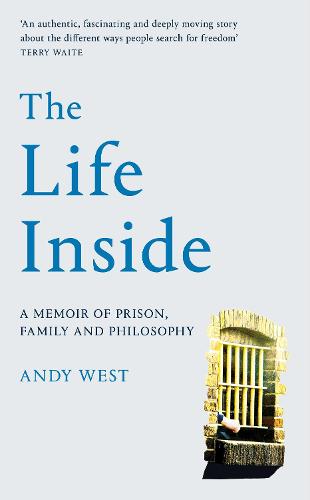
Review by Jon Wilkins of "The Life Inside: A Memoir of Prison, Family and Philosophy" by Andy West


Andy West is a teacher of philosophy in prisons. 

Whenever  Andy West steps into a jail, he is faced with a multitude of thoughts. He has diverse conversations with the people inside about their lives, their ideas and their feelings. As he listens to the men and women he works with, trying to find new ways for them to face their situation, he also comes to terms with his own world and his own guilt as we find that his father, uncle and brother all spent time in prison.

He chose a different path and has built a totally different life for himself, but he still worries that their fate will become his, as if it is a foregone conclusion that all their lives will take the same route. He asks what is prison for, to punish? To rehabilitate? Should we ever forgive a person who has done time? And what lasting impact does prison have on a person? Do they feel shame? Should we, the public forgive them? Is it in our remit to even think about doing this? What right do we have to do this? 

A fundamental question he asks is: can someone in prison ever be more free than someone outside? With this thought in mind, West goes on a journey looking for his own freedom in the wider world and wonders how these ideas reconcile with each other.

This is a beautifully written book, an intelligent exploration of life inside and outside of prison. Often amusing, often sad, it shows us all that is wrong with society, both behind bars and outside in our supposedly free world. We are what we make ourselves and this book tells us as much. This is truly an un-put-downable book, one that gives us a real insight to a series of different worlds and different lives.


About the reviewer
Jon Wilkins is sixty-six. He has a gorgeous wife Annie and two beautiful sons, and loves to write. He is a retired teacher, lapsed Waterstones’ bookseller and former Basketball Coach. He taught PE and English for twenty years and coached women’s basketball for over thirty years.  He has always loved books and reading. His website is here. 

Tuesday, 28 September 2021

Review by Tracey Foster of "Ghostland: In Search of a Haunted Country" by Edward Parnell


As a reader whose own childhood is rooted in the 1970s, I instantly recognised a very familiar soundtrack to this book: essences of the eerie that accompanied the TV productions of gothic tales from M. R. James, Kipling, Algernon Blackwood and others, the hypnotic hurdy-gurdy music of the black and white productions, often shown at Christmas in line with the Dickens tradition of an uncanny  tale for Christmas Eve. Parnell returns to his own childhood experiences and revisits the parts of the country directly connected with each story, speaking to people connected to the history and taking a fresh look at the landscape involved. 

The author Robert Macfarlane mentions in his article, ‘The Eeriness of the English Countryside,’  the nation’s obsession with the ‘sceptred’ in this ‘sceptred isle.’ This seems to ring true with Parnell’s mission to travel to its furthest corners and poke about in all its ‘sequestered places.’ Using his own memories to exorcise some sad periods, this also becomes an exercise in dealing with grief, to ‘not let those particular ghosts slip away, even when the very act of remembering is sometimes terribly painful.’ M. R. James noted that ‘for the ghost story, a slight haze of distance is desirable,’ and from the distance of adulthood we try to make sense of our haunted past. My own encounter with the vivid description of ‘the thief and his load’ in Jane Eyre at a young age pales in comparison with Parnell’s experiences, which are bound to send a shiver of recognition through its readers because of the wide net it casts. TV productions of ghostly classics, ‘folk horror ’ films, startling Public Information shorts, all form a backdrop to the childhood of this era, creating a ‘haunted generation,’  who will enjoy the detail this book goes into, researching these creations. The landscapes involved have their own tale to tell and many of us will enjoy seeing the pastoral idyll portrayed in a new way. Rather than a ‘stage set to offer the picturesque, it is a realm that snags, bites and troubles.’   

Landscapes of the desolate are a great environment to inspire and set the uncanny, the X MOD land off Orford in Suffolk being a great example. However, large houses with fading decadence also dominate these stories and this leads us to enquire why storytellers were fixated on them. Clarke thinks it is because they resonate with our social expectations of the eerie: ‘toffs like ghosts because it’s a symptom of their decadence, the plebeians because they are ill-educated.’  Parnell explores this in more depth: what is it about the place, brick, gravestone that brings us back to our fears? As John Clare puts it,

          We gaze on wrecks of ornamented stone
          On tombs whose sculptures half erased appear,
          On rank weeds, battening over human bones,
          Till even one’s very shadow seems to fear. 

The eerie has a tendency to surface at times of hardship, endurance. Several authors suffered losses as a result of two world wars, and this gave birth to an outpouring of ghostly grief from Rudyard Kipling, M. R. James and Walter de la Mare. We can find echoes within our own times as the 1970s was an era of unemployment, depression and darkness following the power cuts of 1972. As we find ourselves in troubling times again, writers of all genres are turning their sights to the uncanny once more and I for one can’t wait to see where it may lead. 


About the reviewer
Tracey Foster has been teacher of Art and Design in schools in Leicestershire, Northamptonshire and Rutland for over 40 years. She took part in the Comma Press short story course in 2019 and had a short story published in a collection, Tales from Garden Street. She had a poem about Covid published by BusPoetry Magazine and has since commenced an MA in Creative writing at Leicester University. 

Monday, 3 August 2020

Review by Lucretia Rose McCarthy of "Funny Weather: Art in an Emergency" by Olivia Laing


I came to Funny Weather: Art in an Emergency after enjoying Olivia Laing’s 2018 novel Crudo. Crudo broke away from Laing’s non-fiction to brilliantly detail the despair of the politically turbulent summer of 2017 through the persona of experimental writer Kathy Acker. Funny Weather is its antidote. Returning to criticism through neatly ordered essays on subjects ranging from the environment to loneliness and immigration via art and culture, it is the culmination of Laing’s works gathered across a formidable career as a critic. The two books are inextricably linked, with Crudo presenting the chaos and fear at work in the world, and Funny Weather offering order and hope despite the frequently difficult topics addressed. 

It is a book that is at once sensitive, humorous and optimistic. Through the collection, Laing takes in radical acts of self-care through film director Derek Jarman, the ‘fertile paranoia’ driving David Wojnarowicz’s art and the joy and renewal of David Bowie’s music. She introduces queer writer Maggie Nelson, revisits theorist Eve Kosofsky Sedgwick, and offers a conversation with singer Joseph Keckler, alongside many more. In this way, the text is highly peopled, forming communities of artists, writers and musicians in abundance without ever feeling pretentious or overwhelming. Funny Weather left me with a delightful, lengthy further reading list curated by what felt like a generous guide who appeared to be in conversation with the artists at hand and with the reader too. Laing’s own anecdotes maintained the autobiographical element familiar in many of her texts, which supported the interesting and often surprising biographical details of the artists littered throughout each of the essays. Each piece feels effortless, clearly backed up by Laing’s almost forensic research, making abstract art and distant figures familiar in the same way that the artists she invokes mediate our complicated world.

Funny Weather shows exactly what art can do in an emergency, how it can offer insight as well as respite, working as protest and envisioning new futures. As we begin to return to the world post-lockdown, this book provides not only comfort in chaos but strategies and spaces for hope. Though easily devoured in one sitting, it is one to return to, dipping into favourite essays and revisiting artists like old friends. It is the book we all need right now. 


About the reviewer
Lucretia Rose McCarthy is PhD researcher based at the University of Leicester in the department of Languages and Literature. Her work centres on women’s contemporary experimental life writing and is supported by funding from the Arts and Humanities Research Council and Midlands4Cities Doctoral Training Partnership. 


Wednesday, 5 September 2018

Interview with Dustin Illingworth


Dustin Illingworth’s writing has appeared in a variety of outlets including The Atlantic, Paris Review, the Times Literary Supplement, Los Angeles Times, and the Los Angeles Review of Books. He is the managing editor of The Scofield, and a contributing editor at Literary Hub. Dustin lives in Newport Beach, California and is currently finishing a debut novel. 

You can also read a list of Dustin Illingworth's Top Reads of 2016 here. 


Interviewed by Lee Wright

LW: What motivates your writing? 

DI: It is something I try not to look at too closely. If the motivations behind one’s obsessions become fully intelligible, their power is somehow weakened. If pressed, I would say I write fiction to rescue time. Even if what I reclaim isn’t completely satisfying, the effort represents a stand against the loss we are always in the midst of.  

LW: You are in the process of finishing a debut novel. Have you kept to a strict writing schedule? 

DI: I believe a writer is someone who finds a way to write every day. Ideas are cheap and plentiful, and inspiration pales in comparison to work ethic. My own schedule is very well-defined due to my having a day job. I write every evening after work from six to ten, and much longer on weekends.

LW: In a piece about the Journals of John Cheever, you wrote that Cheever was “a natural miniaturist, a collector of set pieces.” How effective is this style of writing? 

DI: I think writers possess natural capacities, and the best writing arises from an artist discovering the ideal formal vehicle for their vision. Cheever’s digressive richness makes for some of the greatest short fiction ever written, whereas I always feel like his novels are threatening to dissolve into fragmented incident. He can’t help but meander.

LW: What makes for a good piece of creative non-fiction? 

DI: As someone who loathes the personal essay, my favourite non-fiction situates art as existing in conversation with other art rather than (strictly) with oneself. Elizabeth Hardwick is my ideal essayist, a writer whose work moves beyond mere analysis into a kind of luxurious intuition. It is beautiful, often ambiguous, and possessed of a tensile strength.

LW: Is fiction harder to write?      

DI: Infinitely so. An essay or review is a discrete, self-contained piece of writing—if you’ve written enough of them, you begin to have a feeling for pacing, transition, where to include the offhand flourish or coup de grace, etc. A novel, though, is a torment unlike anything I’ve ever experienced. Fiction rubs your nose in your own ineptitude day after day. Again, it is as much an act of endurance as a work of inspiration.

LW: How did you develop your writing in the early days? 

DI: I read (and continue to read) writers who are vastly superior to me. Writing daily and reading those who have achieved an authoritative style are the only ways I know how to improve as a writer. Reading Shirley Hazzard or Mavis Gallant or John Hawkes or Malcolm Lowry impresses upon me how poor of a writer I am, and how far I need to go.

LW: What has been the most valuable piece of advice you’ve received as a writer?  

DI: “Write as if this were your only book, your last book. Into it put everything you were saving—everything precious, every scrap of capital, every penny as it were. Don’t be afraid of being left with nothing.” André Gide wrote this, and James Salter memorably condensed it: “Save nothing.”


About the interviewer
Lee Wright was born in Nuneaton, Warwickshire in 1980 and has been writing both fiction and non-fiction since 2008. He is taking an MA in Creative Writing at the University of Leicester in 2017.