
Showing posts with label Alan McCormick. Show all posts

Saturday, 15 February 2025

Review by Alan McCormick of "Precipitation" by Ailsa Cox, with illustrations by Patricia Farrell


Precipitation is the fifth in a series of small, illustrated story collections from the independent Manchester based publisher Confingo. Precipitation has three stories of frail characters from the city, faltering in alluring yet foreboding settings. There are echoes of David Constantine’s stories in the nuanced, empathetic characterisations and subtle lyrical handling of dramatic natural elements, the incessant rain falling through the ravines and scarred slopes of West Yorkshire and North Wales. 

In the first story, ‘Heavy Showers and Thunder,’ I was initially resistant to the seemingly novelistic back and forth cast of divergent characters, the multi-layered use of shifting time and back story. Within a few pages I was hooked. Luke seeks shelter on a desperate drenched cycle ride in the Calderdale hills with his ex-in-laws George and Barbara. He is escaping his new family home in the city. Middle-class and urban, he is an outsider in the rural landscape, in his ex-in-laws’ small village home. Tightly wrought grievances, social and political differences, and unquenched grief permeate their night together. Their daughter, Cass, Luke’s first wife, had died in a climbing accident years before and Barbara blames Luke. George and Barbara’s teenage granddaughter rarely contacts them anymore, and life hasn’t healed or moved on for them. Fuelled by a few drinks, George conveys Barbara’s resentment and blaming to Luke, who bridles, then retreats to the emotional ‘time-warp’ of Cass’s old moth-infested bedroom. 

Ailsa Cox is unafraid of putting a writer centre stage – the frustrated novelist Jason in ‘The Empty Quarter’ and the poet Fleur in ‘Stan’s House.’ Fleur came from Manchester with her partner (outsiders again) to live in Bethel Street, the same fictional Calderdale setting for ‘Heavy Showers and Thunder.’ Initially full of naïve optimism and excitement, the elements and surroundings soon close in and get the better of her. She encounters a malevolent old woman Yvonne, who she christens Miss Havisham. The old lady casts a spell, picking at her vulnerabilities, her aloneness. Initially repelled, Fleur becomes obsessed, her antennae piqued when learning that Yvonne once had a brother, a wild drunken poet called Stan – giving name to ‘Stan’s House.’ Fleur ends up as Yvonne had predicted, alone, when her partner moves out, the two women left somehow invisibly drawn together despite themselves. Stan and Fleur, two failing poets floundering in the exposing elements, also suggested Sylvia Plath’s grave in Calderdale’s Heptonstall, Ted Hughes’ family farm home nestled a mile away amongst the brooding escarpments.      

In ‘The Empty Quarter’ a hollowed-out novelist, Jason, can only think to escape his disappointing life and fulfil a long-held longing to reinvoke Wilfred Thesiger’s Arabian journeys, not by visiting there, but by imagining it from the lonely outpost of his writer friend’s neglected Welsh cottage. He loses himself in the mix, the incessant rain and isolation, a backdrop to his imaginary breakouts into the desert.

I was reminded of Tessa Hadley and Alice Munro (and then discovered Ailsa Cox has written a book about Munro) in the psychological depth of her stories that extend well beyond the page, so you think about the characters long after reading about them. So much is left unsaid, shadows creeping in from the past, from complex painful family dynamics. Life and feeling are brought naturally, three-dimensionally into the present, in these fragile characters’ thwarted attempts to maintain relationships, fulfil longings and escape disappointing lives. 

Shadowy pasts and character’s yearnings are skilfully invoked by Patricia Farrell’s accompanying black and white illustrations. It’s a wonderful mix and a great collection that left me enthralled and wanting more.


About the reviewer
Alan McCormick lives in Wicklow. He writes fiction and memoir. Recent writing has appeared in The Stinging Fly, Banshee, The Lonely Crowd, Exacting Clam, Southword and Culture Matters. His website is here.

You can read more about Precipitation on Creative Writing at Leicester here. 

Thursday, 15 December 2022

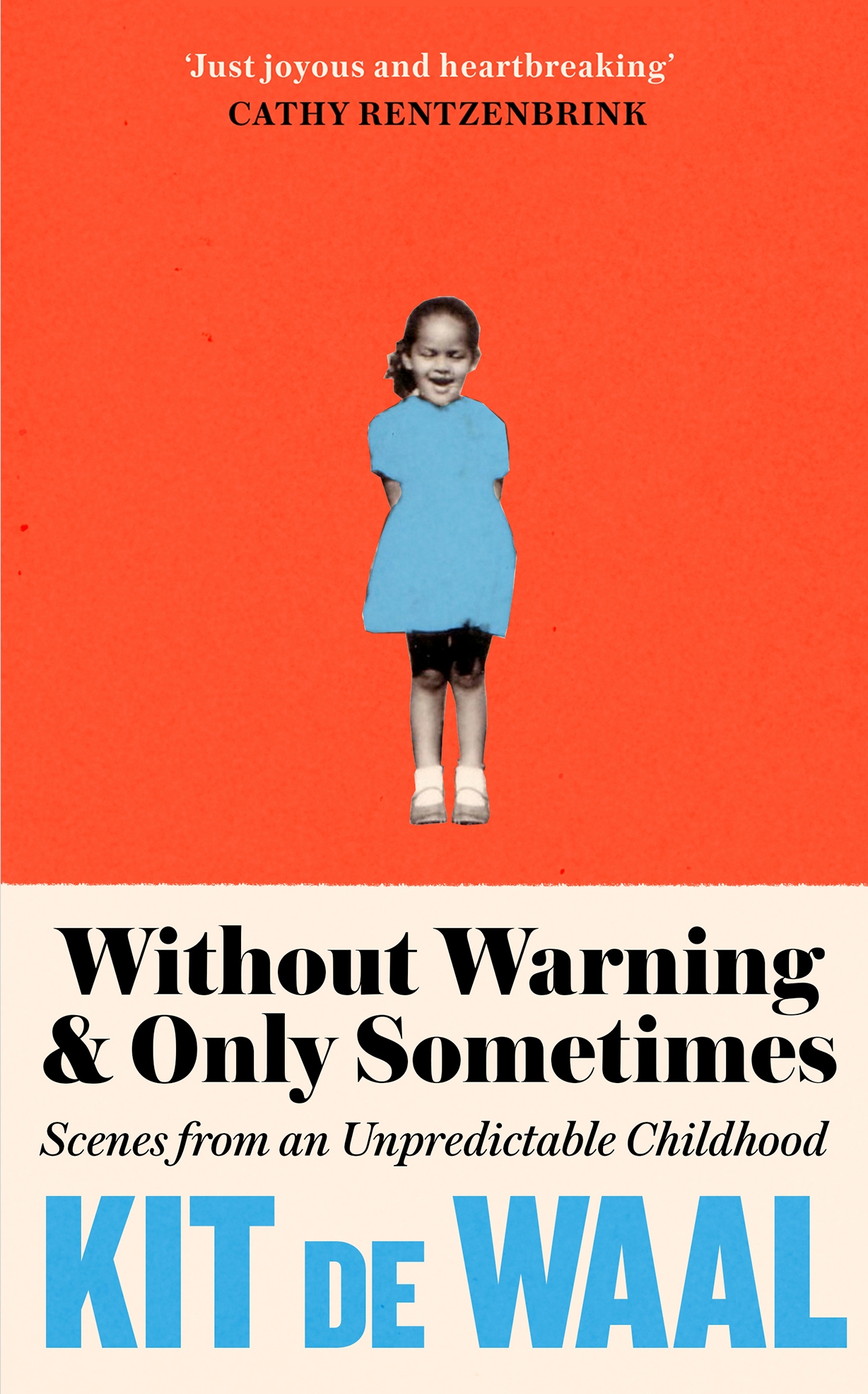
Review by Alan McCormick of "Without Warning and Only Sometimes: Scenes from an Unpredictable Childhood" by Kit de Waal


Kit De Waal’s narration is clear-eyed and unsentimental, devoid of self-pity, with an extraordinary gift of recall and eye for detail borne from a harsh childhood, where survival was often found in the shadows, dreaming, observing, trying to make sense of the goings on in an often unpredictable, joyless home, attempting to understand her family’s place in the world. 

Kit’s Mom is from Wexford and her Dad from St. Kitts. Being both Irish and Caribbean in nineteen-sixties-and-seventies Britain meant enduring endemic prejudice and everyday acts of racism – being called ‘Little Miss Fuzzy Wuzzy’ by a teacher or ‘wog’ and ‘blackie’ by a spiteful classmate – singled out in turn for being either Irish or black or mixed-race.  Even Kit’s grandmothers, Nan and Black Nana, never accept the racial partner choices made by their children, and, worse, Kit’s parents seem to distrust and reject each other’s cultures, and barely connect or show affection to each other. 

Kit’s Dad, Arthur, is mostly controlled (controlling), off-handily critical and barely present, living through cricket (he’s good), and detective and cowboy films on television. He springs momentarily to life to corral his willing kids (desperate for a bit of fun) to help bake Christmas cakes to give as gifts or make Caribbean food at weekends whilst Mom, Sheila, is at work. He puts on a good face around relatives and friends from home, fondly reminiscing a romanticised past. There is little money around and what money there is, is rarely spent on enough food and clothing for Kit and her siblings. Whilst Sheila tries to save, Arthur would rather use his money to keep up appearances by buying a smart car, good shoes for himself, sending extravagant gifts back home and building a house for his fantastical return to St Kitts. 

Sheila is overwrought and overworked (doing many jobs, cleaning, child-minding, caring, and running the home). She’s exhausted and distracted, needy and swamping when showing unexpected moments of generosity or affection (the sudden purchase of art supplies is accompanied by her manic desperation for the kids to instantly use and enjoy them), her feelings dissipated in caring for vulnerable strangers outside the home. She does rise to meet a crisis, caring in response to Kit’s dramatic childhood accidents, but becomes increasingly frustrated as time passes, saving milk bottles to throw at the outhouse wall, escaping into a forlorn, nostalgic reverie of singalong sentimental songs. 

And then there’s Jehovah which means no Christmas or birthday presents! Kit and her siblings learn to endure, and (ultimately) reject the weekly services at Kingdom Hall with their boring, guilt-tripping sermons, by making up irreverent names for the congregation. But Mom is on a mission to spread the word and in one hilarious, acutely observed scene, she again tries to lay traps (the increased frequency of natural disasters) to try and entice and convert her wily Catholic mother, who is having none of it: ‘It’s a push-me-pull-you of a dance,’ Kit observes. ‘As old as time, the child who was never the favourite, the mother who couldn’t love enough. They lock in with their clumsy footsteps, out of step to the music, each one trying to lead, stepping on toes.’

Affection and joy may arrive in the home ‘without warning and only sometimes’ for Kit and her siblings but it can also come from outside – Dad’s cousin Uncle Mike is ‘loud, gruff, rough, fun’ and the kids love being around him in his chaotic bedsit. Kit and her siblings also learn to find their own fun, to stick together to survive.

Everyone in the family wants to escape and change their lives, and, whilst Dad and Mom are thwarted, Kit finds salvation, the possibility of a better life away from home, first with friends, and then in the company of characters from books. She devours the classics recommended to her, the watcher becoming a reader, and later the writer who will let us into her life and tell her story – a multi-layered story about race and class, of hope and survival. It’s a wonderful, wise, and life-enhancing book that will stay with me for a long time.


About the reviewer
Alan McCormick lives in Wicklow. He’s a trustee with  InterAct Stroke Support who read fiction and poetry to stroke patients. Alan’s writing can be read in current issues of The Stinging Fly, Southword and Exacting Clam; and online at 3:AM Magazine, Fictive Dream, Dead Drunk Dublin, Mono, Words for the Wild and Époque Press. His story, 'Firestarter,' came second in this year’s RTÉ short story competition. For further information, see here


You can read more about Without Warning and Only Sometimes, by Kit de Waal, on Creative Writing at Leicester here

Monday, 22 June 2020

Review by Alan McCormick of "I Don't Want to Go to the Taj Mahal" by Charlie Hill


Charlie Hill’s I Don’t Want to Go to the Taj Mahal tells his story of growing up and living in Birmingham through a series of witty and engaging vignettes, skilfully told anecdotes, as if a much-loved, mischievous friend is regaling you in a pub and you don’t want him to stop because the stories are so good.

It’s a busy, disorientating life lived on the edge, often recklessly, sidestepping convention or being part of any defined group, or as Hill puts it, ‘not quite one thing nor another’: a life of cricket (playing for the local Tandoori restaurant team), curry (inevitably), old-school drugs and alcohol, pool hustling, dodgy bets (and even more dodgy pubs), missed sexual encounters, fleeting sexual encounters, a huge cast of entertaining characters and friendships, left-wing politics, decades of being broke, rare windfalls and cadging, cold bedrooms, sofa surfing and collapsing tents, casual approaches to casual jobs, and comically disastrous foreign travel. 

The book is honest, non-judgmental and unsentimental but has great warmth and charm, and carries a survivor’s stubborn will to live as full and interesting a life as possible through difficult times and periods of self-sabotage. It wears its great writing skill lightly, unpretentiously, so that stories of seeming little consequence build as if by magic to form a multi-dimensional portrayal of Hill’s character and life. If some of the sections, particularly at the beginning, are a little flip (though in keeping with the younger Hill’s outlook), and occasionally overly brief or relying on a killer last line of comic understatement or pathos to affect a feeling or change of tone, there are many more sections that are extraordinary, full-blooded, surprisingly touching and insightful, a delight to read.

Many scenes made me smile with fond recognition and others are just laugh-out-loud funny. Attempting to wise up (it’d be too early for that) a young Hill attends an interview to train as a nurse. To show his pragmatism and willingness to work he can’t stop mentioning that he’d ‘be happy to clean up shit,’ reflecting that he didn’t get an offer because they might have felt he had some kind of ‘shit fetish.’  In a later tone-perfect section, Hill ill advisedly follows his girlfriend, a more experienced traveller, to India. Valuing his libertarian spirit, and stubbornly eschewing any guidebook advice, Hill soon loses all his money, has to be fed by impoverished Indian fellow-travellers in a Third Class carriage (which he’s paid hundreds of times too much for) and comes down with amoebic dysentery. When his girlfriend wants to visit the Taj Mahal, of course he replies: ‘Everyone goes to the Taj Mahal — why would I want to go to the Taj Mahal?’

Living on the edge brings some surprises and excitement, but having no money or a secure home, regularly getting trashed, searching and constantly questioning everything also seems to be exhausting and to take its toll. 

As Hill’s life unexpectedly and gratifyingly calms through his forties with a partner and children, it’s allowed him to reflect on things and to write a wonderfully eccentric and entertaining memoir – I can’t think of another one quite like it!


About the reviewer
Alan McCormick lives with his family on the Wicklow coast. He’s been writer in residence at Kingston University’s Writing School and for the charity, InterAct Stroke Support. His fiction has won prizes and been widely published, including Salt’s Best British Short Stories, Confingo, and online at Words for the Wild, Dead Drunk Dublin, 3:AM and Époque Press. His collection, Dogsbodies and Scumsters, was long-listed for the 2012 Edge Hill Prize. See more at www.alanmccormickwriting.wordpress.com.

Thursday, 25 July 2019

Review by Alan McCormick of "Some of us glow more than others" by Tania Hershman


Tania Hershman casts mysterious and magical spells in her latest collection of short stories and flash fiction. She somehow manages to be forensic yet lyrical, playful yet profound, disturbing yet compassionate. Her scope is daring, unique and revelatory, investigative and sharp; continuously, entertainingly experimenting with ideas and with words; searching for meanings in stories about religion, science and love (nearly always love); the alchemy of life examined in startling ways, robots and octopi, the human spirit tested but winning through. It’s a beautiful book.

Like all truly original ambitious books that I’ve loved and savoured, there are some parts I don’t get or respond to – I think of writers like Dostoyevsky and Joyce that I consumed too quickly in my teens, whose books were so wondrous that it felt okay to skim over certain passages. Here there are occasional very short stories that don’t quite touch me, their meaning too slight or obtuse, frustratingly out of reach. But when Hershman’s experimentation is wedded to character and emotion, as it nearly always is, reading becomes a thrilling experience. The rogue scientific nun, Emmylene in ‘God Glows,’ who happens on the essence of love through her tests on other nuns’ blood, is a character who will long stay in the memory. 

There are several near-future dystopian stories – the domestic servant disconsolately apart from her land replacing a discarded robot in ‘Something Like a Tree,’ tending the grandmother of the house, who is slowly dying, so 'when she tries to breathe there is a dark deep knocking from inside as if something wants to leave.' In ‘The Special Advisor,’ there is the chillingly mundane world of dumbed-down subservience at work – following orders in a shadowy totalitarian state, bringing to mind Hannah Arendt’s observation about the ‘banality of evil’ – its central character employed to witness and advise on an array of inexplicable executions. Written in the second person to heighten the sense of existential dread, the witness/advisor is disturbed but doesn’t know what to do, a way out offered near the end by the predecessor in the post, who simply says ‘you don’t have to.’

If the flash shorts can sometimes seem oblique, they can also be spellbinding and moving. In ‘A Song for Falling’ a woman starts by composing songs for standing, and for sitting. After life engulfs her and the songs dry up, at last a single note appears, ‘a small small song ... for breathing, for taking the next breath ... a song for how to live now that you know what life can do to you.’  In another beautifully spare story, Carly, ‘a lonely child,’ ‘seems to have more of everything, more features than usual, diffused, extra, spare. And yet there is not enough of her. Not enough of her to make her way in the world.’

I found myself thinking of Barthelme, Borges and Lydia Davis in the wit, brevity and range of the stories, of Atwood in the disturbing science fictions, but Tania Hershman’s voice and vision is all her own. It’s a book I’ll enjoy giving to friends, for them to savour, to have their senses ignited, to be in thrall to.


About the reviewer
Alan McCormick lives with his family on the Dorset coast. He’s been writer in residence at Kingston University’s Writing School and for the charity, InterAct Stroke Support. His fiction has won prizes and been widely published, including Salt’s Best British Short Stories and Confingo. His collection, Dogsbodies and Scumsters, was long-listed for the 2012 Edge Hill Prize. See more at www.dogsbodiesandscumsters.wordpress.com.