Showing posts with label Memoir. Show all posts

Wednesday, 27 May 2026

Review by Millie Jackson of "Everything I Know About Love" by Dolly Alderton


Everything I Know About Love by Dolly Alderton is an internationally bestselling memoir following Alderton’s experience of growing up, adapting to adulthood and navigating love, loss, friendship and the hardship of work. Resembling the likes of Bridget Jones’s Diary, Alderton's memoir recounts personal anecdotes and stories alongside lists, recipes and observations to create a book that has resonated greatly with contemporary women of all ages. 

I absolutely loved Everything I Know About Love. It pulled me in from the first few pages; I ended up reading it so quickly because I was engaged the entire time. What stood out most to me was how honest and personal it felt. The book is open and relatable, and I felt connected to both Alderton and the stories she shares.

The book captures friendship, growing up, heartbreak, love, and the uncertainty of your twenties. So many moments were relatable – whether funny, emotional, or awkward, and that made the reading experience comforting and genuine. I also loved the balance of humour and vulnerability throughout the book.

Overall, this book felt like listening to a close friend tell stories about life in the most entertaining and heartfelt way possible. Everything I Know About Love is an essential read for all women navigating the challenges of adulthood. 


About the reviewer
Millie Jackson graduated from Oxford Brookes University with a BA (Hons) degree in Social Work. She is passionate about supporting others and currently works for a local charity. In her spare time, Millie enjoys spending time with animals, especially dogs, along with arts and crafts, reading, and playing video games.


Tuesday, 10 February 2026

Review by Kim Wiltshire of "Boater: A Life on England's Waterways" by Jo Bell


I’ve been aware of, and an admirer of, Jo Bell’s poetry for several years, so was excited to learn about this memoir she has written, all about her life living on a boat and travelling around England’s canal system. Published by Harper North, Boater: A Life on England’s Waterways is a cracking good read, and you’ll learn something about canal history too!

Living close to a canal myself, I’ve always been slightly envious of the lifestyle of the boat-dwellers as I’ve taken a walk down the towpath on a crisp winter morning or on a sunny afternoon, and as they sit with their cups of tea and biscuits, navigating through the canal systems of Greater Manchester. For a mere house-dweller like me, the lifestyle seems to offer freedom, albeit with plenty of hard work, a sense of fulfilment in spending time opening and closing locks, getting the fresh water in, emptying the wastewater out, filling up with fuel and wood for the fire. And this is pretty much the life Bell explores in her book.

However, what makes this book much more interesting than your run-of-the-mill memoir about living on a boat is the historical element she weaves through it. I now know about Telford, Rolt and Brindley, I know how locks are supposed to work, I know about the Nicholson maps. But this information doesn’t come across in a preachy "I’m teaching you something you should know about" way – although of course we should all know about it, because, as Bell highlights, it is such a central part of our recent history. No, Bell writes about the historical elements because of the way they link into her life, link into the choices she makes not just in where to go next, but why and how, and we learn that the decisions made by these genius innovators in the eighteenth and nineteenth centuries continue to shape her life. 

The book is written in three parts, all with short sections, and there are small moments of repetition, which perhaps might have been edited out, but these are easily forgiven with the sheer joy and energy in the book. As a bank-dweller, sometime gongoozler and slightly envious reader, I know now never to ask a boat-dweller if it is cold in the winter, but I’ve also learned not just about Jo’s life but about the industrial revolutionary history of our waterways.

This is a joyous book, and I would say if you can hold back the envy (maybe that is just me!) get yourself a copy and settle in for a cosy read. 


About the reviewer
Kim Wiltshire is a writer and academic, Reader and Programme Leader for Creative Writing at Edge Hill University. She writes scripts, short stories and was a British Academy Innovation Fellowship researching ways of embedding arts into healthcare settings during 2022 and 2023. 

You can read more about Boater by Jo Bell on Creative Writing at Leicester here


Sunday, 29 June 2025

Review by Lee Wright of "On Agoraphobia" by Graham Caveney


Memoirs rarely make deliberate use of space on the page, but the large areas of emptiness in Graham Caveney’s On Agoraphobia (2022) evoke a sense of unease that mirrors the author’s fear of open spaces, motorways, and crowds. As someone intimately familiar with the vulnerability of vast, public environments, Caveney conveys in his second memoir a sense of being throttled by a thousand invisible hands, each chapter strengthening the grip. The narrative is a belt tightening around the chest, each notch drawing one step closer to madness. 

There is a fraught relationship between the writer and the agoraphobic. Caveney recalls Shirley Jackson—once cruelly dubbed Virginia Werewolf—and her anxiety attack in a New York shopping mall: "She stayed inside. Something new and unpleasant had begun to happen every time she tried to leave the house." 

Art and agoraphobia demand a retreat from the world. Art is created out of a desire to fix, reinterpret, or reimagine the world. The more the world is fixed on the page or canvas, the more jarring and unpleasant the real world may feel to the artist upon stepping outside. Caveney has been battling his condition for thirty-plus years, calling it "a neurotic two-step." His agoraphobia began at the University of Warwick. Mine started while waiting for a bus outside a college in a Warwickshire town. 

He quotes Elizabeth Bowen: "Inside everyone, is there an anxious person who stands to hesitate in an empty room?" I have been that person, and I know others who carry that presence within them. But never before has there been such a deeply personal journey into the empty room as in Caveney’s account. 

To proceed, he has to turn back: "I grew up with a whole mythology of nerves. They had their own poetics. Bad with his nerves, a bundle of nerves, a nervous wreck. Nerves were a site of catastrophe." This anxious life, marked by more than its fair share of catastrophe, has provided Caveney with the material to write books that deeply resonate with readers. We can only hope that Shirley Jackson was right when she closed her diary with the repeated phrase: "laughter is possible laughter is possible laughter is possible." 


About the reviewer
Lee Wright is currently pursuing a PhD. His subjects are memoir, people and place. His work has been published in Fairlight Books, époque press, and Cigarette Fire Literary Magazine. 


Sunday, 26 January 2025

Review by Jonathan Taylor of "The Moon Looks on Them All: Of Friends and Friendship" by John Lucas


Despite their reputation for egocentrism, memoirs are often – perhaps always – about relationships between a narrator and other people. As critics Sidonie Smith and Julia Watson point out, “there is a relational aspect to most life writing," and many others have claimed something similar. This “relationality” (as they call it) most commonly encompasses fathers, mothers, siblings, children; but there is a growing sub-genre of memoirs and personal essays which recognises the vital role played by friends in our lives. John Lucas’s fascinating and wide-ranging The Moon Looks on Them All is a significant and beautifully-written contribution to this sub-genre of friendship-memoirs (filikigraphy?). 

Like all the best books about friendship, what Lucas’s memoir recognises is that “relationality” does not simply mean that the story is about two (or three, or fifteen) people rather than one. No: "relationality" means that the relationships themselves become focal points, main characters, above and beyond the individuals involved. Friendships are themselves stories: friendships have narrative arcs of many different kinds, and each of the chapters in Lucas’s book is, first and foremost, a story of a key friendship in the author’s life. Of course we find out about the amazing individuals involved – poets, academics, jazz musicians, E. M. Forster, Brian Clough, Lucas’s cat – but above and beyond that, we follow the story of Lucas’s changing relationships with them over time.

The result is a life-affirming patchwork of interweaving friendships, voices, anecdotes, poems and brilliantly-drawn character portraits. At one point, Lucas admits that “sooner or later, everyone I meet, and get to know, will remind me of a character in Dickens” - and The Moon Looks on Them All is rather like a Dickens novel, teeming with memorable characters. If the cumulative effect of a Dickens novel is often that the reader feels immersed in a vibrant all-encompassing community, something similar might be said, on a microcosmic scale, of the community of friends in Lucas’s memoir. He cites E. M. Forster’s faith in “Love, the beloved Republic,” in “an aristocracy of the sensitive, the considerate, and the plucky” – and that seems to me as good a description as any of the utopian community of friends which Lucas depicts in this book. 


About the reviewer
Jonathan Taylor is an author, editor, lecturer and critic. His two most recent books are the memoir A Physical Education: On Bullying, Discipline & Other Lessons (Goldsmiths, 2024), and the short story collection Scablands and Other Stories (Salt, 2023). He directs the MA in Creative Writing at the University of Leicester. 


Tuesday, 14 January 2025

Review by Lee Wright of "Two Sisters" by Blake Morrison


Blake Morrison’s younger sister, Gill, passed away at 67 from complications related to alcoholism. His latest memoir, Two Sisters, recounts Gill’s heartbreaking decline into severe alcohol addiction, worsened by the additional burden of losing her eyesight. Though Morrison cannot directly live through Gill’s specific challenges, he empathises with the physical, and psychological toll of such a loss. 

Morrison’s half-sister, Josie – the result of their father’s affair with a family friend – is the second sister featured in the memoir. Her paternity was confirmed through a DNA test just eight months before she tragically took her own life. 

Another interpretation of the title is that it reflects two versions of Gill: one sober, the other intoxicated. As a young girl, Gill was bullied at boarding school, and ultimately died alone, curled up on a strip of carpet between a bed and a radiator. Two Sisters is more experimental than Morrison’s earlier memoirs, blending excerpts from his diary with chapters that explore real-life brother-sister relationships, such as those between Charles and Mary Lamb and Dorothy and William Wordsworth. This elevates Two Sisters from a straightforward memoir into a broader, more reflective examination of familial dynamics and the complexities of sibling relationships. By weaving in these external examples, Morrison invites readers to compare his own experiences with those of historical and literary figures, prompting questions about the ties that bind. Many argue that those who are stronger have a responsibility to help the weaker. On the other hand, there are opposing views that emphasise individual responsibility, suggesting that it may not be the duty of the strong to help the weak if it infringes upon personal freedom. Morrison maintains that ‘It’s what happens with addicts. They kill your compassion. For a time Gill’s drinking killed mine.’ 

Whether it should be a brother’s responsibility to look out for his sister depends on individual values, and the specifics of the relationship between siblings. Do siblings have a moral obligation to support and care for each other? In the end, each familial relationship is unique. ‘Sisters do go missing,’ writes Morrison. ‘They go missing in horrible ways, abducted, murdered, forcibly married, disappeared for causing trouble to the powers that be. And sometimes they go missing by choice, to escape their families or – as we’ll discover later in this story – because they’ve fallen out of love with life.’ Morrison’s decision to write about his sisters is driven by a desire to make sense of their lives and to reconcile with the past. Two Sisters is infused with a profound sense of sadness as Morrison also processes his own emotions and commemorates his lost siblings as if their spirits were peering over his shoulder, watching him type and reading his words. After finishing the memoir, the final few lines of enslaved poet, Phillis Wheatley Peters’ 1773 poem, 'To a Gentleman and Lady on the Death of the Lady's Brother and Sister, and a Child of the Name Avis, Aged One Year,' came to mind: 

          Methinks I hear her in the realms above,
          And leaning forward with a filial love,
          Invite you there to share immortal bliss
          Unknown, untasted in a state like this.
          With tow'ring hopes, and growing grace arise,
          And seek beatitude beyond the skies.


About the reviewer
Lee Wright has an MA in Creative Writing and is currently working towards a PhD researching memoir and film. His fiction and poetry have been published with Fairlight Books, époque press and Burning House Press.

Sunday, 10 November 2024

Review by Sally Shaw of "A Physical Education" by Jonathan Taylor


A Physical Education: On Bullying, Discipline & Other Lessons is a book of memoir, interwoven with literary, film, drama and social sciences, by Jonathan Taylor, published in 2024 by Goldsmiths Press. 

When I started reading this book I wasn’t sure what to expect or even if I would be able to fully understand what Jonathan Taylor is discussing. As I read on and paused to consider what had been written I discovered how literature has tried to record or unveil bullying, how it has the power to aid individuals that are being bullied, and also Taylor’s skill in his examination of this subject. His writing enabled me to consider the many forms and complexities of bullying and bullies. Taylor’s bravery in sharing his at times harrowing experiences of being bullied will, I’m sure, enable others to identify bullying either of themselves or others and, in doing so, reduce it in educational and work settings, or deal with it. 

By providing literary examples, the book exposes, in a non-threatening way, the many different forms of bullying within education. For example, Taylor discusses the example of The Prime of Miss Jean Brodie, in relation to issues of classroom democracy, after he has been beaten down by the other children for standing up for the rights of a character in a drama the class are watching: "The problem, of course, with apparently individualistic behaviour is that it doesn’t come from nowhere. Individualism is never simply itself. Rather, it is made - and often made for, rather than by - the pupil or pupils at the centre of it. In The Prime of Miss Jean Brodie, the so-called individualism of the 'Brodie set' is obviously made, in part, by Miss Brodie herself, forged by her 'as the leader of the set … as Roman matron.' 'I am putting old heads on your young shoulders,' she declares, when her favourites are eleven. 'I would make you the crème de la crème.' Later, she proclaims: 'You are mine … of my stamp and cut.' Miss Brodie’s stamp and cut are what 'set them apart' from the other pupils, and ultimately, 'it was impossible to escape from the Brodie set because they were the Brodie set in the eyes of the school.' This puts them in an 'enviable’ position,' such that 'everyone thought the Brodie set had more fun than anyone else.' All too often, though, being set apart in 'the eyes of the school' is much less fun, more a matter of ostracism than envy." I think that most people can relate to a drama, novel or film and for me this book has made me aware that it is a legitimate form of support for people affected by bullying.

I can only say what I discovered by reading this book. One thing is that it can sometimes take years to realise bullying has been, or is, taking place. Reading this book I did think about my past and present. I knew I was bullied by teachers, work colleagues, and I have also started to uncover bullying from individuals close to me. And I have found the book contains further reading to enable me to explore this in greater depth. In fact, as I read on, I started to acknowledge that I think I could have been a bully at times in my earlier life, but I’m unable to recall the details. Taylor examines how the bullied have the potential to become the bully. I happened to watch the film The Joker (2019), starring Joaquin Phoenix, an extremely dark and disturbing film, that to me demonstrated a possible consequence of when the bullied become the bully. As Taylor discusses, the very term "bullying" is almost impossible to define, as it can range from teasing to domestic abuse and more. 

This book is worth reading by everybody as it is relatable to all areas of society and may lead to readers identifying bullying, so enabling greater awareness and understanding. There may not be one single method of stamping out bullying, but this book shows that greater understanding can reduce the risks for future generations. The more we can talk about it, reduce the shame, the more people will be helped.  


About the reviewer
Sally has an MA Creative Writing from the University of Leicester. She gains inspiration from old photographs, history, childhood memories, and is inspired by writers Sandra Cisneros, Deborah Morgan, Liz Berry and Emily Dickinson. She has short stories and poetry published in various online publications including The Ink Pantry, AnotherNorth, Roi Faineant Press
Sally lives in the countryside. 

You can read more about A Physical Education on Creative Writing at Leicester here

Sunday, 11 August 2024

Review by Sally Shaw of "Ghost Town: A Liverpool Shadowplay" by Jeff Young


Ghost Town: A Liverpool Shadowplay is a mixture of memoir and storytelling, by Jeff Young, published in 2020. Jeff Young is a playwright, screenwriter, writer, lecturer and broadcaster.

The hardback edition dustcover has a sepia photograph of two young children stood in the doorway of a terrace house. They seem to be looking out for someone, leaving or returning, I’m not sure. Jeff Young steps out from his family home to journey through the streets of Liverpool, his childhood, and life. The purpose is to find and preserve Liverpool. The book has seventeen chapters. As I’m reading, it occurs to me that these chapters are vignettes, and for a moment I’m reminded of Sandra Cisneros’s The House On Mango Street. I know I’m not on Mango Street: it’s the beauty of the writing that grips my hand ensuring I don’t get left behind.

The opening chapter "Gutted Arcades" provides a wonderful insight to why Young is on this journey: "My mother liked to trespass - she didn’t call it trespassing, she called it having a nose. We’d have a look round the Corn Exchange or go up the back stairs of an insurance building, slip into the Oriel Chambers and sort of just … breathe. We were breathing in Victorian dust and the pipe smoke of Dickensian ledger clerks; drinking in the shadows and gloom and beams of light." In these few sentences I can see the awe and wonderment Young has for his mother, I sense her wit and love for the heartbeat of Liverpool. I have a glimpse of Young’s ability to form a link to people of the past, present and future - that the ghosts are held in the very structure of a city for all to see should they choose to. 

Throughout his journey, Young bumps into many ghosts, too many to name here: "When I was seventeen I picked up a copy of Malcolm Lowry’s Ultramarine in a bookshop in Exchange Station - a station used by Lowry, en route to Norway in 1931 - and I discovered that Lowry had been a haunter of Liverpool’s streets and cinemas, too." Chapter by chapter, the reader follows Young through Liverpool, his childhood, adulthood, reflections trying to make sense of it all, with each step meeting family members, childhood friends, buildings, colourful characters real and imagined. 

What becomes apparent is the gradual disappearance of Liverpool, through buildings destroyed, redeveloped or left to decay. They’ll remain invisible if people forget, have no history or relationship with the place they call home. Young’s writing enables the reader to be part of his journey to find himself within the streets, buildings, sights and experiences of Liverpool. 

Ghost Town is a treasure chest of what it is to be human, community, family and the beauty of memories. Young shows me the complexity of memories, how through life one gathers them, some belonging to you while others are on loan from writers, musicians, artists, buildings, and family. They aid an understanding of self and life events. I found some of the stories within the chapters complex, others upsetting; some made me smile, others held the wonder of childhood. The last three chapters for me are outstanding. In "The Haunted Lullaby," Young writes of an experience where dreams and  his imagination merge with raw reality - how this has impacted his writing and has never left him or Liverpool. "In some ways, I think this is what made me a writer; it’s the origin story for the way I see and hear Liverpool. Elsie’s lullaby seeps into the city, haunting it, disturbing it, creating endless, turmoil. It’s beautiful and strange." The last chapter is magical and moving, Young’s description of searching for the "Stanley Park treasure-tree" is enchanting and leads the reader into knowing his sister Val who lived in a treasure trove house. I will say no more, so you can discover the wonder of Val, Liverpool and Jeff. The vignettes will never fade from my memory and I hope neither will Liverpool. 


About the reviewer
Sally Shaw has an MA Creative Writing from the University of Leicester. She writes short stories and is currently working on her novel based in 1950s Liverpool. She sometimes writes poetry. She gains inspiration from old photographs, history, her own childhood memories, and is inspired by writers Sandra Cisneros, Deborah Morgan, Liz Berry and Emily Dickinson. She has had short stories and poetry published in various online publications, including The Ink Pantry and AnotherNorth and in a ebook anthology Tales from Garden Street (Comma Press Short Story Course book 2019). Sally lives in the countryside with her partner, dog, and bantam. Twitter: @SallySh24367017

Monday, 8 April 2024

Review by Lee Wright of "The Observable Universe" by Heather McCalden


Following the death of both her parents from AIDS in the 1990s, Heather McCalden was left an orphan at the age ten, to be raised by her grandmother. Convinced she could solve the mystery of why this happened and who her father really was, she became consumed by thoughts of AIDS and the internet developing on parallel timelines – 1982 was the year the terms Acquired Immune Deficiency Syndrome (AIDS) and Internet with a capital I were first used. 

Years of searching for deeper understanding eventually led her to becoming an artist and writer, clearly needing to fulfil a desire to create, and fill that part of her which life had destroyed. 

The publishing world isn't short on grief memoirs, but McCalden has been innovative with her subject, imparting historical knowledge and personal intimacy like spoonsful of cough syrup. The experience of reading The Observable Universe may sometimes taste bitter, but it is easily digestible. 

Viral infection and the internet are both constructed on shifting sands and so the author is constantly moving. The book feels like a Russian doll, or scrapbook. Or, as McCalden explains on the opening page: "This book is an album about grief. Every fragment is like a track on a record."

Every vignette, whether on Facebook, desire, curiosity, Netflix, human longing, Wikipedia, useless private detectives, or Holocaust deniers, carries with it both the serious and the satirical. The dormant menace of AIDS erupted around her as she grew up in Los Angeles, and then years later, another menace – that of a family secret - caused more heartache. 

McCalden’s thoughts are everywhere but given only in glimpses. There are also episodes of – whisper it – flash fiction, in the form of retold conversations in hotel bars or rent a car offices. Like a virus, there are many directions this memoir could go, and like the internet, you have to filter through the pages to get to the real story. 


About the reviewer
Lee Wright has an MA in Creative Writing and is currently working towards a PhD researching memoir and film. His fiction and poetry have been published with Fairlight Books, époque press and Burning House Press.

Sunday, 14 January 2024

Review by Kathy Hoyle of "These Envoys of Beauty" by Anna Vaught


These Envoys of Beauty is a stunning memoir in which Anna Vaught’s prose sparkles with detailed observations of the natural world, contrasting sharply with a deep-rooted emotional response to childhood trauma. "When I was very young, and would run out or just stand and stare, I would look to plants and trees to help me explain to myself a bewildering world."

Structured as twelve separate essays, this memoir is journey of learning and discovery for both the writer and the reader. Vaught shares her vast knowledge of the natural world throughout, and by structuring the work in this way, the memoir becomes all the more manageable for the reader, especially when we must also traverse the deep, emotional revelations in each section. In the pause between each essay, we are able to breathe, process and decompress before beginning again, entering into the next deeply absorbing experience. And have no doubt, each essay is a completely immersive experience, exhilarating yet emotionally arduous in equal measure, a vivid sensory delight, juxtaposed with the trauma discussed. Vaught protects her reader wisely: much is implied throughout,  and though Vaught writes with vital honesty, she is never brutal. 

In her opening essay, Vaught declares, "My mother said mental health problems were an indulgence," and each essay delves further into a child’s journey through a world of shadows and unspoken truths, a world of fear and shame, where a girl is made to feel as though she is nothing but a "sufferance."  But this is also the story of a child who is curious, and despite her harsh reality, she finds beauty in the natural world around her, in the landscapes and seascapes, in dens and hollows, caves and cliffsides, in the trees and flowers, the roaring weirs and crashing waves. The child deftly slips between reality and imagination, between nature and dreams. 

This memoir embraces the wildness of nature and its cyclical patterns, and the writer truly finds comfort in the both the darkness and the light that nature provides: "One of my favourite things to this day is the nimbostratus, whose effect you feel and see: imagine the sun on your skin and light illuminating the sand. Then darkness and everything changes colour. This sudden shift is a moment of ecstasy for me in its drama. I also like sudden, powerful belts of rain, never more so than when I am by the sea. Standing in the water while being pelted – assuming you are not too cold – brings me to myself."

Despite the terrible echoes of Vaught’s past running through this memoir, there is also hope and a certain defiance in the writing which I found hugely admirable: "Epilobium angustifolium. My maternal grandmother called it fireweed, and my father said you could not kill it – which was exactly what I liked about it. It thrived."

In this examination of her "self" and her childhood memories, Vaught brings great comfort and hope to others with her resilience. I cried often when reading the essays, but I smiled too, at the beauty of them, at the hope within them. I wanted to champion the curious little girl Vaught once was, stroke her hair and lay in a meadow with her as the clouds scud above us and tell her that, one day, she will be okay. But I sense that Vaught is already one step ahead of me. In writing these essays, Vaught has reclaimed both her "self" and her power, and with her ongoing connection to the natural world, she has fashioned a protective shield. I love how Vaught has defiantly built new associations with natural world, casting off many of her childhood fears and associations, as she moves through adulthood, creating newer, safer memories: "But here was determination, and I wonder if it is strongest in those who are repeatedly told they should not survive or deserve to, who are told it would have been better if they had not been born."

I found These Envoys of Beauty such a beautiful and deeply moving memoir. It is one which will stay with me for a very long time. 


About the reviewer
Kathy Hoyle is a working-class writer of short fiction. Her stories have appeared in various literary magazines including Northern Gravy, Lunate, Ellipsiszine, Fictive Dream and The Forge. She is currently studying for a PhD in Creative Writing at the University of Leicester. She lives in a sleepy Warwickshire village and when she's not writing, she enjoys singing Dolly Parton songs to her long-suffering labradoodle, Eddie. 

You can read more about These Envoys of Beauty by Anna Vaught on Creative Writing at Leicester here


Tuesday, 2 May 2023

Review by Lisa Williams of "The Scent of Flowers at Night" by Leïla Slimani


Grab a sleeping bag – we’re off to Venice with Leïla Slimani to be locked into the Punta della Dogana museum for the night. In 2016 her novel Sweet Song won the Prix Goncourt, and this year she’s one of the Booker Prize judges. In The Scent of Flowers at Night she dwells on family, oppression, and ultimately happiness. These musings are woven round her exploration of the exhibits at night. Her reflections on self, solitude and the creative process make this short autobiographical work a particular delight for writers. The time frame seems fleeting though; her neat, lucid style leaves you wanting to spend another night with her, perhaps in a different museum.  


About the reviewer
Lisa Williams has an MA in Creative Writing from the University of Leicester. She writes word-limited flash fiction, mostly drabbles - stories of exactly one hundred words. You can find her online @noodleBubble 


Saturday, 11 March 2023

Review by Laurie Cusack of "T'ree Tins of Turpentine" by Tim O'Sullivan


O’Sullivan’s spare-bittersweet memoir has laugh-out-loud moments strewn all the way through it. The boozy opening anecdote is electrifying and helps set its visceral tone. Here is an underrepresented Irish diasporic working-class voice in full flow.

It is authentic and comes straight from the gut, which is a rare phenomenon indeed, methinks. Bravo.

Many of O’Sullivan’s recollections and experiences resonated more than once. The brutality meted out by school and family was the norm back then which haunts our PC world of today. Also, his faith and first holy communion are well realised  and struck a chord: I  felt the same reservations about the body of Christ and eating the wafer.

Moreover, his allusions to hooliganism, drugs and inner-city violence that were ever present in 1970s England are bang on. A scrap was never far away. 

Shoplifting in Lewis’s – what a joy!   

These remarkable warts-and-all remembrances of social deprivation are truly powerful, evocative, poignant and captivating. This is a brave text. Sometimes it’s easy to ignore the tiers of poverty that surround us, and that is why this rare text is an important empathetic reminder to us all about life, chance and circumstance: ‘There but for the grace of God go I.’ His incarcerations speak volumes about the revolving door and institutionalisation and how chance can change a life. 

The period detailing is also spot-on: long-lost pubs and clubs like the Black Lion, The Longstop, The Churchill, Breni Inns, The George and Sloopy’s are in my memory bank. O’Sullivan’s text vividly captures the decades seamlessly as his chaotic life unfolds – no holds barred, until redemption and change kick-in.

There is a local buzz about this Leicester folklore of a book − I keep bumping into people who have read it or who are planning to.

A local delight!


About the reviewer
Laurie Cusack has a PhD in Creative Writing from the University of Leicester. His collection of short stories, The Mad Road, will be published by Roman Books in 2023. His story 'The Bottle and the Trowel' is published in the anthology High Spirits: A Round of Drinking Stories

Thursday, 15 December 2022

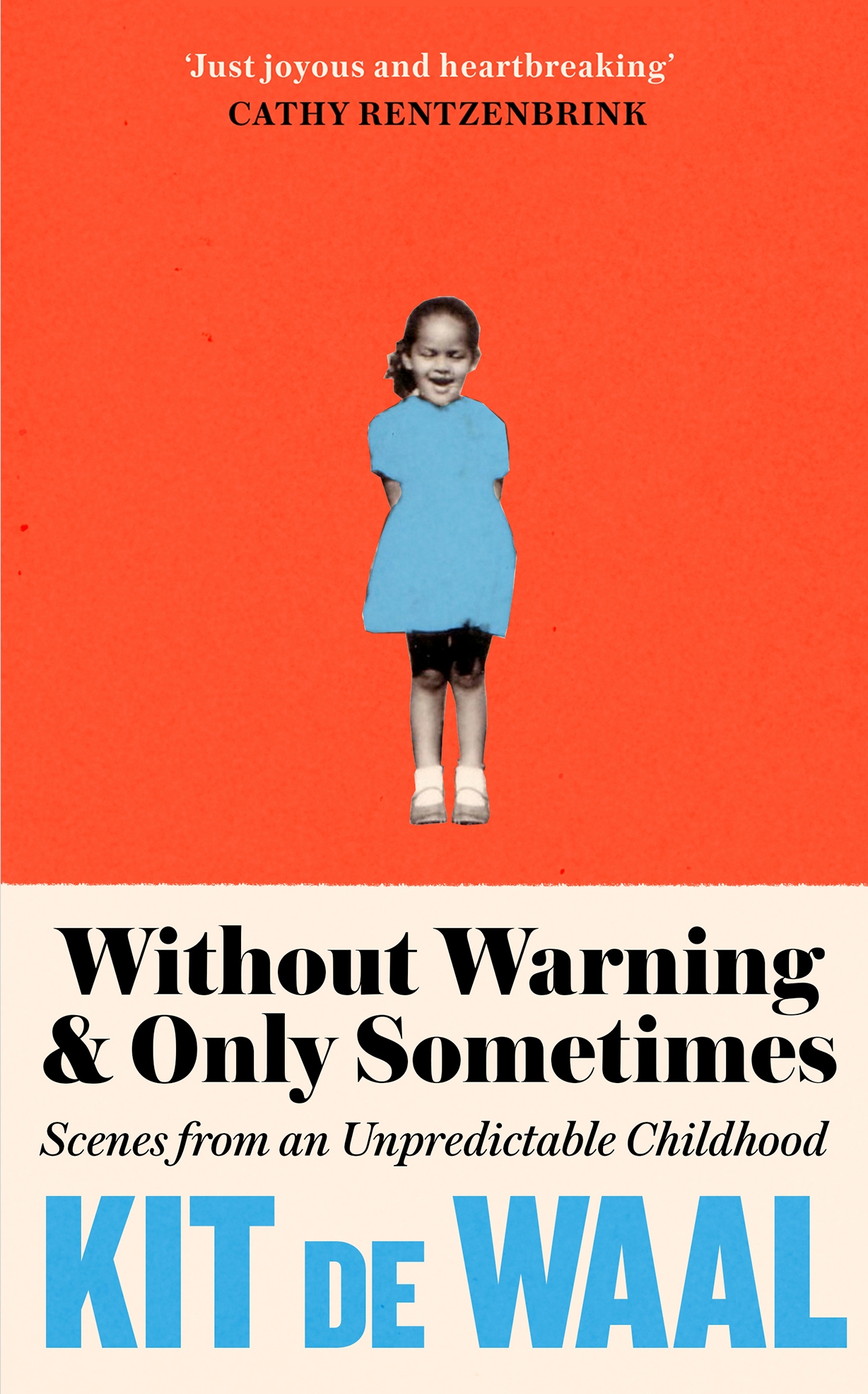
Review by Alan McCormick of "Without Warning and Only Sometimes: Scenes from an Unpredictable Childhood" by Kit de Waal


Kit De Waal’s narration is clear-eyed and unsentimental, devoid of self-pity, with an extraordinary gift of recall and eye for detail borne from a harsh childhood, where survival was often found in the shadows, dreaming, observing, trying to make sense of the goings on in an often unpredictable, joyless home, attempting to understand her family’s place in the world. 

Kit’s Mom is from Wexford and her Dad from St. Kitts. Being both Irish and Caribbean in nineteen-sixties-and-seventies Britain meant enduring endemic prejudice and everyday acts of racism – being called ‘Little Miss Fuzzy Wuzzy’ by a teacher or ‘wog’ and ‘blackie’ by a spiteful classmate – singled out in turn for being either Irish or black or mixed-race.  Even Kit’s grandmothers, Nan and Black Nana, never accept the racial partner choices made by their children, and, worse, Kit’s parents seem to distrust and reject each other’s cultures, and barely connect or show affection to each other. 

Kit’s Dad, Arthur, is mostly controlled (controlling), off-handily critical and barely present, living through cricket (he’s good), and detective and cowboy films on television. He springs momentarily to life to corral his willing kids (desperate for a bit of fun) to help bake Christmas cakes to give as gifts or make Caribbean food at weekends whilst Mom, Sheila, is at work. He puts on a good face around relatives and friends from home, fondly reminiscing a romanticised past. There is little money around and what money there is, is rarely spent on enough food and clothing for Kit and her siblings. Whilst Sheila tries to save, Arthur would rather use his money to keep up appearances by buying a smart car, good shoes for himself, sending extravagant gifts back home and building a house for his fantastical return to St Kitts. 

Sheila is overwrought and overworked (doing many jobs, cleaning, child-minding, caring, and running the home). She’s exhausted and distracted, needy and swamping when showing unexpected moments of generosity or affection (the sudden purchase of art supplies is accompanied by her manic desperation for the kids to instantly use and enjoy them), her feelings dissipated in caring for vulnerable strangers outside the home. She does rise to meet a crisis, caring in response to Kit’s dramatic childhood accidents, but becomes increasingly frustrated as time passes, saving milk bottles to throw at the outhouse wall, escaping into a forlorn, nostalgic reverie of singalong sentimental songs. 

And then there’s Jehovah which means no Christmas or birthday presents! Kit and her siblings learn to endure, and (ultimately) reject the weekly services at Kingdom Hall with their boring, guilt-tripping sermons, by making up irreverent names for the congregation. But Mom is on a mission to spread the word and in one hilarious, acutely observed scene, she again tries to lay traps (the increased frequency of natural disasters) to try and entice and convert her wily Catholic mother, who is having none of it: ‘It’s a push-me-pull-you of a dance,’ Kit observes. ‘As old as time, the child who was never the favourite, the mother who couldn’t love enough. They lock in with their clumsy footsteps, out of step to the music, each one trying to lead, stepping on toes.’

Affection and joy may arrive in the home ‘without warning and only sometimes’ for Kit and her siblings but it can also come from outside – Dad’s cousin Uncle Mike is ‘loud, gruff, rough, fun’ and the kids love being around him in his chaotic bedsit. Kit and her siblings also learn to find their own fun, to stick together to survive.

Everyone in the family wants to escape and change their lives, and, whilst Dad and Mom are thwarted, Kit finds salvation, the possibility of a better life away from home, first with friends, and then in the company of characters from books. She devours the classics recommended to her, the watcher becoming a reader, and later the writer who will let us into her life and tell her story – a multi-layered story about race and class, of hope and survival. It’s a wonderful, wise, and life-enhancing book that will stay with me for a long time.


About the reviewer
Alan McCormick lives in Wicklow. He’s a trustee with  InterAct Stroke Support who read fiction and poetry to stroke patients. Alan’s writing can be read in current issues of The Stinging Fly, Southword and Exacting Clam; and online at 3:AM Magazine, Fictive Dream, Dead Drunk Dublin, Mono, Words for the Wild and Époque Press. His story, 'Firestarter,' came second in this year’s RTÉ short story competition. For further information, see here


You can read more about Without Warning and Only Sometimes, by Kit de Waal, on Creative Writing at Leicester here

Friday, 11 November 2022

Review by Fiona Linday of "Marrying Across Borders" by Sheela Burrell


It was an absolute pleasure to read Sheela’s generous memoirs, Marrying Across Borders. This most enlightening read shows her informed perspective on international marriage, giving others tips for thriving in the UK. They say to write what you would like to read; Sheela has filled a gap for those couples adapting to new surroundings and cultures. As well as us gleaning from her integration and connection with her family and friends, she cleverly elicits the experience of others in cross-cultural marriages. That was through a questionnaire to extend her Malaysian perspective.

This self-help book is presented striking a natural tone. Much humour and honesty keep us hooked in enjoying this helpful tool. I think it prepares those in cross-cultural marriages for smoother integration.

I particularly enjoyed the social and cultural norms chapter where Sheila says of her marriage: “When two people from different cultures fall in love, they come as two uniquely wrapped packages with intricate layers of beliefs and rules from their own culture ... We realised that we needed to respect and compromise as a couple in a cross-cultural relationship when it came to each other’s culture.”

Her story covers current topics to encourage cohesion within families. So the reader learns about misconceptions and better understands rich cultures. The layout is easy to dip into for valuable insight to engage newcomers as challenges present themselves or consume as a gripping memoir. I highly recommend this as a valuable resource to those welcoming couples in a cross-cultural marriage.


About the reviewer
Fiona Linday is an East Midland’s writer, coach and creative mentor. First published with the young adult Get Over It, Adventures, Onwards and Upwards. Then followed a prize-winning short story, ‘Off the Beaten Track,’ and the Unique Writing Publications Story Award for ‘Love’ prose non-fiction. There is a YA eBook anthology of short stories, The Heavenly Road Trip with Help For Writers. More recently, she enjoys facilitating with Attenborough Arts Centre, Leicester University learners editing Family Matters: An Anthology of New Writing, 2019, and Making Our World Better, Dahlia Publishing, 2022. These projects were Arts Council supported. Her inspirational collection is Count Our Blessings, Onwards & Upwards, 2021. Presently, she is pitching a resilience-building, wildlife picture book series seeking a publisher. Her website is here. You can read more about Making Our World Better on Creative Writing at Leicester here


Thursday, 27 October 2022

Review by Tracey Foster of "Modern Nature" by Derek Jarman


There’s an omnipresent overseer throughout Jarman’s Modern Nature. It manifests in different forms as he switches from daily records of the garden at Prospect Cottage, to a memoir of his childhood and life as a film producer - from the looming presence of Dungeness power station, felt through the thickest fog as his home faced ravaging seas, to the oppressive rule of the teachers at boarding school, ever vigilant for deviant behaviour.

Covering a period from the beginning of 1989 through to September the following year, he begins with the great storm that plunged the cottage into darkness, leaving him with only the beam of the lighthouse to see by. As he watches timbers fly from fishermen’s cottages and hears the wind cry like a banshee around him, he takes us back to Kansas and his nightmare dreams of Oz: "The Wizard of Oz reminds me of the frightening power of movies to move. I’m glad it had a happy ending."

The great city of Emerald, lit up like Dungeness station, is another presence that overshadows the narrative - a hint that we don’t always get what we truly wish for. 

Jarman bought Prospect with his father’s inheritance and moved there when his HIV status became public. The memoir is very poignant as he turned to face his death. Many of his friends had already succumbed to this vicious disease and he must have known that his time was running out as he built a garden in a savage microclimate. Many plants died, succumbed to the salt sprays, turned black and calcified. The temperatures could swing from intense dry heat to bitter blasts, but he persisted and replanted after every storm, gathering stones thrown up by the surges to decorate his patch.  A keen gardener and wide reader, he knew his plants and makes references to their mythical past, cultural symbolism, and power to heal. The prose is beautiful and melancholic: "Today, Dungeness glowed under a pewter sky – shimmering emeralds, arsenic, sap, sage and Verdigris greens washed bright, moss in little islands set off against pink pebbles, glowing yellow banks of gorse, the deep russet of dead bracken, and pale ochre of reeds in clumps set against the willow spinney."

This symphony of colour, intense like no other landscape, is filmic and harks back to the technicolour washes of Oz. A film-maker throughout, he sets scene after scene for us and is mindful of our reaction. During this period of writing, he was also filming War Requiem and includes the scene of poppies from the garden, buzzing with bees.

          Scarlet Poppies
          This is a Poppy
          A flower of cornfield and wasteland
          Bloody red
          Sepals Two
          Soon falling
          Petals four
          Stamens many
          Stigma rayed
          Many seeded
          For sprinkling on bread
          The staff of life
          Woven in wreaths
          In memory of the dead
          Bringer of dreams
          And sweet forgetfulness. 

I can clearly remember the towering black obelisk of 1980s public information films, warning us about the AIDS epidemic. A newly-qualified teacher at the time, I was working under the shadow of Section 28 which forbade schools from "promoting the teaching of the acceptability of homosexuality as a pretended family relationship." Jarman’s experience of the prejudices and persecution he faced during this period whilst watching his friends "shrivel and parch like the landscape" is harrowing. From his refuge at Prospect, the nature is encompassing and assuaging but also a grim reminder that our time in the garden is finite. The debris he collects from the shores after high tides is dragged back and used to create a sculpture garden of decay, where distorted metal hums to the sound of bees - inspiring him to paint and write.

          No dragons will spring from these circles.
          These stones will not dance or clap hands at the solstice.
          Beached on the shingle,
          They lock up their memories,
          Upright as sentinels
          In the dry grass.

Name dropping throughout his close contacts and work diary, this book will appeal to anyone who is interested in media of the period, but it is the plants who steal the show. It is they he turned to at the end of his day and Prospect Cottage that was his refuge at the end of his life.


About the reviewer
Tracey Foster started off in a long career as an Art and Design teacher but wanted to refocus her creative energies into writing poetry and prose. After helping others find inspiration in the world around us, she took an MA course in Creative Writing at Leicester University and has not looked back. She finds inspiration in the past and the events that shape us. Previous work has been published by Comma Press, Ayaskala, Alternateroute, Fish Barrel Review, Mausoleum Press, Bus Poetry Magazine and The Arts Council.

Friday, 7 October 2022

Review by Robert Hamberger of "What the Trumpet Taught Me" by Kim Moore


Kim Moore’s What the Trumpet Taught Me is an exciting, innovative experiment with the memoir form. It uses precise vignettes of a girl and woman’s experiences with music (specifically, learning to play a cornet and trumpet over the years). These snapshots are short pieces of prose or prose-poetry – often barely longer than a page – which link chronologically to explore themes of family, education, class, gender, sexism, creativity, community, work, desire, bereavement, performance, power and self-empowerment. One of the book's joys is the skilful way that Moore explores these major issues through the prisms of a trumpet and one woman’s life and reflections. 

Given her expertise as a poet, Moore consistently plays a poet’s notes: observation and imagery, rhythm and atmosphere. The writing is absorbing throughout, virtually always in the present tense, which helps to retain its visceral immediacy. I learned too about the history of the cornet and trumpet, technical terms like single tonguing and triple tonguing, the first, second and third valve slide. It’s packed with stunning, painful insights. Here’s one: ‘I think back to all the men I’ve been taught by and my relief when they only do their job, my gratitude.’ 

Just over halfway through the book there’s a chilling depiction of an abusive relationship. The narrative trembles from its after-effects, and the reader wants the narrator to reclaim herself, feels relieved when she does so. Her trumpet remains a positive presence, companion and instrument of ultimate triumph. What the Trumpet Taught Me gives us music as stirring as any brass or soul band. It’s an engrossing and moving achievement. 


About the reviewer
Robert Hamberger’s fourth poetry collection Blue Wallpaper (Waterloo Press) was shortlisted for the 2020 Polari prize. His prose memoir with poems A Length of Road: Finding Myself in the Footsteps of John Clare was published by John Murray in 2021.  


You can read more about What the Trumpet Taught Me by Kim Moore on Creative Writing at Leicester here

Monday, 9 May 2022

Review by Robert Richardson of "In Glad or Sorry Hours: A Memoir" by Alastair Niven


I first met Alastair Niven in 1988 when, as Director of Literature at the Arts Council, he provided me with a letter of support for the events I was organising, for the following year, to celebrate the 70th anniversary of the origins of Imagist poetry. This helped open doors to cooperation from The Poetry Society and the literature venue within the Royal Festival Hall. It was also the beginning of a friendship that continues to this day.

With a mere outline of his life—Dulwich College, Cambridge, Director of Literature at the Arts Council and the British Council, Principal of Cumberland Lodge (an institution with Royal patronage at Windsor)—it would be all too easy to dismiss Alastair Niven as a conventional establishment figure. Such sketchiness would be unjust and inaccurate, as his memoir makes clear. He inhabited these roles as an enlightened (small "l") liberal, but for a more complete portrait he was, and remains, a radical internationalist.

The book shows his defining experience to be early on, with the time immediately following his graduation from Cambridge spent teaching at a university in Ghana. This led to a strong interest in African literature, and it was also where he met his future wife, Helen, who provides the foundation of a happy personal life. Though mainly focused on his professional activities, the memoir also skilfully weaves in aspects of his family background.

His commitment to post-colonial literature was deepened through a doctorate from Leeds University and an academic post at Stirling. Subsequently, he left full time academia to direct the Africa Centre in London. Niven had the vision to combine a welcoming environment for African writers, and those creating in all art forms, resident in London, or visiting it, with solid policies and initiatives to promote their work and develop audiences.

Approaching the first twenty-five years of the twenty-first century, with diversity casting becoming standard in theatre, film and television, Niven, in his time as Director of Literature at the Arts Council in the 1980s and 90s, can be seen as a pathfinder for the consciousness necessary for this. He shifted funds to make sure they included black and Asian writers and supported placements that launched the careers of ethnic minority professionals in mainstream publishing. Wasafiri, a journal he initiated during his Africa Centre days, received Arts Council funding, and in 1994 his department helped bring about Out of the Margins at the South Bank Centre, the biggest celebration of black and Asian literature ever to take place in London. There was an "emphasis on the determination of writers from minority communities to be heard at the centre of British culture." These initiatives from the past are now a marker for the present and future, and this book importantly places them on record.

His relatively short time at the British Council was not so happy or productive, its structures limiting the number of positive impacts he could make. He was even cornered into closing libraries, with the poet Christopher Logue once saying to me "Alastair would want to be opening libraries, not closing them."

His final appointment as Principal of Cumberland Lodge became his "dream job." Its founding agenda was as a place for the discussion of ethical issues, primarily by groups from universities, although other groups visited too (one included a third of Britain’s Chief Constables). To these types of programme, he also added more emphasis on the arts.

Niven’s retirement is predictably busy, and he continues to show that an appreciation of a post-colonial world leads to the enjoyment of a better world.


About the reviewer
Robert Richardson is a visual artist and writer. His work appears in Artists’ Postcards: A Compendium (Reaktion Books, London) and Leeds Postcards (Four Corners Books, London), and it is included in collections of the British Museum and the Australian National Gallery. In 2021, he was a Residency Artist of the Digital Art Observatory: Ukrainian and British artists combining for online exhibitions, and in 2022 he was selected to present work at the first European Digital Art Fair. His website is here.

Wednesday, 6 April 2022

Review by Lee Wright of Howard Jacobson at Literary Leicester Festival


The return of Literary Leicester offered an exciting line-up of well-known authors, but, for me, none more so than Howard Jacobson.  

To date, he has published sixteen novels, been nominated for the Booker Prize on no less than four occasions, twice making the short-list, and winning the prize in 2010 for The Finkler Question. Howard has twice won the Bollinger Everyman Wodehouse Prize for his novels The Mighty Walzer and Zoo Time; and his 2014 novel, J was also short-listed for the Goldsmiths Prize. Along the way, Jacobson has also published six works of non-fiction, his latest being Mother’s Boy, the memoir that he was in Leicester to talk about.

This latest book is something of a departure for him. Talking on the night to Professor and author David Brauner, Jacobson told those in attendance that the origin of his memoir was a collection of reminisces of bad things that he had done throughout his life -  to have, as Jacobson said, “An honest conversation with myself, a moral accounting.” 

Mother’s Boy: A Writer’s Beginnings is, among many things, a water-damaged love letter to both his parents and the early literary influences of F. R. Leavis, Charles Dickens, Jane Austen, George Eliot and D. H. Lawrence; influences that both inspired and haunted him for a long time. Indeed, though harbouring ambitions to become a novelist from a young age, Jacobson was forty-years-old before his first novel, Coming from Behind, was published in 1983. His new memoir is a fascinating re-telling of the upbringing and circumstances that led to his breakthrough. 

On the night, Jacobson talked of the many reasons for not writing. His own name, Jacobson was just one - the reason being that he could not envisage his name down the spine of a book, sitting on a shelf alongside those of Ernest Hemingway and F. Scott Fitzgerald. As he told David, “I was a ridiculous mess of self-doubt.”  

Though it is a memoir for all, it is an especially poignant one for writers. By Jacobson’s own admission, he spent a large part of his youth not knowing who he was. And if anyone is questioning the reasons to write fiction in the first place, to find out who you are is surely as good an answer as any. It was only by writing as Howard Jacobson, and not as George Eliot or D. H. Lawrence, that he finally became the thing that had long eluded him: a novelist.                 


About the reviewer
Lee Wright is currently writing a novel as part of a PhD at the University of Leicester, where he also studied on the MA in Creative Writing. His short stories and poetry have been published with Burning House Press, Fairlight Books and epoque press.   

Friday, 1 April 2022

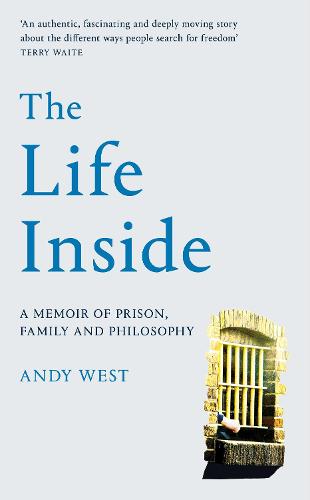
Review by Jon Wilkins of "The Life Inside: A Memoir of Prison, Family and Philosophy" by Andy West


Andy West is a teacher of philosophy in prisons. 

Whenever  Andy West steps into a jail, he is faced with a multitude of thoughts. He has diverse conversations with the people inside about their lives, their ideas and their feelings. As he listens to the men and women he works with, trying to find new ways for them to face their situation, he also comes to terms with his own world and his own guilt as we find that his father, uncle and brother all spent time in prison.

He chose a different path and has built a totally different life for himself, but he still worries that their fate will become his, as if it is a foregone conclusion that all their lives will take the same route. He asks what is prison for, to punish? To rehabilitate? Should we ever forgive a person who has done time? And what lasting impact does prison have on a person? Do they feel shame? Should we, the public forgive them? Is it in our remit to even think about doing this? What right do we have to do this? 

A fundamental question he asks is: can someone in prison ever be more free than someone outside? With this thought in mind, West goes on a journey looking for his own freedom in the wider world and wonders how these ideas reconcile with each other.

This is a beautifully written book, an intelligent exploration of life inside and outside of prison. Often amusing, often sad, it shows us all that is wrong with society, both behind bars and outside in our supposedly free world. We are what we make ourselves and this book tells us as much. This is truly an un-put-downable book, one that gives us a real insight to a series of different worlds and different lives.


About the reviewer
Jon Wilkins is sixty-six. He has a gorgeous wife Annie and two beautiful sons, and loves to write. He is a retired teacher, lapsed Waterstones’ bookseller and former Basketball Coach. He taught PE and English for twenty years and coached women’s basketball for over thirty years.  He has always loved books and reading. His website is here

Tuesday, 2 November 2021

A Book That Changed Me, by Katie Sone: "A Woman in the Polar Night," by Christiane Ritter


A book that changed my life is A Woman in the Polar Night by Christiane Ritter. It is her memoir of her journey and year spent in Spitsbergen (Svalbard) in 1934 with her husband. She writes of her life in a tiny bleak hut where her life is paired down to the simplest of tasks, scrubbing the cabin, chopping logs for the stove, and where a cup of rationed coffee is an event to be revered and sipped in quiet contemplation. She writes of the foreboding landscape that is bleak, dark and harsh and the pure joy she experiences when, after a long winter, the sun appears. She writes of spending months alone, surviving storms that battle with the hut, and of crawling on all fours twenty times round the hut to get her daily walk. She knows she must. On her journey to Svalbard she is told by the manager of the telegraph station: “Madam, if you want to survive the winter well you must remember three things … you must take a walk every day, even in the winter night and storms. That is as important as eating and drinking. Always good temper. Never take things seriously. Never worry. Then it will be fine.”

I read this in March 2020 when all our worlds turned upside down. I sought solace in books that would take me to distant places. I could travel without leaving the house, escaping somewhere, whilst our worlds and lives became smaller. I took comfort in Christiane’s resilience and determination, thought of the simplicity of her life and her life being stripped back to basics. It was a calming read, her words comforting and helpful. I remembered the Telegraph Station Manager's words and, even though anxious and scared of what was happening all around us, I took a walk every day and found joy in the simplest of things and revered my daily cup of coffee.


About the reviewer

Katie Sone is a writer and delivers writing for wellbeing workshops. She is also a part time librarian for Leicester Libraries. You can find out more here.


Thursday, 29 April 2021

Review by Lisa Williams of "Crazy" by Jane Feaver


Crazy is a blend of fiction and memoir. It's a thought-provoking story of a relationship and essentially about the blurring between life and storytelling itself ...  

The book opens in a bed, the shipping forecast providing a comforting massage to its occupant. Rather than a sailor listening to the outlook for the seas around Britain we join Jane, a creative writing teacher. The areas trigger memories and so the course is set and we head off with her on her uncharted journey.

The novel focuses on a relationship. A former relationship. This is pieced together from flashbacks to first meetings during college years. Phone conversations from then and from present day hint that there’s been more to the relationship. We listen for what’s unsaid. The heaviness of a bad or wrong decision lingers throughout. 

Just as Jane the teacher unpicks students' work, so we dwell on the author's choices: we know an ill-fitting shoe at her wedding is more than just that. This is no fairytale with a prince and his bride set for a happy ending. We return again to the sea when a bottle of cider provides a life buoy at a party. 

Midway through the book Jane's partner declares the 'end of story.' It starts to sink in that they aren’t sharing the same story. Jane tells us her tale but there are negative bits she immediately tells us 'I edit it out.'

Crazy made me question my own relationships, the bits I exclude from my stories. I'd not read anything by Jane Feaver before but will definitely be looking up her other books.


About the reviewer
Lisa is a shop girl from Leicester. Find her on social media @noodleBubble

You can read more about Crazy by Jane Feaver on Creative Writing at Leicester here.