Showing posts with label autobiography. Show all posts

Sunday, 26 January 2025

Review by Jonathan Taylor of "The Moon Looks on Them All: Of Friends and Friendship" by John Lucas


Despite their reputation for egocentrism, memoirs are often – perhaps always – about relationships between a narrator and other people. As critics Sidonie Smith and Julia Watson point out, “there is a relational aspect to most life writing," and many others have claimed something similar. This “relationality” (as they call it) most commonly encompasses fathers, mothers, siblings, children; but there is a growing sub-genre of memoirs and personal essays which recognises the vital role played by friends in our lives. John Lucas’s fascinating and wide-ranging The Moon Looks on Them All is a significant and beautifully-written contribution to this sub-genre of friendship-memoirs (filikigraphy?). 

Like all the best books about friendship, what Lucas’s memoir recognises is that “relationality” does not simply mean that the story is about two (or three, or fifteen) people rather than one. No: "relationality" means that the relationships themselves become focal points, main characters, above and beyond the individuals involved. Friendships are themselves stories: friendships have narrative arcs of many different kinds, and each of the chapters in Lucas’s book is, first and foremost, a story of a key friendship in the author’s life. Of course we find out about the amazing individuals involved – poets, academics, jazz musicians, E. M. Forster, Brian Clough, Lucas’s cat – but above and beyond that, we follow the story of Lucas’s changing relationships with them over time.

The result is a life-affirming patchwork of interweaving friendships, voices, anecdotes, poems and brilliantly-drawn character portraits. At one point, Lucas admits that “sooner or later, everyone I meet, and get to know, will remind me of a character in Dickens” - and The Moon Looks on Them All is rather like a Dickens novel, teeming with memorable characters. If the cumulative effect of a Dickens novel is often that the reader feels immersed in a vibrant all-encompassing community, something similar might be said, on a microcosmic scale, of the community of friends in Lucas’s memoir. He cites E. M. Forster’s faith in “Love, the beloved Republic,” in “an aristocracy of the sensitive, the considerate, and the plucky” – and that seems to me as good a description as any of the utopian community of friends which Lucas depicts in this book. 


About the reviewer
Jonathan Taylor is an author, editor, lecturer and critic. His two most recent books are the memoir A Physical Education: On Bullying, Discipline & Other Lessons (Goldsmiths, 2024), and the short story collection Scablands and Other Stories (Salt, 2023). He directs the MA in Creative Writing at the University of Leicester. 


Monday, 8 April 2024

Review by Lee Wright of "The Observable Universe" by Heather McCalden


Following the death of both her parents from AIDS in the 1990s, Heather McCalden was left an orphan at the age ten, to be raised by her grandmother. Convinced she could solve the mystery of why this happened and who her father really was, she became consumed by thoughts of AIDS and the internet developing on parallel timelines – 1982 was the year the terms Acquired Immune Deficiency Syndrome (AIDS) and Internet with a capital I were first used. 

Years of searching for deeper understanding eventually led her to becoming an artist and writer, clearly needing to fulfil a desire to create, and fill that part of her which life had destroyed. 

The publishing world isn't short on grief memoirs, but McCalden has been innovative with her subject, imparting historical knowledge and personal intimacy like spoonsful of cough syrup. The experience of reading The Observable Universe may sometimes taste bitter, but it is easily digestible. 

Viral infection and the internet are both constructed on shifting sands and so the author is constantly moving. The book feels like a Russian doll, or scrapbook. Or, as McCalden explains on the opening page: "This book is an album about grief. Every fragment is like a track on a record."

Every vignette, whether on Facebook, desire, curiosity, Netflix, human longing, Wikipedia, useless private detectives, or Holocaust deniers, carries with it both the serious and the satirical. The dormant menace of AIDS erupted around her as she grew up in Los Angeles, and then years later, another menace – that of a family secret - caused more heartache. 

McCalden’s thoughts are everywhere but given only in glimpses. There are also episodes of – whisper it – flash fiction, in the form of retold conversations in hotel bars or rent a car offices. Like a virus, there are many directions this memoir could go, and like the internet, you have to filter through the pages to get to the real story. 


About the reviewer
Lee Wright has an MA in Creative Writing and is currently working towards a PhD researching memoir and film. His fiction and poetry have been published with Fairlight Books, époque press and Burning House Press.

Saturday, 11 March 2023

Review by Laurie Cusack of "T'ree Tins of Turpentine" by Tim O'Sullivan


O’Sullivan’s spare-bittersweet memoir has laugh-out-loud moments strewn all the way through it. The boozy opening anecdote is electrifying and helps set its visceral tone. Here is an underrepresented Irish diasporic working-class voice in full flow.

It is authentic and comes straight from the gut, which is a rare phenomenon indeed, methinks. Bravo.

Many of O’Sullivan’s recollections and experiences resonated more than once. The brutality meted out by school and family was the norm back then which haunts our PC world of today. Also, his faith and first holy communion are well realised  and struck a chord: I  felt the same reservations about the body of Christ and eating the wafer.

Moreover, his allusions to hooliganism, drugs and inner-city violence that were ever present in 1970s England are bang on. A scrap was never far away. 

Shoplifting in Lewis’s – what a joy!   

These remarkable warts-and-all remembrances of social deprivation are truly powerful, evocative, poignant and captivating. This is a brave text. Sometimes it’s easy to ignore the tiers of poverty that surround us, and that is why this rare text is an important empathetic reminder to us all about life, chance and circumstance: ‘There but for the grace of God go I.’ His incarcerations speak volumes about the revolving door and institutionalisation and how chance can change a life. 

The period detailing is also spot-on: long-lost pubs and clubs like the Black Lion, The Longstop, The Churchill, Breni Inns, The George and Sloopy’s are in my memory bank. O’Sullivan’s text vividly captures the decades seamlessly as his chaotic life unfolds – no holds barred, until redemption and change kick-in.

There is a local buzz about this Leicester folklore of a book − I keep bumping into people who have read it or who are planning to.

A local delight!


About the reviewer
Laurie Cusack has a PhD in Creative Writing from the University of Leicester. His collection of short stories, The Mad Road, will be published by Roman Books in 2023. His story 'The Bottle and the Trowel' is published in the anthology High Spirits: A Round of Drinking Stories

Thursday, 15 December 2022

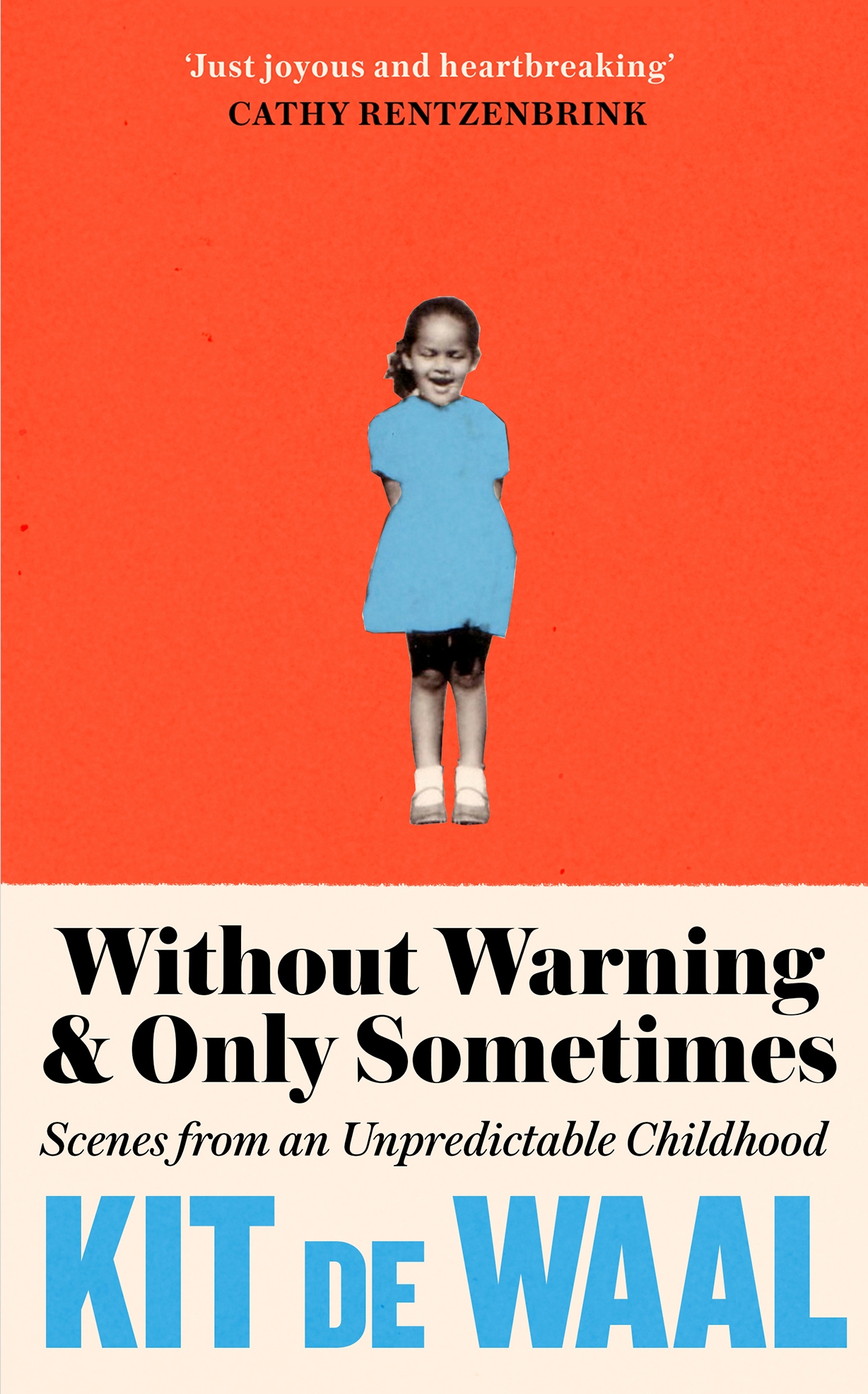
Review by Alan McCormick of "Without Warning and Only Sometimes: Scenes from an Unpredictable Childhood" by Kit de Waal


Kit De Waal’s narration is clear-eyed and unsentimental, devoid of self-pity, with an extraordinary gift of recall and eye for detail borne from a harsh childhood, where survival was often found in the shadows, dreaming, observing, trying to make sense of the goings on in an often unpredictable, joyless home, attempting to understand her family’s place in the world. 

Kit’s Mom is from Wexford and her Dad from St. Kitts. Being both Irish and Caribbean in nineteen-sixties-and-seventies Britain meant enduring endemic prejudice and everyday acts of racism – being called ‘Little Miss Fuzzy Wuzzy’ by a teacher or ‘wog’ and ‘blackie’ by a spiteful classmate – singled out in turn for being either Irish or black or mixed-race.  Even Kit’s grandmothers, Nan and Black Nana, never accept the racial partner choices made by their children, and, worse, Kit’s parents seem to distrust and reject each other’s cultures, and barely connect or show affection to each other. 

Kit’s Dad, Arthur, is mostly controlled (controlling), off-handily critical and barely present, living through cricket (he’s good), and detective and cowboy films on television. He springs momentarily to life to corral his willing kids (desperate for a bit of fun) to help bake Christmas cakes to give as gifts or make Caribbean food at weekends whilst Mom, Sheila, is at work. He puts on a good face around relatives and friends from home, fondly reminiscing a romanticised past. There is little money around and what money there is, is rarely spent on enough food and clothing for Kit and her siblings. Whilst Sheila tries to save, Arthur would rather use his money to keep up appearances by buying a smart car, good shoes for himself, sending extravagant gifts back home and building a house for his fantastical return to St Kitts. 

Sheila is overwrought and overworked (doing many jobs, cleaning, child-minding, caring, and running the home). She’s exhausted and distracted, needy and swamping when showing unexpected moments of generosity or affection (the sudden purchase of art supplies is accompanied by her manic desperation for the kids to instantly use and enjoy them), her feelings dissipated in caring for vulnerable strangers outside the home. She does rise to meet a crisis, caring in response to Kit’s dramatic childhood accidents, but becomes increasingly frustrated as time passes, saving milk bottles to throw at the outhouse wall, escaping into a forlorn, nostalgic reverie of singalong sentimental songs. 

And then there’s Jehovah which means no Christmas or birthday presents! Kit and her siblings learn to endure, and (ultimately) reject the weekly services at Kingdom Hall with their boring, guilt-tripping sermons, by making up irreverent names for the congregation. But Mom is on a mission to spread the word and in one hilarious, acutely observed scene, she again tries to lay traps (the increased frequency of natural disasters) to try and entice and convert her wily Catholic mother, who is having none of it: ‘It’s a push-me-pull-you of a dance,’ Kit observes. ‘As old as time, the child who was never the favourite, the mother who couldn’t love enough. They lock in with their clumsy footsteps, out of step to the music, each one trying to lead, stepping on toes.’

Affection and joy may arrive in the home ‘without warning and only sometimes’ for Kit and her siblings but it can also come from outside – Dad’s cousin Uncle Mike is ‘loud, gruff, rough, fun’ and the kids love being around him in his chaotic bedsit. Kit and her siblings also learn to find their own fun, to stick together to survive.

Everyone in the family wants to escape and change their lives, and, whilst Dad and Mom are thwarted, Kit finds salvation, the possibility of a better life away from home, first with friends, and then in the company of characters from books. She devours the classics recommended to her, the watcher becoming a reader, and later the writer who will let us into her life and tell her story – a multi-layered story about race and class, of hope and survival. It’s a wonderful, wise, and life-enhancing book that will stay with me for a long time.


About the reviewer
Alan McCormick lives in Wicklow. He’s a trustee with  InterAct Stroke Support who read fiction and poetry to stroke patients. Alan’s writing can be read in current issues of The Stinging Fly, Southword and Exacting Clam; and online at 3:AM Magazine, Fictive Dream, Dead Drunk Dublin, Mono, Words for the Wild and Époque Press. His story, 'Firestarter,' came second in this year’s RTÉ short story competition. For further information, see here


You can read more about Without Warning and Only Sometimes, by Kit de Waal, on Creative Writing at Leicester here

Thursday, 27 October 2022

Review by Tracey Foster of "Modern Nature" by Derek Jarman


There’s an omnipresent overseer throughout Jarman’s Modern Nature. It manifests in different forms as he switches from daily records of the garden at Prospect Cottage, to a memoir of his childhood and life as a film producer - from the looming presence of Dungeness power station, felt through the thickest fog as his home faced ravaging seas, to the oppressive rule of the teachers at boarding school, ever vigilant for deviant behaviour.

Covering a period from the beginning of 1989 through to September the following year, he begins with the great storm that plunged the cottage into darkness, leaving him with only the beam of the lighthouse to see by. As he watches timbers fly from fishermen’s cottages and hears the wind cry like a banshee around him, he takes us back to Kansas and his nightmare dreams of Oz: "The Wizard of Oz reminds me of the frightening power of movies to move. I’m glad it had a happy ending."

The great city of Emerald, lit up like Dungeness station, is another presence that overshadows the narrative - a hint that we don’t always get what we truly wish for. 

Jarman bought Prospect with his father’s inheritance and moved there when his HIV status became public. The memoir is very poignant as he turned to face his death. Many of his friends had already succumbed to this vicious disease and he must have known that his time was running out as he built a garden in a savage microclimate. Many plants died, succumbed to the salt sprays, turned black and calcified. The temperatures could swing from intense dry heat to bitter blasts, but he persisted and replanted after every storm, gathering stones thrown up by the surges to decorate his patch.  A keen gardener and wide reader, he knew his plants and makes references to their mythical past, cultural symbolism, and power to heal. The prose is beautiful and melancholic: "Today, Dungeness glowed under a pewter sky – shimmering emeralds, arsenic, sap, sage and Verdigris greens washed bright, moss in little islands set off against pink pebbles, glowing yellow banks of gorse, the deep russet of dead bracken, and pale ochre of reeds in clumps set against the willow spinney."

This symphony of colour, intense like no other landscape, is filmic and harks back to the technicolour washes of Oz. A film-maker throughout, he sets scene after scene for us and is mindful of our reaction. During this period of writing, he was also filming War Requiem and includes the scene of poppies from the garden, buzzing with bees.

          Scarlet Poppies
          This is a Poppy
          A flower of cornfield and wasteland
          Bloody red
          Sepals Two
          Soon falling
          Petals four
          Stamens many
          Stigma rayed
          Many seeded
          For sprinkling on bread
          The staff of life
          Woven in wreaths
          In memory of the dead
          Bringer of dreams
          And sweet forgetfulness. 

I can clearly remember the towering black obelisk of 1980s public information films, warning us about the AIDS epidemic. A newly-qualified teacher at the time, I was working under the shadow of Section 28 which forbade schools from "promoting the teaching of the acceptability of homosexuality as a pretended family relationship." Jarman’s experience of the prejudices and persecution he faced during this period whilst watching his friends "shrivel and parch like the landscape" is harrowing. From his refuge at Prospect, the nature is encompassing and assuaging but also a grim reminder that our time in the garden is finite. The debris he collects from the shores after high tides is dragged back and used to create a sculpture garden of decay, where distorted metal hums to the sound of bees - inspiring him to paint and write.

          No dragons will spring from these circles.
          These stones will not dance or clap hands at the solstice.
          Beached on the shingle,
          They lock up their memories,
          Upright as sentinels
          In the dry grass.

Name dropping throughout his close contacts and work diary, this book will appeal to anyone who is interested in media of the period, but it is the plants who steal the show. It is they he turned to at the end of his day and Prospect Cottage that was his refuge at the end of his life.


About the reviewer
Tracey Foster started off in a long career as an Art and Design teacher but wanted to refocus her creative energies into writing poetry and prose. After helping others find inspiration in the world around us, she took an MA course in Creative Writing at Leicester University and has not looked back. She finds inspiration in the past and the events that shape us. Previous work has been published by Comma Press, Ayaskala, Alternateroute, Fish Barrel Review, Mausoleum Press, Bus Poetry Magazine and The Arts Council.

Monday, 9 May 2022

Review by Robert Richardson of "In Glad or Sorry Hours: A Memoir" by Alastair Niven


I first met Alastair Niven in 1988 when, as Director of Literature at the Arts Council, he provided me with a letter of support for the events I was organising, for the following year, to celebrate the 70th anniversary of the origins of Imagist poetry. This helped open doors to cooperation from The Poetry Society and the literature venue within the Royal Festival Hall. It was also the beginning of a friendship that continues to this day.

With a mere outline of his life—Dulwich College, Cambridge, Director of Literature at the Arts Council and the British Council, Principal of Cumberland Lodge (an institution with Royal patronage at Windsor)—it would be all too easy to dismiss Alastair Niven as a conventional establishment figure. Such sketchiness would be unjust and inaccurate, as his memoir makes clear. He inhabited these roles as an enlightened (small "l") liberal, but for a more complete portrait he was, and remains, a radical internationalist.

The book shows his defining experience to be early on, with the time immediately following his graduation from Cambridge spent teaching at a university in Ghana. This led to a strong interest in African literature, and it was also where he met his future wife, Helen, who provides the foundation of a happy personal life. Though mainly focused on his professional activities, the memoir also skilfully weaves in aspects of his family background.

His commitment to post-colonial literature was deepened through a doctorate from Leeds University and an academic post at Stirling. Subsequently, he left full time academia to direct the Africa Centre in London. Niven had the vision to combine a welcoming environment for African writers, and those creating in all art forms, resident in London, or visiting it, with solid policies and initiatives to promote their work and develop audiences.

Approaching the first twenty-five years of the twenty-first century, with diversity casting becoming standard in theatre, film and television, Niven, in his time as Director of Literature at the Arts Council in the 1980s and 90s, can be seen as a pathfinder for the consciousness necessary for this. He shifted funds to make sure they included black and Asian writers and supported placements that launched the careers of ethnic minority professionals in mainstream publishing. Wasafiri, a journal he initiated during his Africa Centre days, received Arts Council funding, and in 1994 his department helped bring about Out of the Margins at the South Bank Centre, the biggest celebration of black and Asian literature ever to take place in London. There was an "emphasis on the determination of writers from minority communities to be heard at the centre of British culture." These initiatives from the past are now a marker for the present and future, and this book importantly places them on record.

His relatively short time at the British Council was not so happy or productive, its structures limiting the number of positive impacts he could make. He was even cornered into closing libraries, with the poet Christopher Logue once saying to me "Alastair would want to be opening libraries, not closing them."

His final appointment as Principal of Cumberland Lodge became his "dream job." Its founding agenda was as a place for the discussion of ethical issues, primarily by groups from universities, although other groups visited too (one included a third of Britain’s Chief Constables). To these types of programme, he also added more emphasis on the arts.

Niven’s retirement is predictably busy, and he continues to show that an appreciation of a post-colonial world leads to the enjoyment of a better world.


About the reviewer
Robert Richardson is a visual artist and writer. His work appears in Artists’ Postcards: A Compendium (Reaktion Books, London) and Leeds Postcards (Four Corners Books, London), and it is included in collections of the British Museum and the Australian National Gallery. In 2021, he was a Residency Artist of the Digital Art Observatory: Ukrainian and British artists combining for online exhibitions, and in 2022 he was selected to present work at the first European Digital Art Fair. His website is here.

Friday, 5 February 2021

Review by Jo Jenkins of "Becoming" by Michelle Obama


Fresh from the White House, Michelle Obama found herself with a sense of freedom she’d almost forgotten and an opportunity, at last, to take a breath. Becoming, written at a time of reflection after a significant change in her life, is a deep dive into her past, to better understand her choices, character, struggles and successes before considering what to do next. I am the same age as Obama and can relate to her sense of being betwixt and between, young enough to live life to the full but, perhaps with a greater sense of urgency and need to get it right from now on. 

In her autobiography she details her early family life through to the end of her husband’s presidency. It isn’t quite a rags-to-riches story, but there is a stark contrast between her childhood and her adult life. However, it is apparent early on in the book that what matters to Obama was never money. The overriding sense of her early years is one of joy, love, security and seriousness. She was a quiet, studious girl determined to succeed and surrounded by a family who encouraged her and sparked an interest in activism.  


She focuses less on her family’s financial position and much more on the relationships that formed her. She understood her family’s history with links to slavery and the injustices experienced by her grandfather, unable to get a union card because he was Black. This important theme runs through the book and the significance of her arrival in the White House, as a descendent of enslaved African Americans, is immense. 


From her childhood, through her teen years, university and into her career as a lawyer, Obama is aware of the important opportunities available to her that had been denied to her forebears. She meets and is influenced by other women of colour who guide and encourage her and, of course, her most important relationship, her marriage, takes her in a direction which enables her to encourage and influence the generations of young Black women who follow. Obama has embraced her position as a role model, not just for her own daughters but for girls around the globe. In looking back at her own life, she can see that it is relationships that have shaped her more than circumstances. 


The book is, first and foremost, a simple autobiography--it does document her life and it provides the reader with plenty of juicy snippets of life in the White House, even giving some insight into Barack. Michelle Obama's writing though, cleverly blends the details of her life into a social commentary, stressing the importance of relationships, strong positive role models and community activity. It is a welcome antidote to individualism, advocating a route to success which rewards hard work and determination, and providing a beacon of hope for us all, but particularly for young women. 


About the reviewer
Jo Jenkins lives in Portsmouth and runs her own business selling children's clothes. She's a keen baker, cyclist and Archers listener.

Monday, 25 January 2021

Interview with Damian Barr


Damian Barr is an award-winning writer, columnist and broadcaster. Maggie & Me, his memoir about coming of age and coming out in Thatcher's Britain, was a BBC Radio 4 Book of the Week and Sunday Times Memoir of the Year, winning the Paddy Power Political Books 'Satire' Award and Stonewall Writer of the Year. You Will Be Safe Here is his debut novel –a BBC Radio 4 Book at Bedtime, it was shortlisted for awards by the Saltire Society, Authors’ Club and Historical Writers Association. Damian has been a columnist for the Times, Big Issue and High Life and often appears on BBC Radio 4. He presents the television series Shelf Isolation and the Big Scottish Book Club on BBC Scotland. He is creator and host of his own Literary Salon, which premieres work from established and emerging writers and sees him and his team host events online and around the world. A Fellow of the Royal Society of Literature, Damian holds a PhD in Creative Writing from Lancaster University. Damian lives in Brighton. He is on Twitter @Damian_Barr and his website is here.


Interview with Jonathan Taylor

JT: What first gave you the idea of writing Maggie & Me? How did it develop from that initial idea? 

DB: I was working as a journo at The Times and was tiring of only ever having 800-1500 words on any given subject. To begin with I wasn’t sure I could write anything longer than that. What I began with was a novel but it soon became clear that the central character ‘Darren’ had an awful lot in common with someone very close to me …. But, schooled in journalism where I was not the story and suffused with West Coast self-effacement, I couldn’t contemplate memoir. Then I went home to visit my sister and got lost driving from the train station to my childhood home—a journey I’d done many times. The road had changed because the steelworks had not just gone but been levelled—the ground itself had shifted and memory did too. So I started writing about the Ravenscraig steelworks, which lit up the sky so we had two sunsets, and that was that.

JT: What were your aims - political or personal - in writing the memoir? What did you want it to do, whether for yourself, the reader or the world?

DB: This is  generous question—thank you. Well, the personal is, of course, the political. I was working at the Times and folk there loved her (not everyone but more than I’d ever met growing up near a steel plant). Thatcher, the Maggie of the title, dominated my early life, for better and for worse (mainly worse). I remember reading the obituary in the system and thinking  about the one the Guardian had prepared---there had to be room between damnation and beatification. I wanted to find the grey area that was making me feel uncomfortable and explore that. I wanted, simply, to take the reader to there and then—a small village near a small town where once coal was mined and then steel was forged and then nothing.  To a family that was breaking down and a boy that was waking up.

JT: Do you have an intended reader in mind when you write? Or intended readers?

DB: No. I hoped my family wouldn’t read it and most of them haven’t.

JT: Maggie & Me is one of the most single-mindedly (and powerfully) immersive and 'novelistic' memoirs I have read. Unlike many memoirs, for example, there is very little retrospective musing in it - rather, it tells the story in a linear and immersive way. Was this a conscious decision on your part? Why do you think it took on this form?

DB: I started writing it in the past tense and it was dead—it was full of fully-arrived-at thoughts and neat summations—none of which I had at the time. It was also very angry and one note. This book took seven years. A good part of that was giving myself the permission to speak (and maybe be heard) and another was finding a way to connect with my voice. First person present tense made it come to life but it also made it harder emotionally. The form gained momentum and in the end I spent nearly two years editing a lot—taking stuff back, just for me.

JT: Given that it's a very novelistic memoir, how true is it? I know that's a very difficult question to answer - but how much licence did you feel you had to fictionalise what happened? 

DB: Everything that happened in the book happened to me. But, of course, other people experienced those events differently—they may disagree. That’s subjectivity. I can only seek to tell my own story. I never made someone do or say something they would not have but I did move some events in time—there are many boring months and not all events were of interest to the story. It is a story and not a diary.

JT: What ethical questions arose in writing and publishing the memoir? Did you have (for instance) any issues in terms of dramatising real people, events and places?

DB: I was terrified of what my family would think of me—many of the events in the book concern moments I’d lied about for years, particularly abuse I experienced from my mother’s partner. I was ashamed still of so much—of somehow not having stood up to my abuser, of the poverty we were plunged into after the divorce and then the steelworks closing, and there was (is always) internalised homophobia too. So I was concerned with exposing myself, yes, but more worried about others. Eventually the pain of not writing overtook the fear of publishing. I was guided by the hope that if I had read this book as a child my early life would have been very different—I’d have felt less shame and felt more seen, in a good way. I was thinking of a young scared kid reading this in a school library, if I thought of anyone. As for the ethics of legal matters, that is what legal editors are for.

JT: Did you enjoy writing Maggie & Me? What did you learn from it, or gain from it, personally? 

DB: No and also yes. The toughest scenes to read were the hardest to write—when my mother's partner almost drowns me in the bath, for example. It feel surreal even writing it now. That was not fun to revisit. But it was necessary. I learned more about what happened that night simply from writing it all down—that was therapeutics, cathartic we are supposed to say. Writing it also made me more sympathetic to the plight of my parents and especially my mum—how hard she had to work to recover form the brain haemorrhage that nearly killed her, how she had to fight so many men who wanted to control her and her kids, how she had to stretch impossibly mean benefits to feed and clothe her family.

JT: What sort of response did you have in publishing the memoir? 

DB: Well, it came out the week Thatcher died—that was uncanny. There was a year of hoopla. What I find most moving and enduring is the responses from readers—I still hear from readers at least every week. They are very different people with very different stories but they share their lives with me and that is a great honour, if sometimes also a pressure. Everybody has a story to tell and I would like everybody to feel the freedom and power that comes from being able to tell and own your own story, with all its flaws, even if you never ever publish it. Most of the benefit I got from M&M I got by the time I finished that last edit. The rest was publishing and I have been very lucky and remain very grateful.

JT: How does your memoir-writing relate to other aspects of your writing life?

DB: Writing M&M set me on the path of writing my novel—much of what I chose not to put in the memoir was spun into the feelings that fuelled You Wil Be Safe Here, another story of mothers and sons, oppression and survival. I arrived at the novel a writer with some awareness of their weaknesses and tics (a terrible overreliance on EM dashes and a tendency to warm the pot rather than crack on). I will write another memoir, I can’t not. And right now M&M is being adapted for TV by the brilliant Andrea Gibb and I am also writing on it. That will be another degree of separation between my life and me and in that gap we will what darkness and brightness can be found.


About the interviewer
Jonathan Taylor's books include the memoir Take Me Home (Granta, 2007), the novel Melissa (Salt, 2015), and the poetry collection Cassandra Complex (Shoestring, 2018). He is director of the MA in Creative Writing at the University of Leicester. His website is here

Tuesday, 18 September 2018

Review by Jonathan Taylor of "margerykempething" by Pattie McCarthy


Autobiography in English was invented by a woman – a fourteenth- and fifteenth-century mystic called Margery Kempe. As Pattie McCarthy writes, in her remarkable and highly original pamphlet of sonnets, margerykempething: ‘margery kempe invents the autobi- / ography &     vernacular tell-all.’ Kempe founded the autobiographical tradition, which – despite its associations more recently with patrilinearity – is hence, at heart, about ‘ladies [who] write history concerning ladies.’ 

For McCarthy, this autobiographical tradition clearly does not just consist of individual ‘ladies’ writing for and about themselves; rather, these writers are also writing ‘histories’ for and about other ‘ladies’ plural. Unlike, say, the more solipsistic tradition of post-Romantic male autobiographers, this is a matrilinear tradition where women write their histories for other women – where autobiography is a collective form, which might encompass or speak to the experiences of other women across history. Certainly, there are moments in margerkempething where Kempe’s experiences speak to twenty-first century experiences – and, conversely, there are also moments where the twenty-first century speaks back to Kempe. 

Kempe – who bore fourteen children, then renounced sex, experienced visions, and who was, on multiple occasions, imprisoned, accused of heresy – was apparently ‘no good wife’ or ‘wifthing.’ She was not even a ‘good saint,’ because ‘a really good [female] saint does nothing,’ and is ‘smaller & duller’ than a male saint. Instead of doing nothing, she went on pilgrimages, preached in public, made noisy displays of her ecstatic faith, and threatened ‘to lure / … [other] wifthings [away] from’ their husbands. She was, in short, a fifteenth-century proto-feminist, and what a certain president might now call a ‘nasty woman.’ McCarthy’s pamphlet shows that only the sexist terms of reference have changed over time, not necessarily the attitudes behind them. In the twenty-first century, rather than being called a bad ‘wifthing,’ Kempe is accused, by various modern critics, of being ‘petty    neurotic    vain / illiterate’ with a ‘mental banality.’ 

Faced with all these accusations, new and old, Kempe is ‘churched postpartum’, and ‘is arrested & is arrested / & is arrested & is arrested / … & she is … questioned / … & then … / is threatened with rape & prison.’ The threat is at once individual and collective, persisting across history. Despite having lived ‘thirty-eight years … with … [her] husband, / when … not on pilgrimages,’ despite having given birth to fourteen children, Kempe is still seen as a ‘strumpet,’ ‘no good wife,’ and is hence threatened with rape, violence, imprisonment. As a woman, it seems impossible for her either to be a good wife or good saint – the society sets up impossible (and paradoxical) ideals, and threatens her with extreme violence for failing to live up to them. This, as one particularly powerful sonnet makes clear, is a failure and threat shared by women across history:

we heretics we wolves we birth we birth
we winterward we cluster we blister we quire
we escape the fire we lucky creatures
we latin we goodwives we daughterthings
we patience figures we soft unforgiving …
inordinate love we hairshirt we lapse
we churched we bloody we slide we between
we margery kempe we gentle bedtime

Here is a powerful statement of a shared, collective, almost transhistorical female identity and lineage; here, in this poem and the pamphlet as a whole, is a statement which is timely – given current conservative rhetoric about women – and which is perhaps always timely: ‘we swive we margery me marry we burn’. 


About the reviewer
Jonathan Taylor's most recent books are the poetry collection Cassandra Complex (Shoestring, 2018), and the novel Melissa (Salt, 2015). He directs the MA in Creative Writing at the University of Leicester. His website is www.jonathanptaylor.co.uk.

Tuesday, 26 June 2018

Review by Robb Doyle of "Thatcher Stole My Trousers" by Alexei Sayle


Some of the best years of my life were in the first half of the 1980s. Although I didn’t notice much at the time, in this post-punk era there were huge social and political changes afoot.  In some ways Alexei Sayle was an embodiment of a quiet revolution.  From his energetic TV politically themed stand up performances to his pivotal role in The Young Ones he was an enlightening and refreshing change from the hackneyed comedians who dominated the 1970s.

Thatcher Stole My Trousers is about Alexei Sayle’s journey from 1950s Liverpool to the fame he found in London in the 1980s. Whilst the autobiography acknowledges the TV career, it is in the main about the people and experiences which led him there.  The book skilfully weaves together the numerous threads of his life. Alexei’s humour shines through with amusing anecdotes appearing at regular intervals through the book.

Sometimes we assume that successful performers have been working at it from a young age. This is not the case with Alexei. His political views are well known and the book acknowledges his committed associations with various communist groups. The first of these were through his parents. His formative educational years were spent as an art student at Southport College. This was followed by Chelsea College of Art and Design. None of these would suggest a successful career as a comedic performer. Yet from his first steps at the Comedy Store in 1979 he has had brilliant career in comedy. Alexei is clearly a great communicator, performer and a natural comedian. Was this from the well-known Liverpudlian gene? I had also forgotten his top-twenty chart hit with “Ullo John! Gotta New Motor?”  He also had a number of roles in films such as Gorky Park.

There is a great deal of honesty within the text and he seems open to sharing stories where he can only be described as a complete and utter prat. He is equally honest about his personal relationships and how they formed his life. This is particularly true of both his mother Molly and his wife Linda.  

Is this the best writing you will see? Probably not, but it does not offend either. However, for anyone who lived through the 1980s it is a fascinating read. In the end I was both informed and entertained by the book. 


About the reviewer
Robb Doyle currently teaches Product Design Engineering at Loughborough University with over 35 years experience. He is also a keen amateur photographer, having won several awards. He works as part of The Bradgate Park Trust, in both the photography voluntary team and the education voluntary team.

Thursday, 24 May 2018

Review by Amirah Mohiddin of "The Woman Warrior: Memoirs of a Girlhood Among Ghosts" by Maxine Hong Kingston


We are made, destroyed and remade by the stories we are told as we grow up. Maxine Hong Kingston’s fantastic The Woman Warrior: Memoirs of a Girlhood Among Ghosts provides us with a vivid representation of an Asian-American woman and shows just how much stories shaped her identity. 

Each of Kingston’s five chapters are beautifully woven with mythical and traditional stories passed down from her mother. They overpower the narrative, excellently depicting the suffocation of these stories upon Kingston’s childhood. Yet her voice still seeps through, thorny and bitter against the elevation of males and the oppression of female sexual desire in a patriarchal world. Each chapter of this memoir is hauntingly beautiful, giving life to the past by giving it space on the page. 

My favourite chapter was ‘A Song for a Barbarian Reed Pipe.’ Through the memoir, we journey from the silenced female in ‘No Name Woman,’ to this final explosive voice, where Kingston weaves the story of Ts’ai Yen, her voice clear and vocal. This story finally gives us a direct and raw voice, no longer overpowered by a story from childhood, instead using Ts’ai Yen’s story to show the end-point of Kingston’s search for identity. It explores Kingston’s childhood, the silent Chinese girl in the American schooling system, using an interplay of personal stories and the theme of shame and repression.

All our parents tell us stories growing up, they ‘talk-story’ as Kingston puts it. These stories play a large part in making us who we are. Yet for the generation after the emigrants, there is a huge gap between the stories and what we see outside our Western windows. I expect it’s worse for parents, who see a world so completely different to the one they grew up in. So, parents create an impossible distance between culture and Western society. Kingston’s memoir shows the destruction and turmoil that parents create by talking-story, bringing children up with fantastical superstitions to frighten them in the new Western world, making them curl further and further within themselves. And the Western world doesn’t help. White people, the ‘ghosts,’ the centre of society, cultivate shame and repression of culture and identity. Kingston’s The Woman Warrior depicts the strangeness of our generation, eloquently showing oppression from both sides, culture and society, and how we succumb to both, and consequently, belong to neither.

It is only in doing what Kingston has done in her final chapter, ‘A Song for a Barbarian Reed Pipe,’ rejecting both sides and embracing our hybridity, our distinct voices, that we can fight away the shame and even begin to be remade by the stories we tell ourselves. The Woman Warrior, with its honest and bitter narrative, makes way for Asian women, but it’s also a true inspiration for people of colour and different ethnic backgrounds to take another step forward into the Western world, out of the stereotypes, by beginning a new generation of stories that will remake us all.


About the reviewer
Amirah Mohiddin, born in Birmingham U.K, is an MA Creative Writing student. She specialises in fantasy, speculative fiction and magical realism.

Monday, 12 December 2016

Review by Alyson Morris of "I Had It In Me" by Leonie Orton


Leonie Orton’s memoir, I Had It In Me, is an autobiographical account of a difficult upbringing, intertwined with quotations from plays by her famous brother, Joe Orton.

Authors of autobiographies rarely grip readers - unless there are intricate and emotional details of human thoughts, such as those brilliantly conceived by Colm Toibin, or augmented with shattering descriptions of poverty and human survival, such as those created by Frank McCourt. Delightfully, Leonie Orton’s exposés hit hard. They capture the emotional damage caused by a loveless mother-daughter relationship, and define her early life with such disturbing detail and force, that readers will undoubtedly wrap their arms around little Leonie and hold on tight.

As a fan of Joe Orton’s sardonic accounts of life, I can see where all that cynicism came from. Younger sister, Leonie Orton, describes their upbringing with candor, and dishes out multiple servings of pathos for the reader to vividly imagine being right in the thick of it. Their mother, Elsie, who is by far the most dominant and captivating character (in a disturbing sense), is a callous, selfish and downright cruel mother and wife. She may have dished out a morsel of love to her sons, but her wickedness towards her daughters and the bullying of her ‘weak’ husband, will afford no pity from readers. Yet Elsie is a compelling read, and is sadly missing from the second half of the book.

Throughout Leonie’s story you will become increasingly compassionate towards her. You will become exposed to her tragic young life at Fayrhurst Road and then Trenant Road council estates, and watch her struggles with education so that she ends up with little choice but to work in factories. Enjoyably, the author’s memories of this time are highlighted with quotes from Joe Orton’s plays such as Entertaining Mr Sloane and What the Butler Saw. These references demonstrate links between his characters and members of his family, and expose the damaging influences of Leonie’s childhood, which has ignited a cynicism and wit that she shares with her brother.

As the autobiography evolves, you hear how Leonie struggled but succeeded in forcing herself out of Elsie’s template, into education, and finally into love. The second half of the book, triggered by the tragic death of her brother, quickens in pace. It also lacks the references to play scripts and Elsie. Despite the unsavoury depictions of Elsie, her absence is felt. And Joe Orton’s accounts of human behaviour linked to Leonie’s life are also missed. One powerful message in this part of the story is that we grow with Leonie. She moves from higher education into better jobs, and finds love with John Foster. Sadly, the affair ends in another tragic death, this time at the expense of the NHS, rather than Joe’s murder being at the expense of his lover.

As the final section of the book emerges, the pace slows again as Leonie appears comfortable with the re-introduction of brother, Joe. The final chapter is real page-turner, like reading Leonie’s accounts of her mother. The last pages take you on a journey with Leonie while she searches for the missing pages from Joe’s London diary. These pages are said to expose the reasons for his death in 1967.

Leonie now runs the Orton Estate and is often interviewed about her brother. She should now be interviewed as an author. She did have it in her, and I hope that we hear from this author again. I also hope that she now has all the love she can get.


About the reviewer
Alyson Morris is the Course Director for English and Creative Writing at Coventry University. She teaches modules for writing picture books, theatre and radio scripts and travel articles. Alyson writes poetry and short fiction, is Executive Editor of the Coventry Words magazine, and is currently studying for a PhD in creative nonfiction at the University of Leicester.


Thursday, 22 October 2015

Review by Dips Patel of "Dead Leader" by Jang Jin-Sung, and "Nothing to Envy" by Barbard Demick

And I’ve just finished reading Dear Leader by Jang Jin-Sung, which is a memoir/autobiography of a guy who escaped out of North Korea (and escape is the right word, though fleeing for his life is more apt). He was a poet/writer/musician who somehow got himself into the inner-most circle of Kim Jong-il (this circle is referred to as "the Admitted," which tells you something about the cult of Kim) and right when he was riding that popularity wave at its highest, one careless slip, one "unthinking" moment meant his life was up for grabs and escaping to South Korea (via China) was the only option.

It is an immensely affecting insight into one of the most secretive, insular countries in the world and a disturbingly intimate look into Kim Jong-il’s reign and also reveals the history of the country post WWII, the split with the South, and how the North Korea of today came into being seen not from an outsider’s perspective, but a man who had access to government documents and workings.
 
I’ve read and recommended Barbara Demick’s Nothing to Envy countless times and while that chronicles the lives of the ordinary Korean on the street (so to speak; it’s essentially a series of interviews with six defectors given some novelisation stylings), this gives you the chance to see North Korea from a different angle, from a real insider’s view, life in N. Korea for the privileged few and what that looks like and means. As Jin-Sung recounts his life and escape, it also reveals how North Koreans are seen and treated by the Chinese, by South Koreans and by fellow North Koreans, particularly ethnic Koreans living in China. As is the case with Demick’s book, there are several moments reading the book where I put it down, got up and walked away, got myself a brew, went for a walk, just did something to give myself some breathing space before I continued reading, as lumps-in-the-throat appear with more frequency than is comfortable and what you read becomes almost overwhelming. Yeah, I would say Dear Leader is absolutely worth reading as it is bang up-to-date (2014) and if you haven’t read Nothing to Envy (2009), that’s an essential read too!

About the reviewer
Dips Patel is a graduate in Graphic Design which means he can colour in without going over the lines and when he does he makes it look deliberate, cool and edgy. He much prefers fine art where the art of talking nonsense is finer still allowing him extremely moderate success in introducing his work to a wider audience. Hobbies include reading stuff, watching stuff, commendably misguided attempts at painting stuff and consuming copious amounts of coco pops, clementines, curries, cakes and cocktails, not all at the same time which is frowned upon in polite society.