Showing posts with label Historical Fiction. Show all posts

Tuesday, 18 February 2025

Review by Sally Shaw of "Red Runs the Witch's Thread" by Victoria Williamson


Red Runs the Witch’s Thread is a novella by Scottish author Victoria Williamson. It’s a story of the impact of a young girl’s perception of childhood, puberty, childbirth and society’s expectations. 

The year is 1722. Christian and her maid Meg visit Paisley, to sell Christian’s white skein of thread to a merchant. The merchant treats them with contempt and no deal is made. Meg wants to protect her mistress but she knows better than to speak out. Once on the street she tells her mistress her thoughts but Christian can only hear one thing: "The blood was pounding in her ears, drumming out a single dreadful word that thundered up from the depths of her memory and drowned out every other sound. Witch. Witch. WITCH!"

Christian is a woman driven to ensure the economic stability of her family and home, Bargarran House. She believes that by producing the purest white thread and enhancing its production will provide security: "The hand-powered twist mill that would allow a dozen spindles of her hand-spun linen to be twisted into strong thread all at once would revolutionise linen commerce in Scotland." But Christian’s memories return her to her childhood, taking her out of herself, "Christian Shaw, the child who was bewitched." The story moves back and forth from 1696/7 to 1722. On this journey Christian’s mind and strength unravel as she is led to facing the truth behind her being bewitched and the consequences to her family and those who have contact with her. 

Williamson is able to create the atmosphere of the time, how society interpreted the functions of the human body and the individual's behaviour. The story highlights the history of witches and the human beings who were singled out as different and misunderstood. 

As Christian travels towards her own truth and identity, she is watched over by her loyal maid Meg and observed by the Ravens. Ultimately the power of the Ravens will lead to discoveries. I found this book has made me aware of how misunderstanding, fear and lack of knowledge can inflict pain and loss on communities and create mistrust within societies. What is a witch is difficult to know, Christian’s story provides an insight into the witch trials and their importance within history and the modern world.


About the reviewer
Sally Shaw has an MA Creative Writing from the University of Leicester. She gains inspiration from old photographs, history, childhood memories, and is inspired by writers Sandra Cisneros, Deborah Morgan, Liz Berry and Emily Dickinson. She has short stories and poetry published in various online publications including The Ink Pantry, AnotherNorth, Roi Faineant PressSally lives in the countryside. 

Tuesday, 29 October 2024

Review by Tracey Foster of "The Gallows Pole" by Benjamin Myers


Much has been written about the pros and cons of using slang in fiction. It's a difficult act to pull off, if your audience cannot understand or interpret the meaning behind the text. I had also heard about the strange phenomenon of how the brain can interpret written phrases even when the key vowels are removed, an exercise that is fun to do, but not something I would attempt to do in fiction. These doubts were in my mind as I started Myers's book The Gallows Pole. His protagonist and narrator speaks directly to us in Yorkshire dialect, written as heard and without punctuation. The first few words were hard to transcribe, but then it was like a lightbulb had gone on and I could suddenly, fluently read the strange words: "In the fyres of the forges in the Black Cuntry was where I first herd tell of coinin where I learnit a little bout chippin and clippin swimmers where I learnit bout the yeller trade and the work of them men that darest do."

Myers delves into the true history of the Cragg Vale Coiners, led by David Hartley, a notorious rebel who enlisted a gang of weavers and land workers to clip coins and defraud the Crown. An offence punishable by death, they worked in secret and avoided detection because of their remote settings in the Yorkshire hills. Using historical facts and court transcripts he weaves a narrative about a group that unleashes a reign of menace onto the local communities, who are caught up in their practices. The events that lead up to the capture and resultant hanging of the gang leaders is fast paced and gripping and involves a cat-and-mouse chase with an excise man and the law.

Dark and gritty, Myers's novel uses a wealth of guttural language to convey the destitution and desperation that led to the necessity for an illegal trade. Clipping real coins and shaving off small particles, they would melt down and repress the metal to create forgeries, passing them off in trade within the local communities: "The night came in like a bruise of purple and blues and then finally griped so tight that the sky was black and broken by the weight of time pressing upon it. Dawn would melt the night in fading yellows but for now the sun seemed like an impossibility; a dead concept. A foreign country."

Myers's skill for evoking place with pathos and descriptions of the dark vales led him to be awarded the Roger Deakin Prize in 2017 for writing about "natural history, landscape and environment." It also secured the Walter Scott prize in 2018, leading to a TV adaptation by the director Shane Meadows. Critics described the book as "a roaring furnace of a novel." The author's childhood in suburb of Durham was uneventful but allowed him the freedom to explore and, as he described, he "spent a lot of time climbing up trees or trespassing on roofs." This familiarity with nature seeps through the novel as his excise man roams the valleys in the dark, catching whispers from taverns and firelight from hidden forges. He keeps his narrative in tune with the earth, that eventually gives up its secrets: "Autumn arrived like a burning ghost ship on the landscape’s tide to set the land alight. The fires of the trees’ turning spread far across the flanks and the ravens took flight to the highest climes as leaves fell like flung bodies. September had long slipped away. It was a charred thing now. Gone."

Myers is no stranger to beautiful prose: his poetry collection Heathcliff Adrift from 2014 also used the moors to ground human emotions, allowing them to resonate with our earthy instincts:

To the sky

we ran
and fell
the heather our mattress
the worms our witness –

young lungs burning.
Wet-backed,
soil soaked
mulch-coddled, copper puddled.
Dirt giggled and dizzy.

Fists of earth
raised, thrown –
fecund confetti
for a future union.
The rustling of life.

Several passages of The Gallows Pole could also be read like poetry, finding a turn of phrase to turn the ear. I would recommend this book to anyone who enjoys historical fiction but also relishes beautiful prose and is loath to sacrifice one to suit the other. Myers’s visceral novel pays due homage to the trope of dark novels from God’s own country. 


About the reviewer
Tracey Foster started off in a long career as an Art and Design teacher but wanted to refocus her creative energies into writing poetry and prose. After helping others find inspiration in the world around us, she took an MA course in Creative Writing at Leicester University and has not looked back. She finds inspiration in the past and the events that shape us. Previous work has been published by Comma Press, Ayaskala, Alternateroute, Fish Barrel Review, Haiku Foundation, Mausoleum Press, Bus Poetry Magazine, Wayward Literature, The Arts Council and she writes on her own blog site  The Small Sublime found here.

Friday, 22 September 2023

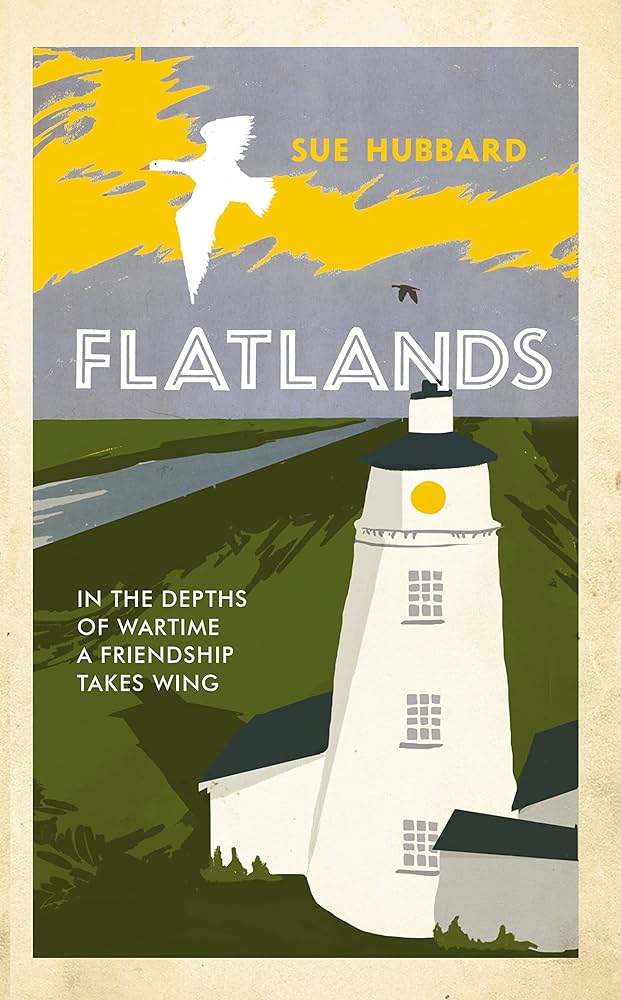
Review by Lisa Williams of "Flatlands" by Sue Hubbard


Flatlands by Sue Hubbard retells Gallico’s The Snow Goose but to an adult audience. Two souls that don’t belong, Freda and Philip, are bonded by the welfare of an injured bird: wounds and the wounded feature heavily in this wartime story. We are still evacuated with Freda but the desolation of the Snow Goose’s stretching mudflats are shifted up the coast to a “place between somewhere and nowhere” on the shores of the Wash. Hubbard’s skilled scene setting places us in both the wilderness and the time perfectly.

On “a hot day, the sort of day for a picnic, not a war” we’re transported with Freda on a train full of sad, scared evacuees to a new home “far away from love.” We’re immersed immediately in the “melancholy of the place.” This landscape, we learn as the story unfolds, matches the aching loneliness felt by both Freda and Philip. Freda remembers paisley eiderdowns and parma violets – Hubbard treats all our senses as she juxtaposes home comforts against the relentlessly barren East coast landscape.

Throughout the book the feeling of threat and uncertainty that war brings looms large but the actual menace is revealed to be lurking within the farmhouse. It is in the very place that Freda is put for safety that the full horrors of war are first exposed. She finds sanctuary at Philip’s lighthouse and they form what Philip describes as “a strange little friendship.”

An elderly Freda is telling us the story as a documentary about Dunkirk is about to be shown at her care home. Those nursed on the The Snow Goose will know Dunkirk’s poignant part in the story. I’m paddling carefully here not to avoid mines, but spoilers. During the depths of Dunkirk’s horrors in Flatlands oddly it was the addition of a dog in the water that made me catch my breath. His fate lingers long after the page has been turned.

As I read a book I make a note of sentences that I like. There was a point early on in this book that I thought I might never finish reading it because I was writing so many down. It’s a slow-paced read but with some delightful lines.


About the reviewer
Lisa Williams is a creative soul from Leicester. She has a Masters in Creative Writing from Leicester University, and lately tends to write mostly short fiction. She likes the challenge of a word limit – usually one hundred words. Her work has been published in numerous anthologies. Lisa has a weekly story slot on local community radio. She helps out a bit at Friday Flash Fiction and Blink Ink Journal. Lisa also paints and makes jewellery selling online as noodleBubble.

Friday, 30 June 2023

Review by F. Bamforth of "The Valley of Lost Secrets" by Lesley Parr


In this book, the main character Jimmy is sent away from his home in London to rural Wales along with his little brother Ronnie and his classmates. Jimmy struggles to settle down with his new foster family and adapt to his new life outside of London. Whilst in Wales, he makes a discovery which helps to change how he feels about his new home. 

This is a fantastic book, telling the story of an evacuee missing his home. It is an excellent read for anyone wanting an adventure story with a good ending. 


About the reviewer
F. Bamforth is 15. She loves books and building lego sets. 


Wednesday, 1 March 2023

Review by Tim Grayson of "For Thy Great Pain Have Mercy on My Little Pain" by Victoria Mackenzie


For Thy Great Pain Have Mercy on My Little Pain is a magnificent book. It brings fresh eyes and vitality to the lives of two real, medieval women of faith: Margery Kempe, and the anchoress Julian of Norwich. It is a work of fiction, but takes its inspirations from The Book of Margery Kempe (the first autobiography written in English by a man or woman) and Julian's Revelations of Divine Love (the earliest surviving book in English written by a woman).

Interestingly, these women did meet in real life, and the latter part of the book deftly imagines their conversation. At times, I found myself moved beyond words, as if the book was speaking to my soul. It may be classed as fiction, but the author has worked wonders here; it's almost as if she's assisted Margery and Julian in creating a new holy book. Outstanding.


About the reviewer
Tim Grayson is the founding editor of the Leicester Literary Review, poet-in-residence at Belvoir Castle and the head of media at Technology Record. He has written poetry for members of the British peerage, scripts for BBC Radio, and has created and produced several board games, including Tatakai - a game of covert warfare. In his spare time, Tim enjoys spending time with his family, training Brazilian Jiu Jitsu and exploring sites of historical significance.


Wednesday, 17 August 2022

Review by Lisa Williams of "Madwoman" by Louisa Treger


          It was struggle, loss and longing that propelled the narrative forward ... 

 - Louisa Treger, Madwoman

Although this story is based on biographical facts of Nellie Bly’s life, the author stresses from the beginning that we are reading a work of fiction. The gaps in the record have been filled with Treger’s invention and this blend of fact and fiction is seamlessly woven into a fab read. Although a compelling character in real life it is Treger’s yarn-spinning skill that gets us rushing through the book.

In the prologue we find ourselves shackled to Nellie on the way to Blackwell’s Island, ‘a place of criminals, paupers, the sick and the insane’ with a guard warning us ‘you’ll never get out.’ Despite this prophecy, Nellie and the reader are comforted by the fact that ‘storytelling would get her through this.’ We’re hooked immediately, needing to know how this will end but Chapter One throws us back in time to her childhood.

After a taste of what’s to come, we find out how she got there; we’re with Nellie as she has the dawning realisation of the injustices of the world, discovers the fetters of her femininity. We share her struggles as she rallies against the differences between the opportunities available for her and the ones her brothers are given. At each stage we get glimpses of Nellie’s strong fighting spirit and how she battles against the usual role of women at that time. 

Nellie is, however, encouraged by her father to follow her dreams. At eleven he gives her a journal and fountain pen, bucking against the Victorian idea that ‘too much imagination can play havoc with a young girl’s mind.’  She has an unflinching drive to tell her story and we share her frustrations at the limited options available to her through her formative years before her story continues back on Blackwell’s Island.

The book is about storytelling. We follow Nellie in her struggle to create her own story as a woman in a male-dominated world. The Nellie we read about is part fiction, part fact and is a character you warm to instantly. She recognises the untold stories in the world, and with her indomitable strength of spirit she forges a way to tell them, getting them an audience while helping the other protagonists ultimately find their own voices too.


About the reviewer

Lisa Williams is a shopgirl and a graduate of the MA in Creative Writing at the University of Leicester. https://linktr.ee/noodlebubble


You can read more about Madwoman by Louisa Treger, as well as an excerpt from the novel, on Creative Writing at Leicester here


Sunday, 28 March 2021

Review by Tony R. Cox of "The Beloved Children" by Tina Jackson


The Beloved Children is skilfully crafted and delights with every page, every character, every action and a plot that trips the light fantastic with the touch of a master wordsmith.

The central characters, the Three Graces and the surreal, magical wardrobe mistress and her even weirder Russian ragdoll, meet up in Fankes Music Hall in 1940s wartime London. The teenagers’ dancing establishes them in vaudeville as well as the hearts (and elsewhere) of the audiences of servicemen. Author Tina Jackson’s crafted words dance on every page. They flow and wave, weave, dip, bow and curtsey, pirouette, twirl, trip, slip and entice, and always captivate. At the end of every chapter the reader takes a breath and smiles at the audacity of the almost physical movements of the writing. But such choreography requires strict discipline and, while Jackson’s writing is almost florescent, every word has its defined place and role.

Jackson’s characterisation brings wartime London and music hall entertainment to vivid life. There’s brutality, brutal relationships, rampant egos, beauty and style, weird and wonderful characters, heinous crime and retribution, villains and heroes, and the constant threat of a single bomb, physical and metaphysical, falling to obliterate everything and everyone.

Rarely do I pick up a book and read just for the sheer pleasure of experiencing a free-flowing style that knits and sews the plot seamlessly into the lightness of touch. The Beloved Children is a flowing, twisting, turning adventure through blitzed and dangerous London up to the present day.

The Beloved Children is also the only book I’ve read where the word ‘Terpsichorean,’ and its many shortened and linked forms, are used so often and to such great effect.


About the reviewer
Tony R. Cox is an ex-regional journalist, ex-public relations consultant and now the author of the Simon Jardine crime thriller series, which features a young reporter who is drawn into the plot through his search for a front page lead story. Published by Fahrenheit Press. He was born in London, and has lived in Scotland, Cheshire,  Pakistan and Derbyshire, and is now retired in Leicestershire. Writing has never been a choice; it’s been a drug since he was at school.

Friday, 26 March 2021

Interview with Linda Rosen


Linda Rosen is a twice-published author living in America. Formerly a fitness professional, Linda became a novelist when her debut The Disharmony of Silence was published in March 2020. Linda’s second novel is Sisters of the Vine, published in March 2021. Her books are set in the “not-too-distant past” and examine how women reinvent themselves despite obstacles thrown their way. Linda was a contributor to Women in the Literary Landscape: A WNBA Centennial Publication for the Women's National Book Association and has had stories published in online magazines and print anthologies. She is a member of the Women's Fiction Writers Association and the Women’s National Book Association where she is National Recording Secretary and Selections Coordinator of the Great Group Reads committee which chooses books for National Reading Group Month. Her website is here.


About Sisters of the Vine

Housewife and mother with a loving husband to take care of her – that’s all Liz, a Fifties gal, ever wanted. Over her father’s objections, she drops out of college to marry Rick, who dreams of living off the land. They buy a farm on a verdant hillside in the Hudson Valley, but can’t agree on what to plant. When they discover French-American hybrid grapes, Liz is confident they’ll be happy. Grapes are classy.

As the rich soil sinks into her soul and the vines begin to thrive, the marriage grows rocky. Refusing to disappoint her father again, Liz is determined to make her marriage work ... until she discovers a photograph hidden in the old barn.

Faced with impossible decisions, Liz is desperate. She has a vineyard ready to harvest and no idea how to accomplish the task. Does she have the moxie to flourish? Or will she and the land turn fallow?

Sisters of the Vine was published in March 2021 by Black Rose Writing. 


Interview with Gail Aldwin

GA: Sisters of the Vine is your second novel. Can you tell us about your debut, The Disharmony of Silence

LR: Thanks for asking. I’m happy to. The Disharmony of Silence is about a clandestine love affair in 1920s Brooklyn that leads to a family secret held for eighty-four years. Carolyn Lee, the protagonist, is desperate for family. When she discovers this shocking secret, she is determined, against all advice, to reveal it. The secret has the potential to tear lives apart. Or, it could bring her the closeness and comfort she longs for. It all depends on how she handles it.

GA: The Disharmony of Silence was published at the start of the pandemic. How did this impact on you as a writer launching a debut novel?

LR: Actually, having my debut published during this time was, for me, the silver lining in this pandemic. With book events all turning to virtual, I was able to “meet” readers from all over, from places I never would have gotten to if events were in person. In addition, the writing community is extremely giving and many well-published authors stepped up to help promote me, as well as my fellow 2020 debuts. Facebook groups were formed with on-line book clubs and podcasts and Zoom took over virtual book talks and interviews. I’ve met so many wonderful writers who I now call friends. And met readers, who I probably never would have met if not for Covid 19 shutting down in-person events. That said, I am looking forward to this pandemic being over and am so very sorry for everyone who has lost a loved one to this horrendous virus. 

GA: A sense of place is important in Sisters of the Vine. How do you choose your settings?

LR: Thank you. I worked hard for the vineyard to come alive. Settings are so important to me when I read a novel that I wanted to make mine evocative. I want my readers to inhabit place, smell the aromas and feel the textures. Therefore, I choose places that I know well, where I’ve walked the streets and ate the food, heard the birds sing, or, as in Sisters of the Vine, stood in vineyards, felt the grapes in my fingers, smelled the rich moist earth and tasted the bold wine. 

GA: I understand the vine to be symbolic of womanhood in your novel. Was this your intention?

LR: Absolutely. The original title for the book was Flourish because as the vines flourished, so did Liz and the women. I’m glad the title changed. Sisters of the Vine is so much better and, as I wrote the second and third drafts, and more, the vineyard became more of a character, more of a metaphor for Liz’s life and for all the women in the story – hopefully for all women in general.

GA: An inherited diamond marquise ring features in Sisters of the Vine. Why did you include a piece of jewellery in each of your novels?

LR: The Disharmony of Silence centers around the mystery of a cameo brooch. The painting in the story, of a woman wearing a cameo, is actually what brought me to write the book. When I added the diamond ring to Sisters of the Vine, it didn’t dawn on me that I had something going with jewellery. When it was pointed out to me that jewellery is part of my brand, I decided to stick with that and I’m adding an emerald to the book I’m working on now. So, to answer your question, I suppose it is simply organic. I hadn’t planned it for books one and two, but now, for future books, I am.  

GA: In Sisters of the Vine, we see the women characters offering each other mutual support. How do you plan character development in your novels?

LR: Before I begin writing, I give my main characters a full biography: birth date, color of hair and eyes, body type, marital status, etc. and then I go deeper to their personalities, their idiosyncrasies, emotional triggers, habits, even if they get along with their mothers. I make them human, to the point that one day I was walking down the street and saw someone coming towards me and almost told my friend who was walking with me that the woman looked just like Carolyn (my protagonist in Disharmony)! Sometimes something happens when I wonder what Liz or Carolyn, Kate or any other character would say. I hope my characters are as real to my readers as they are to me.

GA: You’ve now had two novels published, what’s next?

LR: In addition to being interviewed and having virtual book talks for Sisters of the Vine, I’m working on book 3 set in South Florida in the late 1960s. At this point, I’m getting words on the page. I am what’s called a pantser. I don’t outline or plan too far ahead. I know my characters, my theme, and I have an idea where I’m going with the story and I let it come to me organically. The characters talk to me and sometimes when I wish they would keep quiet so I can sleep! It’s fun. And this has been fun, too, answering all your questions. Thank you for having me.


About the interviewer
Gail is a novelist, poet and scriptwriter. Her debut coming-of-age novel The String Games was a finalist in The People’s Book Prize and the DLF Writing Prize 2020. Following a stint as a university lecturer, Gail’s children’s picture book Pandemonium was published. Prior to Covid-19, she volunteered at Bidibidi in Uganda, the second largest refugee settlement in the world. Her second novel, a contemporary story for adults, This Much Huxley Knows, uses a seven-year-old boy narrator to show the adult world in a new light and will be released in July 2021. It explores friendship and community tensions during the Brexit referendum. When she’s not gallivanting around the world, Gail writes at her home in Dorset. Find out more about Gail on social media: Blog: https://gailaldwin.com Twitter: https://twitter.com/gailaldwin Facebook: https://www.facebook.com/gailaldwinwriter/

This interview was first published on Gail's blog here


Monday, 1 February 2021

Review by Paul Jenkins of "The Mirror and the Light" by Hilary Mantel


Anticipation, comparison and expectation are difficult emotive foes to appease. How do bands and singers follow their breakthrough song or album? Few rarely do successfully. How does a writer follow not only best sellers, but two Booker Prizes?  

Eight years had passed since Hilary Mantel's ‘Bring Up the Bodies’ had secured her second Booker Prize. Anticipation, expectation, and comparison had never reached such heights before ‘The Mirror and the Light’ was published in 2020, drawing the life of Thomas Cromwell to a conclusion. It is against these measurements and emotions with which we must contend, to write a fair review of the final novel of this Tudor trilogy. It is exceptionally difficult to do so.

What is without doubt, is that Hilary Mantel continues to write with exceptional knowledge and clarity of Tudor life. It's hard to pinpoint whether the title author or historian suits her more. The detail around Tudor life; food, colours, fashion, and house décor are extraordinary. You are given an unparalleled vivid lesson into the textures and fabrics of everyday Reformation Britain. You can feel and breathe it. The characters are alive as the political noose tightens around the hero. Is he a hero or deserving of his fate? Texts books portray Cromwell as a villain, but Mantel offers a more nuanced perspective.

The Tudor court was all about survival, and Cromwell was better at survival than most – he needed to be. Mantel makes him come alive, and I for one was urging him to navigate the class machinations that ultimately secured his downfall. For me he became a hero and I wanted him to survive. Alas, no, and Mantel’s final words still pain me as his blood spills onto the scaffold. The jury decide that there will be no third Booker Prize, but that does not diminish this final book of the trilogy. For me, the emotive foes have been successfully equalled and that is more than good enough. Take a bow, Hilary Mantel.   


About the reviewer
Paul Jenkins is 56 years old, with wide ranging interests in history, hill walking and the arts.


Monday, 2 November 2020

Review by Sara Read of "The Prisoner's Wife" by Maggie Brookes


If this fascinating story was not based on a true account given to the author by a survivor of a Second World War workcamp, it would be scarcely believable. The tale is that of the intelligent and resourceful Izabela, a twenty-year-old Czech woman, who falls for an English prisoner and arranges, at great risk, a clandestine marriage for them. Instead of honeymoon, the couple barely have time to consummate their match before heading off on the run from the Nazis. 

Before leaving her mother’s farm, Lizzy disguises herself as a boy soldier, cropping her hair and taking some of her brother’s clothes. This decision ultimately saves her life, for when she is arrested with husband Bill, the Nazis accept without question that Izzy is a young soldier named Algernon Cousins, who is now mute through shellshock. Brookes ably conveys the terror that Izzy feels at every moment, expecting her secret to be uncovered at the mandatory delousing and showers, or when her period arrives. The consequence of this would be certain death. Yet, instead of being unmasked, the story shows how the men of Izzy and Bill’s hut rally round to protect her, forming a shield while she washes out her bloodied rags, and reminding her to feign shaving when the guards are around.  

One of the reasons the story is so compelling is the sophisticated narrative techniques Brookes employs. Izzy’s story is told through personal narration, which encourages the reader to invest in her character, inviting our sympathy. The chapters in which Izzy speaks are alternated with third person narration of the story from the point of view of husband Bill, or from the external narrator’s perspective. The way Izzy copes with her forced silence, her lice-infestations and extreme malnourishment, the latter leading to amenorrhoea within a couple of months, and yet somehow holds her own with the men she is incarcerated alongside is one of hope. Maggie Brookes’ meticulously researched narrative offers a real and vivid insight into life in a prisoner of war workcamp, where death is an almost mundane fact of life. What it reveals is the power of having a reason to go on, to find the strength to persevere when the odds are stacked so very highly against you.  


About the reviewer
Sara Read's debut novel, a work of historical fiction called The Gossips' Choice was published in 2020. She is a lecturer in English at Loughborough University, and her personal website is sararead.co.uk or tweet her @saralread.


Monday, 3 August 2020

Review by Charis Buckingham of "The Gossips' Choice" by Sara Read


I approached Sara Read’s novel with anticipations of enjoyment. A historical novel, set in one of my favourite periods of history, from the perspective of a woman, could hardly fail to appeal. I believe shining light onto the everyday lives of women throughout history is incredibly important; that this novel tackles this topic is an immediate recommendation. 

The novel opens as Lucie Smith, the protagonist, attends the "laying of" Lady Eleanor. Immediately, her skill and expertise becomes evident, although the modern reader may raise an eyebrow at some of the people's fundamental beliefs; in particular, their medical ideas and theories. Nevertheless, Lucie’s voice prevails, as she lets you into her busy, God-fearing, contented life as a midwife. She details several different cases, the characters and events moving together, against the backdrop of summer 1665 and the plague. 

As the story progresses, Lucie’s trials grow greater. Martha, her maid and close friend, finds herself with child, and Lucie, along with her deputy attend a difficult birth where both mother and child die. The tone begins to change; what was once contented and assured is now uneasy and uncertain. As the novel reaches its crescendo, a case is raised against Lucie, questioning her skill as a midwife, and her husband, Jasper, travels to London. He begins to feel unwell as she struggles at home. When he is found dead, a bruise under his armpit indicates plague, although it’s never officially confirmed. This small detail reflects the reality of life during pestilence and the inaccuracies of public records. 

The novel closes quietly, hushed with grief as Lucie contemplates life on her own, but with the promise of hope as the trial against her is overturned. 1665 has been a harsh and unusual year, but the story holds the reader’s attention throughout. 

One of Read’s greatest strengths is the way she embraces the spirit of the time. Her precision of writing brings what is ostensibly a simple story into full and vibrant colour. Politics, religion and superstition reflect the turmoil of the country at large and are interwoven expertly into each character. I would wholeheartedly recommend this novel to either those well-versed in historical knowledge, or those looking for an immersive and engaging read. 


About the reviewer
Charis Buckingham graduated from Leicester University in 2018 with an MA in Creative Writing, and has since split her time between teaching ESL, writing, and walking her dog. She occasionally dabbles in poetry and short stories, but her heart is in full-length novels, and she is currently editing a YA fantasy novel. Her favourite genres are fantasy, historical fiction, and romance, but she never says no to a good serial killer documentary. 


Wednesday, 11 December 2019

Review by Kathy Hoyle of “The Confessions of Frannie Langton” by Sara Collins


Frannie Langton is on trial at The Old Bailey and the crowds are baying for the blood of the ‘Mulatta Murderess’.

‘Any gaol-bird could tell you that for every crime there are two stories, and that an Old Bailey trial is the story of the crime, not the story of the prisoner.
That story is one only I can tell’ 

Frannie’s lawyer gives her a sheaf of paper, ink and pen, so that she may confess the terrible secrets she has kept so close, and somehow find a way to escape the noose. 

This meticulously researched bawdy, brutal tale brings to life to Regency England, where reputation is far more important than truth, and freedom is an impossible dream.   

As a young girl Frannie Langton is given her massa’s name and brought into the big house in Paradise, Jamaica, but for what reason? Living in fear of her spiteful mistress Miss Bella and with no answers from Phibba the housekeeper, Frannie must learn to fend for herself under Massa Langton’s watchful eye. Soon Frannie learns just how terrible the mind of an inquisitive gentleman can be. When Langton forces her to perform his ‘negro’ experiments alongside him, Frannie is drawn into unspeakable acts, scarring her soul forever.  

A fortuitous event follows. A fire wipes out the Plantation and sees Langton flee, with the only chattel he has left… Frannie. Could this be the chance for freedom Frannie has hoped for? Gifted to the prominent writer George Benham in return for the publishing of his scientific papers, Langton ensures that Frannie is simply passed from one wicked master’s hands to another. 

The only light in Frannie’s life is her new mistress, the beautiful but delicate Madame Marguerite. As the love between maid and mistress grows, terrible secrets unfold. Both women are slaves to the master, each one suffocated with dreams of freedom… and then the unthinkable happens. A double murder in the Bentham household, and Frannie is the only suspect. 

The confessions of Frannie Langton is a stunning debut from Sara Collins. The inherent racism of colonial England comes through loud and horrifically clear as we follow Frannie in her search for freedom and a love that crosses the boundaries of race, gender and class.  Collins weaves gothic strands of tension throughout the story with a masterful edge, holding us in the palm of her hand as we wait with bated breath, for Frannie’s final day of judgement. A page-turner from the get-go, this novel will leave you breathless. 

  
About the Reviewer  
Kathy Hoyle is an MA graduate of Creative Writing at the University of Leicester. Her Flash fiction and short stories have appeared in various Online Zines. She has been shortlisted for The Exeter Short Story Award, The Fish Publishing Short Memoir prize and the Ellipsiszine Flash Fiction Collection Competition.