Showing posts with label Ambrose Musiyiwa. Show all posts

Saturday, 20 November 2021

Review by Richard Byrt of "Bollocks to Brexit: An Anthology of Poems and Short Fiction," ed. Ambrose Musiyiwa


I strongly recommend this entertaining collection. Authors consider Brexit from a wide variety of viewpoints, frequently with passion, and sometimes movingly. 

Virtually all the contributions are anti-Brexit. The title reflects many people’s views but might be seen as disrespectful to Brexit voters, including those living in very deprived areas. However, Joel Baccas observes that the term “bollocks” is not always disrespectful. 

Topics of poems include Jo Cox (Mark Connors, Paul Francis), the campaign “Brexit bus” (Anthony L. Church, Tracy Davidson, Lizza Lane) and young people’s futures (Carole Coates, Josh Granville, Kelly Knight, Wayne McDonald, Jacob Spivey). Pessimism is expressed (Nicollen Meek) in relation to shops (Colin Gardiner), splits in the UK (Selina Lock) and the island of Ireland (Richard Kilian Neville). “Brexit” is described as a “synonym for … boring” (Chloe Jacquet). 

Unusual “starting points” to poems include “pictures of derelict factories” (Stephen Wylie); scenes of Harwich (Harry Gallagher), Whitby Abbey (Deborah Harvey) and a “Servants’ Ball” (Nathan Evans). Effective contrasts are made between Brexit and memories of Europe (antonia langford, Isabella Mead, Pappageno). Several poems contain vivid concrete details and original metaphors, with Brexit compared, for example, to birds (Yvonne Reddick), and the breakup of close relationships (Ayodele, Ellie Curtis, Steve Pottinger). Brexit is also considered in relation to Pandora’s box (Nathan Evans), an Italian café (Pam Thompson), chess (Trinity-Grace Robinson), “red boots” (Mariya Pervez), and voyages to the moon (Mantz Yorke), and by ship (Carole Coates, Elizabeth Uter). There are four refreshingly different treatments of the topic, “March” (Anne Howkins, Melissa Oram, Bethany Rivers, Mark Rutter). 

Effective short prose pieces include a conversation about the consequences of Brexit (Danielle Allen), an account of a small girl who joins in the shout, “Bollocks to Brexit” (Anne Howkins), and a presentation on “The Sundering of the Kingdom” (Selina Lock). 

There is a wide range of free verse and fixed forms, the latter including “No country for young men” (Wayne McDonald), a version of Psalm 23 (Trevor Wright), and four sonnets (Gareth Calway, Isabella Mead, Glen Wilson, Michael Woods). There is also a terza rima (Sarra Culleno), a pantoum (Tracy Davidson), and a modified rondeau (Charis Cooper). 

Songs include a ballad (Gareth Calway), a “Hokey Cokey” poem (David R. Mellor), and a stirring “Song for Europe” (Joe Williams). There is a reverse poem (Rachel Hardisty Vincent), skilful use of couplets (Pam Thompson), and an exhortation (Michele Witthaus). Serious messages are conveyed in witty poems, “Deal or No Deal” (Garry Maguire) and “How to Skin a Cat” (Joe Williams).

Congratulations to the authors and editor on a thought-provoking, enjoyable read. 


About the reviewer
Much of Richard Byrt’s work is concerned with the experiences of those of us who face “othering” and discrimination. This is reflected in some of his published poetry, facilitation of creative writing and work for an LGBT+ history project. 

You can read another review of Bollocks to Brexit on Everybody's Reviewing here


Thursday, 15 August 2019

Interview with Ambrose Musiyiwa


Ambrose Musiyiwa edited and published Bollocks to Brexit: an Anthology of Poems and Short Fiction (CivicLeicester, 2019) and Leicester 2084 AD: New Poems about The City (CivicLeicester, 2018). He also co-edited Welcome to Leicester (Dahlia Publishing, 2016). 

He is the author of The Gospel According to Bobba

His poems have been featured in anthologies that include Over Land, Over Sea: Poems for Those Seeking Refuge (Five Leaves Publications, 2015), Do Something (Factor Fiction, 2016), and Write to be Counted (The Book Mill, 2017). 

One of his poems, "The Man Who Ran Through The Tunnel," first published in Over Land, Over Sea, has been translated into many languages as part of Journeys in Translation

You can also read some of his work here and here

In the following interview, Ambrose talks about Bollocks to Brexit, the poetry anthology.


.
Q: How did Bollocks to Brexit: an Anthology of Poems and Short Fiction come about?

AM: Over the past three years, I have been following the debate around Brexit and have been conscious that the only voices that are being heard are those of politicians like Nigel Farage and billionaires like James Dyson, multimillionaires like Wetherspoons boss Tim Martin, and the people who sit in the Houses of Parliament. All other voices are being marginalised. The voice of the poet has been particularly mute. And yet poets up and down the country are writing about Brexit and are sharing what they are writing in workshops, in performance spaces, on social media, in publications of different kinds. So, to work with the voice of the poet, I put out a call for submissions for poems (40 lines or less) and short fiction (100 words or less) on the theme "Bollocks to Brexit" with a view to compiling an anthology.

I sent the call for submissions to as many poets, writers, writers’ associations and schools of writing in the United Kingdom as I could find. The call for submissions was also listed through local, regional and national writers' networks like Writing East Midlands, the National Poetry Society, and many more.

In terms of the volume, range and quality of submissions received, the response was phenomenal. I even received submissions from people in countries like South Africa, Kenya, Tanzania and Canada who said they were following the news on Brexit and were concerned and worried about Britain's future. They felt compelled to write poems about this, and submitted the poems for possible inclusion in the anthology.

From over 300 items of poetry and short fiction that were received from over 100 writers, 95 of the items, from 77 poets, made it into the anthology.

Also in the anthology are a Preface from Nottingham-based poet, Neil Fulwood who gives an overview on protest poems from World War 1 till now. This is followed by an introduction from Dr Corinne Fowler, Associate Professor of Postcolonial Literature at the University of Leicester, who looks at protest poems and the literature of resistance from sites like Peterloo, Manchester, Grenfell Tower, and Leicester. And there's an article by Joel Baccas looking at the word "bollocks" and its uses.

After these introductory remarks come the poems

Q: How has Bollocks to Brexit been received since its release?

AM: The anthology became an instant bestseller. When it came out, it spent a week on the Amazon Bestsellers in Poetry Anthologies list and is still going up and down the list.  On a number of occasions, Bollocks to Brexit: an Anthology of Poems and Short Fiction has been a No. 1 bestseller in the category for hours, sometimes for days, and sometimes for a week.

Q: In your view, how and why did this happen?

AM: I think this is because people want to hear what poets are saying on Brexit. They want to hear other voices other than those of Donald Trump, Nigel Farage, Theresa May, Jeremy Corbyn, Boris Johnson and Jeremy Hunt.

People want to be inspired and re-animated about life, about the future and about the country. The anthology offers other voices to the ones we hear all the time; the new voices counter the latter, which have become tiresome because they are unimaginative, uninspiring and lacking in vision and hope.

The anthology offers hope. It says every voice matters and that Downing Street and Parliament should be working to repair the damage Brexit has caused to friendships, families, communities and the country.

Q: Initially, the anthology was going to be launched at the Bishop Street Methodist Church but something happened and you had to find an alternative venue?

AM: Yes. We'd made arrangements to hold the launch on Saturday, 29 June 2019, at the Bishop Street Methodist Church in Leicester. The church lets artists and community groups hire space for different activities and is an important space for the arts in Leicester. Over the past two years or so, we’ve held a number of literary events there. But with Bollocks to Brexit, a few days after we’d made a booking to hold the launch there, the church revoked the booking. The church said it "understand[s] the anger expressed in the title of the collection" and was revoking the booking because it wants to "strike a balance between being prophetic and a place of reconciliation".

We had no choice but to look for another venue. Dr Corinne Fowler, Co-director of the Centre for New Writing at the University of Leicester found us a venue at the university and we ran with it. 

Q: How did the launch go?

AM: The launch went well. Most of the people who read at the event live in and around Leicester. A good number also came from places further afield. One person who'd read about the event in the local paper also brought a poem of his own that he shared with all present. Most of the featured poets who attended read their poems and shared reflections on the poems and on Brexit. The readings and the reflections convince me it was right to bring out the anthology the way we did. One person who attended the launch said, "What an amazing evening and the people reading their poems. Everyone treating each other with respect. I loved it."

Bollocks to Brexit, the poetry anthology, headlined at AfterWORD! at Attenborough Arts Centre on Monday, 29 July 2019. That event went well, too. The readings and reflections that we heard at both events convince me that through events like these, we can broaden the space that is there in public discourse on Brexit. All we now have to do is organise more events around the anthology in more places around the UK between now and October. 

Q: What happens next?

AM: In Leicester, De Montfort University will also be hosting an event around the poetry anthology on 1 October as part of Everybody’s Reading, Leicester’s festival of all things to do with reading. And we are currently looking into the possibility of organising events around the anthology in a number of towns and cities around the UK over the coming few months. As part of these events, alongside readings from Bollocks to Brexit: an Anthology of Poems and Short Fiction, there will be space for other people to bring their own “Bollocks to Brexit” poems and present them at the events because these are part of the conversation that the anthology is about as well.

Monday, 5 August 2019

Review by Kirsten Arcadio of "Bollocks to Brexit" ed. Ambrose Musiyiwa


As an ardent pro-remainer, I joined The People’s Vote march in the spring of 2019. ‘Bollocks to Brexit’ was a phrase I yelled during the march, so when the opportunity came up to review an anthology of the same name, I jumped at it. From discussions of the language we use to describe our crisis to reflections of our predicament, this anthology of anti-Brexit poetry and short fiction is a joy to read. The collection is brimming over with pertinent questions: the question of our children’s legacy; the effect on our businesses; the loss of our European identity; our repulsion at the sudden rise of anti-immigration sentiments; the lies told to us by the Leave campaign, to name but a few.

I particularly enjoyed 'Peregrines' (Yvonne Reddick) with its feeling of transience and reminder that most of us hail from elsewhere and, like the author, I would love the freedom to stay on the move; 'Yes there will also by singing' (Deborah Harvey) is a beautiful poem that echoes Bertolt Brecht’s ‘Motto,’ a collection of verses he wrote after fleeing Nazi Germany. 'Reverse Brexit' (Rachel Hardisty Vincent) is a clever poem you can read top down or bottom up for two entirely different reflections on how a person could have voted in the referendum – very nicely done and it works as a quick an effective mirror on current society. 'Before and After' (Pam Thompson), about an Italian café through the pre and post referendum period, is almost too close to home (I own an Italian café). The two verses of this poem show the golden era of tolerance and multi-cultural European values before the vote and the quick reversal of that afterwards. I enjoyed the immediate image of Disney villain, Gru, that 'Bad bad man' (Andy Callen) brought to mind. This poem reminded me that, in a world where a PM plays the fool to win voters’ affection, we should examine our begrudging affection for cardboard cut-out villains. Maybe it’s time to look behind their larger-than-life characters to see what they are really up to?

Bollocks to Brexit is a wonderful collection of poetic reactions to our current state of affairs. The works outline, in succinct form, the predicament British society finds itself in at this peculiar crossroads in time. It delivers a great slap in the face for complacency in bite-sized but not easily digestible chunks - and is worth carrying around to delve into every time a reminder is needed of what’s at stake. 


About the reviewer
A Ph.D student of Creative Writing at the University of Leicester, Kirsten Arcadio is an entrepreneur who runs a business alongside her writing career. She has written and indie-published four novels:  Borderliners, Split SymmetryWorldCult, and Zeitgeist, each with a different speculative theme.

Wednesday, 16 November 2016

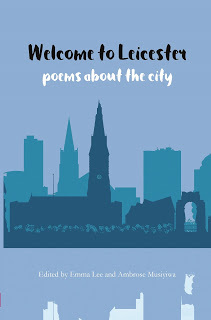
Review by Simon Cole of "Welcome to Leicester," ed. Ambrose Musiyiwa and Emma Lee, and "Born to Run," by Bruce Springsteen

Home Thoughts From Abroad


Holiday reading is important to me. It has to be a conscious choice as the pile of books by the bedside gets bigger, and the time available to read them gets smaller. So a half term break saw two choices make the cut. Springsteen's Born To Run, and Welcome to Leicester: Poems about the City.

Springsteen has produced a magnificent rollicking read, as he heads from sleeping on the beach surrounded by all of his few possessions to mega stardom. Along the way he hasn't lost his sense of humour, of irony and of who he has lost along the way. His descriptions of his battles with himself and his depression are vivid and moving. 

Having engaged with The Boss, I turned my mind back to Leicester, taking myself very quickly from Asbury Park, N.J. To Spinney Hill Park, LE5. Early on in the Welcome to Leicester anthology Paul Lee recalls Spinney Hill Park, in 'her green lap', he recollects how

delighting feet sloshed through
The dew-slick flood of grass

I was hooked. I loved the evocations of places I knew as a child, and know now. The cinnamon scents washing over the Caribbean Festival, the colours and tastes of the Belgrave, THAT view of Old John from the top of London Road and late night in Granby Street. That is a scene that every police officer who has ever worked the night time economy would recognise as Julia Wood describes 'The cash-machine drunks on the pavement.'

There are two omnipresences throughout that are brought to life. The unblinking oversight of a dead King, and the inspiring tale of the fox that was an underdog. 'We've won the bloody football', writes Steve Wylie, 'while policemen laugh', before expressing guilt that he isn't exactly sure who one of the heroes adorning the lampposts in the city actually is! The sense of sport bringing together all sorts of people from all sorts of backgrounds is writ large throughout. It does capture what it felt like to be in Leicester as the impossible happened, as people danced in the street, as tears were shed, as Nessun Dorma rang out, and as one in four of the population headed for Victoria Park to sing and shout and cheer themselves hoarse. I suppose that as I write this I appear to have 'something in my eye'. The poems capture that feeling very emotively.

Overlooking all is one man. Whilst I would love that man to be the chief constable it is, of course, Richard the Third. 'A pile of bones, Both regal and diminished', a Plantagenet, a resident of York, a talisman, a commentator, a source of inspiration. In Charles G Lauder Jr's 'The City' he is the King hailed by the City one day, before his 'usurper' is festooned the next. Together with the bespectacled 'Italian alchemist' Ranieri as his Caesar, the miraculous discovery of the King in the car park runs as a driving force for a renaissance of civic pride.

For me the biggest theme is of belonging. Poets describe a search for a place to be home, where they can be themselves. Farhana Shaikh writes 'To Leicester Where We Belong', and of her grandparents arriving with just a single suitcase to their name. Some of the language and places of the past used in many poems reminded me of my own grandmother, Leicester born and bred. She would recognise the sounds of the market, the stories of those that make things, the chance to look out from the City into the county beyond. The image of Hui-Ling, Chen's 'Night Swans on the Grand Union Canal' would have resonated with her.

So what's not to like? Inevitably some of the writing grabbed me, and some didn't. In a collection of almost 100 poems and 150 pages that is unsurprising. I felt that some of the footnotes were a bit utilitarian and unnecessary; part of the joy of reading new things is finding out what is being alluded to for yourself.

What I loved most was the swirl of images and names that look like the place that I live and work in every day; the Diwali wheel, Idi Amin, The Big Issue, Windrush, suffragettes, hope, DNA, DMU, Attenborough, Watermead Park, the Haiku hike around Aylestone Meadows and even some policing. I especially loved the stately dance of Maria Ronner's 'On A Bus', as cultures meet, and the niqab and woolly hatted anorak find out a way to get along.

So, as I sat far away watching waves roll endlessly into a foreign beach, I found myself back in landlocked Leicester. Perhaps Browning should have written 'O, to be in Leicester' as he reflected on his home thoughts from abroad.

As Rob Gee shouts 'I am from Leicester, and I can do anything.' I have even got my own pen and paper, well... laptop... out and have started scribbling down some poems of my own, me ducks!

Notes:

1. Welcome to Leicester is available from Dahlia Publishing: http://www.dahliapublishing.co.uk/2016/09/welcome-to-leicester/
2. See also, Kershia Field’s review of Welcome to Leicester, http://everybodysreviewing.blogspot.co.uk/2016/10/review-by-kershia-field-of-welcome-to.html and Eliot John’s review of the anthology, http://everybodysreviewing.blogspot.co.uk/2016/10/review-by-eliot-john-of-welcome-to.html
4. See also Ambrose Musiyiwa's blog post on the anthology, http://ambrosemusiyiwa.blogspot.co.uk/2016/09/new-poetry-anthology-celebrates-city-of.html

About the reviewer
Simon Cole QPM is Chief Constable of Leicestershire Police. 

Wednesday, 26 October 2016

Review by Kershia Field of "Welcome to Leicester," ed. Emma Lee and Ambrose Musiyiwa


[This is the second of two reviews we're running on this new anthology. You can read the first here.]

When I left Leicester after living there for three years I was utterly convinced that nobody would love it as much as I do. The new Welcome to Leicester anthology has proved me wrong. It captures the remarkable and the completely normal about the city so beautifully that I realise now that Leicester stays with each and every person who passes through it.

I thought I knew everything there is to know about Leicester, its history and its culture. Once again this collection corrected me. Reading it is a wonderful, educational experience that only makes me feel closer to the city, rooting me in its fascinating past with poems like Andrew Button's “Ratae Corieltauvorum” and “Ruins steeped in history” by Norbert Gora.

Having only left Leicester a few months ago, I’m still very much homesick for the city. This collection allowed me to fall in love again and again with each page and by the end, it’s as though I’ve been back and visited the city itself. Each poem feels like a personal connection, like it was written just for me. I can hear the Leicester market place, I am part of the hustle and bustle of shoppers in the Highcross, I can smell fireworks after the Diwali celebrations, and if I close my eyes I am walking along Julia Wood’s perfect depiction of Granby Street.

Not being a football fan myself and knowing nothing about the game, I wasn’t particularly bothered by Leicester winning the Premier League this year. What I did love, though, was that the city came alive. People came from all over to our city to celebrate the success of underdogs. It resonated with thousands and that’s something that definitely shines through in “The Art of Winning” by Jayne Stanton and also “On Leicester winning the premiership” by Rob Gee.

It’s impossible to pick a favourite from the collection and I suppose that makes sense. It’s impossible to pick one part of Leicester that I love the most. Perhaps the best thing about the collection is the sense that everyone who has taken part feels proud of the city and it’s not hard to see why. Leicester belongs to everyone from all walks of life: it’s home, it’s beautiful and now everyone can have a small piece of it to keep.


About the reviewer
Kershia Field is a twenty-one-year-old poet currently working on her first poetry collection based on Mental Health and the stigma surrounding it. She has her own blog at http://kershiadoespoems.blogspot.co.uk/


Monday, 10 October 2016

Review by Eliot John of "Welcome to Leicester," edited by Emma Lee and Ambrose Musiyiwa


[This is the first of two reviews from different reviewers which we're running on this new anthology.]


Imagine a puzzle of Leicester… large and colourful and made up of a thousand tiny, intricate pieces. Now, imagine that you’ve just emptied out the contents of the puzzle-box. The image is scattered and broken, beautiful and diverse.


Welcome to Leicester is a Wonderland in poetry form. From the Contents you are transported on a zig-zagged journey through the city, as if you were viewing it from Willy Wonka’s Great Glass Elevator. You jump from ‘Granby Street’ to ‘Western Road’ and back to ‘Highfields’ in only a handful of titles. A few big names also stand out, Richard III is there, of course, and Shakespeare, then there’s Picasso placed nicely in the middle and obviously a number of Leicester City footie fans.

Where do I start? Let’s begin as Alice did in her Wonderland - straight down the rabbit hole. The Leicester equivalent is the notorious carpark, the resting place of an infamous king. 'King Richard of Leicester' is an incredibly witty, fast-paced poem that gives you the low down on Richard and his great discovery. Colin Cook is that teacher you had in school who made history fun and relatable. You would leave class thinking 'Mr. Cook is so strange, isn’t he?' but you’d still be laughing and quoting the poem all the way home.


Rob Gee also mentions ‘some dead bones of a dead bloke in a carpark’ in his piece 'On Leicester Winning Premiership.' This poem is like being a VIP at the Mad Hatter’s tea party, only with Vardy-bombs instead. It perfectly portrays the elation felt within the community after the grand win. It is an adrenaline-filled ode to the club. I challenge you not to tear up by the end.

Julia Wood shows us a different side to Leicester in 'Fosse Park, After Dark.' I wouldn’t dare to read this one after dark. ‘Concrete ghosts’ will haunt your dreams and leave you breathless.

You cannot help but admire Leicester after reading this anthology. It’s an odd mix of poems on history, food, scenery, ethnicity, festivals, sport and more. But hey, that’s Leicester for you.


About the reviewer
Eliot John is a poet and creative writer from Leicester who specialises in spoken word and flash fiction. Eliot regularly hosts burlesque shows in the city for The Leicester Vixens and is renowned for their witty and dark approach to life. Recurring themes that are explored in their work include loss of identity, sexuality, ethics, and the vices of modern culture.

Sunday, 4 October 2015

Review by Jonathan Taylor of "The Gospel According to Bobba" by Ambrose Musiyiwa


There is a wonderful twentieth-century composer called Webern, who managed to encompass whole Mahlerian symphonies, whole concertos, musical drama, tragedy, comedy, in the space of a couple of minutes. Something similar might be said of a new miniature e-book by Ambrose Musiyiwa, called The Gospel According to Bobba. Here, encapsulated in twenty-four micro-poems, is a microcosmic universe of knowledge, encompassing everything from politics:

Bobba says
in a country
that's afraid of its own shadow
schools
should be places
where light is cast on shadows

... to philosophy:

Bobba says
there's something about tea and biscuits
which makes the world
a beautiful place

... to the significance of an elephant and the number three in a shoe box:

Bobba says
imagine a shoe box
with an elephant and the number 3
in it

In miniature form, there is surrealism here, psychology, playfulness, sadness, even mini-narratives sustained between the individual micro-poems. The collection might take five minutes to read, but its nano-wisdom reaches out far beyond its twenty-or-so pages. Like Webern's epigrammatic music, it's all rather wonderful.


About the reviewer
Jonathan Taylor's books include the novel Melissa (Salt, 2015), and the poetry collection Musicolepsy (Shoestring, 2013). His website is www.jonathanptaylor.co.uk.