Showing posts with label Leicester. Show all posts

Sunday, 13 September 2026

Review by Sally Shaw of "The Longest Day" by Lisa Williams


The Longest Day is Lisa Williams's debut novella, each page holding exactly one hundred words. The one-hundred word stories are set in a tower block in Leicester: "Longhope House rises into an ecru sky with the railway station tucked at her feet. She looks tired, her concrete curves haven’t been tattooed with a fancy new mural." These words convey the status of the flats and the people that reside in each. The novella is set on 21st June 2019, the longest day of the year, and allows the residents of the tower block to speak.

The way Williams has formatted the book, each page having flat number, title and time reminded me of 253 by Geoff Ryman. As I read, I was curious to find out the relevance of the flat numbers, because Williams hasn’t set the stories in flat order: flat 204, for instance, is followed by flat 602. For me as I read, it was as though I was running up and down the stairs to each of the flats, to find their stories. I tried to hold each story in my mind's eye, searching for connections to individual residents, some of which I found, others I may have missed so fleeting were they. I liked the layout of each page: the words, page centre, enabled me to access each sentence and absorb their full impact. 

The stories within each flat are like flash cards that may show who the resident is, why they are there, their past, their sadness, age, family, work, personality, circumstance and more. Williams packs enormous detail into each sentence: "Renee is planning her funeral. She’s reading through the hymn-list again. She’s told no one about this but has detailed it all in a red notepad bought for 3/6 in Woolies. It still has the price sticker on it." In these three sentences I gain an insight into Renee’s age, that she’s a private person and holds a fear of death and her wishes not being known. As the story of each flat unfolds I find moments of humanity, conveyed by words that portray the underbelly of circumstance and uncover the predators waiting to pounce. Flat 505 "the mobile hairdresser" has a gentle beginning, and tells the story of Betty, her hair downy thin. The hairdresser sees the beauty of Betty, and doesn’t draw attention to "a peaches fuzz over a shrimp pink scalp." Betty is taken back to beehives, gossip and herself, in a story of untold truth and unfelt age. 

These stories can be read as isolated vignettes to reflect on, and yet as I mentioned earlier I searched for threads that pull them together. Flat 903 and 205 are threaded to flat 1305, the actions of whom cause harm and disappointment, demonstrating the ramifications of circumstance. Taken as a whole the stories form a collage of the lives of the people who dwell within the tower block. 

The Longest Day is a complex read, and there’s beauty to be found amongst the harshness and sometimes foul aspects of life for the inhabitants of Longhope House. I wrote down my thoughts after reading the last page. I discovered glimpses of community but in the main this had been stripped away, the post left in pigeon holes, the milk not delivered to flat doors, the demise of the caretaker. It made me consider how and why people are housed in run-down tower blocks. Are they selected because they are vulnerable, have no fight, no right to ask for better? Williams has provided an insight into the lives of those hidden away and maybe The Longest Day will bring these issues into the day light. 

The Longest Day is a book that can be read as a whole, or read story by story to be thought about, enabling you to see the individual people living in those tower blocks you pass rushing for the train.


About the reviewer
Sally has an MA Creative Writing from the University of Leicester. She gains inspiration from old photographs, history, childhood memories, and is inspired by writers Sandra Cisneros, Deborah Morgan, Liz Berry and Emily Dickinson. She has short stories and poetry published in various online publications including the Ink Pantry, AnotherNorth, Roi Faineant Press. Sally lives in the countryside. 

You can read more about The Longest Day by Lisa Williams on Creative Writing at Leicester here. 

Friday, 28 August 2026

Review by Nancy Dawkins of "In Vauxhall Pleasure Gardens" by Katherine Howey


"Beggin’ pardon, Miss, why’s a respectable young lady like you a-going to the Pleasure Gardens? Don’t you know they has the most prodigious bad reputation, and ain’t no place for a lady unaccompanied?" Katherine Howey’s debut novel, In Vauxhall Pleasure Gardens, follows Lucinda, a young soldier’s daughter, who arrives in London in the late 1700s after fleeing the American Revolutionary wars. Lucinda begins, it seems, as a typical historical heroine: naïve, thrown into a new and unfamiliar world, tasked with learning a new job as a seamstress. Her forays into society and the meeting of a wealthy gentlemen may set a reader up to believe that a Cinderella story is about to unfold. Perhaps, after meeting with a few trifling difficulties, Lucinda will get married and all will be tied in a neat Austen-like bow? But who is the mysterious doctor, William Browne, who bursts, singing and swinging, onto the page? 

The realities of being a woman in the eighteenth century, and of the harsh divisions of class in that time, become immediately apparent as Lucinda’s fairytale turns dark. A sudden and misunderstood illness strikes Lucinda, leaving her unable to perform her roles, either as a seamstress, or as an eligible woman in society. What follows for Lucinda is a Dickensian fall through the cracks of London. For a modern reader, it is clear that Lucinda’s illness resembles a chronic disability like M. E. or fibromyalgia, but to her contemporaries in the book, her illness is incomprehensible, appearing fabricated even. In Vauxhall pleasure Garden does not shy away from the traumatic realities of being a young woman, alone and disabled, in times gone by. Lucinda is not a perfect heroine, she is frequently disempowered, doesn’t know where to turn, and chooses the wrong people to trust. Nevertheless, she manages to support herself in inventive ways, and forge friendships and a life, however unconventional. 

In Vauxhall Pleasure Gardens tells a story that is often missing from historical fiction, the story of a woman who did not, and who because of disability could not, follow the paths laid out for women in that time, but who managed to survive. I finished the novel, the first in a series, ready to read the second, wondering what lies ahead for Lucinda; what really happened to William Browne, will Alex Henderson find her at the Inn, and will she see Jem again?


About the reviewer
Nancy Dawkins is a poet and musician from Leicester. Her writing has been published in print and online, including in The Leicester Literary Review and Heroica. She was shortlisted for the inaugural role of Leicester Poet Laureate in 2025, and was longlisted for the Glastonbury Emerging Talent Competition 2024. 

You can read more about In Vauxhall Pleasure Gardens by Katherine Howey on Creative Writing at Leicester here. 

Wednesday, 8 April 2026

Interview with Annabelle Slator


Annabelle Slator
grew up writing stories in the depths of the British countryside. After achieving a degree in Creative Writing, she spent most of her twenties working with brands and start-ups in London and New York. 
Nowadays, if she isn’t spending time writing, you can almost always find her obsessing over niche internet drama, practising her fencing parry or mooching around vintage fairs and flea markets. Annabelle’s first contemporary romance novels, The Launch Date and Risky Business, were inspired by her time working in the wild world of dating apps and the tech industry. You can read more about Risky Business on Creative Writing at Leicester here. Annabelle's website is here. 


Interviewed by Anupriya Sisodia

Q: Tell us more about the Risky Business: what inspired you to write a modern, fast-paced romance set in the tech start-up world? 

AS: Risky Business is inspired by my experiences not only working in the tech and start-up industry, but working exclusively for women-run and female-founded companies. It admittedly is not the sexiest world to set a romance, but it was an area I felt was relatively unexplored in the romance genre and something to which I can bring a unique perspective. 

Q: Were there any scenes or moments that were especially fun or challenging to write? 

AS: The set-up and opening chapters were the most challenging to write, and were rewritten several times during the drafting process. I was trying to hit a balance between a dynamic main character with plenty of agency whilst making sure she "stumbled" into the circumstances of the story instead of actively choosing to deceive everyone from the start. The chapters I found the most fun to write were the meet-cute chapters, the first carefree, flirty night Jess spends with Oliver. I found those chapters to be incredibly cathartic for a character who had spent so long focusing on her own anxieties instead of living her life to the fullest. 

Q: What genres or topics do you enjoy writing about the most? 

AS: I love romance! First kisses and romantic tension are always the most enjoyable parts of the process, but blending self discovery and growth is the most satisfying part of writing, even if it’s not as fun as flirty banter and hijinks in the moment! 

Q: How do you approach blending humour, tension, and romance in your storytelling?

AS: I like to champion the idea that romance is inherently hilarious and should be treated as such. Having a crush makes you do and say things you never thought you would, that you would laugh at somebody else doing, and often look back at and cringe. I approach humour, tension and romance in the same way. Whether they are clashing or in sync, they often work hand in hand to create something magical on the page.  

Q: How do you handle writer's block or creative doubt?

AS: For me, writers block has never been a massive issue because I am always working on multiple projects as once. If I’m stuck on a part of a story, I will focus on another for a few days until the knot in my mind becomes untangled. I also find working on something physical, like cooking or even going for a long walk, helps immensely if I’m really stuck. Ultimately, creativity is a muscle; it can get tired and that’s okay but it needs to be exercised regularly to keep working.  

Q: Are there specific messages or feelings you hope your readers take away from your story?

AS: I hope my readers feel inspired to take their dreams seriously, but also not be too hard on themselves. In the past I have felt a lot of the feelings Jess (and Grace in The Launch Date, my previous novel) experience, and I learnt a great deal through them. I hope readers have the same experience. 

Q: Did you draw on any personal experiences or observations about gender dynamics in tech or in general while writing Jess’s journey? 

AS: Not necessarily direct personal experiences, but witnessing how female founders are treated in the space was a huge inspiration for the story. I think most women can relate to the experiences Jess has in the book, or know someone who has. In particular, Risky Business was inspired by the real-life story of two female entrepreneurs who created a fake male CEO called Keith Mann to dodge tech industry sexism. Ever since reading a news story about this in 2017 I had wondered what would happen if you took that concept further, hiring a man to be the face of a company who was nowhere near qualified. 

Q: You set the story across Rome, Paris, and Vienna. How did these locations shape the plot and the characters’ personal growth? 

AS: Originally, this story was just set in London like my first novel, The Launch Date, but with the mechanics of the story being punctuated by rounds of a tech competition, the idea of just going back to the same hotel events hall every few chapters seemed very boring. I also wanted to make the competition as expensive as possible for Jess without it seeming ridiculous. Tech is a very pricey industry to enter and often excludes people who have great ideas but no financial backing. Making these an international escapade not only made the competition more dynamic but also gave me the opportunity to have fun and flirty scenes between Jess and Oliver outside of a hotel foyer, like the aeroplane bathroom, the French countryside cafe and the Italian dive bar. 

Q: What is your favourite part of being a writer? 

AS: Apart from the obvious of fulfilling a childhood dream of being a published author, it’s amazing to have a job that is so creatively fulfilling. The personal freedom is also a huge part of being a full-time author that I did not anticipate being one of my favourite parts. It can be stressful, not always knowing what the next year will hold and waiting on publishers for feedback etc, but it’s the best job I’ve ever had. 

Q: What personal advice would you give aspiring writers?

AS: Writing to a schedule was one of the best decisions I made when I first started writing full novels. If your goal is to be published, your first book is most likely the only one you will ever write on your own schedule. When writing The Launch Date, I deliberately gave myself a year to plan, write and edit the manuscript before querying, as I knew that was the rough timeline a publisher would give me. As it turns out, I had even less time to write and edit Risky Business, so I’m really glad I had the experience of a tight turnaround before things got serious! 

Q: Finally, what are you currently working on?

AS: I can’t reveal too many specifics right now but I’m currently finishing up something a little bit spookier than The Launch Date or Risky Business, but just as exciting and tension-filled. You can follow me on instagram @annabelleslator or tiktok @annabelleslatorauthor for future updates! 


About the interviewer 
Anupriya Sisodia is a published romance fiction author, pursuing an MA in Creative Writing at the University of Leicester. She is an avid reader who loves writing stories with realistic, relatable characters who experience emotional and exciting journeys on their way to a happy ending.

Wednesday, 25 March 2026

Review by Lisa Natasha Wetton of "Writing Elegies for Dead Men I Didn't Meet" by Cathi Rae


This is everyday life, simply depicted, suicide taken in a stride, elongated spaces between the words giving breath where there is none. The reader is given space to pause to reflect and then continue, taking in the gravity of this subject matter in as easy a way as possible. 

          "Is this real?"
          "Shit, I think it’s real"
          "He really really did it"
          running in real time
          while time has stopped for you.

Writing Elegies for Dead Men I Didn't Meet is a series of poems based on real-life stories, creating a narrative that shines a light on issues around men's mental health and the tragedy of male suicide. In her preface, the author refers to it as "a 21st century tragedy." She brings home the finality of life-ending decisions made in everyday circumstances, in order to make individual men visible in a culture that, as the collection quietly argues, has made them very easy to overlook.

Every kind of suicide and situation weaves through this collection. Teenage boys, middle-aged men, drunken fathers snatched from life in a moment that cannot be taken back. Some planned, some more spontaneous, all terminal and unchangeable. The sadness and tragedy are stark and unrelenting, with a wish that it could be something other. 

The simplicity of descriptions mirrors the commonality of suicide. Men of all ages are taking their lives under the compounding weight of circumstances that ground them down - feeling unseen, carrying shame they were never equipped to name, or simply exhausted by the effort of continuing. 

In the opening piece, "Slicing Through the Information Superhighway with a Scalpel," Rae writes about the process with which she created the content:

           my computer glitches
           won’t stop scrolling page after page
           name after name after name
           until I have to look away block away the tears
           writing elegies for dead men I didn’t meet.

Poem after poem, man after man, the weight of it builds and builds. These are not isolated failures, not men who simply couldn't cope. They are every age, every background, every circumstance. "Club 18 to 35" feels like the collection's breaking point. This is an almost-angry reckoning with what we are doing to men, and what we are allowing to continue.

Male suicide is becoming an often silent, global epidemic, with men dying by suicide approximately three to four times more often than women. Rae reaches out to shed light on an issue that must be addressed. These poems provide perspectives of people choosing to take their own lives and how, as well as acknowledging those left behind. 

In "Finders," Rae bluntly puts it, 

          your discovery       just a delay
          in the everyday of commuting home
          a flicker of frustration
          and then reset
          Someone has to find you ... 
          someone who will keep that memory
          forever
          even if they wish they couldn’t
          who might prefer that you had stayed
          unfound.

Here, she acutely presents the devastating impact that ripples out from suicide. Lights go out on a life, as the world inevitably, indifferently, keeps on turning. This is a collection that deserves to be read widely - not as a comfortable experience, but as a necessary one. 


About the reviewer
Lisa Natasha Wetton (aka Lisa Life) is a regular contributor to the English pages of L’eco de Sitges, Barcelona. She is a Creative Artist, Coach & Hypnotherapist. She collaborates on Writing Retreats with American Author Will Bashor, with whom she co-authored Soul to Pages - A Weekend Journey to your Novel/Self-help book, a process used to support budding writers that incorporates meditation and visualisation sessions. She is currently refining edits on her first completed book, A Guide to Spirituality from a Working Class Girl. She has a twenty-year history working in Dance & Theatre and has been based in Barcelona for almost seven years. You can find Lisa at https://linktr.ee/NewLisaLife.

You can read more about Writing Elegies for Dead Men I Didn't Meet by Cathi Rae on Creative Writing at Leicester here. 

Saturday, 10 January 2026

Review by Sarah Gresham of "The Final Women" by Pardeep Aujla


This is a great read. It’s compelling, thrilling and unpredictable. I love the way that the main characters are a group of women survivors out to get bloody revenge on a serial killer. The author cleverly and intelligently explores the characters’ different reactions to historic trauma as well as their motivations to get even.

Throughout, the action sequences are expertly done and badass, and the dialogue is cracking and witty. As for the horror content … if it’d been a film I was watching, there were lots of moments I’d have been reaching for a cushion to cover my eyes. Descriptions are inventive, novel and full of dark humour. The Silas Crowe character is menacing, creepy, chilling. 

I saw that the author, Pardeep Aujla, is an "award-winning screenwriter and narrative designer for video games." This skill shines through so well, as evidenced in the rolling climaxes that explode across that movie-screen of the mind. Think: slasher horror. Think: oodles of gory homicide. Don’t read at bedtime!


About the reviewer
Sarah Gresham’s coffee shop, Clarendon Perk, is at 249 Clarendon Park Road, Leicester, where you will find very nice coffee and homemade cakes and food. It also has a micro bookshop, and occasional literary events featuring local writers.


Wednesday, 10 December 2025

Review by Rhiannon Buckley of "Angel Reach" by Gus Gresham


Characters feel unflinchingly imperfect and real in this collection of short stories by Gus Gresham. For me, the author writes in a way which is unapologetic to the human experience and calls on you to see through another’s eyes. When the character stumbles upon a question, often seemingly unanswerable, I found myself asking the same thing.

Not all books are easy for me to visualise but the stories Angel Reach flowed beautifully and played out like a movie in my mind. None more so than "Woofers and Tweeters" - I love the way the characters here intertwine, adding layers as you read. I really do look forward to reading more short stories from Gus Gresham. Excellent stuff!


About the reviewer
Rhiannon Buckley is an East Midlands based author, actor and communication skills educator. Her first book A Mind Blown was published in 2025. 

You can read more about Angel Reach by Gus Gresham on Creative Writing at Leicester here. 

Monday, 2 June 2025

Review by Gary Day of "Sub/urban Legends" by Pam Thompson


Brilliant, disorientating, splendidly polyphonic: these poems provoke, puzzle, baffle and delight the reader. Each one bears re-reading, not least the title poem, ‘Suburban Legend.’ Its zigzags, elisions, and turbo-charged imagery are typical of the volume. Everything is happening at once and at speed. The reader is not sure of their bearings or of what’s happening. Is a cooker being dumped or being used to make a meal? Who are the characters and what is their relation? The man is ‘the scourge of our town’ but there’s clearly more to him than that. The imagery is partly cosmic ‘I identify Venus, lucid tonight’ and partly quotidian ‘just a sponge and soapy water.’ The diction is a heady brew of the earthy, the enigmatic and the arcane. How often do you hear the word ‘brumous,’ meaning foggy or wintery, these days?

‘The Keys’ should be anthologised in any future volume of British twenty-first-century poetry. It is situational, symbolic and finishes with a wonderful shift that makes the poem just soar. ‘My Life as a Bat’ has a mysterious sub-text. Revenge against a former lover? Difficult to say, but it is extremely well wrought and humorous as well as sinister. The image ‘ricocheting in a cave’ conveys both fury and despair. ‘Reading my mother’s diaries’ is one of the most poignant poems in the collection. The last line is just beautiful. 

There is a lot going on in these pages. The search for something beyond the obvious in ‘An afternoon’; the relation of art and life in ‘Fête Galante’; the eerie atmosphere of ‘Explorers, Antarctica,  1901’;  and the soothing blues of ‘the evening garden.’ Throughout there is a sense of broken things that can’t quite be put back together, and the poems invite the reader’s to help join the fragments


About the reviewer
Gary Day is a retired English lecturer. He has had poems published in Vole, Ekstasis, Acumen and The Dawn Treader. His 'Anne Bronte's Grave' was highly commended in last year's Artemesia Poetry Competition.

You can read more about Pam Thompson's Sub/urban Legends on Creative Writing at Leicester here. 

Wednesday, 30 August 2023

Review by Laurie Cusack of "Kyiv Trance" by Gus Gresham


Beautifully researched − Kyiv Trance is a stone-cold classic − Brilliant in its execution − Gresham's crime thriller is truly mesmerizing  −  Utterly unputdownable − Outstanding!

Blah, blah, blah … How many times have you read over-hyped blurb like this? Too many, I know, but this text is the real deal … honest to god, cross my heart and hope to die!

For starters Gresham’s subject matter couldn’t be more topical. Everyone wants to know about Kyiv now – our sympathies go out to Ukraine in all its adversity. Moreover, there is a hunger to be better informed about its people, culture and way of life. I think we all agree there’s no better way to satisfy that hunger than racing through a sizzling page turner!

Gresham’s atmospheric opening, for instance, draws the reader right into the subterranean bowel of Kyiv: "Richard was riding the improbably long escalators again. From deep down behind him, he could still hear accordion music and the husky voice of the old busker in the strains of a Slavic folksong. It wasn’t necessary to understand Ukrainian to know that the song was about tragedy and loss."

Throughout razor-sharp Kyiv Trance you glean an understanding of Ukraine’s unique Orange Revolution, which was bloodless-civil disobedience after the fraudulent elections of 2004/2005. Gresham, skilfully, sprinkles and captures the zeitgeist moments of a nation that was on the cusp of democratic change, during that tumultuous period. 

The impressive juxtaposition of a maniac on the loose, as this political turmoil is  unfolding, reads very well. Alongside this, Gresham’s haunted protagonist Richard Farr battles to make sense of it all after falling head over heels with beautiful Nadya. There is a lot going on within Kyiv Trance but as a reader you are never lost, as the seamless flashbacks and back story are handled deftly.

They also say good writing is about how you handle detail − keeping your ear to the ground is paramount − Kyiv Trance royally delivers on that score: "Bar Zavtra’s music system was playing Ella Fitzgerald. ‘How Deep is the Ocean?’ Her voice had to compete with the shopping-centre Muzak – some soulless atrocity that sounded like a panpipe rendition of Motorhead’s ‘The Ace of Spades.’"

I was reminded of Martin Cruz Smith’s dynamic thriller Gorky Park to some extent as I read Gresham’s text − both plots are set in the east and are meditations on political power whilst examining the social fabric close-up through the lens of the crime thriller genre. Both highlight how systems work and how people strive and survive within those systems. Kyiv Trance is a blast and brilliantly observed.


About the reviewer
Laurie Cusack (PhD) studied Creative Writing at Leicester University. He writes from the gut − from the underground − about the underdog. His collection of short stories The Mad Road is out in September. He is now an actor-simulator, writer and community advocate.

You can read more about Kyiv Trance by Gus Gresham, as well as an excerpt from the novel, on Creative Writing at Leicester here. 


Tuesday, 1 August 2023

Review by Tracey Foster of "Punk: Rage and Revolution," Leicester Museums and Art Galleries


The current exhibition at Leicester museums and art galleries explores the brief but electrifying period that encompasses the explosion of the punk scene in the UK, with a particular focus on the key movers with connections to Leicester.

On the cusp of being a teenager in 1977, I can clearly remember the shockwaves that followed the death of Elvis Presley and the furore in the news around the end of Rock and Roll. My weekly dose of culture fix watching Top of the Pops showed how torn the nation was, balanced on a record needle between the worlds of disco, cheesy pop, prog rock and punk. The last was a gut reaction against the rest, a rebellion against the norm, the staid and static. Punk was born out of a resistance to the establishment who had screwed up the prospects for its youth, with high unemployment, nationwide strikes, violence in Northern Ireland and financial crashes. This period was epitomised by power strikes and the darkness that we were plunged into. Stuck at home, freezing by candlelight, the time was right for anarchy in the UK.

This exhibition cleverly plunges us back into those times using audio, video and many newspaper clippings. We are transported back to that period to understand the rage and rebellion that emerged from it. Many artefacts have survived from the period and are displayed in conjunction with dialogue that enhances the narrative and brings us the personal. Local voices have contributed to the displays and loaned their own histories to the sets, reliving the period and effect on the city at that time. 


For me, it took me back to my youth and gave clarity to it. Younger visitors may begin to see connections to today and understand the need to have a voice, to make yourself heard. A lack of technology and interconnectivity did not stop the word from spreading in the 70s. Fanzines and press releases made sure that youth culture connected and prospered. Leicester’s scene is fondly remembered and extolled: pubs like The Hind, Princess Charlotte and the Globe welcomed the punks and well-known bands from The Jam, The Clash, The Dammed played at Leicester venues. Creatives from Leicester went on to be involved in the punk fashion scene in London and become the recorders of the time, photographers, photojournalists and movie makers - highly influential names such as David Parkinson, Stephane Raynor, Helen Robinson and Roger K Burton to name a few. Their part in the movement and lasting influences are given credit and much-needed respect from the city that spawned them.


The one element that personally resonated with me was the highlighting of the female voice. Fearless and provocative, Punk set out to empower women in a time of masculine dominance. Girls deliberately set out to create a narrative around ‘what a woman was,’ a rebellion against the male gaze and objectification of the female form that dominated the media and removed our voice. They created band names to deliberately reclaim the gross disrespect for the female body, such as The Slits, Penetration and the Adverts. The Feminist movement started around the same time, but punks became the face of anarchy, a middle finger to the establishment and conformity.  


The 70s was also a period of race riots and the rise of the national front movement. This exhibition also seeks to make connections to the reggae music and collaborations that formed at that time, black and white finding themselves outcast from society and reacting to racism together. Bands like Aswad, UB40 and Steel Pulse found themselves speaking out about injustice and intolerance, and found unity with punks who identified with their message. Bands who covered work from The Clash to The Police led to a resurgence in the Ska movement and united disenfranchised youth further. 

This exhibition is exhaustive and timely, looking back at a period of unrest and  unrivalled creativity that might spark others to reflect upon our current predicament and react accordingly. We can only hope. Rosie Ann Boxall of Soft Touch Arts says: "What excites me most about the exhibition is the conversations that have taken place between the generations. Hopefully we've created an environment where people feel that they can talk to each other.

The exhibition is on at the New Walk Museum and the Soft Touch Arts Centre until 3rd September. A summer programme of events to celebrate this exhibition is planned across August including a Punk Festival Weekender at the O2 Academy. For more info about this exhibition and any other events please follow the link to the website for further videos, interviews, playlist and catalogue bookstore here.


About the reviewer
Tracey Foster was too young to be a punk but has set store by its reactive stance ever since and would like to think herself a rebel at heart. She started off in a long career as an Art and Design teacher but wanted to refocus her creative energies into writing poetry and prose. After helping others find inspiration in the world around us, she took an MA course in Creative Writing at Leicester University and has not looked back. She finds inspiration in the past and the events that shape us. Previous work has been published by CommaPress, Ayaskala, Alternateroute, Fish Barrel Review, Mausoleum Press, Bus Poetry Magazine, Wayward Literature and The Arts Council and she writes on her own blog site The Small Sublime found here.


Saturday, 11 March 2023

Review by Laurie Cusack of "T'ree Tins of Turpentine" by Tim O'Sullivan


O’Sullivan’s spare-bittersweet memoir has laugh-out-loud moments strewn all the way through it. The boozy opening anecdote is electrifying and helps set its visceral tone. Here is an underrepresented Irish diasporic working-class voice in full flow.

It is authentic and comes straight from the gut, which is a rare phenomenon indeed, methinks. Bravo.

Many of O’Sullivan’s recollections and experiences resonated more than once. The brutality meted out by school and family was the norm back then which haunts our PC world of today. Also, his faith and first holy communion are well realised  and struck a chord: I  felt the same reservations about the body of Christ and eating the wafer.

Moreover, his allusions to hooliganism, drugs and inner-city violence that were ever present in 1970s England are bang on. A scrap was never far away. 

Shoplifting in Lewis’s – what a joy!   

These remarkable warts-and-all remembrances of social deprivation are truly powerful, evocative, poignant and captivating. This is a brave text. Sometimes it’s easy to ignore the tiers of poverty that surround us, and that is why this rare text is an important empathetic reminder to us all about life, chance and circumstance: ‘There but for the grace of God go I.’ His incarcerations speak volumes about the revolving door and institutionalisation and how chance can change a life. 

The period detailing is also spot-on: long-lost pubs and clubs like the Black Lion, The Longstop, The Churchill, Breni Inns, The George and Sloopy’s are in my memory bank. O’Sullivan’s text vividly captures the decades seamlessly as his chaotic life unfolds – no holds barred, until redemption and change kick-in.

There is a local buzz about this Leicester folklore of a book − I keep bumping into people who have read it or who are planning to.

A local delight!


About the reviewer
Laurie Cusack has a PhD in Creative Writing from the University of Leicester. His collection of short stories, The Mad Road, will be published by Roman Books in 2023. His story 'The Bottle and the Trowel' is published in the anthology High Spirits: A Round of Drinking Stories. 

Wednesday, 29 June 2022

Review by Tracey Foster of "Let's Ride Leicester Literary Tour," on Saturday 25 June 2022


Saturday was a good day to go on a bike ride. What a great way to see the backstreets and alleyways of our city! I must admit, I was a little nervous as I signed up to join the "Let’s Ride Leicester Literary Tour" to visit the key sites and places associated with our great writers, Joe Orton and Sue Townsend. The scale of the ride looked daunting, but the pace was slow enough to enjoy it. 

The University of Leicester’s Dr Emma Parker talked us through the relevant history and gave us a valuable insight into the life of Joe Orton from his humble beginnings, making plays in his garden with his sisters, to applying for a place at the Little Theatre. The subsequent demolition of his childhood home took away our sense of place as Emma read snippets from his teenage diary and his sister’s memoir (Leonie Orton, I Had It In Me). We also visited the University’s David Wilson Library that houses a ceramic pot made by Joe Orton’s niece, Rachel Barnett and a stencil artwork by street artist Stewy. We also stopped off at a local kebab shop that has been decorated by Leicester City Council with an image of Joe Orton to celebrate his success.

The highlight of the tour was the stop at the Pork Pie Library in the middle of the Saffron Lane estate where both writers grew up and visited in their youths. This magnificent old building has now acquired listed status and has retained some of the original interiors and fixtures. The head librarian Tracey Inchley was very keen to welcome us and gave us a fascinating talk about the library and its historical connections to the two writers. We saw the board game made by teenagers working on a 2017 exhibition about Joe Orton by Soft Touch Arts that reflected the struggles and pitfalls of growing up on the Saffron Lane Council Estate. Peter Simmonds talked enthusiastically about Sue Townsend as the reluctant writer, and creator of Adrian Mole, who never broadcasted her fame but remained faithful to her beloved Leicester all her life. He read snippets of Mole wisdom outside the buildings that were related to the text.

Combining gentle exercise with insight into two local literary heroes was a great idea and a tour that was well worth the effort. I recommend this event to the keen reader and the gentle cyclist alike. Many thanks to all those who were involved with organising and presenting on the day.

If you’d like to give it a go, this ride will run again during Leicester Comedy Festival / LGBT History Month in February. 


About the reviewer
Tracey Foster started off in a long career as an Art and Design teacher but wanted to refocus her creative energies into writing poetry and prose. After helping others find inspiration in the world around us, she has taken the MA course in Creative Writing at Leicester University and has not looked back. She finds inspiration in the past and the events that shape us. Previous work has been published by Comma Press, Ayaskala, Alternateroute, Fish Barrel Review, Mausoleum Press, Bus Poetry Magazine and The Arts Council.


Thursday, 23 June 2022

Review by Jon Wilkins of "The Cry of the Icemark" by Stuart Hill


This is a thrilling fantasy novel from Stuart Hill's acclaimed Icemark series. Written mainly at the tills of Waterstones in Leicester during the stores quiet times, this is an epic contribution to the fantasy world. The book was reissued mid-Covid and is well worth a read. 

When her beloved father dies in battle, the fourteen-year-old Thirrin becomes Queen of the Icemark, a tiny kingdom situated between dangerous neighbours. Thirrin needs to raise an army to protect her people from the seemingly invincible Imperial invaders. She searches for allies far beyond her kingdoms borders, and meets former enemies in the Land-of-the-Ghosts and the frozen Hub of the World. But the one question that haunts her is: can she save her kingdom?

Thirrin is a true Warrior Queen and a major force in Hill’s fantasy world.

The book and others in the Icemark Trilogy deserves a new audience, a new generation of readers who will delight in the battles in the Icemark.

It is beautifully written, a true page turner that rampages across the pages, drawing the reader into the story, delighting them as they enter the vivid imagination of Stuart Hill.


About the reviewer
Jon Wilkins is 66. He is married to the gorgeous Annie with two wonderful sons. He was a teacher for twenty years, a Waterstones bookseller and coached women’s basketball for over thirty years before taking up writing seriously. Nowadays he takes notes for students with Special Needs at Leicester University. He has had a work commissioned by the UK Arts Council and several pieces published traditionally as well as on-line. He has had poems in magazines and anthologies, art galleries, studios, museums and at Huddersfield Railway Station. He loves writing poetry. For his MA, he wrote a crime novel, Utrecht Snow. He followed it up with Utrecht Rain, and is now writing a third part. He is currently writing a crime series, Poppy Knows Best, set at the end of the Great War and into the early 1920s.

Wednesday, 22 June 2022

Interview with Philip Tew


Philip Tew is a writer of fiction, a poet and an academic who focuses on the Anglo-American novel from 1920 to the present, especially avant-garde fiction. After a varied career, he became Professor of English at Brunel University London where he completed a second doctorate in Creative writing (Fiction) awarded in 2016. He retired in August 2021 and was made Professor Emeritus at Brunel. He lived in Leicester from 1972 to 1981 and toward the end of that time taught in several local schools, at one of which Jon Wilkins was a colleague.  


Interviewed by Jon Wilkins

JW: Tell us about yourself and your time in Leicester. 

PT: I came to Leicester in 1972 as a student at Leicester University, studying law, but I changed to American Studies after my first year. Also, in that first year I met a local woman from Welford who was a fellow student and a keen Foxes fan. I stayed on after graduation in 1976, getting married during the great heatwave of that summer. I thought about joining the RAF, but I didn’t want my hair cut short, and my wife would not contemplate leaving the area. Instead, I trained for a year at Leicester Polytechnic, at their Scraptoft site, to become a teacher, a PGCE, with my main teaching practice at a middle school in Wigston. I think it’s now South Wigston High School, for 11-16 year-olds, previously 10-14 under the Leicestershire Plan. I was mentored by a great older chap who’d gone into the profession straight out of the army. He wore a suit. I was casual and scruffy. After lots of interviews where my face clearly didn’t fit (or was it my non-posh London accent perhaps?), I found my first job at Lancaster Boys’ School, a secondary modern offering single sex education. That’s where Jon and I first met as colleagues, and became friends. As you know well it was a pretty grim place in which to work back then.  After my separation from my wife I disappeared back down to the smoke, as Sue Townsend used to call it. More of her in my responses to other questions below. 

I had an ambivalent relationship with Leicester, because I missed London and wanted out of teaching, but couldn’t see me doing that in the city as it was then. Looking back I enjoyed the sports, the pubs and the crowd of people I hung around with. I loved my house which we bought for about six grand in South Knighton in maybe late 1977. However, I found everything recurred, the same people at exceedingly similar parties, same crowd in two or three pubs, and same Waitrose every Friday evening. I wanted more from life. We drank in the Cradock, the Clarendon, the Magazine; I went for occasional pints with a character called Chris Challis (again more on him below) in the Rifle Butts. It’s mostly in my novel, Afterlives, apart from the shopping.  

JW: What was the literary scene like in Leicester in late 1970s?

PT: The literary scene locally, for me that was brilliant, with lots of poetry groups, workshops and magazines, writing workshops and a plethora of alternative bookshops. The university and the polytechnic ran events and writers’ groups, so did local people. There was one night class I attended run by Rosalin Brackenbury (née Crabtree), a skilled writer in the Woolfian mould, who now lives in Key West, Florida and appeared to be still active in 2019. 

Overall, it was a very lively scene, very supportive. I saw Ginsberg, Bunting, McGough, Adrian Henri, Graham Greene and many other lesser names. I suppose the local poet, Chris Challis, was a kind of mentor to me, although I didn’t realise it at the time. He was a quirky but very generous guy, a definite long-hair from the 1950s and 1960s. He’s a key character in my first published novel, Afterlives (2019). During my time in Leicester I wrote and published poetry in various magazines, even gave readings on occasions when Challis was the headline act. I remember one at Nene College in Northampton—where he was writer-in-residence—and another in the Vaults, a traditional pub in the market place in Uppingham. Aged twenty-five I spent my second summer holidays while a teacher writing a novel entitled Swallows in the Sky, a crappy, juvenile title adapted from Junket’s ‘Ode to Autumn.’ I tapped away during late July and August at my ancient portable, bottle of Tippex to hand, upstairs in my terraced house in South Knighton. Later, I published several scenes as short stories in the university arts magazine, Luciad. Another guy, an English lecturer at the university, J.C. ‘Ian’ Hilson (1946-1980), encouraged me in this. However, unfortunately just as the eighties began he died on 9th June in an accident when his car was struck by a speeding motorcycle doing about a ton along London Road, going into town I believe. Such a waste, a real tragedy as Ian was only about thirty-four! He’d read my first novel, which he thought showed great promise, but I never did a thing with it in the aftermath of his death, somehow couldn’t bring myself to return to it. 

JW: You started a literary magazine in Leicester, tell us about it.

PT: A group of us got together, not sure how and where, to think about a Leicester-based arts magazine, which we bid for funding. It was a monthly I think, with reviews, an events page and interviews etc., the usual mix. We had local authority and Arts Council funding, and we had to present a business plan for this support. However, the first pair of main editors immediately shifted direction and they spent most of our money on a launch hosted by the theatre in town, the Haymarket, then by the Clock Tower, trying to find long-term, generous advertisers. We had caterers and lots of booze. The returns were negligible. Our title was magazine (lower case, imagining that made some sort of statement). We managed three issues, but the printer held back the third because of our debts. 

I liked Sue Townsend a great deal, met through Challis. She too had been encouraged to write by him. Together we persuaded her to contribute a feature to magazine, which was the diary of a teenager, Nigel Mole. She changed the name later, advised it was too close to the Nigel Molesworth stories by Geoffrey Willans, illustrated by Ronald Searle. I recall laying out the second issue of magazine on a huge pine table in Sue Townsend’s house in Highfields, drinking copious amounts of wine and beer. As we all now know, Sue went on to deserved fame and success, but she remained as grounded and modest as when I first met her in her years of struggle. I remember her well from workshops at the Phoenix Theatre where she’d gained a bursary. This was opposite the Magazine pub, one of my favourite city-centre hostelries. Sue—after whom the arts centre was renamed in 2015—would have been working on Womberang, which was performed at the Soho Poly in London in 1979. Many people have forgotten she was a gifted and funny playwright.  It was the news of her death in April 2014 (on my car radio) that persuaded me to start writing fiction again.

JW: BS Johnson, the subject of your doctoral thesis was a huge influence. Tell us why.

PT: Well, he was a working-class Londoner, working on experimental fiction, a sub-genre I’m drawn too. There’s something brutally honest and puritan about Jonson’s fiction, whose style is very controlled and compelling. There’s not a hint of bourgeois sensibilities. These were all things to which I aspired when younger, but could not achieve. When I decided to undertake a doctorate he was the obvious choice, plus back then he was much neglected, almost forgotten, so limited secondary sources which gave me the space to be original, and not face screeds of reading in my preparation. That would be very different today, as much scholarly work has appeared on this author and still does. For anyone unfamiliar with his work (especially aspirant writers) I’d highly recommend Albert Angelo and Trawl. 

JW: Which Leicester writers influenced you?

PT: At the time that I lived there, Chris Challis, Sue Townsend and Rosalind Brackenbury, plus Malcolm Bradbury, Colin Wilson and Joe Orton. They offered an example of how one might turn the everyday into significant modes of creative expression. I think of all of them Orton intrigued me most. And at that time I hadn’t twigged the slenderest of Leicester connections of Julian Barnes, as first he’d only produced his first novel, Metroland, which was only six months old when leaving, but he is a Foxes fan. 

JW: What informs your writing today?

PT: My past life and the world of the university sector as it evolved institutionally over the past forty or fifty years. I’m often concerned with issues of sexual fidelity, and the degradation of personal relationships after betrayal. I’m also motivated by what I mostly don’t find in British fiction. There are many writers who for me, whatever the merits of their novels, just don’t get how it is to be an ordinary person. I want B. S. Johnson’s stark honesty, the well-observed mundane cynicisms and singular interconnections of an early Muriel Spark, but mostly we get bourgeois niceties, even when and where the world purveyed is bleak. So, what mostly informs my writing is seeking to achieve is to capture the subtleties and nuances of everyday life in a fictional or quasi-fictional format, so very much B.S. Johnson again. Although my style is very different from his, the underlying ambitions are very similar. 

JW: How has your writing developed since you left Leicester?

PT: A huge amount: I think it’s far more fluent, well-edited and thoughtful, and certainly many readers seem to think so. I left Leicester when I was almost twenty-seven, so still a young man, but I was very troubled by the vicissitudes of my personal life, my divorce. And, I knew I was still learning to write. After a break of a year or so, I continued writing and tried to find publication after that for a period of maybe fifteen years, but without much success. So somewhat disillusioned, I abandoned fiction as a creative practitioner. After having completed a doctorate on Johnson, I turned to academic writing after that and produced as author, editor or by various collaborations twenty-seven volumes. A twenty-eighth will appear next year, a final one I think. Now I focus on fiction and occasional poetry, as I have done since 2014.  

JW: How much has Leicester influenced your writing? There are a lot of echoes in your stories.

PT: For me Leicester is all about the ambivalence, of living somewhere that has great merits, but you’d rather be elsewhere, needing a return to your roots. However, as I age, the city also represents a phase of my youth, one full of passions and energy, a phase of my life I enjoy revisiting. Plus, I had so many good friends and met so many interesting writers in an environment you might not anticipate doing so. Echoes is correct: Leicester resonates within me, confuses me, and delights me in equal measure. All of which is fertile ground for a writer of poetry and fiction. 

JW: Tell us about your novels and which one(s) you are happiest with.

PT: Afterlives involves an extended autobiographical reflection of all the creative people I had known, many of whom had died, mostly without much public success. I was not only convinced that they were good writers, but that my interactions with them also offered certain insights into creativity. My fictional alter ego is Jim Dent, the protagonist. However, this is certainly not a memoir, and has lots of fictional elements. You might consider my life as being used like a clothes hanger, in essence a framework upon which I can set out new and different sets of clothes. Hence it provides a chronology, a logic of existence, places and certain people, but they are all adapted to convey the nuances of life I mentioned earlier, with a touch of hubris here, amity there, an element of spirit, nostalgia, feeling, 

Fragmentary Lives is a companion piece, but is fully fictionalized. In it the past is explored in three interconnected novellas. The first novella, ‘Another Long Weekend,’ incorporates my time as a play-leader for the Greater London Council (GLC) and explores the tensions and loyalties of male friendship when facing a mutual object of desire. The second, ‘Swimming the Goldfish Bowl,’ features Luke Windsor, a young doctoral student drawn into the machinations of an attractive, but hard-faced blonde who moves into lodgings in the house in Tufnell Park he shares. The third, ‘After the Revolution (Failed to Materialize),’ explores retrospectively the presumptive political idealism of the hard left during the seventies and eighties. 

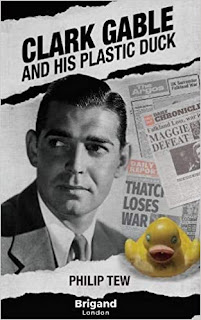
My second novel, Clark Gable and his Plastic Duck, is set in 1991 and centres on Bill Pugh, another play-leader working for the GLC. In this alternate reality Thatcher has lost the Falklands War and after a failed premiership of Michael Foot, followed by a misguided one led by Michael Heseltine, Alan Clark has become Prime Minister. He initiates a right-wing government, an effective coup. Protests and a bombing campaign follow. Pugh is more concerned with his failed romance and the arrival of an attractive female co-worker. A privatized new security apparatus (modelled in part on the wartime SOE) hires thugs to enforce a new orthodoxy and Pugh comes to their attention after the surprise visit of a school-friend, Connie Chidley. This prompts a host of memories, some highly uncomfortable. Their lives are once again intertwined, with notable consequences for both. 

JW: What are you working on now?

PT: I’m finishing off what I consider to be my best novel to date, Heroes and Villains. My son agrees, and he’s an excellent judge of these things. This narrative has various experimental elements, and it has three narrative perspectives set out in three different sections, following a different account of the tribulations of Luke Windsor. Overall, his struggle animates the narrative. If I said any more all suspense would be lost.  

JW: Having read the earlier drafts of Heroes and Villains I can attest to the fact that it will be well worth a read when published. I will be writing a review on Everybody’s Reviewing when it comes out. Phil returned to London after various adventures at home and abroad and now works out of his garden shed in Enfield. I love the nods to Leicester in his writing, evidence of the positive influence our fair city has had upon Phil.


About the interviewer
Jon Wilkins is 66. He is married to the gorgeous Annie with two wonderful sons. He was a teacher for twenty years, a Waterstones’ bookseller and coached women’s basketball for over thirty years before taking up writing seriously. Nowadays he takes notes for students with Special Needs at Leicester University. He has had a work commissioned by the UK Arts Council and several pieces published traditionally as well as on-line. He has had poems in magazines and anthologies, art galleries, studios, museums and at Huddersfield Railway Station. He loves writing poetry. For his MA, he wrote a crime novel, Utrecht Snow. He followed it up with Utrecht Rain, and is now writing a third part. He is currently writing a crime series, Poppy Knows Best, set at the end of the Great War and into the early 1920s.

You can read Jon Wilkins's review of Clark Gable and His Plastic Duck by Philip Tew on Everybody's Reviewing here. 


Friday, 17 June 2022

Review by Rosa Fernandez of "Delusions of Grandeur" by David Parkin


I was delighted to discover that the cover of Delusions of Grandeur referred to Blackadder, because that’s what I immediately thought of when I saw it. I was then pleased to discover on reading that David Parkin’s tribute went further, but I won’t spoil that for anyone yet to read this fascinating book.

Having experienced somewhat debilitating mental health problems myself in the past, I was interested to read Parkin’s account of his experiences being sectioned, and the book moves between his own recalled account, his notes during his time on the wards, and the doctors’ notes about him during the whole episode. This combination of sources gives us a fuller appreciation of the events and allows us to enjoy contrasts which make for a lot of the humour in the work.

Parkin refers to himself as a ‘genius,’ ‘mentally positive’ and ‘clever and hilarious,’ all of which is briskly undercut by the notes that state that he ‘continue[s] to overvalue self’; while problematic mental health is clearly nothing to joke about, it’s clear that Parkin wants us to be entertained by the daftness of his predicament. I find it hard to believe he’d have committed much of this to page had he not thought it would be entertaining.

That being said, and perhaps inevitably, the tale takes a darker turn and things get serious. Parkin takes us into his gloom and we await the outcome, although like many stories we know that there will be a happy ending because he lives to tell the tale, as it were. Even the observations about him take on a new softness, and the two disparate views converge at last. The note that ends the book is a joyous message of hope; you’ll need to read the book to find it out.  


About
Rosa Fernandez is a slam-winning poet and sometime proofreader. She also enjoys wearing silly hats. 


Wednesday, 16 March 2022

Review by Jon Wilkins of "Clark Gable and His Plastic Duck" by Philip Tew


It’s what we all need to know, Clark Gable. Plastic duck. What on earth? So in the true story-telling tradition of show not tell, I will show. Clark Gable. Plastic Duck.

It is your task to discover their relevance. Task? That makes it sound an onerous assignment. Reading this novel is far from that. It is an undiluted pleasure. It is one of those rare reads, one that you can honestly not put down. The end of each chapter tempts you into reading the next and so on until you have forgotten what day it is and where you are.

I get added pleasure from Philip Tew's books as we taught together in Leicester, way back in 1979. I hadn’t seen him since, until we met at an Everybody’s Reading event in 2018, at De Montfort University. Pre-Covid. Weren’t they the times!

Tew writes of a time I can remember, and so many of his allusions ring true to me, as I am sure they will ring true to any Leicester resident from those Thatcherite days of the 1970s through to the 1990s.

His novel takes us into an alternate world where Thatcher lost the Falklands and Alan Clark became Prime Minister. For those who remember his philandering ways, is that a stretch too far or a parallel to a shaggy-haired oaf that we all currently endure? Thatcher is rehabilitated as Secretary of State for Northern Ireland and the greatest irony is when the pariah Enoch Powell becomes Home Secretary.

Where would we be today if things had turned out like that? Is that what we deserve? Considering what we have now, would it be such a bad thing? You decide as Britain descends into a world of darkness, further hypocrisy, and our hero Bill Pugh doesn’t know who to trust and who to turn to. His world as broken as the society he finds himself in.

As Phil Tew writes: “Rebellion follows. And a new privatized security service full of thugs and villains. For me, Clark’s political broadcast ties my narrative together. Suddenly, the rebellion and riots all make full sense, especially after the Falklands (Malvinas) defeat. The narrative started to reflect very different priorities.”

This novel shows without telling. Readers will not need to be told; they will see the nuances of the narrative as a challenge and an invitation into Tew’s dark world. Fantasy or Dystopia? Alternate reality or too close to truth? Who is the hero: Clark Gable or the Duck or is it Bill Pugh?

You will decide because I won’t be telling you.


About the reviewer
Jonathan Wilkins is a Creative Writing PhD Student at Aberystwyth University, Wales, reading mostly Golden Age Crime fiction. His website is here. 

Tuesday, 25 February 2020

Review by Amber Culbert of SoundCafe Leicester


SoundCafe is a Leicester based non-profit organisation founded in 2014. They run weekly workshops on Wednesday afternoons and offer a safe creative space for people suffering in poverty who may be homeless, isolated and vulnerable.

Their main aims are to:

  • Create a safe space for people to explore their creativity.
  • Provide a sense of belonging.
  • Help people to find and have their voices heard.
  • To build and sustain good relationships.


I am a second year creative writing student at DMU and as part of a placement for one of my modules, I have been attending arts events around the city over the past few months. One of the most memorable events I attended was SoundCafe on 22nd January.

Upon arriving I naturally gravitated towards the poetry table (there were several different tables set up, each for different activities such as poetry, arts and crafts, music etc.). One thing that struck me immediately was the sense of community and friendship between the visitors, most of whom I had never met before. Every few minutes someone would approach me and introduce themselves and ask me about myself in a way that felt so genuine like they really cared about what I had to say. 

SoundCafe is set up for people who are vulnerable and in need but these people seemed in such high spirits and were so happy to be there, it was really lovely to see. Throughout the duration of the session, guests were invited to come up to the front and perform, whether it was a song on karaoke, a piece of music or a poem; they all had such enthusiasm it was infectious.

Attending the session was quite a moving experience and I was able to see just how much these workshops meant to people. You could feel the hurt and pain in some of the guests and it was clear that art, particularly writing, drawing and singing, can be a much-needed emotional outlet for people who are struggling. SoundCafe is doing some very important work in our community and I want to thank them for making me feel so welcome!


About the reviewer
Amber Culbert is a second year creative writing student at De Montfort University. She enjoys writing poetry and short fiction and has always loved reading, especially work by Stephen King and Kate Tempest. She is passionate about helping others and encouraging other emerging writers to share their work.

Tuesday, 11 February 2020

Review by Laurie Cusack of "Earthrise" by Gus Gresham


Earthrise by Gus Gresham ticks all the boxes where page turning is concerned. He draws the reader in from the very first line regarding his feisty heroine: “Erin would remember this as the night everything started getting messed up beyond all recognition.”

The novel is a coruscating read and a testimony of our times concerning the way vested interests manipulate power and our freewill for unadulterated profit; they don’t care if it makes us sick or unwell. Earthrise explores these themes with relish. 

What also makes Gresham’s scorching text stand out is the way it dramatizes the courage and integrity of young adults, with Pullmanesque aplomb. After all, someone must make a stand, or we all will perish. These young adults have guts. They have something to say.

Earthrise is riveting and scary at times as it scrapes under the skin of corporate greed with surgical expertise. And Gresham handles the tense mirroring of reality and fantasy with skilful craft and gusto. This dark twisted fantasy is the real deal … Brilliant!


About the reviewer
Laurie Cusack has a PhD in Creative Writing from the University of Leicester. He is currently working on his first collection of short stories. His story 'The Bottle and the Trowel' is published in the anthology High Spirits: A Round of Drinking Stories. You can read more about his work here. 

Friday, 29 November 2019

Review by Jonathan Taylor of "The English Disease" by Lydia Towsey


As with her previous poetry collection, Lydia Towsey’s second book, The English Disease, is full of poems which are musical, lyrical, performative, but which also jump off the page into the ears and mouth of the reader: poems, that is, which work equally out loud or ‘in-loud’ – heard via silently-moving lips in the mind’s-ear of the reader. 

In these poems, the reader hears of modern England’s diseases and their symptoms – as well as possible cures, some which help, some of which make them worse: ‘There must be a shot. / There must be a cure // for the English disease, the English disease.’ Towsey asks diseased England to ‘write back’ to her, so she, like a poet-doctor, can diagnose what is wrong – and what might be right, too. Among the militant nationalists, the ‘men in monocles abusing privilege,’ the ‘treatments / elections and referendums,’ the war-mongering, the failed primeministers, the arms sales, the xenophobia, she traces a counter-narrative, a counter-culture, a half-obscured English tradition of resistance, hospitality, rebellion, subversive humour, courtesy, a ‘decency of queues.’ This is a crypto-Socialist England, not unlike that imagined by George Orwell in his great essay The Lion and the Unicorn, which needs to ‘remember the speeches’:

          We shall welcome them on the beaches. 
          We shall welcome them on landing grounds. 
          We shall welcome them in the felds and in the streets. 
          We shall welcome in the hills. 

          I remember Monty Python, 
          I remember Bowie, 
          I remember Boudicca, 
          I remember Bevan.

Politics, though, is not all speeches and heroes, not all Boudiccas and Bevans and Guy Fawkeses. It does not only happen on a national scale. It is also a uniquely personal force, as universal as gravity, which operates between people in queues, friends sharing cups of tea. And Towsey’s poetry beautifully captures moments of connection between the political and the personal, the macrocosmic and microcosmic. It stands with Jung, when he declares that ‘the psychology of the individual is reflected in the psychology of the nation.’ In Towsey’s poetry, family history, parenthood, eating disorders, tea drinking, queuing, politeness and its opposite all reflect the psychology of contemporary England – a psychology which intermingles all these things with a traumatic history ‘built on broken bones / returning boats to burning homes.’ 

Still, if this national history is reflected in individual actions and, indeed, individual poems, it can also be distorted, refracted, resisted – through utopian moments of friendship, through twisted nursery rhymes, reconceived myths, and a new language that Towsey calls ‘Zomblish.’ Towsey’s are visionary poems which reflect national psychological states, and then go on to shatter them, in order to piece together new, better ones – of ‘Donald Trump saying sorry. / Fiscal reform to favour the many. / My daughter sleeping through the night.’ A better England – a better world – is possible, and Towsey’s poems hold out that hope: 

          Build me a picket fence, 
          form me a queue. 

          Shall we sit for days on end 
          and talk as weather beats on tents?

          The light that sets on the British Empire 
          points from yesterday to a new tomorrow. 
          This land might grow a new beginning. 

          This generation must find a way. 
          There must be a salve.


About the reviewer
Jonathan Taylor is an author, editor, critic and lecturer. His books include the novel Melissa (Salt, 2015), the poetry collection Cassandra Complex (Shoestring, 2018), and the memoir Take Me Home (Granta, 2007). He directs the MA in Creative Writing at the University of Leicester. His website is www.jonathanptaylor.co.uk.