Showing posts with label Penguin. Show all posts

Friday, 7 August 2026

Review by Sally Shaw of "Under a Pink Sky" by Esther Ghey


Under A Pink Sky is a memoir written by Esther Ghey, that takes the reader into the darkest depths of growing up and an unimaginable death of a child. Ghey guides the reader back into the sunlight and a place of hope through action. 

The title puts Brianna at the heart of the book. Ghey recounts a  moment after the death of her daughter when the sky was a vibrant pink. "'Look!' I exclaim, pointing up. The sky is covered in a thick, undulating pink duvet. It is heartbreakingly beautiful. The slow-flowing canal looks like a strip of pink. Alisha, Wes and I hold each other a little closer. 'She’s here,' I say. 'I can feel her.' How did I know it was her? I really don’t like the colour pink - I used to try my best to get her to wear anything other than pink - but pink was not just a colour to her, it was a way of life. So of course, as with anything to do with my extremely determined child, she would  paint the sky pink, and not just any pink, a French Fancy pink, just to remind me who was still queen." 

As Ghey tells the story of her own teenage years, the effects of her mum becoming a foster parent and the relationship with her mum as a small child, then as a teenager, I found that Ghey was searching for an understanding of what has changed from her childhood to Brianna’s childhood. What makes this so difficult is that Ghey couldn’t find that understanding while Brianna was struggling with growing up and finding her place in the world. Ghey speaks honestly and frankly about her behaviour from the age of eleven, the role education played and the influence of older children. Ghey discovered that playing the cheeky-clown no longer made her peers like her once she moved into high school. "If the cheeky-clown act wasn’t going to work, I would mimic what I had seen at home. I knew how the tough kids talked and I knew the reaction it got. I would not be pushed and shoved in the hallways, so I started to act up. I talked back to teachers to disguise the fact that I couldn’t cope. I would do anything to hide my insecurity, but it really was all an act." As Ghey describes Brianna’s difficulties in school, she questions herself as to why she was unable to identify the similarities of how education impacted her and then her daughter twenty-five years later. 

As the story of Brianna’s life and death unfolds, Ghey tells it from her viewpoint, never assuming she can give Brianna’s opinion. I found her honesty about the mother and daughter relationship touched my heart and helped me understand the complex reality that teenagers find themselves in today. What became clear was the influences the smart phone brought into Brianna’s life and that these were impacting how Brianna saw herself and society. "At school she was relatively safe, but the real bullies were in her pocket. They would follow her into her room and into her head." These bullies take on many forms, but the one thing they all have in common is they lurk within social media. Ghey informs the reader of the dangers of social media, how these platforms are managed to ensure children become addicted. 

Along with the addictive power of social media, the content manipulates teenagers to think and act in ways that are harmful. The way this is achieved and the influences on Brianna and others are beyond the scope of this review. "When she emerged, it was TikTok Brianna, wearing her school skirt provocatively short, lots of make-up and a persona that was being built on social media but with which she strutted into school." This made me question what would Brianna be like without this influence; would she feel the same with different role models from peers, society and history? 

As Brianna moves further into her teenage years she constantly uses her phone, making self-care videos on TikTok, gaining many followers while retreating into her bedroom, led away from her family and friends by social media algorithms. At school the phone dominates her behaviour and her ability to take part in education. Ghey documents their journey through trying to gain support and answers. When Brianna texts her mum that she’s on a bus to meet a friend, Ghey describes why this appeared to be a positive step, unaware this would be the last text.

Through this book I have gained insight into today’s childhood or rather how that childhood is dissolving into the digital world, where your worth is measured by likes, followers and social media challenges. If a child doesn’t have a phone they’re a nobody, yet if they have a phone they’re in danger. Education becomes invisible and the breadcrumbs back to childhood have been devoured by influencers. The message that Ghey gives is we, as parents, siblings, family, friends and society, have to maintain hope through action and love. Ghey, through her organisation The Brianna Ghey Legacy Project, is campaigning for a phone-free education, as well as working alongside side other organisations campaigning to reduce the risks of social media. Under A Pink Sky is relevant to everyone and has educated me about the possible dangers held within my phone. 


About the reviewer
Sally has an MA Creative Writing from the University of Leicester. She gains inspiration from old photographs, history, childhood memories, and is inspired by writers Sandra Cisneros, Deborah Morgan, Liz Berry and Emily Dickinson. She has short stories and poetry published in various online publications including the Ink Pantry, AnotherNorth, Roi Faineant Press
Sally lives in the countryside. 

Sunday, 31 May 2026

Review by Callum Deppe of "Talking to Strangers" by Malcolm Gladwell


Talking to Strangers is an exceptionally engaging and thought-provoking non-fiction book. Gladwell takes you on a journey through various real-world stories that tie together to make the overarching point that we understand strangers much less than we think we do. The book challenges the natural inclination to trust strangers and overestimated belief that we can accurately judge a stranger's character, intent and emotions.

I really enjoy how Gladwell takes seemingly unrelated real-world stories and brings them together, incorporating his own thoughts and illuminating their significance. He tells each story in such a riveting and accessible manner that the book feels like storytelling rather than an analysis. Most of the stories I hadn’t heard before, which was interesting to engage with in and of itself, but even for those familiar with the stories, Gladwell expresses a fresh perspective that you likely won’t have thought or heard before. I was particularly interested in the stories of spies and espionage.

This profound book leaves you with the motivation to interact with strangers with more humility, and brilliantly demonstrates the risks of assuming you fully understand the people around you. These messages are particularly important in today’s world. I would highly recommend this book to anyone. 


About the reviewer
Callum Deppe is a University of Leicester graduate with a BSc in Psychology. He enjoys a multitude of sports including football, cricket and golf, taking his dog on long walks and reading insightful non-fiction about the world around us. Callum works as a Social Work Assistant.


Wednesday, 27 May 2026

Review by Millie Jackson of "Everything I Know About Love" by Dolly Alderton


Everything I Know About Love by Dolly Alderton is an internationally bestselling memoir following Alderton’s experience of growing up, adapting to adulthood and navigating love, loss, friendship and the hardship of work. Resembling the likes of Bridget Jones’s Diary, Alderton's memoir recounts personal anecdotes and stories alongside lists, recipes and observations to create a book that has resonated greatly with contemporary women of all ages. 

I absolutely loved Everything I Know About Love. It pulled me in from the first few pages; I ended up reading it so quickly because I was engaged the entire time. What stood out most to me was how honest and personal it felt. The book is open and relatable, and I felt connected to both Alderton and the stories she shares.

The book captures friendship, growing up, heartbreak, love, and the uncertainty of your twenties. So many moments were relatable – whether funny, emotional, or awkward, and that made the reading experience comforting and genuine. I also loved the balance of humour and vulnerability throughout the book.

Overall, this book felt like listening to a close friend tell stories about life in the most entertaining and heartfelt way possible. Everything I Know About Love is an essential read for all women navigating the challenges of adulthood. 


About the reviewer
Millie Jackson graduated from Oxford Brookes University with a BA (Hons) degree in Social Work. She is passionate about supporting others and currently works for a local charity. In her spare time, Millie enjoys spending time with animals, especially dogs, along with arts and crafts, reading, and playing video games.


Wednesday, 8 April 2026

Interview with Annabelle Slator


Annabelle Slator
grew up writing stories in the depths of the British countryside. After achieving a degree in Creative Writing, she spent most of her twenties working with brands and start-ups in London and New York. 
Nowadays, if she isn’t spending time writing, you can almost always find her obsessing over niche internet drama, practising her fencing parry or mooching around vintage fairs and flea markets. Annabelle’s first contemporary romance novels, The Launch Date and Risky Business, were inspired by her time working in the wild world of dating apps and the tech industry. You can read more about Risky Business on Creative Writing at Leicester here. Annabelle's website is here


Interviewed by Anupriya Sisodia

Q: Tell us more about the Risky Business: what inspired you to write a modern, fast-paced romance set in the tech start-up world? 

AS: Risky Business is inspired by my experiences not only working in the tech and start-up industry, but working exclusively for women-run and female-founded companies. It admittedly is not the sexiest world to set a romance, but it was an area I felt was relatively unexplored in the romance genre and something to which I can bring a unique perspective. 

Q: Were there any scenes or moments that were especially fun or challenging to write? 

AS: The set-up and opening chapters were the most challenging to write, and were rewritten several times during the drafting process. I was trying to hit a balance between a dynamic main character with plenty of agency whilst making sure she "stumbled" into the circumstances of the story instead of actively choosing to deceive everyone from the start. The chapters I found the most fun to write were the meet-cute chapters, the first carefree, flirty night Jess spends with Oliver. I found those chapters to be incredibly cathartic for a character who had spent so long focusing on her own anxieties instead of living her life to the fullest. 

Q: What genres or topics do you enjoy writing about the most? 

AS: I love romance! First kisses and romantic tension are always the most enjoyable parts of the process, but blending self discovery and growth is the most satisfying part of writing, even if it’s not as fun as flirty banter and hijinks in the moment! 

Q: How do you approach blending humour, tension, and romance in your storytelling?

AS: I like to champion the idea that romance is inherently hilarious and should be treated as such. Having a crush makes you do and say things you never thought you would, that you would laugh at somebody else doing, and often look back at and cringe. I approach humour, tension and romance in the same way. Whether they are clashing or in sync, they often work hand in hand to create something magical on the page.  

Q: How do you handle writer's block or creative doubt?

AS: For me, writers block has never been a massive issue because I am always working on multiple projects as once. If I’m stuck on a part of a story, I will focus on another for a few days until the knot in my mind becomes untangled. I also find working on something physical, like cooking or even going for a long walk, helps immensely if I’m really stuck. Ultimately, creativity is a muscle; it can get tired and that’s okay but it needs to be exercised regularly to keep working.  

Q: Are there specific messages or feelings you hope your readers take away from your story?

AS: I hope my readers feel inspired to take their dreams seriously, but also not be too hard on themselves. In the past I have felt a lot of the feelings Jess (and Grace in The Launch Date, my previous novel) experience, and I learnt a great deal through them. I hope readers have the same experience. 

Q: Did you draw on any personal experiences or observations about gender dynamics in tech or in general while writing Jess’s journey? 

AS: Not necessarily direct personal experiences, but witnessing how female founders are treated in the space was a huge inspiration for the story. I think most women can relate to the experiences Jess has in the book, or know someone who has. In particular, Risky Business was inspired by the real-life story of two female entrepreneurs who created a fake male CEO called Keith Mann to dodge tech industry sexism. Ever since reading a news story about this in 2017 I had wondered what would happen if you took that concept further, hiring a man to be the face of a company who was nowhere near qualified. 

Q: You set the story across Rome, Paris, and Vienna. How did these locations shape the plot and the characters’ personal growth? 

AS: Originally, this story was just set in London like my first novel, The Launch Date, but with the mechanics of the story being punctuated by rounds of a tech competition, the idea of just going back to the same hotel events hall every few chapters seemed very boring. I also wanted to make the competition as expensive as possible for Jess without it seeming ridiculous. Tech is a very pricey industry to enter and often excludes people who have great ideas but no financial backing. Making these an international escapade not only made the competition more dynamic but also gave me the opportunity to have fun and flirty scenes between Jess and Oliver outside of a hotel foyer, like the aeroplane bathroom, the French countryside cafe and the Italian dive bar. 

Q: What is your favourite part of being a writer? 

AS: Apart from the obvious of fulfilling a childhood dream of being a published author, it’s amazing to have a job that is so creatively fulfilling. The personal freedom is also a huge part of being a full-time author that I did not anticipate being one of my favourite parts. It can be stressful, not always knowing what the next year will hold and waiting on publishers for feedback etc, but it’s the best job I’ve ever had. 

Q: What personal advice would you give aspiring writers?

AS: Writing to a schedule was one of the best decisions I made when I first started writing full novels. If your goal is to be published, your first book is most likely the only one you will ever write on your own schedule. When writing The Launch Date, I deliberately gave myself a year to plan, write and edit the manuscript before querying, as I knew that was the rough timeline a publisher would give me. As it turns out, I had even less time to write and edit Risky Business, so I’m really glad I had the experience of a tight turnaround before things got serious! 

Q: Finally, what are you currently working on?

AS: I can’t reveal too many specifics right now but I’m currently finishing up something a little bit spookier than The Launch Date or Risky Business, but just as exciting and tension-filled. You can follow me on instagram @annabelleslator or tiktok @annabelleslatorauthor for future updates! 


About the interviewer 
Anupriya Sisodia is a published romance fiction author, pursuing an MA in Creative Writing at the University of Leicester. She is an avid reader who loves writing stories with realistic, relatable characters who experience emotional and exciting journeys on their way to a happy ending.

Saturday, 21 February 2026

Review by Mithila Dutta Roy of "Supporting Cast" by Kit de Waal


It’s been months since I cried over a book, and short stories rarely do that to me. But Kit de Waal’s Supporting Cast made me tear up a bit on a bright Saturday afternoon. 

As the whole world is running around flaunting the idea of being the "main character" with the Pinterest-style life, glorious cafes and extravagant nightlife, there are still many who feel like the supporting cast in others’ stories. And Kit de Waal has brought their stories to life with such precision. Their losses of all kinds - time, age, love, lovers, children, sanity, legs - that form their imperfect lives are staged in a voice that is empathetic and truthful. That’s the mastery these stories needed and got.

Before starting the short story collection I didn’t know that these were the characters in the background of her earlier works. But it didn’t matter as I went from one story to another and found each character becoming a whole, with their nuances, flaws and introspection. Each story stood out as a complete piece, which was fascinating. 

It’s a book that talks about a woman who, on her divorce day, remembers her husband rescuing a boy during their honeymoon; a mother who says goodbye to her newly-wed son and starts thinking about how the bride never thanked the mother who loved him first - and then, in turn, realises that she never thanked her adopted son’s mother. It’s a book about the blind man who passes you by in a crowded street, and what he is still grateful for. It’s a story of an already grieving woman trying to form stories to make her dying father less uncomfortable.

These stories delve into deep human emotions and inner conflicts, while keeping the plot poignant. Some of the stories break what some would call the rules or conventions of short fiction, but even in breaking them there seems to be a purpose, and that is an achievement. Overall, Kit de Waal has done a wonderful job in giving the supporting cast the highlighted stories they deserve. She has given them the closure they might not have received in previous books, where they were only a part of the conversation but not the whole conversation.

Now, which one of these stories made me tear up, or was it my unbalanced hormones? You’ll have to read this book yourself to figure it out, because I’m also just another supporting cast in your story talking about a book I enjoyed.


About the reviewer
Mithila Dutta Roy is a reader and writer with a keen interest in literary fiction and stories that explore human experience. She is pursuing an MA in Creative Writing at the University of Leicester and is currently working on her first novel. She is passionate about storytelling and hopes to contribute her own voice to contemporary literature.


Wednesday, 14 January 2026

Review by Karen Stevens of "The Collected Stories" by Katherine Mansfield


I’ve been unable to read fiction for a few months now due to burnout. When that happens, I eventually re-energise by returning to The Collected Stories of Katherine Mansfield (Penguin, 1981 – my very battered copy). Every time I revisit her work, I’m staggered by her ability to capture the inner lives of people and the revelations that arise from the most trivial or seemingly ordinary moments. One such moment occurs in her perfectly crafted short story "At the Bay" - my favourite story of all time.

Linda Burnell, one of Mansfield’s most beautifully drawn characters, is alone with her baby boy in the garden of their seaside holiday home. It’s a rare moment of solitude; her life is almost entirely given over to her family. Here, she reflects on her real grudge against life: "She was broken, made weak, her courage was gone, through child-bearing … she did not love her children. It was useless pretending."

But then the baby turns over and beams at Linda, instantly testing and eroding her resolve: "'Why do you keep on smiling?' she said severely. 'If you knew what I was thinking about, you wouldn’t.' But he only squeezed up his eyes slyly and rolled his head on the pillow. He didn’t believe a word she said. 'We know all about that!' smiled the boy. Linda was so astonished at the confidence of this little creature … Ah no, be sincere. That was not what she felt; it was something far different, something so new, so … The tears danced in her eyes; she breathed in a small whisper to the boy, 'Hallo, my funny!'" 

In that exchange, Mansfield enables us to experience the sweetness and anguish that shape the pattern of all our lives – the essence of good - no, great fiction. 


About the reviewer
Karen Stevens is Senior Lecturer in Creative Writing at the University of Chichester and lives in West Sussex. She is an editor, critic and writes short fiction. Her debut collection of short stories Brilliant Blue was published by Barbican press in 2025. 

You can read more about Brilliant Blue on Creative Writing at Leicester here.

Thursday, 27 February 2025

Interview with Lisa Bent


Lisa Bent's debut romance novel, Symona’s Still Single (2020), was published as part of the ground-breaking #Twentyin2020 cohort, which saw 20 Black British writers published in the same year by independent publishing house Jacaranda, a first in the UK. 

Her second book is called Bombshell (2024) - a romance comedy co-written with Alison Hammond, published by Penguin. 

Lisa has written for The Independent, Stylist Magazine and Porter Magazine. She is currently writing the sequel to Symona’s Still Single.


Interviewed By Saskia Kabongo

SK: What inspired you to write Symona’s Still Single, and was there a specific moment that pushed you to start?

LB: On Facebook I used to share my opinion on everything from politics, films to my dating trials and tribulations which always got the most likes and comments. When my friend sent me a competition from Jacaranda, a Black-owned independent publishing house calling for 20 Black British writers, I decided to go for it and here I am, one of the 20 published in 2020. This was and still is groundbreaking. No mainstream or independent publishing house has ever done this. 

SK: Your background is in Psychology and HR. How did that influence the way you developed Symona’s character and her journey of self-discovery?

LB: My background in Psychology has heavily influenced how I developed Symona. I wanted a protagonist that was self-aware and knew the importance of self-love to show what dating looked like from this standpoint, which I would have loved to have read when growing up.

Being your whole self is important; however, I show the contradiction of this in the workplace. My insights and experiences are not unique. The aim of including them is to resonate with those who have. For those who haven’t … yet, it’s a signpost to show, reassure and help.

The unspoken pressure to assimilate, code switch to get by and succeed while finding your voice to advocate for yourself is a journey in itself. 

SK: Did you draw from any personal experiences while writing this novel, or were the characters and scenarios purely fictional?

LB: The majority of the book is fiction. However, there are a few personal experiences within that I have changed and embellished so it’s no longer my story but it remains grounded in realism to feel believable.

SK: Writing a debut novel can be a challenging process. What were some of the biggest obstacles you faced while bringing this story to life?

LB: As I’ve never written a book before I didn’t know if I was doing it right. Letting go of self-doubt and giving myself permission to just write was a big hurdle in the beginning. Cultivating my discipline and creative process was a journey alongside rebuking the word “writer's block” to embrace taking a break. Hard deadlines are scary.

SK: The book beautifully balances humour and emotional depth. Was that intentional from the start, and how did you find that balance in your writing?

LB: I didn’t want to just write a romance novel filled with fantasy and 90’s music video dreams. I wanted to bring to life the real struggle of Black British women in their late thirties because our / their stories weren’t being told. My Facebook posts showed me I wasn’t alone. My friendship groups told me I wasn’t alone, and so I knew there would be others who felt the same. I wanted my book to highlight these important feelings for us to be seen and heard.

The balance lives in good storytelling and my vibrant, personable and relatable characters. 

SK: What was the most rewarding part of writing Symona’s Still Single?

LB: The accomplishment of following through with the creative labour and birthing a book I am proud off. 

It’s also rewarding receiving lovely messages from readers who have been touched by Symona’s story and gone out of their way to tell me. It’s always a nice surprise that I do not take for granted. 

SK: The book challenges societal pressures on women to be in relationships by a certain age. How do you think these expectations impact Black British women specifically?

LB: The pressures are a mixture of culture, tradition and society. Within society there are stereotypes, beauty trends and the rest, all of which are layered and feed into each other. The reality of the biological ticking clock is ticking can cause a lot of stress. Childlessness is another form or grief no one talks about.

SK: What message do you hope readers take away from Symona’s journey, especially those who feel pressured to "have it all figured out"?

LB: I hope readers see the importance of self-awareness, self-acceptance and self-love. How having a willingness to delve into introspection can release you from your past and provide an opportunity to change your current situation and future.

No one has it all figured it. We can only work with where we are, with what we know. In time what we know becomes wisdom and discernment, but it’s reflection that enables us to acknowledge this.

Become the best version of yourself. Hold that vision high. 

SK: How do you think past relationships shape the way people approach love? Does Symona’s experience reflect common patterns you’ve seen in real life?

LB: How we were raised and how we are treated by family, friends and lovers all contribute to what we think of ourselves, what we expect and what we think we deserve from all types of love and relationships. 

Symona’s journey is only one story of hundreds. However, at the centre no matter what your story, self-esteem, self-belief, self-worth, self-confidence, self-acceptance and self-love will be impacted to various degrees. This will also be the common pattern.

SK: Symona’s dating experiences highlight the complexities of being a Black woman in the dating world. Why was it important for you to show these realities?

LB: It was important to show it because it exists. I wanted the reader to walk alongside Symona and in-turn feel seen, heard and understood. 

SK: In London, dating can be exciting but also overwhelming. How did the city influence the way you wrote Symona’s love life?

LB: I am a Londoner, and for my first book I wanted to pull from my experiences and observations to bring it to life in a richer way that resonates with fellow Londoners.

SK: The men Symona dates each represent different challenges and relationship dynamics. Did you want readers to recognize these types of men from their own experiences?

LB: I wanted to show that while it may be easy to generalise, no man is the same and therefore no relationship is the same. The signs may be different too, but there are signs, red and green flags and it’s really important to pay attention. The book is designed to speak to as many people as possible in the hope that something resonates. 

SK: What are some of the biggest misconceptions people have about dating as a Black British woman, and did you aim to address those in the book?

LB: A single Black woman in her late thirties to early / mid-forties is loaded with accusations that she must be difficult, too picky or career driven. If you are also childless those labels also apply, though more focus given to career drive.

I also wanted to address that a woman shooting her shot doesn’t make her desperate. 

SK: As a British-Jamaican woman, how did your heritage influence the way you wrote Symona’s character and her experiences?

LB: Symona is a Black Woman because I am. It is laced with cultural flair as a result. The spiritual touch through her Grandma I would say is the clearest influence.

SK: There’s a growing demand for more authentic Black British love stories in mainstream fiction. How do you feel about the current state of representation in publishing?

LB: Due to Jacaranda’s groundbreaking competition and the death of George Floyd the literary landscape has a wealth of brilliant Black British authors which is growing. This is not only necessary but refreshing, especially as when I was growing up I had never read a romance novel by a Black British author.

SK: Did you feel any pressure to write a certain type of story to fit industry expectations, or did you stay true to your vision from the start?

My intention was not to create a Black Bridget Jones. I stayed true to my vision from the start with full support from my publisher Valerie Brandes. 

SK: You speak on topics like mental health, self-acceptance, and "showing up as your whole self." How do these themes connect to Symona’s journey?

LB: Without giving too much away, these are themes that people navigate in the journey of life. One in four people are likely to have a mental health issue in any given year, I believe it’s higher than that. I show you Symona’s journey in the hope readers will audit where they are at. 

SK: Many women struggle with self-worth when it comes to relationships. What advice would you give to those trying to find confidence in their singlehood?

LB: Being single is the perfect time to reflect, heal and bloom. To love the parts that need attention, to understand who you are, what makes you tick and to build confidence and self-worth.

Two halves make a whole, but there is so much more power and beauty in understanding you are already whole, you don’t need to seek “a better half.” 

Romance your life. Find your joy. Enjoy exploring yourself and working out what sparks you up. Take the solo trip. Get comfortable with being in your own space, alone. Enjoy the time that doesn’t require negotiating.

The work done in the single space is the grounding and foundation of who you are and what you will or won’t tolerate. Self-love is first love. You set the bar. 

SK: Symona’s Still Single is your debut novel. Do you have plans to write another book, perhaps a sequel?

LB: Bombshell is my second romance novel co-written with Alison Hammond, released November 2024.

The sequel has been cooking and taking longer than expected. Who told me to leave the book in a funny place? Lol. I mean, I could leave it there, but I think you are all intrigued to see how it all ends. 

SK: What’s next for you as an author and speaker? Are there any exciting projects in the works?

LB: This year I hope to be more visible and vocal. I am a panel guest at The Alternative Book Fair on 5th March. It’s a Jacaranda takeover at Islington Library and I will be joined by fellow romance writers Sareeta Domingo and Rasheda Ashanti Malcolm. It’s a free event, so come through and say hello.

SK: If you could tell your younger self one thing about writing and publishing, what would it be?

LB: Your story, style and voice are important. Just give yourself permission to write, and write. There is a publisher who will just get it. 


About the Interviewer 
Saskia Kabongo is a journalism student at the University of Leicester with a passion for storytelling. She is inspired by authors and their writing, always eager to learn more about their creative process. Through her interviews, she aims to share meaningful conversations that highlight the people behind the stories. 

Friday, 21 February 2025

Review by Saskia Kabongo of "Me Before You" by Jojo Moyes


Wow! what a book. Me Before You is one of the most beautiful and heartbreaking love stories I have ever read. Without even trying, Jojo Moyes creates a romance that feels so raw and real, proving that love isn’t just about grand gestures or endless kisses, it’s about the connection between two people, the way they change each other’s lives. 

Louisa Clark is the heart of this novel. She is bright, kind, and full of life, finding joy in the smallest things, whether it’s boiling a kettle or watching a foreign film. She reminds us that happiness can be found anywhere if we allow ourselves to see it. On the other hand, Will Traynor is strong in a different way. Once a man who had everything that was wealth, adventure, and success, his life is turned upside down after an accident leaves him paralyzed. Yet, despite his pain, he finds the strength to smile for Lou, to let her in, and to spend his last six months truly living. Their time together is filled with laughter, adventure, and the kind of love that doesn’t need to be said out loud to be felt deeply. 

One of the most powerful messages in this book is about embracing life, no matter the circumstances. Lou teaches Will that joy can be found even in the simplest moments, while Will pushes Lou to dream bigger and step outside the limits she has placed on herself. Their love story isn’t just romantic, it’s inspiring. 

A quote that stayed with me is: “You only get one life. It’s actually your duty to live it as fully as possible." 

This book is more than just a love story, it’s a lesson in appreciating the time we have and making the most of it. It touches on themes of mental and physical health, personal growth, and the idea that life is meant to be lived to the fullest. Me Before You made me laugh, cry, and reflect on the choices we make. It’s a book that stays with you long after you turn the last page. 

If you haven’t read this yet, please do. It just might change the way you see life. 


About the reviewer
Saskia Kabongo is a first-year journalism student at the University of Leicester with aspirations of becoming an author and publisher. A passionate reader, she consumes around 200 books a year, constantly seeking stories that inspire and challenge her. Growing up in London, she draws endless inspiration from the city's people and narratives. Her favourite authors, Krista and Becca Ritchie, are known for their deeply authentic characters and unique storytelling, which she believes make every book feel like a reality TV show come to life.


Friday, 5 July 2024

Review by Lee Wright of "Our Island Stories: Country Walks Through Colonial Britain" by Corinne Fowler


American philosopher John Dewey said, “Time and memory are true artists; they remould reality nearer to the heart's desire.”

The British countryside has long captured that heart's desire, with its poetic allure, rolling hills, meandering lanes, and quaint villages with their listed buildings, evoking a sense of tranquillity and wonder, and wealth. But in Our Island Stories: Country Walks through Colonial Britain, historian Corinne Fowler (joined by various companions) takes us back through time on ten fascinating walks through Britain’s rural landscape, and sets out to discover the unique colonial connections of the places through which she passes.  

From the Cotswolds to East Lancashire, Hampshire to the Inner Hebrides, to Dolgellau and Norfolk, Fowler is propelled by a personal desire to give us the facts in an era when our elected (and often unelected) politicians choose to remould reality, preferring fiction over fact. This book isn't afraid to tie a piece of string around the base of the sensitive rural tooth, and the other end to the colonial doorknob, then slam the door. History may be complicated, but it should not be reshaped. As the author says in the book's preface, “Knowledge is not something to be weaponized but to be shared.” 

Fowler's finely crafted book shows us why it is essential we explore imperialism. Each walk taken is accessible so others, if they so wish, can follow in the author's footsteps. Slavery was a vast system and the author's task is equally vast. As she continues to shine new light on Britain's past, some in Westminster and most of the right-wing press are fighting her all the way. Fowler encourages her readers to look at rural Britain differently. History has much to show us, and this book, and her walks, follow where the history leads. 


About the reviewer
Lee Wright has an MA in Creative Writing from the University of Leicester and is currently working towards a PhD researching memoir and film. His fiction and poetry have been published with Fairlight Books, époque press and Burning House Press.

You can read more about Our Island Stories by Corinne Fowler on Creative Writing at Leicester here


Wednesday, 18 October 2023

Review by Rebecca Reynolds of "Otherlands: A World In The Making" by Thomas Halliday


Thomas Halliday’s book is a biography of the Earth, told backwards. He starts 20,000 years ago, at the beginning of the decisive thawing of the mammoth steppe, which rings the top of the world and is home to horses, bison and the now-extinct cave lion. 

The book then travels the Earth, landing at different times and places. So there are abundant giant penguins 41 million years ago; a gorgon 253 million years ago with a painful mouth tumour and a leg which has never been the same since she fractured it hunting Bunostegos (a creature looking like a stumpy, tall crocodile); and rock-eating bacteria in the Devonian, 407 million years ago, which make the surface of the water in which they live, intolerably hot to every other lifeform, shimmer with bubbles. The climate and geological processes are given as much space as plants and animals. 

The book ends in the pre-Cambrian 550 million years ago, with no life on land, a 22-hour day before friction slows the Earth’s rotation, and the closer moon shining 15% brighter.

How does Halliday add drama and interest to processes that happen over huge timescales, mostly with no humans involved?

Firstly, he picks varied moments — differently configured landmasses and oceans, with different climates and ecosystems, for example before or after mass extinctions. Secondly, he focuses on movement. Movement of wind, waves and water and therefore of land; communities of animals migrating; individual creatures on the move. Thirdly, he mixes together disparate information — so as well as watching a short-faced bear rummaging in a mammoth carcass, we learn about Korean, Russian and European bear mythologies.

Lastly, he embraces human-centred ways of description. Literary quotations head each chapter (including Hardy’s ‘Drummer Hodge’ — ‘Yet portion of that unknown plain / Will Hodge forever be’). He chooses anthropomorphic language such as ‘cyanobacteria discovered the magic of photosynthesis,’ and is happy to translate from the academic to the literary; so the academic term ‘index fossils’ (fossils which are so abundant they can be used to date the rocks they are in) becomes ‘fossil timepieces’ later in the same paragraph. The book ends with a plea to work together to stop climate change. 

This book tells us the world will never stop being in the making, or in the unmaking.


About the reviewer
Rebecca Reynolds is an English language teacher and editor. She has just finished a Research Masters at Liverpool University looking at differences between reading, speaking and listening to poetry. She published her book Curiosities from the Cabinet: Words and Objects from Britain’s Museums in 2017. Website here. X: @rebrey. 

Tuesday, 8 November 2022

Review by Thilsana Gias of "The Hen Who Dreamed She Could Fly" by Sun-Mi Hwang


What do you think of when you hear the word "fable"? Your mind might soar to Aesop's The Town Mouse and The Country Mouse or if you are prone to harrowing school flashbacks, Orwell's Animal Farm

But unlike these examples, Sun-Mi Hwang's fabulist novel features a protagonist that we can actually get behind and cheer on - a humble and endearing little chicken called Sprout. 

Sprout is by no means a one-dimensional character - through her struggles and sacrifices for motherhood, we see a vivid portrayal of the complexity of human emotion, allowing the character to transcend the simple role of a moral-inspiring creature and become her own valid being with a fierce sense of determination in a cruel and lonely world: "Just because you're the same kind doesn't mean you're all one happy family. The important thing is to understand each other."

Sprout's voice is deliberately portrayed as very plain and honest (given her upbringing as a lowly caged hen) and contrasts with the chiding voices of harsher and more arrogant animals that set the confining social expectations and standards of farmyard life. Consequently, it is through Sprout's uncomfortable interactions with these creatures that we realise the novel is an allegory for the trials and tribulations that immigrant mothers experience in a harsh and judgemental society. 

Now, more than ever, exposure to such voices has become an utmost necessity as we see daily news reports featuring refugees of war and environmental disaster struggling to build nests for themselves and their children; facing hostility from governments, communities and even the very lands and seas they traverse on their arduous journeys. Therefore, having these disturbing realities presented to us in the colourful yet unforgiving backdrop of the natural world allows us to focus on humanity of a yearning mother without much political noise or confusion.

Perhaps what is most captivating about the novel is how beautiful the setting looks to the protagonist despite the hardships she faces in it - we are treated to lovely descriptions and illustrations of acacia trees which evolve and change with the seasons alongside Sprout, who tries to find hope wherever she can.

If you are still wondering why you should read a book about a chicken, know that Sprout's heart-wrenching story, full of daring escapes, sinister weasels and holes of death, has a rather magnetic quality, drawing international audiences of all ages and even inspiring a comic and popular animated film. So, if there's a moral here, it's that birds of a feather flock together and that maybe, just maybe, great minds think alike.


About the reviewer
Thilsana Gias is an MA Creative Writing graduate from the University of Leicester and a secondary school English Teacher. She spends her days trying to find time to write and crying every time a child confuses Romeo and Juliet with Rapunzel: "Romeo, Romeo, let down your hair!"

Thursday, 17 February 2022

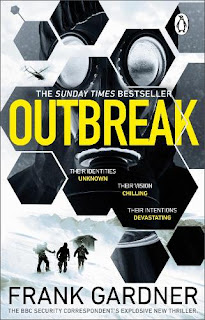
Review by Lisa Williams of "Outbreak" by Frank Gardner


You might want to pop a Kevlar vest on for this action-packed book from the BBC’s security correspondent. It’s a fast-paced read – short chapters moving between four different countries. We travel from the Arctic Circle to Porton Down and from Moscow to Lithuania.

This is the third book (I’ve not read the others) featuring the hero MI6 operative Luke Carlton. I feel this book stands alone as I only realised there were two others when I’d finished reading and there wasn’t a point when I felt I didn’t know what was going on or that I was missing something.

If you read for escapism it’s possibly not the right book at the moment.  The subject is clear from the title - the book opens with three scientists in a blizzard in the Arctic Circle searching for shelter. They find a cabin. Inside a man is slumped in the corner, his swollen body convulses. Blood, bile and mucus sprays into the air and so the contamination begins. Actually you might want to pop a little mask on as you read too ... 


About the reviewer
Lisa Williams is a shopgirl and a graduate of the MA in Creative Writing at the University of Leicester. She is on Twitter @noodleBubble 


Monday, 13 December 2021

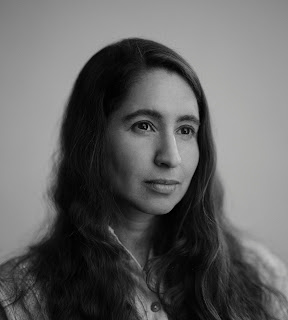
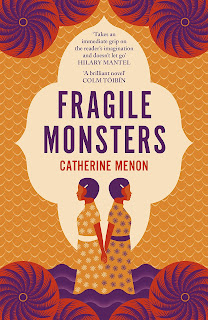
Interview with Catherine Menon


Catherine Menon is the author of Fragile Monsters, published in 2021 by Viking. Her debut short story collection, Subjunctive Moods, was published by Dahlia Publishing in 2018. She has a PhD in Pure Mathematics and an MA in Creative Writing from City University, for which she won the annual prize. She’s won or been placed in a number of competitions, including the Fish, Bridport, London Short Story, Bare Fiction, Willesden Herald, Asian Writer, Leicester Writes, Winchester Writers Festival and Short Fiction Journal awards. Her work has been published in a number of literary journals, including The Good Journal and Asian Literary Review and has been broadcast on radio.

You can read a review of Fragile Monsters on Everybody's Reviewing here. You can read more about Fragile Monsters on Creative Writing at Leicester here


Interviewed by Jonathan Taylor

JT: What was the original starting point or inspiration for writing Fragile Monsters?

CM: The inspiration for Fragile Monsters came from the bedtime stories my father used to tell me about his own childhood in Pahang. It was only as an adult that I began to understand the context of these stories. Kuala Lipis, where he grew up, was the headquarters of the Japanese army in Pahang during the occupation. 

I began to read memoirs and interviews with other people who’d lived through that time, and I was struck by the extent to which all of these speakers were taking ownership of their own narratives. They were describing what had happened to them, but with a focus on the emotional truth rather than the specific events. This was an amazing thing to realise: the sheer resilience that they had had to show in order to take back control of the past.

JT: How far and in what ways did you draw on autobiographical material in writing Fragile Monsters?

CM: Although the inspiration for Fragile Monsters came from my own family history, all the events and characters in Fragile Monsters are completely fictional. Looking more deeply, though, there are certain aspects of the character of Durga with which I feel an identity. Her desire to connect with her past and define her own interpretation of her history, her ancestors, her place in society – that’s something I can strongly relate to. So often we’re led to feel that our lives are out of our control: if we’re born into a particular society, culture or family then that will dictate who we can become. Durga struggles against that and has a fierce desire to create her own identity, even where this means moving half a world away. 

More generally Durga is, I think, a representation of some of the pressures which modern women face. She’s driven to succeed and because of her chosen career feels that she has to fiercely repudiate other ways of looking at the world, such as Mary’s more slippery approach to the truth.

JT: How important is a sense of place in your writing?

CM: This is hugely important to me when writing in general, and was particularly so for Fragile Monsters. The characters are to a certain extent defined by the place: by their history, culture and surrounding society. This was a theme I kept returning to during the writing process, particularly when intertwining the history of the characters with the stories they tell each other, which are of course grounded in myth and folklore. There’s sometimes an expectation that stories from Asian cultures will be somehow made palatable to Western understanding, that the characters will be neatly placed into their boxes: the mystic, the oppressed woman, the ambitious pauper.

The thing is, of course, that stories – and even myths – don’t fall neatly into such partitionings. Durga would have grown up with a similar fusion of stories and folklore as I did: she’d have told stories of pontianaks to terrify her friends at school, she’d have waited for Father Christmas to arrive and she’d have seen stories from the Ramayana on TV on Sundays. Myths and folklore tell us something deep and true about ourselves and the place we live in. In writing Fragile Monsters it was very important to me to acknowledge the power of these stories without falling into the trap of reductionism. 

JT: How important is a sense of history in your writing?

CM: Again, this was immensely important to me. I think that in general – particularly about WW2 – there’s a tendency for history books, education and popular media to focus on the war in Europe. Most people don’t even know that the Japanese invasion of Kota Bharu took place before the attack on Pearl Harbour. This is a shame, because it does a disservice to the unique stories of Malaysians living through the Occupation at the time, and subsumes their identities and narratives into a global, Eurocentric perspective.

When writing Fragile Monsters I spent a lot of time reading through old newspapers, letters and interviews in the British Library. It was very important to me to access primary sources and as far as possible to hear people tell their stories of that time in their own words.

JT: I loved how you threaded mathematical themes and metaphors throughout Fragile Monsters. What part do you think maths plays in the novel? Why do you think it arose as a part of the narrative?

CM: I wanted to explore the way we all tell stories about our past, the way we mythologise certain events and gloss over others until we’re no longer even sure what our real memories are. Obviously Mary does this by co-opting folklore and mythology to create a slippery, evasive history – but it was also important to me to show that this isn’t the only way we reinvent ourselves. Durga, of course, is the exact opposite. She values logic, certainty, a kind of rigorous and exacting thought process that doesn’t allow for something to be “right, instead of true,” as Mary tells her. But of course, that’s just as reductive a way of looking at the world, and misses out just as much.

JT: In a wider sense, do you think there are overlaps between maths and storytelling, or writing?

CM: For me, mathematics and writing come from the same creative well. They're both a search for the right way to express a concept that exists only in potentia and to communicate it to your readers. When we judge a mathematical proof we use words like elegance, interest, beauty - the exact words we use about a piece of writing. Pure mathematics consists of sitting very quietly, inventing abstract objects and thinking up relationships between them – then stretching those relationships, putting the objects together in different ways, looking at them from different angles … everything that you do with characters in a novel!

JT: How and why did you go about structuring Fragile Monsters around parallel, inter-generational stories?

CM: I knew that I wanted to tell both stories in parallel: Durga’s compressed few weeks when she’s discovering all these secrets, and Mary’s entire life which has given rise to them. There are also a number of deliberate points of confluence between the two narrative flows: the crises and tensions of Durga and Mary’s lives arise in similar ways and at similar points. I also very much wanted to show Mary as herself, rather than solely in terms of her relationship to Durga. We have so few representations of older women in literature, and a lot of those treat these women – these grandmothers, they’re often called in rather disparaging tones, as though they’re nothing else! – as essentially stereotypes. 

Of course, it isn’t as simple as that. Mary’s story is in fact told not by herself but by a disembodied voice identified strongly with Durga. This allowed me to suggest to readers that Mary is, perhaps, just as much a construct and product of Durga’s imagination as she is of her own. Durga is telling Mary’s story for her, both literally and metaphorically.

JT: You write short stories as well as novels, and published a brilliant collection of short stories, Subjunctive Moods, before Fragile Monsters. How did you find moving from one form to another? What do you find are the different challenges posed by the two forms?

CM: I really enjoy both forms, but they do present such different challenges. A short story feels to me like a suspended moment, like the pause before a breath. Obviously short fiction doesn’t have to be limited in time – I’ve read some wonderful short stories, such as some of those by Jhumpa Lahiri, which cover an entire life – but there still needs to be that sense of the narrative arc being pared down to a brittle sufficiency. Novels, on the other hand, feel like an immensity of riches. They require a very strong sense of balance between the events of the plot and the development of the characters, and this needs to be sustained over 80,000-odd words. For myself, I found in moving from short stories to novels I definitely needed to recalibrate my mindset; to feel that I had room to settle into the longer work and do it justice.

JT: Are you working on anything new at the moment?

CM: I’m currently working on my second novel, which explores similar themes of science, storytelling and coming-of-age. I’m immensely excited about it, and about making friends with the new characters. It’s been hard to leave Durga and Mary behind, but I’m very much looking forward to the process of creating new characters and complexities.


About the interviewer
Jonathan Taylor is the director of Everybody's Reviewing and the MA in Creative Writing at the University of Leicester. His books include the novel Melissa (Salt, 2015), and the memoir Take Me Home (Granta, 2007). 


Sunday, 7 February 2021

Interview with Tim Relf


Tim Relf is a Leicestershire-based novelist. His most recent book, What She Left, was published by Penguin under the pen-name TR Richmond and his two previous novels, Stag and Home, were published by Piatkus. His day-job is as a journalist, specialising in writing about farming and the countryside. He's also contributed to national, regional and local papers and magazines, along with BookBrunch and The BooksellerHe's a tutor for the Professional Writing Academy, and has given guest lectures on fiction and the media at Nottingham Trent University and Harper Adams University.

What She Left is a psychological thriller about the life and death of a young woman told through the digital and paper trail she leaves. As well as telling the story from multiple perspectives and in a non-linear time frame, What She Left draws on multiple mediums, including newspaper and magazine articles, diary entries, emails, blog posts, Facebook and Twitter messages, letters, police transcripts and forum posts. Pitched at the literary end of the commercial market, it’s a contemporary epistolary novel – a modern story told in a very modern way. It was published in 21 countries and turned into an audio book starring Emilia Clarke and Charles Dance (who both starred in Game of Thrones). The Daily Telegraph included it in its must-read books of the year, and it was featured as a book club choice by the Daily Mail’s You magazine.


Q: Where did the original idea come from?

TR: It was actually on Twitter. I saw a tweet by someone about what piece of music they’d like played at their funeral and it struck me how bizarre and intimate that was to read. That got me thinking, what else could I learn about this person on Twitter, and that eventually took me to the idea of reassembling, jigsaw puzzle-like, a suspense story from a young woman’s digital and paper trail.

Q: Why did you write it in this format?

TR: I wanted to write a novel that not only passed comment on the way we receive / consume news and information these days, but was actually structured in that way. Hopefully it has something interesting to say about communication, the media and our digital identities, as well as such timeless issues as love, loss, revenge and redemption. Ultimately, I’m very conscious that the internet and social media have revolutionised how people relate to each other and communicate – and it was my fascination with this that drove the idea. Fact is, more than at any point in history, each of us leaves a digital footprint nowadays and it’s from this, jigsaw puzzle-like, that I wanted to reassemble my protagonist’s story.

Q: How do you do research?

TR: The internet is essential. Plus, I always badger people I know who are the same age as a particular character to find out what their cultural reference points are. Most of the research never gets used, but it helps shape my sense of a character. Who would they vote for? What do they like eating? What do they watch on TV? It’s details such as these that help you fashion a sense of someone which, in turn, helps you understand what decisions they’d make.

Q: What or who inspired you to become an author?

TR: I’ve always been preoccupied by capturing detail – whether that was keeping a diary as a kid or taking photographs. Maybe it’s because memory is fickle, but I’ve always worried about 'losing' the past. My desire to write was born out of the same sentiment – it’s partly about helping me remember. It’s also about wanting to start a dialogue with readers. When you publish a book, you’re saying to people: ‘This is how I see the world, what do you think?’

Q: Name a book that has impacted your life significantly.

TR: Thomas Hardy’s Tess of the D’Urbervilles. I was a student doing a summer job in London when I read it. I’d got off a bus, was late for work and about 30 pages from the end, but just stood by the side of the road outside the office and carried on reading. I simply had to finish it. My boss even walked past me at one point and asked me if I was alright! If ever I need reminding of the power of books, I think of that moment.

Q: Give would-be writers one piece of advice.

TR: Have an amazing elevator pitch for your novel. If you can sum it up in a sentence, it'll massively improve its chances of getting picked up by a publisher.


Thursday, 4 August 2016

Review by Kitty Horsfall of "The Rotters' Club" by Jonathan Coe


This, quite simply, was a book I couldn’t put down. A coming of age novel set to the social backdrop of Birmingham in the 1970s, the book follows a group of teenagers and their families as they navigate adolescence, trade unions, girls and politics. Split into three sections, The Chick and the Hairy Guy, The Very Maws of Doom, and Green Coaster, each segment tells a different story of a different cultural era, whilst tracking the teenage boys’ progression into men. As the book progresses, their political awareness becomes more prominent, and the ending ties in with the election of Margaret Thatcher, and ‘the death of the socialist dream’. Jonathan Coe’s writing holds such a perceptive quality that it makes the characters almost tangible.

The main character, Benjamin Trotter, is a sensitive, confused boy, struggling with the muddle of emotions characteristic of youth – a romantic musician and experimenting writer (the last chapter of the book written from his perspective is all one sentence, comprised of 13955 words, and holds the record for the longest sentence in English literature), he is a thinker who finds God after finding a pair of swimming trunks in a locker; the punishment for forgetting them in P.E at King Edward’s School is swimming nude. His seemingly hopeless pursuit after the beautiful Cicely makes for a touching but relatable section of the plot, and serves as the perfect antidote to the heart-breaking effects of his best friend’s, Doug, father’s affair with the older sister of Claire, the girl his son is pining over.

My personal favourite character, Benjamin’s younger brother, Paul, is hilariously Conservative to the point of ridicule, with an iconic scene where he rides behind his older brother and his friends, fully aware he isn’t wanted, singing ‘Anarchy in the UK’ by the Sex Pistols in a choir-boy’s piercing voice, peddling furtively along on a child’s bike. The comedy in the book is not only side-splitting, but relatable, making for both an addictive read and a trigger for poignant thoughts. There are several twists along the way, one of which provoked an audible exclamation from me – it is very rare for a book to have such a lasting effect on someone, and I thoroughly recommend this book to anyone looking for guidance through their school days, or for anyone wishing to reflect upon the tangle and lessons of youth.


About the reviewer
Kitty Horsfall is 17 and studying for A-Levels in English Literature, History and Geography.