Showing posts with label poetry pamphlet. Show all posts

Friday, 11 February 2022

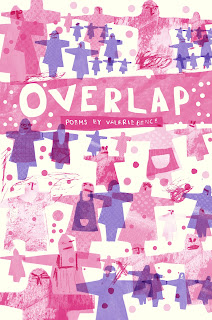
Review by Rosa Fernandez of "Overlap" by Valerie Bence


Overlap is a collection of twenty-one poems by Valerie Bence that contains many timely ideas, and the weaving together of all of them makes sense of this title. This was a book I very much enjoyed reading, and wherever Valerie is, I’m sending her a massive hug.

The journey of this book is from past into present, at first an appreciation of her two clearly much-loved grandmothers Winifred and Harriet; Winifred ‘laughed at everything’ and ‘taught me to wink’ marking her out as the cheekier. Harriet is more brooding and dutiful and ‘lived like prey’ and both suggested elements of my own mother (also a grandmother, and more of a Winifred) and my grandmother (more of a Harriet, I reckon, although she had her moments). The snippets of description of a 1960s childhood will resonate with many, the older women still carrying the drama of wartime with them. The poem ‘Not as posh as I thought we were’ I particularly enjoyed; I felt I could have been the wide-eyed confused child of that poem and it made me giggle.

The last four poems are a sucker punch, and really moved me; I know my mother would feel a solidarity with the sentiments within, having missed time with her own grandchildren. The line ‘I could hardly speak’ hit me hard, and so much of all our lives have been affected by the last two years that I am sure many readers would be similarly moved. The final poem ‘Press me in peat’ is the right poem to end on; while not necessarily a happy ending, it acts as summary from ‘melting glaciers’ to ‘like now’ where we return to the febrile present. I’m sure the grandchildren will be pleased to have this record, and I hope Nonna gets hugs again very soon. 


About
Rosa Fernandez is a slam-winning poet and sometime proofreader. She also enjoys wearing silly hats. 

Sunday, 6 June 2021

Review by Cathi Rae of "Russian Doll" by Teika Marija Smits


I am reading and re-reading this assured and perfectly crafted debut collection by happy coincidence in a room which contains three sets of Russian Dolls. The best Russian Dolls are made with such skill that it is almost impossible to see the join as you open up each figure to find a smaller perfect copy. The very best Russian Dolls lose nothing in detail even as the dolls become tinier. The pleasures are in the craft, the artistry, and the discovery of the very smallest and still beautiful final doll.

This collection provides the same joy – perfectly made poems, exquisite details, and the satisfaction of finding more and more to read, to consider, to discover.

Written in two sections, the first, 'Daughter Doll / Doll-Daughter,' focuses on childhood and relationships with parents. Some of these poems are 'small' – the sensual joy of mint choc-chip ice cream - while some take on the big stuff – suicide of an old school friend, the death of a father, grieving - but all are crafted so elegantly, so absolutely 'right.' Smits can use even the most structured rhyme scheme, as in 'The Pulmonary Embolism,' with a touch so skilled that in other hands could feel cumbersome - but here there is no loss of real pain and emotion.

The second section, 'Mother Doll / Doll-Mother,' is searingly honest about parenting and being a mother with such careful observation that the poems speak to anyone who has cared for small children. The title poem, 'Russian Doll,' contains this: '... As I thin and am worn smooth by little hands that dismantle me daily…” – one of the most perfect descriptions I have read of motherhood. But there is celebration too and a realistic sense of the day-to-day work. I’m in awe of another poet who can find poetry in the quiet hell of sitting pool-side during the weekly swimming lesson.


About the reviewer
Cathi Rae is a spoken word artist and somewhat to her own surprise a PhD student in Creative Writing at the University of Leicester.

You can read more about Russian Doll, as well as a sample from it, on Creative Writing at Leicester here.

Monday, 24 May 2021

Review by Elizabeth Chell of "GREAT MASTER / small boy" by Liz Lefroy


Liz Lefroy’s pamphlet of poetry is innovative, beautifully composed and is as unique as Beethoven himself. Just like Beethoven’s 9th symphony, she combines two art forms, traditional and prose poetry. The artistry of her language, the vivid reflections journey us through the past and present life of Bonn and Vienna. Her themes lend themselves to the Romantic music of Beethoven, merging into the classical tones of her surroundings. 

We are mesmerised by the budding dancer in the poems, the toil and hard work as she finally flowers, and then her voyage into motherhood. The power of Lefroy's words places us beside her; lines such as ‘I  survive fleshy awkwardness’ resonate with our own adolescent selves. Of her pregnant self in the bath, the phrase ‘beached on the rounded island of myself’  is such a perfect description; for me this feeling has never been so adequately illustrated.

The strength of Lefroy's poetry lies in the marriage of the beauty of Beethoven's music, the beast of war, and the war within him, his deafness. Reading through her work you are reminded that, although Beethoven wrote beautiful music, there is often an undertone of sadness and despair. This is a story of life and development of beauty triumphing over despair; it is an extraordinary accomplishment and an absolute pleasure to read, again, and again.


About the reviewer
Elizabeth Chell is currently studying for an MA in Creative Writing at Leicester University. She is a full-time teacher and lives in Leicester. 


Thursday, 15 April 2021

Review by Jenny Robb of "The Weight of Snow" by Pauline Rowe


Pauline Rowe’s new pamphlet, The Weight of Snow, is layered with generations of grief. The accidental death of a ten-year-old girl years ago affects the narrator’s life, and those of her family. The poems cleverly interweave the narrator’s past life, loves and losses against the backdrop of this tragedy, outlined starkly in 'A Letter to Nanna Bereaved':

          He saw her swept away 
          by the trailings of a lorry.  
   
          The old man writes:
          Even now I see her pennies
          spinning in the road.

Yet in this elegiac pamphlet there is also hope and redemption. In contrast to the 'silver anniversary of grief' for a son never born, we are given 'Delivery Room'; joy in the face of the pain and danger of imminent birth, where the bereaved 'Nanna' appears:

          'Pray hard that I may find eternal peace
          and yet reach heaven, reach my lovely girl.
          Pray hard that God may grant me my release.'
         
         Then as the final pain came, she was gone
         and headlong crashing into sound and light
         my glorious boy arrived, my peaceful son.

There is also a parade of sharply drawn characters that bring working-class Widnes to life, as  in 'Barnes Road, 1967': Wendy, who 'kept PG Tips cards / and badges from Robinson jam,' and Billy the lodger who 'blocked the hall / with his deafness and Triumph bike.' But the permafrost of these poems is never far away. Even in the poem celebrating a fifty-year old friend’s marriage in Spain, there is unfulfilled yearning to follow those 'whose souls must sing in the sun.'

Pauline Rowe has created a beautiful and memorable tribute to the collective grief of a family marked by tragedy, a grief that many will recognise in different forms.


About the reviewer
Jenny Robb, from Liverpool, started writing poetry after retiring from a career in Mental Health services. She has been published in both online and print magazines and in poetry anthologies. She has recent publications in Dream Catcher, Prole, Orbis, Ink, Sweat and Tears and The Dawntreader. Her debut pamphlet will be published by Yaffle Press in 2021.

Tuesday, 9 March 2021

Review by Sue Mackrell of "Whose hand would you like to hold ..." by Patricia McCarthy


Patricia McCarthy’s poignantly titled chapbook, written during the first lockdown, invites us to ‘Draw the curtains, light the candle.’ It is ‘Time to sit as the Brontes did,’ she says, ‘Fight off the attacker’ and write. She tells us: ‘Emily will scribble – /with yours – her secrets, fast as she can.’ The predator stalking the Brontes was tuberculosis. For us, Covid 19 has forced us into introspection, to explore the ‘geography of the heart, ‘... deciphering more / about your selves than ever you knew.’ McCarthy asks us to ‘Reflect on those stolen moments / of grace; re-live them despite your skin-hunger,' to ‘think whose hand you would like / to hold one last time, then press softly to your lips.’ 

A thematic link in this cycle of poems is past epidemics, plagues, and pestilences, a seeking of causes and cures. The poet describes her own experience of polio, an evocative portrayal of a 1950s childhood watched from a sick bed, recalling images of ‘tiny faces peering, as if from Advent calendars, from communal iron lungs.’ 

The course of the lockdown in these poems is charted in the heavens; in March, Venus is ‘bright as a searchlight / over all our lives.’  In times past three ‘super-moons’ in as many months would be a sure sign of planetary maleficence; 'influenza' comes from medieval Latin, meaning ‘influence of the stars.’ Ancient Native American names for the moon are invoked, the ‘worm moon,’ when the earth is warm enough for worms to become active and begin the growth season, the ‘pink moon’ when wild ground phlox of that colour is in bloom. The poems are woven together with children’s rhymes, old country sayings, and ancient oracles. Natural phenomena are interpreted as auguries – flights of swallows, skeins of geese, oak branches offer portents of the future.

McCarthy writes of a close relationship with horses, observing how they can survive the brutality of humans, and understand death better than us. A deep connectedness to the natural world gives authenticity to the poems in this chapbook;  flowers blooming and fading mark the passing of spring into summer, from the primroses and daffodils of March, to June wedding roses ‘with no bride to wander under their perfumed roof,’  through to the first of the Michaelmas daisies. 

There is deep sympathy for those denied their solace, ‘Terrible to get the sun only by balancing / an arm or a leg on a window- ledge.’ McCarthy remembers those in care homes, ’The forgotten ones who have forgotten themselves: / see them stare out behind barred windows.’ She  writes with tenderness about her mother, 'suddenly I am you, / our bones knit together, wrapped / in all our ages in waiting rooms,'  an aunt ‘dialling random numbers like life lines,’ a sister ‘newly widowed’ in France. These are deeply personal poems but they resonate, ignite a shiver of recognition from experience or from stories heard on the radio or television, read in newspapers or on the internet. She writes, too, of domestic abuse, for which lockdown provided perfect conditions. ‘Many tales untold not for the telling / within four walls, no escape ...’ Cases of sibling abuse have escalated; the story of Cinderella is recalled: 'She never reported them, only too aware / they would have the last word ...' 

The end of lockdown is tentative, ‘See they return, one and by one they cross Westminster Bridge, not quite yet / undone by death ...’ and then ‘ the criss-cross of pollutant jet-trail tells / of a sky-spoilt world gone back on itself.’ But there is also a sense of comfort; in an earlier  poem McCarthy writes of the loss of childhood faith in Easter liturgies, of  ‘swapping naves for woodland paths,’ wondering instead if ‘his heart [is] beating in every tree ... his pulse in throats of nightingales.’ Here she writes it is ‘Best to rely on the anima mundi which has / no language, but is Love feathered with Peace.’ Its ‘Grace’ she writes ‘will not let those who died alone seem, / amongst Michaelmas daisies, to leave no trace. / All the farewells that could not be said, / are on the backs of swallows, ...Mine amongst them, for my father, spiral into a chorus of Creation psalms.’ 

In the final poem we are encouraged to ‘Draw back the curtains, snuff out the candle / and let Rilke’s angels clean misted windows / with their wings.’ But there is a warning – the angels ‘call out / Fear and Fear not. The look on their faces is terrible.’ 

Covid had not yet finished with us, still hasn’t finished with us. We are back again in March, still hunkering down, drawing strength from writing and from story-telling, as those who wrote the Decameron ‘reeled off tales / to avoid epidemics of fear in a plague.’ In the first lockdown McCarthy expressed what seemed then such a vain hope that a vaccine ‘simple as the one then found’ for polio, ‘dissolved / on a sugar cube,’ would be discovered. Miraculously, her wish has been fulfilled.  


About the reviewer
Sue Mackrell’s ‘Lockdown’ poem will shortly appear on the Words for the Wild poetry website. Her poetry has been published online and in print anthologies and journals, most recently in Agenda Poetry, Ekphrastic Review, and Bloody Amazing (Dragon Yaffle 2020). She has an MA (Distinction) in Creative Writing from Loughborough University, where she was a part-time lecturer for several years. Now retired, she has taught and facilitated Creative Writing workshops in Higher and Further Education, schools, museums, art galleries, hospitals, and with ex offenders.

Sunday, 19 April 2020

Review by Gary Day of "The Escapologist" by Jinny Fisher


To the extent that many of the poems in this collection aim to give a picture of Jinny Fisher’s physical world, real and remembered, they succeed. In ‘Sunday Lunch’ Mother ‘works oil into the surface’ of a ‘long table’  with her ‘bleached wooden brush’; in ‘Screen Memory’ a ‘shiny red hand-pump … spurts brook water for the kettle,’ while in ‘Antiphon’ a crowd ‘almost trample / two tiny wellington boots, painted with daisies, / half buried in the mud.’ Fisher, who has undergone a series of metamorphoses from classical violinist, to psychotherapist to poet, has an eye for detail. Her descriptions are precise. The reader is treated to a series of clearly defined images, but a number are inert. The scene is set but nothing happens.

This is not true of all of these poems. ‘Half-Sister’s Lunch’ neatly captures the tensions between the two women; sharing a plate of food and tearing bread dramatically portray their closeness and rivalry and there is genuine tension in the build up to the magnificent last line. Another work that should be singled out for praise is ‘Regeneration’ which simultaneously keeps in play the shock, the relief, and the new found freedom that comes from the end of what appears to be an abusive relationship. But that’s not all. A faint air of regret hangs about the poem. As someone who has studied psychoanalysis, Fisher is all too aware of the dangerous ambiguity of human emotion.  

One of the eye-catching qualities of the collection is the layout of Fisher’s poems. Some, like the title poem, are laid out in paragraphs, others like ‘The Scarf’ follow the shape of the object they describe. All of them, whether they are about home, family relations or even her violin have something to recommend them.   


About the reviewer
Gary Day is a retired English lecturer. His research mainly lay in three areas, the  history of literary criticism, the workings of class in British literature and the persistence of sacrificial ritual in the development of drama. He had a column in the Times Higher for a number of years and has also edited two volumes on the history of British poetry as well as the three volume Wiley Encyclopaedia of British Literature 1660-1789. He hates management speak, has been involved in amateur theatre for over thirty years and is still trying to write poetry.