Showing posts with label Emma Press. Show all posts

Thursday, 23 July 2026

Review by Laura Sygrove of "Eating Air" by Suyin Du Bois


Suyin Du Bois’ debut poetry pamphlet is a tapestry of shared cultures, a smorgasbord of delectable delights and rough estimations; a rich blend of seasoned memories and flashes in the pan. Eating Air is complex, intimate, and oftentimes devastating; a journey into the past in an attempt to preserve the present, always just seconds out of reach.

Besides Du Bois’ poetry, I’ve thought of little else for weeks. Her work begs you to read the words aloud, to savour each syllable as the speaker savours each meal. Eating Air is a collection of flavour samples that dance on the tongue and settle in the pit of your stomach. Du Bois transports the reader across oceans to sit at low dining tables, folding meal trays at high altitude, beside hospital beds and roadside stalls, relishing the familiar taste of airline food and leftovers, sand-roasted chestnuts, French pastries, and makeshift noodle dinners.

For Du Bois, eating and writing are both acts of remembering and belonging, or of not quite belonging, and of longing itself. In her preface, she describes feeling poetry in her body in much the same way as food, where "certain combinations of words can have just the right mouthfeel." Food nourishes the body while carrying emotional and cultural memory. Poetry preserves that memory, remaking it through language: "I stir and stir like her until my spoon draws the right depths of lineage."

As a title, Eating Air feels both grounding and elusive, suggesting nourishment while gesturing towards something intangible: "store-bought surrogates," swaddled exports with their "layers thinned," family recipes spooned from jam jars for the very last time. Her work reads almost as a series of diary entries, reimagining transitory yet toothsome moments in a search for self through places, memories, and identities that resist easy definition.

Du Bois writes with complete transparency, embracing the discomfort of existing between cultures. She allows these tensions to remain unresolved, capturing the feeling of being both within and without. Her poems linger in that in-between space, searching for belonging without ever insisting upon certainty. My favourite line in the collection, "I insist we oil our bloodlines mackerel slick," is as tender as it is visceral, preserving heritage not as something fixed, but as something living and lovingly maintained. In Eating Air, nourishment is found not only in food, but in language and memory, and the act of returning to them.


About the reviewer
Laura Sygrove is a graduate of the MA Creative Writing programme at the University of Leicester. She is an advance reader at DartFrog Books and writes for The Publishing Post. You can read some of her poems herehere and here.  

You can read more about Eating Air by Suyin Du Bois on Creative Writing at Leicester here


Friday, 25 October 2024

Review by Peter Raynard of "After the Rites and Sandwiches" by Kathy Pimlott


Kathy Pimlott’s heart-breaking pamphlet, After the Rites and Sandwiches, portrays the impact of her husband’s sudden death from falling down the stairs of their home. In the aftermath, the reaction and readjustment is immediate and ever-present.

In an early poem, "No shock advised," short, punchy lines put you under no illusion as to the enormity of the event.

          It’s cruel work
         To kneel down
         and hunch over
         a so-familiar body at the foot of the stairs

But even then, when the defibrillator says, "no shock advised" and it’s apparent that there is nothing to be done, "still the sweet mad hopeful brain insists it will be okay."

The pamphlet is both a portrayal of grief and biography of a marriage. Tears become the episodic outpouring of emotion, almost carrying the weight of a seizure: "It’s impossible to foretell what will provoke tears, the sort that well up and tip over while you hold onto the kitchen sink waiting for them to subside."

Grief is also full of surprises, one of which is guilt: 

         Forgive me, I’ve laughed,
         glided lightly round garden centres, sipped fizzy wine
         with friends, sorted out edge pieces of puzzles.

Grief may not have feathers, but it does have a long tail; for although her husband is gone his presence remains, in objects, memories, as well as his ashes, and knowing what to do with them. In "Death Admin I," "Your demise constitutes a quarter off council tax, removal of a vote you seldom cast." Then in "Death Admin II," when collecting his ashes, 

        It shouldn’t be a surprise, the weight, the quantity.
        Not knowing what to expect, I take a pink rucksack, 
        carry you again, all down Holborn on my back.

Pimlott beautifully crafts the poems, with a matter-of-factness laced with incisive metaphors, which detract from the possibility of being overly maudlin. 

There is also dark humour as she almost parodies self-help, in titles such as "How to be A Widow," "Death Admin I & II," and in the final poem, "Coda: Tips on avoiding the offered consolations of Religion and Therapy": "If it’s Religion, it’ll spot you, even when you’re crouched low behind the credenza," or: "Therapy requires acuter acting skills. Better pretend you’re a dog (a Dalmatian, the least intellectual)." Also in the poem, "What I do with you now you’re dead," Pimlott writes: "in a laughing panic, [I] dumped a quarter of your ashes and ran away, the illicit thrill exactly what you would have wanted."

After the Rites and Sandwiches is a stunning biography of a marriage and its aftershock, that will stay in the reader’s memory long after the book is laid to rest.


About the reviewer
Peter Raynard is an independent researcher, poet and editor of Proletarian Poetry. His three books of poetry are: Precarious (Smokestack, 2018), The Combination: a poetic coupling of the Communist Manifesto (Culture Matters,2018), Manland (Nine Arches Press, 2022). A debut pamphlet (a heroic crown of sonnets), The Harlot and the Rake: poems after William Hogarth, was published by Culture Matters in September 2024.

You can read more about After the Rites and Sandwiches by Kathy Pimlott on Creative Writing at Leicester here


Friday, 11 February 2022

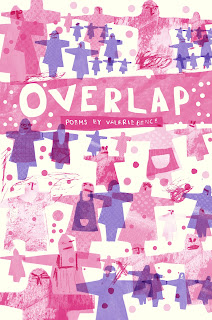
Review by Rosa Fernandez of "Overlap" by Valerie Bence


Overlap is a collection of twenty-one poems by Valerie Bence that contains many timely ideas, and the weaving together of all of them makes sense of this title. This was a book I very much enjoyed reading, and wherever Valerie is, I’m sending her a massive hug.

The journey of this book is from past into present, at first an appreciation of her two clearly much-loved grandmothers Winifred and Harriet; Winifred ‘laughed at everything’ and ‘taught me to wink’ marking her out as the cheekier. Harriet is more brooding and dutiful and ‘lived like prey’ and both suggested elements of my own mother (also a grandmother, and more of a Winifred) and my grandmother (more of a Harriet, I reckon, although she had her moments). The snippets of description of a 1960s childhood will resonate with many, the older women still carrying the drama of wartime with them. The poem ‘Not as posh as I thought we were’ I particularly enjoyed; I felt I could have been the wide-eyed confused child of that poem and it made me giggle.

The last four poems are a sucker punch, and really moved me; I know my mother would feel a solidarity with the sentiments within, having missed time with her own grandchildren. The line ‘I could hardly speak’ hit me hard, and so much of all our lives have been affected by the last two years that I am sure many readers would be similarly moved. The final poem ‘Press me in peat’ is the right poem to end on; while not necessarily a happy ending, it acts as summary from ‘melting glaciers’ to ‘like now’ where we return to the febrile present. I’m sure the grandchildren will be pleased to have this record, and I hope Nonna gets hugs again very soon. 


About
Rosa Fernandez is a slam-winning poet and sometime proofreader. She also enjoys wearing silly hats. 

Friday, 26 November 2021

Review by Cathi Rae of "is, thinks Pearl" by Julia Bird


It is almost completely apposite that I almost didn’t get to read this collection, because the younger French Bulldog (a voracious consumer of all books) got to the post before me. The first piece “Helium Pearl” describes the chaos of the helium balloon seller trying to manage his fat cartoon dogs – I know his pain.

This is a hard-to-categorise collection – poems, prose poems, tiny gems of memoir. I don’t think it matters – imagine Pearl, the jewel at the centre of each piece as the perfect flaneuse – taking you by the hand and opening up the marvellous, the mysterious and the beautiful within the humdrum.

Julia Bird’s powers of observation are razor-sharp; these pieces read like perfect icons where every detail is imbued with leaf gold. In "Liquid Pearl,"

          when the Mayor reopens the lido 
          Pearl takes to the water
          in a blow-up chair the shape
          of a size fourteen flamingo

There is magic, magic realism, another way of seeing at the core of so much of this work. Describing a night club in “Violette Pearl,” Bird writes:

          ... but how the haze, the synthesis
          of dry ice and Silk Cut smoke,
          looks for all the world like
          bluebells in a birch wood seen
          from the far edge of a distant field.

Take a walk with Pearl – you may never see the world in quite the same way.


About the reviewer
Cathi Rae is a spoken word artist and poet. Her debut collection is Your Cleaner Hates You and Other Poems (Soulful Publishing, 2019). She is currently working on an M4C-funded Creative Writing PhD at the University of Leicester on telling marginalised lives through poetry.

You can read a review of Cathi's collection on Everybody's Reviewing here


Wednesday, 20 December 2017

Review by Jonathan Taylor of "Now You Can Look" by Julia Bird


One of the historical strengths of poetry as a 'form' is its protean ability to mingle and assimilate different genres and sub-genres. Poetry is a hybrid. This is very clear in Julia Bird’s beautiful new collection, Now You Can Look, which mingles memoir, autobiography, biography, history, ekphrasis, prose poetry and fiction, alongside beautiful illustrations by Anna Vaivare. 

This mingling of genres is everywhere in Bird’s collection: the final poem of the collection, ‘I Wait for My A-Level Results,’ may well be partly autobiographical; ‘A Bomb Damage Report’ is ostensibly local history; ‘We Leaf Through Her Sketchbook’ sounds like a biographer – or biographers plural – retrospectively looking back on a female artist’s life; ‘The Artist, Aged 9, Plays a Parlour Game’ reads like a scene from a novel, about a fictional, early-twentieth-century female artist. If the collection as a whole mingles genres in this way, so do the individual poems: ‘Without Confiding in a Soul, She Goes to Get Her Hair Cut’ mingles the styles of biography and fiction, and even (possibly) autobiography. 

In this sense, the poems also intermingle characters across time – a fictional female artist from the early-twentieth century, with traces of real-life twentieth-century female artists, with the author’s (or narrator’s) own experiences, with an almost-trans-historical ‘you.’ ‘The Artist, Aged 9, Plays a Parlour Game,’ for instance, is not only about a female artist, but also addresses ‘you’ as reader, as if the liberation involved in the ‘parlour game’ not only applies to the young artist, but potentially to the reader too. In this respect, the final line of ‘Without Confiding in a Soul, She Goes to Get Her Hair Cut’ might stand as what Bird calls ‘a simultaneous double vow’ for the whole collection: ‘I don’t know you and I do.’ The reader does not know the characters in the poems, and yet does, at the same time. 

As well as mixing characters and genres, the poetry shows how art in general intertwines with life: art is omnipresent, and gardening, cooking, hairdressing and so on are artistic genres just as much as painting and engraving. A parlour game results in a formative artistic moment, in which the nine-year-old artist first asserts her individuality through drawing; the sound of two gold bangles as they ‘slip, / percuss and ring’ is an ‘overture to [an] … overture’ at the opera house; a haircut is a kind of sculpture and a statement of independence; a kimono is a painting ‘that’s drunk up all the / colours from the room,’ which combines both ‘silk’ and ‘skin’ – artwork and human being – in its patterns; making omelettes and snowmen are part of – not separate to – an artist’s life; a gardener is also a poet who ‘will cut a word / into a marrow hide to watch it grow.’ 

In such images, Bird’s poetry shows how artwork is not separate to everyday life, but entwined with it – and, moreover, bound up with its transience: in these poems, omelettes, snowmen, marrows are all short-lived moments of artistic beauty. Similarly, in the powerful poem ‘The Artist in a Field in November,’ the strange and momentary beauty of Guy Fawkes at the bonfire’s ‘peak, flames in his hair,’ comes to represent the transience of the artist’s marriage – ‘that something in her home is burning’ too. Perhaps, in its dynamic hybridity, this is what poetry can capture: passing moments, where images and life, moments of spontaneous artistic beauty and personal history, meet and intertwine, and then – just as quickly – vanish. 


About the reviewer
Jonathan Taylor is an author, editor, lecturer and critic. His books include the novel Melissa (Salt, 2015), the memoir Take Me Home (Granta, 2007), and the poetry collection Musicolepsy (Shoestring, 2013). He is director of the MA in Creative Writing at the University of Leicester. His website is www.jonathanptaylor.co.uk