Thursday, 30 December 2021

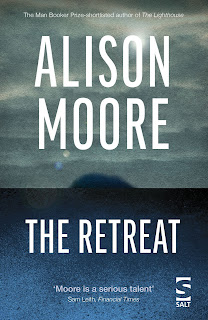
Review by Sally Evans of "The Retreat" by Alison Moore


A well-written novel evocative of the imaginary Mediterranean island at its core, I found the story a little difficult to unpack, in that there are two parallel narratives of two different young women visiting the tiny island, one to attend an artists’ retreat, the other to write a novel. The first one introduced is Sandra, whose reality pervades the main story. She is a dithering would-be artist and photographer who pursues a lone quest among the other people on the retreat, who gang up against her and ostracise her, none of them appearing very capable in their own work. Scenes show squabbling over the food, music and entertainment in the house of an evening, while Sandra makes solitary expeditions round the island in daylight. The house has a ghost which never fully reveals itself, as nothing is fully revealed. There's a transience to this story, as Sandra futilely tries to fit in where she cannot.

Carol, the other protagonist, is going to write a novel. I at first guessed that Sandra’s story was the novel Carol was writing, set on the same island to which she was returning, with more of the history of the island and a smaller offshore isle, which Sandra, at the end of her story, tries to reach. There has been a death, we assume Sandra’s, when Carol arrives at the smaller island at the end of the book. 

The novel is about the attraction of place and the desire to record its beauty, whether in writing or art, and about the incompleteness of short associations with place. The boatman, who takes supplies and post to the island, although shadowy, is the only character truly connected to the place. 

I ended with the feeling I ought to know more about Carol. She is introduced in the future tense narrative, telling where she is going, and what she wants to do, then she is shown gradually approaching the island. Both story strands are mainly told in the present tense, apparently simultaneous until Carol reaches the smaller island at the end of Sandra’s adventure. There’s a lot of atmosphere, detail and almost teasing about the plot, a not-quite-stated ghost narrative about a silent film star, who once lived there.  It’s a novel where the work of reaching conclusions is left to the reader. Sandra is beaten; Carol departs in haste, but the long-gone film star remains silent.


About the reviewer
Sally Evans is a bookseller and poet. Her books include The Bees (2008) and Poetic Adventures in Scotland (2014), both from Diehard publishers. She edited Poetry Scotland for 20 years, and is currently studying for a PhD at Lancaster University. Her novel Wildgoose: A Tale of Two Poets was published by Red Squirrel Press in 2021. You can read a review of it on Everybody's Reviewing here


Monday, 13 December 2021

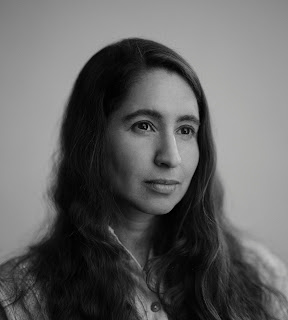
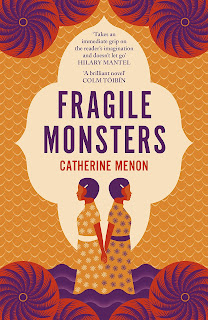
Interview with Catherine Menon


Catherine Menon is the author of Fragile Monsters, published in 2021 by Viking. Her debut short story collection, Subjunctive Moods, was published by Dahlia Publishing in 2018. She has a PhD in Pure Mathematics and an MA in Creative Writing from City University, for which she won the annual prize. She’s won or been placed in a number of competitions, including the Fish, Bridport, London Short Story, Bare Fiction, Willesden Herald, Asian Writer, Leicester Writes, Winchester Writers Festival and Short Fiction Journal awards. Her work has been published in a number of literary journals, including The Good Journal and Asian Literary Review and has been broadcast on radio.

You can read a review of Fragile Monsters on Everybody's Reviewing here. You can read more about Fragile Monsters on Creative Writing at Leicester here


Interviewed by Jonathan Taylor

JT: What was the original starting point or inspiration for writing Fragile Monsters?

CM: The inspiration for Fragile Monsters came from the bedtime stories my father used to tell me about his own childhood in Pahang. It was only as an adult that I began to understand the context of these stories. Kuala Lipis, where he grew up, was the headquarters of the Japanese army in Pahang during the occupation. 

I began to read memoirs and interviews with other people who’d lived through that time, and I was struck by the extent to which all of these speakers were taking ownership of their own narratives. They were describing what had happened to them, but with a focus on the emotional truth rather than the specific events. This was an amazing thing to realise: the sheer resilience that they had had to show in order to take back control of the past.

JT: How far and in what ways did you draw on autobiographical material in writing Fragile Monsters?

CM: Although the inspiration for Fragile Monsters came from my own family history, all the events and characters in Fragile Monsters are completely fictional. Looking more deeply, though, there are certain aspects of the character of Durga with which I feel an identity. Her desire to connect with her past and define her own interpretation of her history, her ancestors, her place in society – that’s something I can strongly relate to. So often we’re led to feel that our lives are out of our control: if we’re born into a particular society, culture or family then that will dictate who we can become. Durga struggles against that and has a fierce desire to create her own identity, even where this means moving half a world away. 

More generally Durga is, I think, a representation of some of the pressures which modern women face. She’s driven to succeed and because of her chosen career feels that she has to fiercely repudiate other ways of looking at the world, such as Mary’s more slippery approach to the truth.

JT: How important is a sense of place in your writing?

CM: This is hugely important to me when writing in general, and was particularly so for Fragile Monsters. The characters are to a certain extent defined by the place: by their history, culture and surrounding society. This was a theme I kept returning to during the writing process, particularly when intertwining the history of the characters with the stories they tell each other, which are of course grounded in myth and folklore. There’s sometimes an expectation that stories from Asian cultures will be somehow made palatable to Western understanding, that the characters will be neatly placed into their boxes: the mystic, the oppressed woman, the ambitious pauper.

The thing is, of course, that stories – and even myths – don’t fall neatly into such partitionings. Durga would have grown up with a similar fusion of stories and folklore as I did: she’d have told stories of pontianaks to terrify her friends at school, she’d have waited for Father Christmas to arrive and she’d have seen stories from the Ramayana on TV on Sundays. Myths and folklore tell us something deep and true about ourselves and the place we live in. In writing Fragile Monsters it was very important to me to acknowledge the power of these stories without falling into the trap of reductionism. 

JT: How important is a sense of history in your writing?

CM: Again, this was immensely important to me. I think that in general – particularly about WW2 – there’s a tendency for history books, education and popular media to focus on the war in Europe. Most people don’t even know that the Japanese invasion of Kota Bharu took place before the attack on Pearl Harbour. This is a shame, because it does a disservice to the unique stories of Malaysians living through the Occupation at the time, and subsumes their identities and narratives into a global, Eurocentric perspective.

When writing Fragile Monsters I spent a lot of time reading through old newspapers, letters and interviews in the British Library. It was very important to me to access primary sources and as far as possible to hear people tell their stories of that time in their own words.

JT: I loved how you threaded mathematical themes and metaphors throughout Fragile Monsters. What part do you think maths plays in the novel? Why do you think it arose as a part of the narrative?

CM: I wanted to explore the way we all tell stories about our past, the way we mythologise certain events and gloss over others until we’re no longer even sure what our real memories are. Obviously Mary does this by co-opting folklore and mythology to create a slippery, evasive history – but it was also important to me to show that this isn’t the only way we reinvent ourselves. Durga, of course, is the exact opposite. She values logic, certainty, a kind of rigorous and exacting thought process that doesn’t allow for something to be “right, instead of true,” as Mary tells her. But of course, that’s just as reductive a way of looking at the world, and misses out just as much.

JT: In a wider sense, do you think there are overlaps between maths and storytelling, or writing?

CM: For me, mathematics and writing come from the same creative well. They're both a search for the right way to express a concept that exists only in potentia and to communicate it to your readers. When we judge a mathematical proof we use words like elegance, interest, beauty - the exact words we use about a piece of writing. Pure mathematics consists of sitting very quietly, inventing abstract objects and thinking up relationships between them – then stretching those relationships, putting the objects together in different ways, looking at them from different angles … everything that you do with characters in a novel!

JT: How and why did you go about structuring Fragile Monsters around parallel, inter-generational stories?

CM: I knew that I wanted to tell both stories in parallel: Durga’s compressed few weeks when she’s discovering all these secrets, and Mary’s entire life which has given rise to them. There are also a number of deliberate points of confluence between the two narrative flows: the crises and tensions of Durga and Mary’s lives arise in similar ways and at similar points. I also very much wanted to show Mary as herself, rather than solely in terms of her relationship to Durga. We have so few representations of older women in literature, and a lot of those treat these women – these grandmothers, they’re often called in rather disparaging tones, as though they’re nothing else! – as essentially stereotypes. 

Of course, it isn’t as simple as that. Mary’s story is in fact told not by herself but by a disembodied voice identified strongly with Durga. This allowed me to suggest to readers that Mary is, perhaps, just as much a construct and product of Durga’s imagination as she is of her own. Durga is telling Mary’s story for her, both literally and metaphorically.

JT: You write short stories as well as novels, and published a brilliant collection of short stories, Subjunctive Moods, before Fragile Monsters. How did you find moving from one form to another? What do you find are the different challenges posed by the two forms?

CM: I really enjoy both forms, but they do present such different challenges. A short story feels to me like a suspended moment, like the pause before a breath. Obviously short fiction doesn’t have to be limited in time – I’ve read some wonderful short stories, such as some of those by Jhumpa Lahiri, which cover an entire life – but there still needs to be that sense of the narrative arc being pared down to a brittle sufficiency. Novels, on the other hand, feel like an immensity of riches. They require a very strong sense of balance between the events of the plot and the development of the characters, and this needs to be sustained over 80,000-odd words. For myself, I found in moving from short stories to novels I definitely needed to recalibrate my mindset; to feel that I had room to settle into the longer work and do it justice.

JT: Are you working on anything new at the moment?

CM: I’m currently working on my second novel, which explores similar themes of science, storytelling and coming-of-age. I’m immensely excited about it, and about making friends with the new characters. It’s been hard to leave Durga and Mary behind, but I’m very much looking forward to the process of creating new characters and complexities.


About the interviewer
Jonathan Taylor is the director of Everybody's Reviewing and the MA in Creative Writing at the University of Leicester. His books include the novel Melissa (Salt, 2015), and the memoir Take Me Home (Granta, 2007). 


Friday, 26 November 2021

Review by Cathi Rae of "is, thinks Pearl" by Julia Bird


It is almost completely apposite that I almost didn’t get to read this collection, because the younger French Bulldog (a voracious consumer of all books) got to the post before me. The first piece “Helium Pearl” describes the chaos of the helium balloon seller trying to manage his fat cartoon dogs – I know his pain.

This is a hard-to-categorise collection – poems, prose poems, tiny gems of memoir. I don’t think it matters – imagine Pearl, the jewel at the centre of each piece as the perfect flaneuse – taking you by the hand and opening up the marvellous, the mysterious and the beautiful within the humdrum.

Julia Bird’s powers of observation are razor-sharp; these pieces read like perfect icons where every detail is imbued with leaf gold. In "Liquid Pearl,"

          when the Mayor reopens the lido 
          Pearl takes to the water
          in a blow-up chair the shape
          of a size fourteen flamingo

There is magic, magic realism, another way of seeing at the core of so much of this work. Describing a night club in “Violette Pearl,” Bird writes:

          ... but how the haze, the synthesis
          of dry ice and Silk Cut smoke,
          looks for all the world like
          bluebells in a birch wood seen
          from the far edge of a distant field.

Take a walk with Pearl – you may never see the world in quite the same way.


About the reviewer
Cathi Rae is a spoken word artist and poet. Her debut collection is Your Cleaner Hates You and Other Poems (Soulful Publishing, 2019). She is currently working on an M4C-funded Creative Writing PhD at the University of Leicester on telling marginalised lives through poetry.

You can read a review of Cathi's collection on Everybody's Reviewing here


Wednesday, 24 November 2021

Review by Katharina Maria Kalinowski of "What Meets the Eye: The Deaf Perspective," ed. Lisa Kelly and Sophie Stone


What Meets the Eye: The Deaf Perspective is an anthology that registers UK Deaf, deaf and Hard of Hearing experiences by British writers. It does not, as the editors write, aim for a definitive account of deafness, but rather seeks to offer a kaleidoscopic view on (not-)hearing. To that end, Lisa Kelly and Sophie Stone beautifully assemble a variety of forms, including poetry, short story, journal entries, and short plays loosely linked to the theme of movement: voices are “in the movement of our hands,” words “moving pictures / Building scenes.” The anthology also provides videos of the texts in British Sign Language (accessible here), which enact the powerfully loud speech of the “silent linguist” and are highly recommendable.

Acknowledging that “life moves and / I with it,” the various perspectives gathered in this anthology take the reader on a multi-faceted journey exploring the “spaces / in between.” These include questions of identity, troubled relationships, family stories, human-animal bonds, and reflections on maps, internal and external, that light up new paths enabling everyone to travel at their own pace. Snapshots of a coastal walk during which “the wind is a bully in hearing aids” joins the “MAPping of a new landscape” that also describes the testing of threshold limits in hearing aid fitting. “Lockdown lyric” accompanies everyday struggles of signing a coffee order in a language that has no legal status. Accounts of contemporary routines involving taking the “cochlear implant off first, then mask, then implant back on” feel urgently political, bearing in mind face masks complicate lip reading, and “people are quick to judge on appearances.” Sometimes unmistakably direct, sometimes subtly entrenched in lines that are audible for some and visual for others, a manifesto for access takes shape, for “deaf rights / to be amplified,” “firmly rooted in society.” 

Inviting the reader to meet “eye to eye” in a world that seems to move faster than our senses can follow, these pages spell out the need to listen vigilantly, not only with the ears. The in-between spaces of what meets the eye are full of inspirational inner strength fuelling a continuous “fight against all / that deem us too small,” fuelling the many dances of hands that “ache” but “never tire.” Hearing is remapped, communication envisioned in different, more accommodating ways, tied to a longing for life without labels and respect without conditions.


About the reviewer
Katharina Maria Kalinowski is a bilingual poet and holds a PhD in English Philology and Poetry: Text, Practice as Research from the University of Cologne and the University of Kent. Her creative-critical research focuses on ecopoet(h)ics, translation, and the Anthropocene. Her work can be found in the Journal of British & Irish Innovative Poetry, Ecozon@, and the Irish Poetry Reading Archive

Saturday, 20 November 2021

Review by Richard Byrt of "Bollocks to Brexit: An Anthology of Poems and Short Fiction," ed. Ambrose Musiyiwa


I strongly recommend this entertaining collection. Authors consider Brexit from a wide variety of viewpoints, frequently with passion, and sometimes movingly. 

Virtually all the contributions are anti-Brexit. The title reflects many people’s views but might be seen as disrespectful to Brexit voters, including those living in very deprived areas. However, Joel Baccas observes that the term “bollocks” is not always disrespectful. 

Topics of poems include Jo Cox (Mark Connors, Paul Francis), the campaign “Brexit bus” (Anthony L. Church, Tracy Davidson, Lizza Lane) and young people’s futures (Carole Coates, Josh Granville, Kelly Knight, Wayne McDonald, Jacob Spivey). Pessimism is expressed (Nicollen Meek) in relation to shops (Colin Gardiner), splits in the UK (Selina Lock) and the island of Ireland (Richard Kilian Neville). “Brexit” is described as a “synonym for … boring” (Chloe Jacquet). 

Unusual “starting points” to poems include “pictures of derelict factories” (Stephen Wylie); scenes of Harwich (Harry Gallagher), Whitby Abbey (Deborah Harvey) and a “Servants’ Ball” (Nathan Evans). Effective contrasts are made between Brexit and memories of Europe (antonia langford, Isabella Mead, Pappageno). Several poems contain vivid concrete details and original metaphors, with Brexit compared, for example, to birds (Yvonne Reddick), and the breakup of close relationships (Ayodele, Ellie Curtis, Steve Pottinger). Brexit is also considered in relation to Pandora’s box (Nathan Evans), an Italian café (Pam Thompson), chess (Trinity-Grace Robinson), “red boots” (Mariya Pervez), and voyages to the moon (Mantz Yorke), and by ship (Carole Coates, Elizabeth Uter). There are four refreshingly different treatments of the topic, “March” (Anne Howkins, Melissa Oram, Bethany Rivers, Mark Rutter). 

Effective short prose pieces include a conversation about the consequences of Brexit (Danielle Allen), an account of a small girl who joins in the shout, “Bollocks to Brexit” (Anne Howkins), and a presentation on “The Sundering of the Kingdom” (Selina Lock). 

There is a wide range of free verse and fixed forms, the latter including “No country for young men” (Wayne McDonald), a version of Psalm 23 (Trevor Wright), and four sonnets (Gareth Calway, Isabella Mead, Glen Wilson, Michael Woods). There is also a terza rima (Sarra Culleno), a pantoum (Tracy Davidson), and a modified rondeau (Charis Cooper). 

Songs include a ballad (Gareth Calway), a “Hokey Cokey” poem (David R. Mellor), and a stirring “Song for Europe” (Joe Williams). There is a reverse poem (Rachel Hardisty Vincent), skilful use of couplets (Pam Thompson), and an exhortation (Michele Witthaus). Serious messages are conveyed in witty poems, “Deal or No Deal” (Garry Maguire) and “How to Skin a Cat” (Joe Williams).

Congratulations to the authors and editor on a thought-provoking, enjoyable read. 


About the reviewer
Much of Richard Byrt’s work is concerned with the experiences of those of us who face “othering” and discrimination. This is reflected in some of his published poetry, facilitation of creative writing and work for an LGBT+ history project. 

You can read another review of Bollocks to Brexit on Everybody's Reviewing here


Saturday, 13 November 2021

Review by Gary Day of "Disappearances" by Kathleen Bell


Kathleen Bell’s debut volume is a thing of beauty, a joy forever, or at least until the global temperature rises beyond the point of no return. Her poems are poised, delicate and occasionally devastating. The book consists of three sections, the second concerns memory, the third magic.

The first deals with the musings of medieval spinsters on matters such as  church, childlessness, beatings and scars from harvesting the corn, a kind of earthly stigmata. These women bear their sufferings with a grim fatalism. Their incessant struggle to reconcile what they are told by the priest or the lord with their own experience is expressed in voices both lyrical and authentic. 

The final poem in this sequence, ‘La Dame à la Licorne,’ is a delight. It is based on six tapestries of the same name woven in the style of ‘a thousand flowers’ at the turn of the fourteenth century. Five of the pictures represent the five senses, the sixth is something of a mystery. The brilliance of this poem lies not just in Bell’s riff on the pictures of the lady with her unicorn but also in the way she subtly relates it to the poems that have gone before, where her women are fluent in their senses but flounder in their minds.

My favourite in the collection is ‘Palais des Beaux Arts’ which revisits Auden’s magnificent ‘Musée des Beaux Arts.’ It strips the original of its calm beauty revealing the horror beneath. Wherever Auden’s landmark poem goes in future, it should be accompanied by this one. 

Each page of this well-produced book is an entrance to an exquisitely constructed little world, whether it is a painting by Vermeer or a card trick. Bell takes us down the side roads of history, showing with great tenderness and truth, what was missed.   


About the reviewer
Gary Day is a retired English lecturer. His research mainly lay in three areas, the  history of literary criticism, the workings of class in British literature and the persistence of sacrificial ritual in the development of drama. He had a column in the Times Higher for a number of years and has also edited two volumes on the history of British poetry as well as the three volume Wiley Encyclopaedia of British Literature 1660-1789. He hates management speak, has been involved in amateur theatre for over thirty years and is still trying to write poetry.

Thursday, 11 November 2021

Review by Richard Byrt of "The Other Side of Hope: Journeys in Refugee and Immigrant Literature, vol.1," ed. Alexandros Plasatis et al


I strongly recommend this collection. I was moved by many of the gripping, “hard-to-stop-reading” stories and non-fiction, skilfully constructed poems, often with striking images, and comprehensive, interesting book reviews. There are contributions by both widely published and new writers. My only quibble concerns minor punctuation and other errors in some prose pieces.

George Sfougaras, who provides a striking cover illustration, refers to “losses and gains of leaving your country of origin to seek safety.” Reasons for staying and leaving the homeland are movingly considered by Madalena Daleziou. Some writers describe the need for people to emigrate because of war and terrorism (Marina Antropow Cramer, Jhon Sanchez) and this is also considered in book reviews by Lucy Popescu and Kathryn Aldridge-Morris. Banoo Zan indicates the importance of editors being prepared to accept poets’ criticisms of oppression in their home countries. Kimia Etemadi writes:

          … anything would be better than
          • the flogging
          • the torture
          • the executions
          • the mass graves…
          All you are is Other. 

Alberto Quero writes: 

          I was born in a place which became …
          an everlasting war,
          tears and exile …

Some authors indicate specific factors increasing migrants’ feelings of alienation, for example, in moving accounts of depression (Radhika Maira Tabrez) and relationships with unloving fathers (Dan Alex and Marina Antropow Cramer). Experiences of racism are described by Murzban F. Shroff and in J. B. Polk’s thought-provoking account of a First Nations woman who is exhibited in a circus. Sahra Mohamed writes vividly about considerable difficulties that she experienced at work as a Black Muslim woman. Musembi Wa’ Ndaita’s intriguing story concerns experiences of the son of American missionaries in Kenya. 

The wish to move to a better life is considered: for example, from China to the USA (Qin Sun Stubis), and from rural Hamirpur to a large city (Radhika Maira Tabrez). Murzban F. Shroff’s vivid description of his teenage trip across America is reminiscent of Jack Kerouac’s On the Road. Hardships in new countries are described by several authors, including Bingh and Amer Raawan: “The walls were tall, the gates were tall / my fear increased daily.”

People’s homelands are remembered in poems by Atar Hadari, Kimia Etemadi and Banoo Zan. Alberto Quero describes “belonging to no land.” Striking contrasts are made with host countries:

          We found a safe place
          for our children to grow
          but we don’t know
          if they will remember

          our language, the words
          that tell of their past …

Congratulations to the editors, authors, cover artist and everyone involved in The Other Side of Hope


About the reviewer
Much of Richard Byrt’s work is concerned with the experiences of those of us who face “othering” and discrimination. This is reflected in some of his published poetry, facilitation of creative writing and work for an LGBT+ history project. 

You can read a review of Richard's poetry collection, Devil's Bit, on Everybody's Reviewing here

Friday, 5 November 2021

Review by Rosa Fernandez of "The Mask" by Elisabeth Horan


‘A celebration and [a] tribute’ is how the author describes The Mask, a collection of nineteen poems directly inspired by the paintings of Frida Kahlo (and a guide to which ones is helpfully included). The mask of the title itself refers to a specific painting and one that sums up the whole concept of the collection: a self portrait where Kahlo’s face is hidden and yet still full of emotion. 

The poems in this collection are all spoken by the imagined voice of Kahlo and have a flow to them that feels like the brush in her hand, sweeping her feelings onto canvas. The voice is direct and powerful and peppered appropriately with Spanish, ‘somehow separada’ and ‘into the rear of el restaurante’ where we can understand more than we think about Kahlo’s world in the writing. You don’t need to see the paintings to get the imagery; in ‘Nectar of the Gods and a Woman’s Throat,’ the animals, her face and the thorns are all described and weighted with meaning.

I really enjoyed the knowingness and humour of this imagined Kahlo, and the witty double meaning of ‘stanza’ in ‘The Mask, Vol. 1’ was a wonderful poetic highlight: ‘I’ve told Eli to make a new stanza,’ the poem ending with the spectacular line ‘Come and f*** me in my mind.’ The respect that the author has for the artist is evident and this poetic tribute is eloquent and sensual throughout, without shying away from Kahlo’s pain or rage.

Sensitive readers may query the fearless language throughout, but Kahlo was a unique individual with an unflinching perspective on the world, and it feels authentic. This collection is as colourful and vivid as its inspiration and can be enjoyed as both enjoyable poetry and as a companion to some fascinating paintings. 


About the reviewer
Rosa Fernandez is a slam-winning poet and sometime proofreader. She also enjoys wearing silly hats. 


Thursday, 4 November 2021

Review by Kathy Hoyle of "Ways of Living" by Gemma Seltzer


This wry, strange collection of stories was a delight to read from start to finish.  

Seltzer’s writing is quirky yet visceral. The collection is filled with wonderfully peculiar stories that pique the reader’s imagination and take us on a journey through familiar London streets, yet with each one, we find ourselves challenged with the unfamiliar. 

Imagine having bath time with a ventriloquist's dummy that has mind of her own and a scathing wit to boot. Meet Other Esther, Esther’s friend and sometimes nemesis, both vying for their father Raphael’s attention. A curious exploration of childhood yearning, Seltzer captures the confusion and bewilderment Esther feels when her father's love seems impossible to hold on to. 

How about taking a picnic with a miniature Mum, long dead, yet happily ensconced in a dressing-gown pocket? This is a strange and complex story, where a mother-daughter relationship is examined with real insight. Wry and witty in places yet dashed with poignancy and absurdism, Seltzer showcases her wonderful originality in 'Some Women Carry Silence in Their Pockets.' 

In 'Get Away from Earth for a While,' Andie is shocked when she receives a telephone call from her friend Leah: 

          ‘You’re joking.’
          ‘I’m not, Andie. Why are you being weird?’
          ‘It’s marriage, Leah.’
          ‘Don’t be bitter.’
          ‘Don’t be a facsimile of every other woman who ever existed. I thought you had principles.’ Andie regretted the words as soon as she had said them.

Instead of attending her friend’s wedding, Andie takes herself to the top of a tree in a London Park to eat ice-cream in her underwear and avoid the awful, yet inevitable, breakdown of their friendship.  

These are just a few examples from this fascinating collection. I thoroughly enjoyed every single story; each one was surprising, often uncomfortably sharp, yet beautifully written. I look forward to reading more of Gemma’s work. 


About the reviewer

Kathy Hoyle is an MA graduate from the University of Leicester. Her work has appeared in literary magazines such as Spelk, Virtualzine, Reflex Fiction and Lunate.  

She won the 2021 Crossing the Tees Short Story Prize and the Retreat West Themed Flash Fiction Prize and took third prize in the Cambridge Flash Fiction Prize and the 2020 HISSAC Flash Fiction Competition. She was a finalist in The Forge Flash Fiction competition, a semi-finalist in the LISP Flash Fiction Award and her micro piece 'My Devil' received a Special Commendation in the 2021 Blinkpot Awards. She is currently working on her first Flash Fiction collection.