Showing posts with label flash. Show all posts

Sunday, 13 September 2026

Review by Sally Shaw of "The Longest Day" by Lisa Williams


The Longest Day is Lisa Williams's debut novella, each page holding exactly one hundred words. The one-hundred word stories are set in a tower block in Leicester: "Longhope House rises into an ecru sky with the railway station tucked at her feet. She looks tired, her concrete curves haven’t been tattooed with a fancy new mural." These words convey the status of the flats and the people that reside in each. The novella is set on 21st June 2019, the longest day of the year, and allows the residents of the tower block to speak.

The way Williams has formatted the book, each page having flat number, title and time reminded me of 253 by Geoff Ryman. As I read, I was curious to find out the relevance of the flat numbers, because Williams hasn’t set the stories in flat order: flat 204, for instance, is followed by flat 602. For me as I read, it was as though I was running up and down the stairs to each of the flats, to find their stories. I tried to hold each story in my mind's eye, searching for connections to individual residents, some of which I found, others I may have missed so fleeting were they. I liked the layout of each page: the words, page centre, enabled me to access each sentence and absorb their full impact. 

The stories within each flat are like flash cards that may show who the resident is, why they are there, their past, their sadness, age, family, work, personality, circumstance and more. Williams packs enormous detail into each sentence: "Renee is planning her funeral. She’s reading through the hymn-list again. She’s told no one about this but has detailed it all in a red notepad bought for 3/6 in Woolies. It still has the price sticker on it." In these three sentences I gain an insight into Renee’s age, that she’s a private person and holds a fear of death and her wishes not being known. As the story of each flat unfolds I find moments of humanity, conveyed by words that portray the underbelly of circumstance and uncover the predators waiting to pounce. Flat 505 "the mobile hairdresser" has a gentle beginning, and tells the story of Betty, her hair downy thin. The hairdresser sees the beauty of Betty, and doesn’t draw attention to "a peaches fuzz over a shrimp pink scalp." Betty is taken back to beehives, gossip and herself, in a story of untold truth and unfelt age. 

These stories can be read as isolated vignettes to reflect on, and yet as I mentioned earlier I searched for threads that pull them together. Flat 903 and 205 are threaded to flat 1305, the actions of whom cause harm and disappointment, demonstrating the ramifications of circumstance. Taken as a whole the stories form a collage of the lives of the people who dwell within the tower block. 

The Longest Day is a complex read, and there’s beauty to be found amongst the harshness and sometimes foul aspects of life for the inhabitants of Longhope House. I wrote down my thoughts after reading the last page. I discovered glimpses of community but in the main this had been stripped away, the post left in pigeon holes, the milk not delivered to flat doors, the demise of the caretaker. It made me consider how and why people are housed in run-down tower blocks. Are they selected because they are vulnerable, have no fight, no right to ask for better? Williams has provided an insight into the lives of those hidden away and maybe The Longest Day will bring these issues into the day light. 

The Longest Day is a book that can be read as a whole, or read story by story to be thought about, enabling you to see the individual people living in those tower blocks you pass rushing for the train.


About the reviewer
Sally has an MA Creative Writing from the University of Leicester. She gains inspiration from old photographs, history, childhood memories, and is inspired by writers Sandra Cisneros, Deborah Morgan, Liz Berry and Emily Dickinson. She has short stories and poetry published in various online publications including the Ink Pantry, AnotherNorth, Roi Faineant Press. Sally lives in the countryside. 

You can read more about The Longest Day by Lisa Williams on Creative Writing at Leicester here. 

Thursday, 10 November 2022

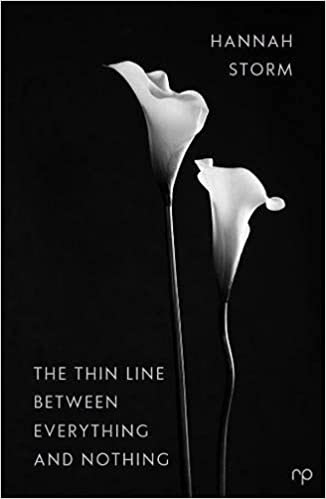
Review by Laura Besley of "The Thin Line Between Everything and Nothing" by Hannah Storm


As Russia continues to invade neighbouring Ukraine, it feels particularly poignant to be reading – or in my case rereading – Hannah Storm’s flash collection, The Thin Line Between Everything and Nothing (Reflex Press, 2021). One of its main themes is the effects of war – on individuals and what they lose as a consequence, or on a rare occasion gain, although hardly ever through choice. Further themes explored are the power struggles between men and women, and violence against women in particular, as well as the kaleidoscope of experience and emotion surrounding motherhood. 

The opening story, ‘Sarajevo Rose,’ is directly about war and the displacement Damir suffers where his name no longer means peace, but ‘scorn’ and ‘stranger’ and ‘the soiled sheets of a bedsit he [can] scarcely afford.’ Even stories not directly about war are peppered with war-like phrases, such as in the title story: ‘[h]e weapons his words’ and ‘the sound of its freedom pops like gunfire.’ Or in the case of ‘The Huntsman,’ a story about a teenager’s first French kiss, there is a distinct feeling of battle, or enemies fighting, as a ‘terrified’ Sarah locks herself in the toilet and ‘pray[s] the lock will hold.’

‘When I go to war, they loan me a flak jacket, a big blue thing designed for men’: ‘Bulletproof’ is one of several stories about women reporting on warzones, being forced to survive, and forced upon, in a world dominated by – often dominating – men, mined presumably from the author’s own journalistic experiences. 

Combining the themes of war, displacement and motherhood is the story ‘Behind the Mountains, More Mountains’ in which the main character ‘[gives] birth to a daughter, the child of men, the child of a history and country she would never really know.’

The Thin Line Between Everything and Nothing is a deep and heartfelt collection, which never shies away from the painful experiences of war, its effects, and those affected by it. 


About the reviewer
Laura Besley is the author of three collections of flash & micro fiction: (Un)Natural Elements, 100neHundred and The Almost Mothers. Having lived in the Netherlands, Germany and Hong Kong, she now lives in land-locked central England and misses the sea. 

Tuesday, 6 July 2021

Review by Nora Nadjarian of "Homemade Weather: An Anthology of Novelettes-in-Flash" by Tom O'Brien, Ian O'Brien and Donna L. Greenwood


Homemade Weather (Retreat West Books, 2021) is an anthology of the three winning entries in Retreat West’s annual novelette-in-flash competition. A novelette-in-flash is essentially a mini-novella composed of linked flashes (or short-shorts), with each chapter or section being up to 1000 words.

Included in the anthology are the 1st prize winner Homemade Weather by Tom O’Brien, What the Fox Brings in Its Jaw by Ian O’Brien and The Impossibility of Wings by Donna L Greenwood. 

These moving narratives create three completely different worlds in beautifully distilled prose. The main characters are vivid and credible, presented as they are with the detail and depth of emotion we would expect from much longer novels. Human relationships with all their complexities are explored in intriguing ways. 

In Homemade Weather we see the world through the eyes of Celia Finn. Her astute observations of the goings-on both in and out of the family home are superbly handled by Tom O’Brien. “When I check the sky for signs of violence, cycling home, I find it on the other side of the mountain, brewing ominous cloud,” says Celia. Her intriguing claim that she can “Sign parts of [her] life away to someone else” keeps the reader hooked till the last page.

What the Fox Brings in Its Jaw is a masterful exploration of a man’s life through a single defining moment and the tragedy that follows. We learn that “It had started, as always, with little things,” and, gradually, the life of the unnamed protagonist unfolds before us. A heart-breaking story told from multiple points of view, it uses flashback to merge the past with the present in dream-like sequences. 

The Impossibility of Wings brilliantly depicts the tensions and difficulties of a resentful mother/daughter relationship. The protagonist, the eldest of four children, is caught in “the sticky mess of family garbage” and longs to escape from the vicious circle she is caught in. When she finally gets on the coach to London where she will study at university, she “can feel [her] wings unfurling with every mile [they] drive away.” But it is only at the end of the novelette that we are reminded that there are two sides to the story and “there’s a thin line” between them.  


About the reviewer
Nora Nadjarian is a poet and writer from Cyprus. Her work has been included in various international anthologies, most recently in Europa 28: Writing by Women on the Future of Europe (Comma Press, 2020), the 2020 National Flash Fiction Day Anthology (UK) and in SAND journal (2021).

You can read a review of Nora Nadjarian's short story collection, Selfie and Other Stories (Roman Books, 2018), on Everybody's Reviewing here. 

Wednesday, 14 April 2021

Review by Kathy Hoyle of "Among These Animals" by Gaynor Jones


Among These Animals is a searing novella-in-flash, as brutal as it is beautiful. Jones handles this niche form with exquisite expertise, weaving each story seamlessly into the next with perfect fluidity. 

Set against the sweeping beauty of rural Wales, Jones’s compelling narrative is a visceral, powerful exploration of complex themes including sibling rivalry, parental love, familial loss, guilt and grief, all told through the eyes of Carys, the eldest daughter of farmers, Derfel and Aelwen.     

Carys is a daddy’s girl who thrives on the gentle guidance and acknowledgement of her reserved father, a man continuously surprised by the colossal weight of love he feels for his daughter. Cerys hero worships him, and he adores her. Her mother, Aelwen, often fades into the background. 

The familial relationships are established beautifully by Jones in the opening stories. In 'Heavy Is the Head That Wears the Crown,' Derfel tells Carys the story of how he met her mother but Carys struggles to see her mother’s worth: 'Carys tries to picture her mother as a princess from one of her books … She can’t. She can picture her father easily though, with a crown on his head and a staff in his arms. As she falls asleep, courtiers bow around him.'

We hear how the idyll is threatened, with the arrival of three younger brothers, 'Owain and the twins' in 'Pecking Order': 'Carys … has sworn a lot more in the years since her brothers arrived … When she was the only one, breakfast was all for her. Warm bubbled crumpets dripping with greasy butter … But that was before the stupid boys came along. Now, Carys has to sit last at the table … Carys has to be last in everything except cleaning and tidying.'

One day, a devastating event alters everything, tearing the family apart and shattering Carys and Derfel’s relationship forever. Jones delves into the themes of guilt and grief with poignancy and precision, taking the reader on a heart-breaking journey as the family try to come to terms with their loss.  

Throughout the novella, Jones showcases her inimitable style, either by pushing the boundaries of social acceptance, with stories such as the disturbing title story, 'Among These Animals,' or by showcasing her exceptional ability to leave the reader reeling with her emotional sledgehammers, often wielded in stories that are just a few paragraphs long.

Among These Animals is tremendous debut novella-in-flash, powerful and poignant. It will leave the reader stunned.


About the reviewer
Kathy Hoyle is an MA graduate from the University of Leicester. Her short stories and flash fiction have appeared in a variety of literary magazines such as Virtualzine, Silver Apples, Reflex Fiction and Lunate. She has been shortlisted for the Exeter Short Story Prize, the Fish Publishing Memoir Prize and the Ellipsiszine Flash Fiction Collection Prize. She recently received a Special Commendation in the Blinkpot Awards and won Third Prize in the HISSAC Flash fiction Competition. She is currently working on both a novella-in-flash and a short story collection, powered by tea and biscuits.

You can read more about Gaynor Jones's Among These Animals on Creative Writing at Leicester here.